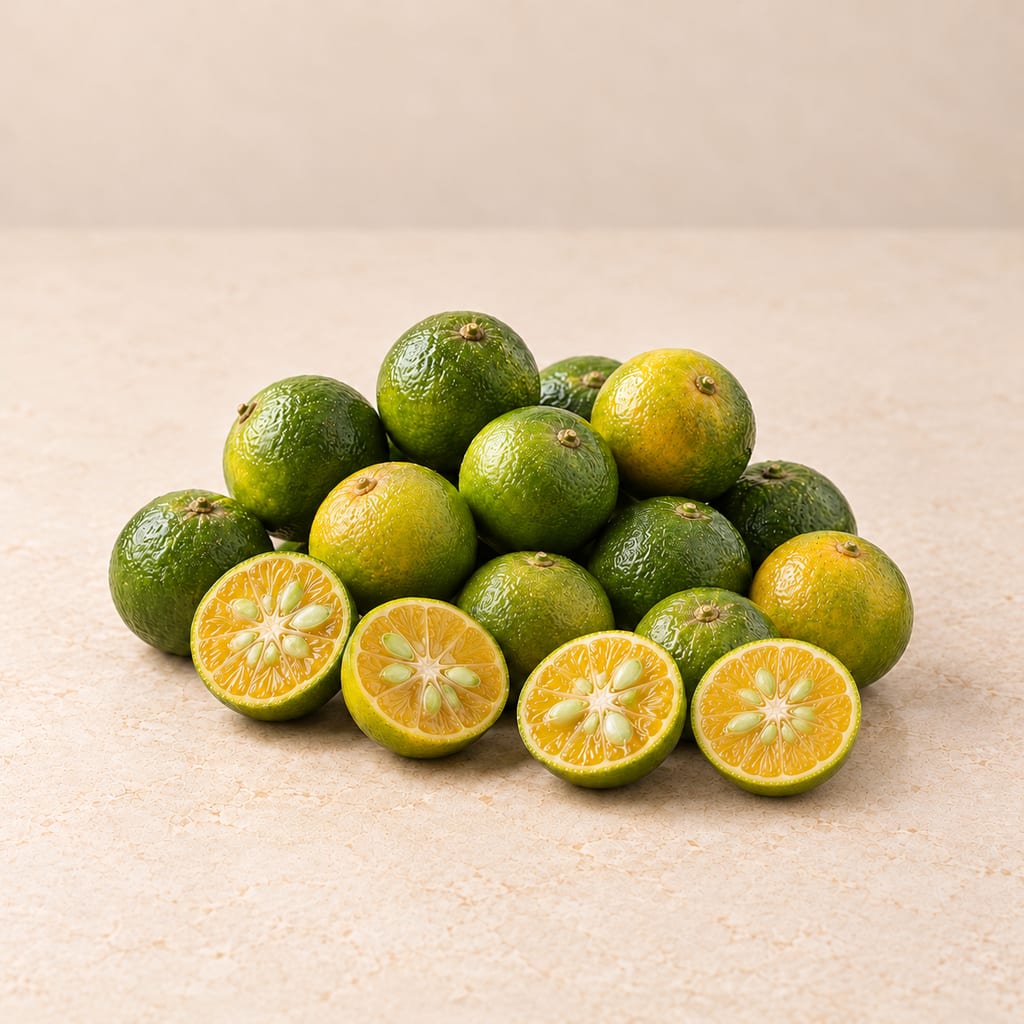
Calamansi
Calamansi is a small, very sour kumquat-mandarin hybrid, Philippine cooking’s all-purpose citrus, squeezed into soy sauce, fish sauce, broths and dips.
 FermenteaWhere food goes to change
Mushrooms
Cantharellus macrocarpus is a large yellow-orange chanterelle described from southern China in 2021. It is listed as edible in a national catalogue; no species-specific food study was found.
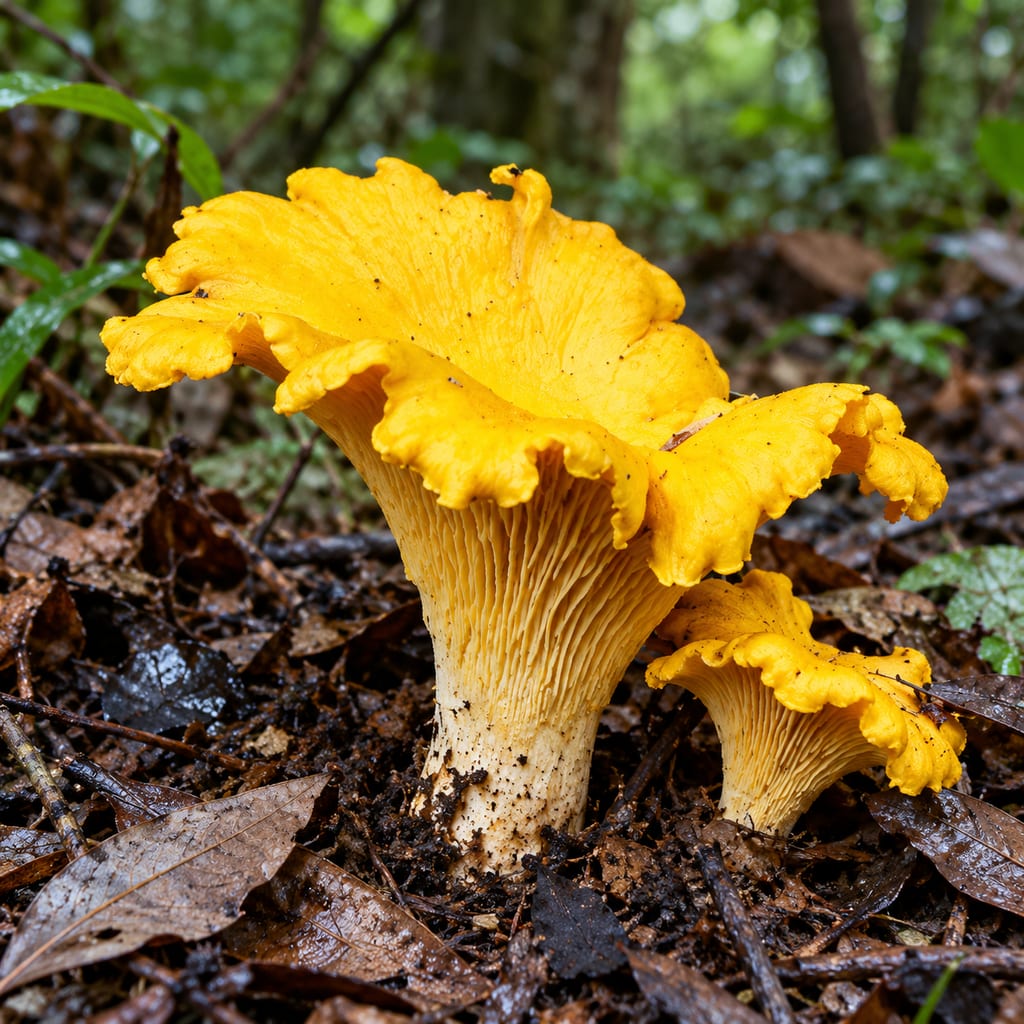
Cantharellus macrocarpus is a large chanterelle with a yellow to orange cap, well-developed branched ridges, and a cream to pale-yellow stipe. Its caps are reported at 10 to 16 centimetres across. It was described in 2021 from tropical Hainan, and the species is recognised in the 2025 treatment of Chinese chanterelles as a distinct lineage.
The ridges separate it from the large C. magnus, which has a smooth hymenophore. These features come from taxonomic literature and are not a visual safety key.
The 2021 description placed the species in Cantharellaceae. Newer Chinese treatments place it in Hydnaceae, which reflects different family boundaries rather than a different species. The 2026 national catalogue gives the Chinese name 大果鸡油菌, which means large-fruited chanterelle.
The sources place the species in Hainan and Guangxi in southern China. The 2025 treatment lists collections at Jianfenglin National Nature Reserve in Ledong County, Hainan, at about 950 metres, in June and July, and in Yulin City, Guangxi, in August. A media interview with the species author places collections in the Bawangling sector of Hainan Tropical Rainforest National Park, in May, July and August.
These records show June to August collections across the named localities. They are not a complete seasonal range, and no specimen coordinates were published in the sources read.
The 2026 Chinese national catalogue of edible and medicinal fungi lists C. macrocarpus as edible. That entry is a catalogue classification. It is not a toxicological study of the species, and it does not describe any traditional dish or market practice for it.
The 2023 media interview relays an expert's inference from the wider genus. It is not species-level safety testing. Do not identify or eat a wild mushroom from a photograph or from this page. Identification of chanterelles depends on specialist examination, and confusion with other fungi is possible.
No species-specific culinary tradition, preparation method or market volume was located in the sources read. The page therefore records the species' listed food status without describing how it is cooked or preserved.
Still open are the primary text of the 2021 description, which was not fully accessible; the figure credits for the species photographs; and any study of the species' food use or toxicity. The reuse licence for the Hainan Daily photograph has not been established, and permission is needed before any product reuse.
Named reserve at about 950 m. The voucher records are GDGM60539 and GDGM86209. No specimen coordinates were published in the sources read, so none is given here.
Researcher-attributed locality in a media interview, not the primary taxonomic treatment. It is recorded in mixed Fagaceae and Pinaceae forest.
Named city-level area. The exact collection spot within Yulin is not established by the sources.
Calamansi is a small, very sour kumquat-mandarin hybrid, Philippine cooking’s all-purpose citrus, squeezed into soy sauce, fish sauce, broths and dips.
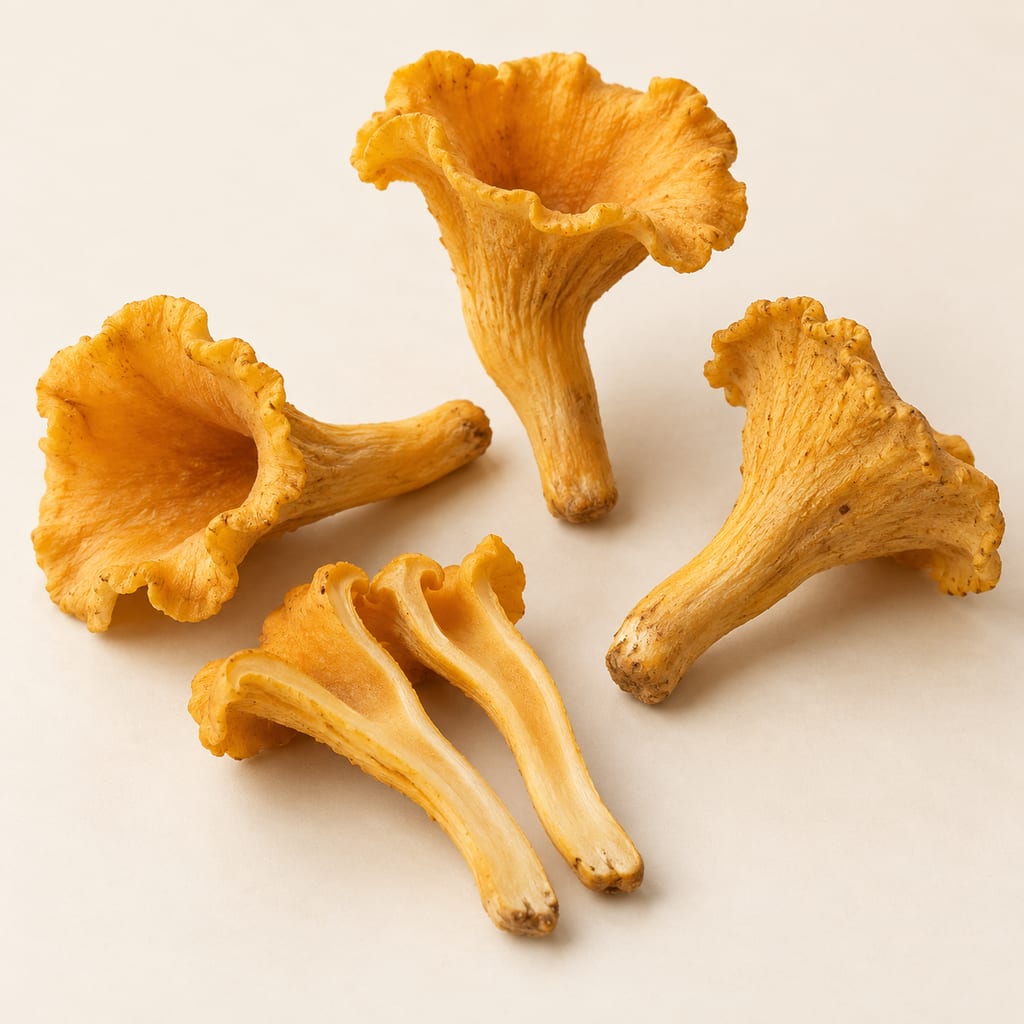
A golden funnel mushroom described from Hong Kong and documented from China; reported as food in several regions, with African taxonomy unresolved.
No community contributions have been published for this entry yet.
Sign in to contribute. Published comments and photos are free to read.
PhytotaxaIdentity · History
Cantharellus macrocarpus: a new species from tropical ChinaDescribed in 2021 from tropical Hainan, China; Phytotaxa 484(2):170-180.
Placed in subgenus Cantharellus on morphology and 28S/TEF1 sequence evidence.
Diagnostic research characters include a large yellow-orange cap, branched ridges, a cream to pale-yellow stipe, thickened pileipellis hyphae and clamp connections.
Cited in: A large yellow chanterelle from southern China; Open questions
MycosphereIdentity · Distribution
Species diversity, taxonomy, distribution and multi-gene phylogeny of chanterelles in ChinaC. macrocarpus recognised as a distinct monophyletic lineage in subgenus Cantharellus.
Caps of 10 to 16 cm; differs from C. magnus by branched ridges rather than a smooth hymenophore.
Voucher localities: Jianfenglin Reserve, Ledong County, Hainan (about 950 m; GDGM60539, 17 June 2017; GDGM86209, 13 July 2021); Yulin City, Guangxi (GDGM87103, 31 August 2022).
Cited in: A large yellow chanterelle from southern China; Where and when it has been collected
MycosystemaFood · Safety
Species cataloging of edible and medicinal fungi in ChinaThe 2026 national catalogue classifies C. macrocarpus as edible (食用).
The catalogue entry is not a species-specific toxicological study or a record of traditional recipes.
Cited in: Names and classification; Food status and safety; Culinary use
MycosystemaDistribution
Chinese Journal of Mycology specimen summaryCatalogue article and specimen summary for the Hainan and Guangxi localities.
Sohu / Nanhai NetDistribution · Season
Interview with the species author Nian-kai ZengBawangling sector of Hainan Tropical Rainforest National Park, in mixed Fagaceae and Pinaceae forest.
Team collections on 23 May 2019, 31 August 2019, 27 July 2021 and 17 May 2022.
The expert's edibility view is an inference from the genus, not a species-level test.
Cited in: Where and when it has been collected; Food status and safety
Hainan DailyImages
Hainan Daily report on the Chinese large-fruited chanterelleReport dated 16 October 2023 with a species photograph credited to Nian-kai Zeng. No reuse licence is stated.
Cited in: Open questions