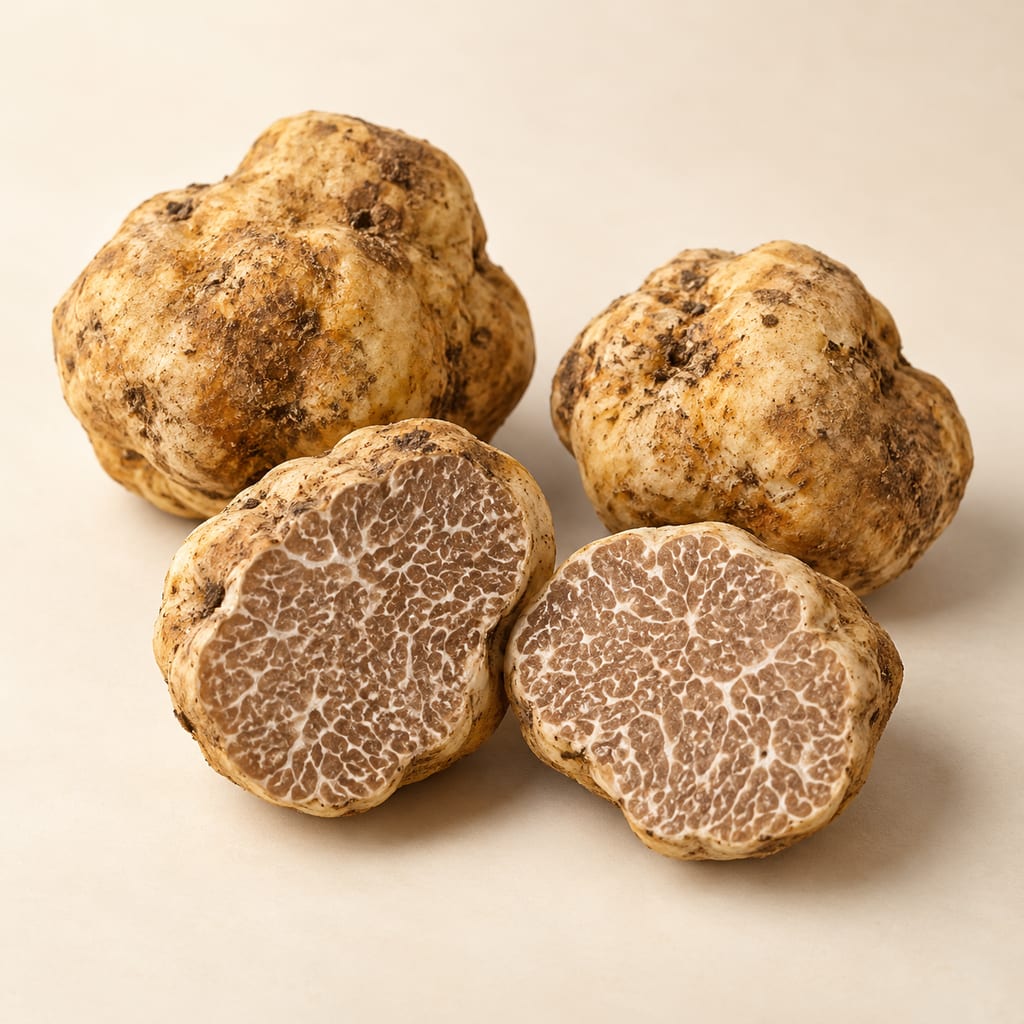
Cumberland truffle
Tuber cumberlandense, an aromatic truffle described as a new species in 2024, native to eastern North America and sold from truffle orchards and woodlands dominated by broadleaf trees.
 FermenteaWhere food goes to change
Mushrooms
Morchella diminutiva is a yellow true morel described in 2012 from eastern North America. Sources report it as a culinary morel that must be cooked; this page is not an identification guide.
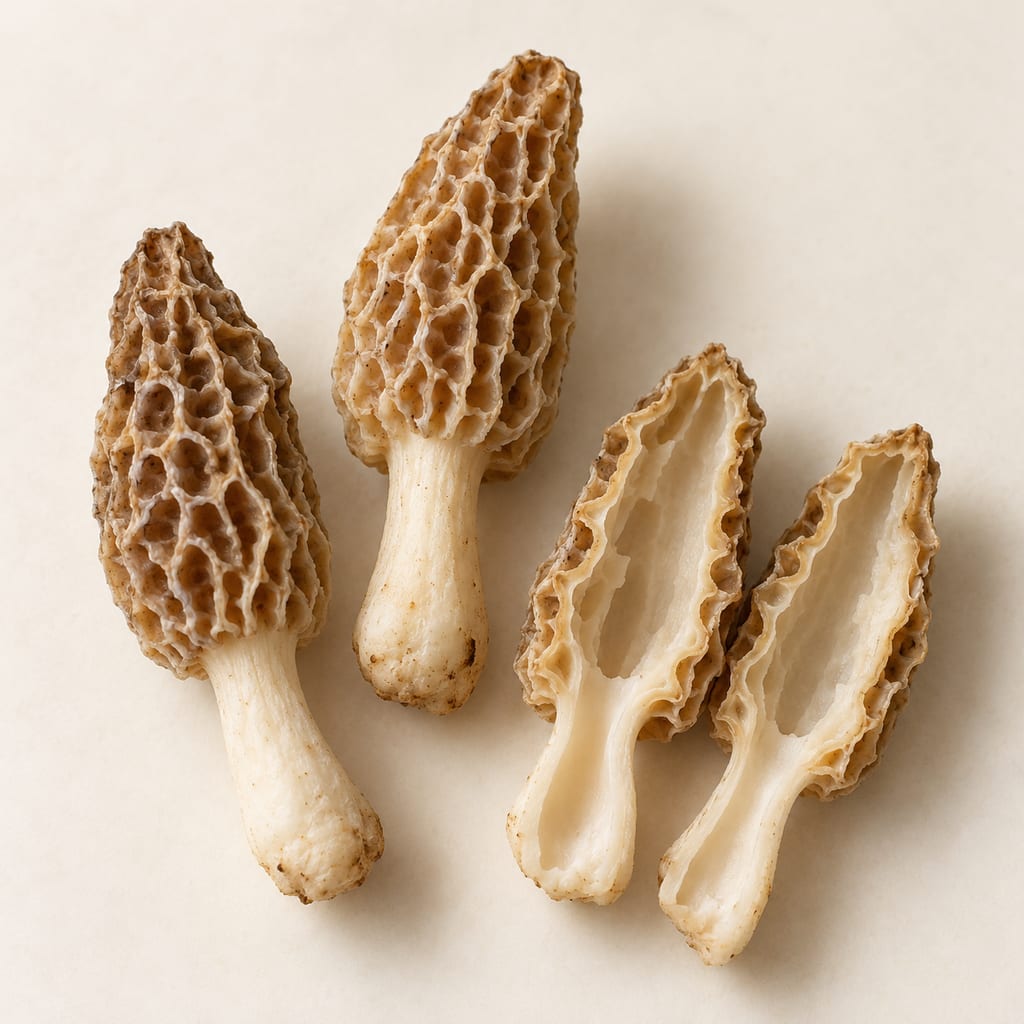
Morchella diminutiva is a true morel, a member of the genus whose species have a honeycombed cap and a hollow stem. The name comes from the 2012 revision of North American morels by Kuo and colleagues, which treated nineteen North American phylogenetic species and described fourteen of them as new. Diminutive morel is one of those fourteen.
The catalogue record for this species describes it as a culinary morel gathered from the wild that needs cooking before it is eaten. The record is a catalogue entry, not a field description. Foragers and growers also use older names for North American morels, so a common name alone does not show which taxon is meant.
The 2012 study placed the species in the yellow-morel group known as the Esculenta clade, within the family Morchellaceae. Its close relative in the field guides is Morchella sceptriformis. The two are distinguished mainly by the shape of the cap: the cap of M. diminutiva is more conical, while that of M. sceptriformis is more egg-shaped.
Some growers call it the tulip morel, a name that also covers the older Morchella virginiana. The holotype is recorded under a phylogenetic species designation, and that designation is the reference point for the name. The catalogue marks the name as a research name that has not been checked against current nomenclature.
The species is native to eastern North America. Sources place it under ash and tulip poplar and also under hickories. The catalogue describes its ecology as forest or woodland and notes that the ecology depends on the lineage. The sources used here do not give a local fruiting season, so none is stated on this page.
The catalogue records this species as a culinary morel that needs cooking. Morels of this group are generally cleaned of soil and insects, sliced or left whole, and cooked in butter or oil, in sauces and in stuffings. The sources reviewed do not give a time or temperature for this species, and none is given here.
The sources reviewed do not describe a drying, rehydration or regional recipe for M. diminutiva, so no such method is recorded on this page.
Morels should not be eaten raw. In a 2023 outbreak in Bozeman, Montana, 51 people had gastrointestinal illness after eating a sushi roll containing morels, and two of them died. DNA sequencing identified the mushrooms as Morchella sextelata, a true morel, not the species on this page. Investigators concluded that uncooked or undercooked morels were the likely source, but no toxin was identified and no causative agent was found in clinical or food testing. The report recommends thorough cooking, because cooking is likely to reduce toxin levels, and it notes the small size of the study.
The sources therefore support cooking as the recorded safety measure for morels in general. They do not establish a safety assurance for M. diminutiva specifically, and cooking is not presented here as a guarantee. The catalogue states that true-morel taxonomy often requires molecular confirmation. Nothing on this page is advice for collecting or identifying wild morels.
The range is eastern North America as the sources state; the entry records the range, not a food tradition.
Tuber cumberlandense, an aromatic truffle described as a new species in 2024, native to eastern North America and sold from truffle orchards and woodlands dominated by broadleaf trees.
No community contributions have been published for this entry yet.
Sign in to contribute. Published comments and photos are free to read.
WikipediaIdentity · Taxonomy · Geography
Morchella diminutivaDescribed in 2012 by Kuo and colleagues; native to eastern North America; found under ash and tulip-poplar and under hickories; close to M. sceptriformis, with a more conical head.
Cited in: Overview; Taxonomy and related names; Habitat
MycologiaTaxonomy · Identity
Taxonomic revision of true morels (Morchella) in Canada and the United StatesThe 2012 revision treated 19 North American phylogenetic species, 14 of them new; the species is placed in the Esculenta clade.
Cited in: Overview; Taxonomy and related names
Morbidity and Mortality Weekly Report, CDCSafety
Morel mushroom illness outbreak, Bozeman, Montana, 202351 gastrointestinal illnesses and 2 deaths; Morchella sextelata identified by DNA; uncooked or undercooked morels the likely source; no toxin identified; thorough cooking recommended.
Cited in: Food use and cooking; Safety and what is not known
Ohio Department of Natural ResourcesIdentity · Safety
Mushrooms of OhioSupplied catalogue source for the morel record.
Cited in: Safety and what is not known