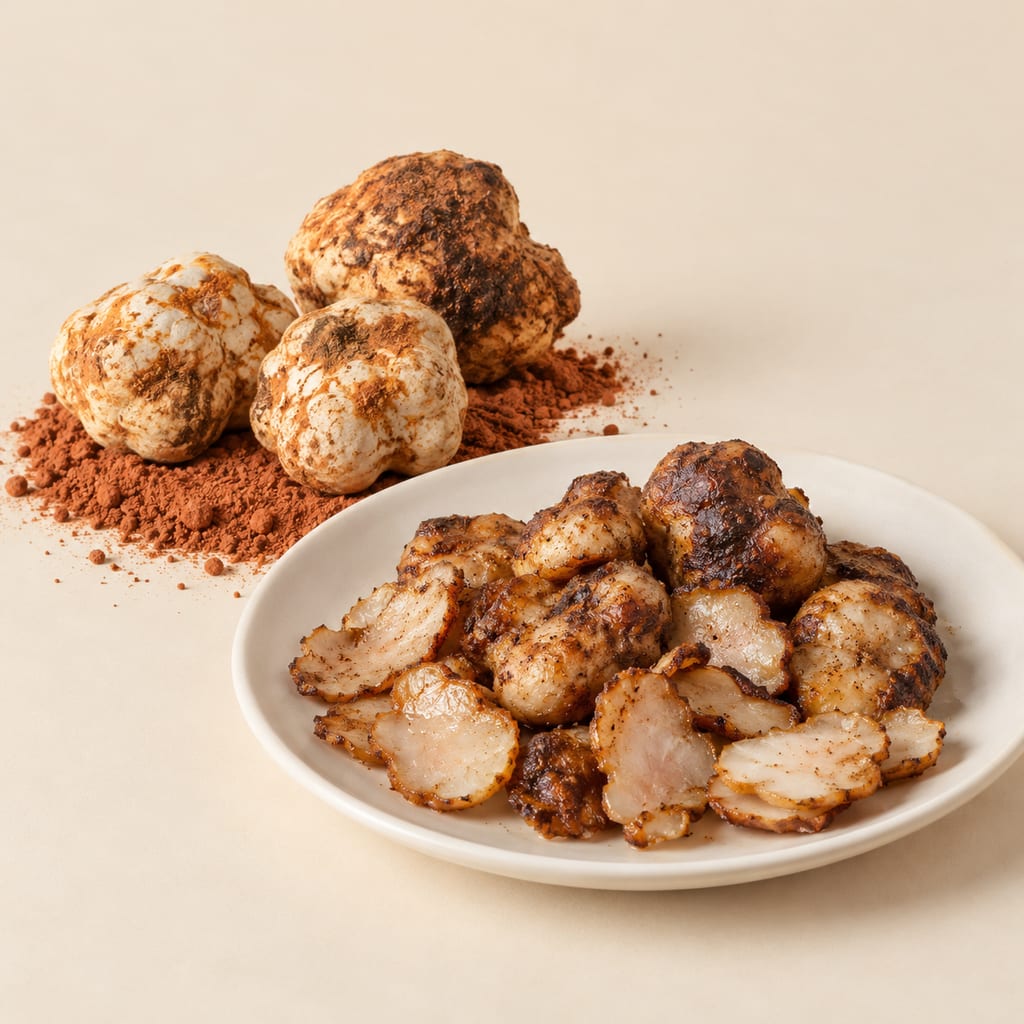
Kalahari truffle
Kalaharituber pfeilii is an underground truffle of the Kalahari and adjacent drylands. San and Khoisan people have gathered and eaten it, and it is sold in Namibian markets.
 FermenteaWhere food goes to change
Mushrooms
Eremiomyces echinulatus is a subterranean desert truffle of the Kalahari, recorded as food in regional ethnomycology and easily confused with the better-known Kalahari truffle, Kalaharituber pfeilii.
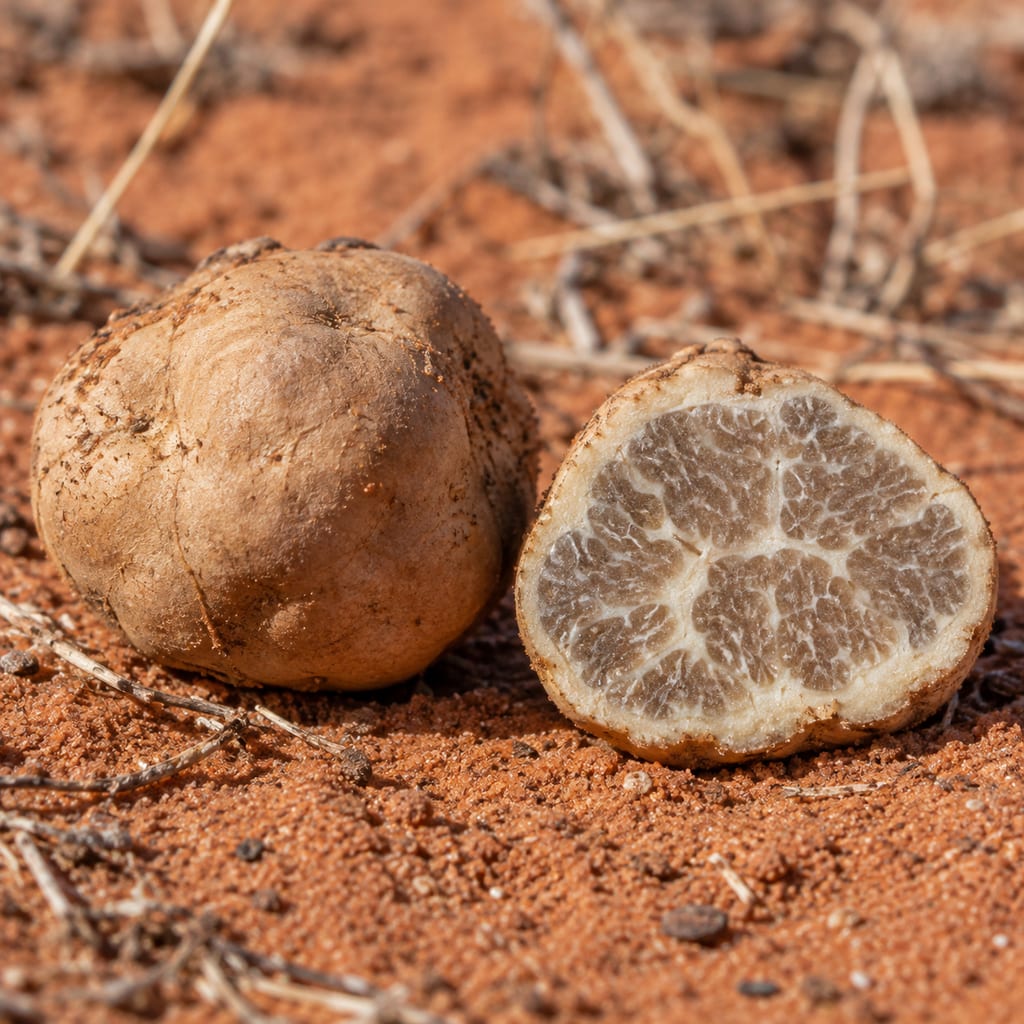
Eremiomyces echinulatus is a truffle, a fungus that forms its fruit body underground. It was first described as Choiromyces echinulatus. Molecular work later moved it into the new genus Eremiomyces, where it sits close to the desert truffle genus Terfezia rather than to Choiromyces.
It is one of three truffle species recorded from the Kalahari. The best known of them is Kalaharituber pfeilii, once known as Terfezia pfeilii, which is often called the Kalahari truffle. The two names overlap in everyday use, so a reference to the Kalahari truffle may mean either species. Eremiomyces echinulatus is the only other truffle recorded from the Kalahari.
The catalogue places the species in Namibia, Botswana and South Africa. It forms its fruit bodies underground. The sources describe the Khoisan peoples of the Kalahari as long-standing gatherers of desert truffles, and say that they still value them, but those accounts mainly concern Kalaharituber, not Eremiomyces.
No consulted source describes how this species is harvested, prepared or cooked, and none gives a local name for it.
The catalogue records the species as included in regional food ethnomycology for Namibia, Botswana and South Africa. The food-use record was not confirmed in the sources consulted for this page. A review of African truffles notes that Eremiomyces echinulatus and Mattirolomyces austroafricanus have been reported in only a few studies and are therefore not addressed in depth.
A 2008 Economic Botany paper by Trappe, Claridge, Arora and Smit on Kalahari desert truffles is the main primary source for the regional food record. Its full text was not checked for food uses of this species, so the food use recorded here stays provisional until that text is read.
The species is subterranean. The sources examined for this page describe the host relations of the better-known Kalaharituber, not of Eremiomyces. The open questions are the host plants, the seasons in which the fruit bodies appear, and whether any local name or preparation exists for this species separate from the Kalaharituber record.
The sources place the species in the Kalahari. The food use is recorded in the catalogue for the wider Kalahari region, not confirmed for this species.
A catalogue record of the regional food use. The consulted sources do not confirm the food use for this species.
A catalogue record of the regional food use. The consulted sources do not confirm the food use for this species.
A catalogue record of the regional food use. The consulted sources do not confirm the food use for this species.
Kalaharituber pfeilii is an underground truffle of the Kalahari and adjacent drylands. San and Khoisan people have gathered and eaten it, and it is sold in Namibian markets.
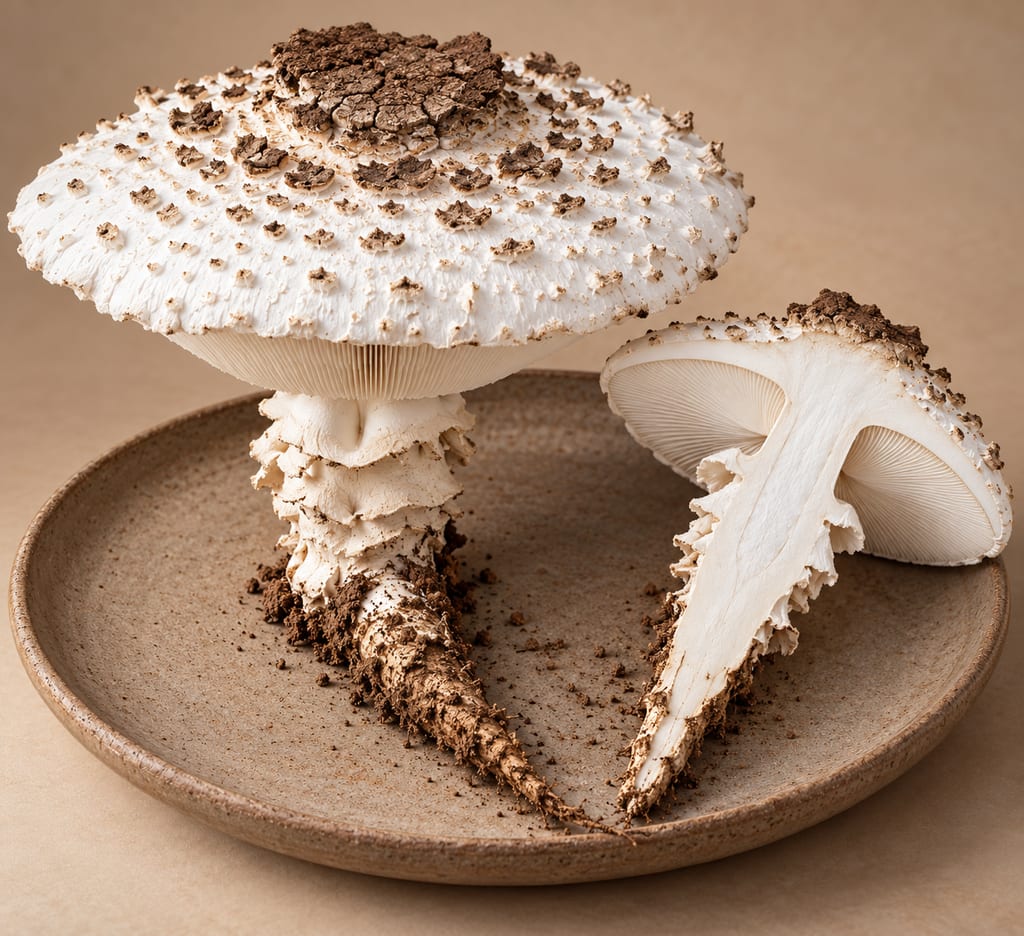
A large wild termite-associated mushroom gathered across parts of tropical Africa. Local food uses and fruiting seasons vary by place and rainfall; its appearance alone cannot establish a safe identification.
No community contributions have been published for this entry yet.
Sign in to contribute. Published comments and photos are free to read.
WikipediaIdentity · Taxonomy
KalaharituberKalaharituber pfeilii, once Terfezia pfeilii, is the best-known Kalahari truffle
Three truffle species are recorded from the Kalahari
Cited in: What it is; Ecology and what is still open
USDA Forest Service Research and Development, TreesearchFood · History
Kalahari desert truffles (Trappe, Claridge, Arora and Smit, Economic Botany)The Khoisan of the Kalahari have long gathered truffles and still value them, mainly Kalaharituber
Eremiomyces echinulatus is the only other Kalahari truffle
Cited in: What it is; Where it grows and how it is gathered; Food use and the open record
USDA Forest Service, Pacific Northwest Research StationEcology
Pacific Northwest research journal article on desert truffles (Trappe et al.)Background on desert truffle ecology; full text not checked for this species' food use
Cited in: Food use and the open record
PubMed CentralTaxonomy · Gaps
African truffles review (PubMed Central)Eremiomyces echinulatus and Mattirolomyces austroafricanus reported in few studies and not addressed in depth
Cited in: Where it grows and how it is gathered
Rhodes University research repositoryEcology
Host relations of Kalaharituber pfeiliiHost relations are documented for Kalaharituber pfeilii; not for Eremiomyces echinulatus
Cited in: Ecology and what is still open