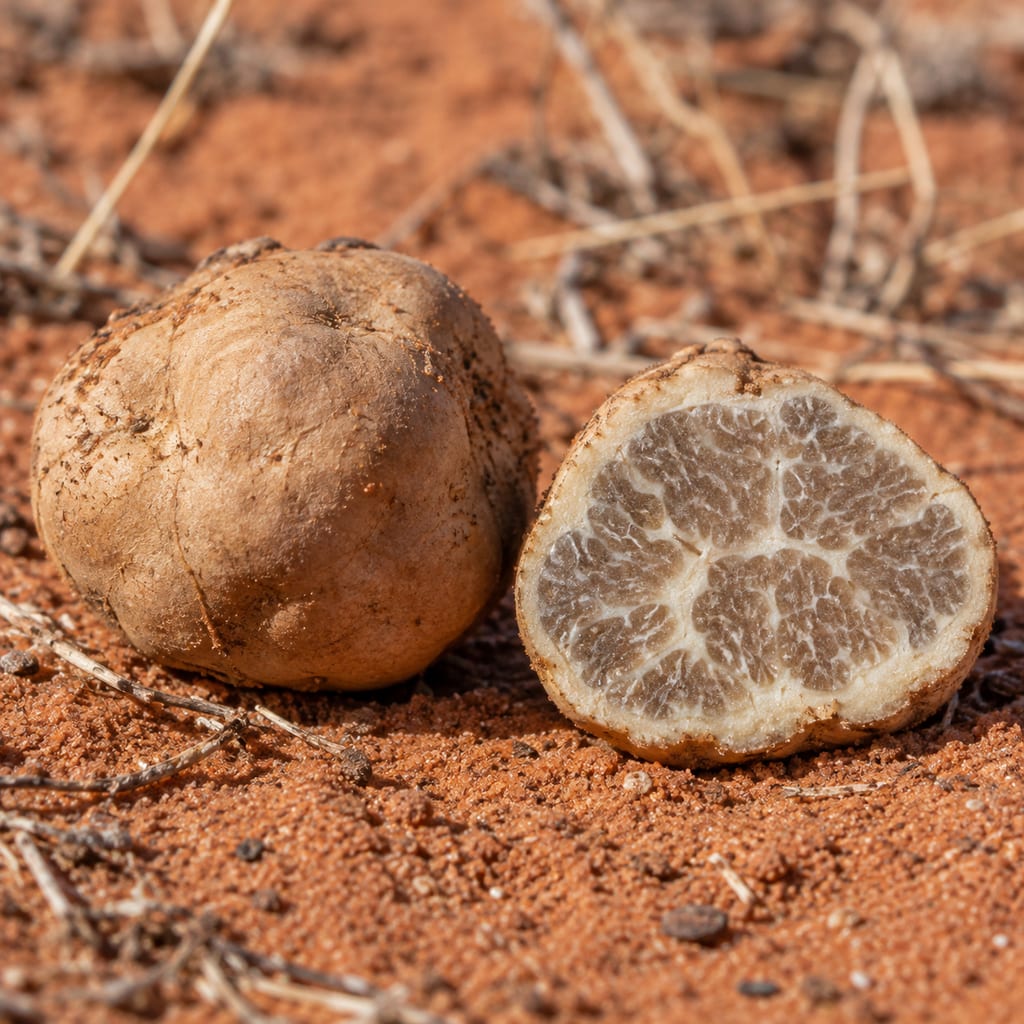
Eremiomyces echinulatus
Eremiomyces echinulatus is a subterranean desert truffle of the Kalahari, recorded as food in regional ethnomycology and easily confused with the better-known Kalahari truffle, Kalaharituber pfeilii.
 FermenteaWhere food goes to change
Mushrooms
Kalaharituber pfeilii is an underground truffle of the Kalahari and adjacent drylands. San and Khoisan people have gathered and eaten it, and it is sold in Namibian markets.
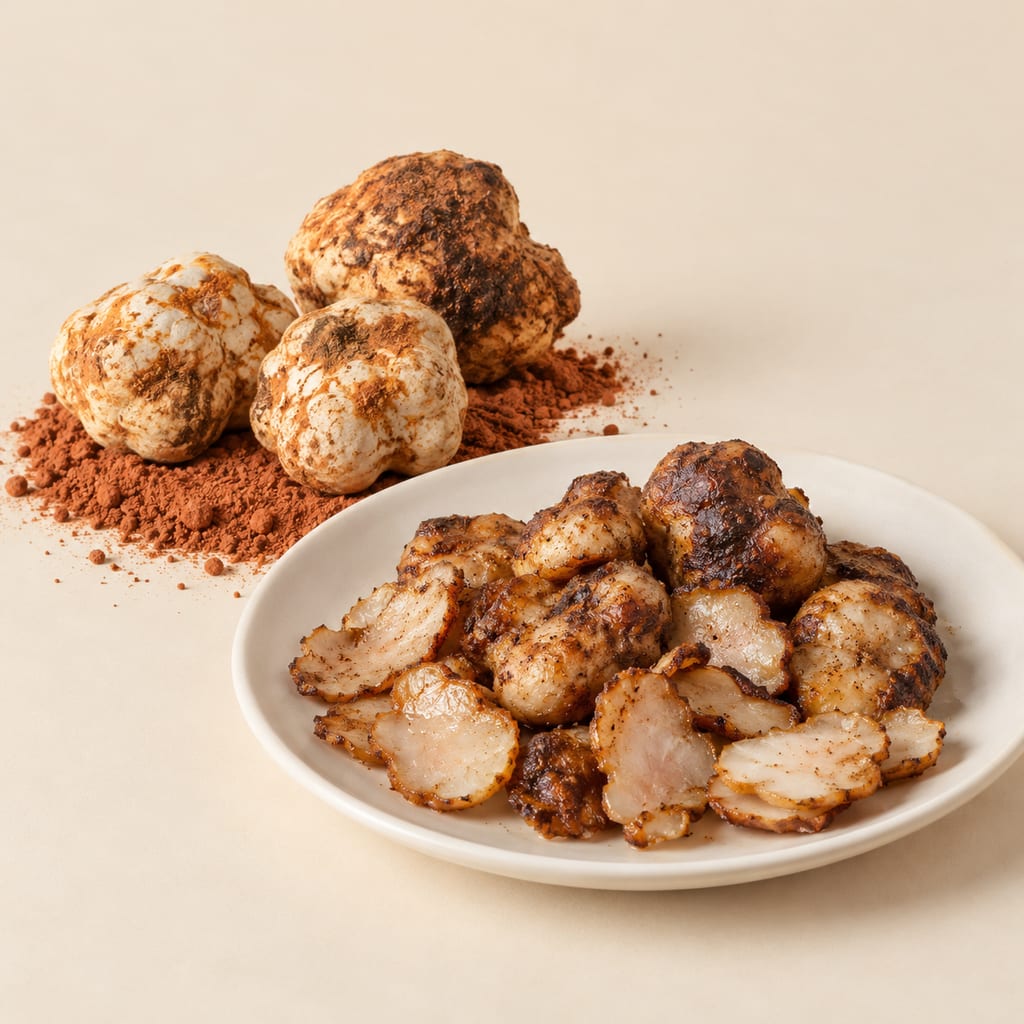
Kalaharituber pfeilii is a subterranean mycorrhizal fungus. It grows underground in the Kalahari and adjacent drylands and forms a partnership with plant roots. Fungal DNA from hyphae on the roots of tsamma melon, Citrullus lanatus, has been matched to the truffle.
Paul Christoph Hennings first described it in 1895 as Terfezia pfeilii. A later study proposed moving the South African samples to Kalaharituber pfeilii. The catalogue also lists Terfezia pfeilii as a synonym, so both names appear in the literature.
San people have traditionally collected the truffle in the Kalahari. It is eaten raw or roasted, and it is also cooked by burying it in hot ash or coals and leaving it to cool overnight. The flavour is described as rich and nutty, and milder than European truffles.
In San tradition the truffles are called the eggs of the lightning bird, because they appear after thunderstorms.
The truffle is sold at informal markets in Namibia at a low price compared with developed countries. A 2022 study of raw truffles sold in Namibia assessed microbiological quality, mycotoxins and heavy metals. Its reported zearalenone levels varied widely, from 45 to 9,680 micrograms per kilogram, so the safety of market truffles cannot be assumed from one sample.
Harvesters and researchers report that the truffle is declining. The causes given are excessive harvesting, climate change and soil erosion, and the decline appears to be stronger where livestock are concentrated.
A caution applies to the name. Some truffles sold in Europe as Kalahari truffles may be Tuber oligospermum, a less highly regarded truffle from Morocco. The label alone does not show the species.
The Namibian mycotoxin figures show that market truffles can carry contaminants, and the catalogue does not supply a safe quantity or a storage time. Confirm the identity of any truffle with a specialist, and buy from a source that can say where and when it was gathered. This page gives no identification or edibility verdict for Kalaharituber pfeilii.
Traditional gathering by San and Khoisan peoples of the Kalahari. The catalogue names Namibia, Botswana and South Africa as food-use countries.
Sold at informal markets. Market and safety details come from a 2022 study that the search summary described; the full text was not checked.
Eremiomyces echinulatus is a subterranean desert truffle of the Kalahari, recorded as food in regional ethnomycology and easily confused with the better-known Kalahari truffle, Kalaharituber pfeilii.
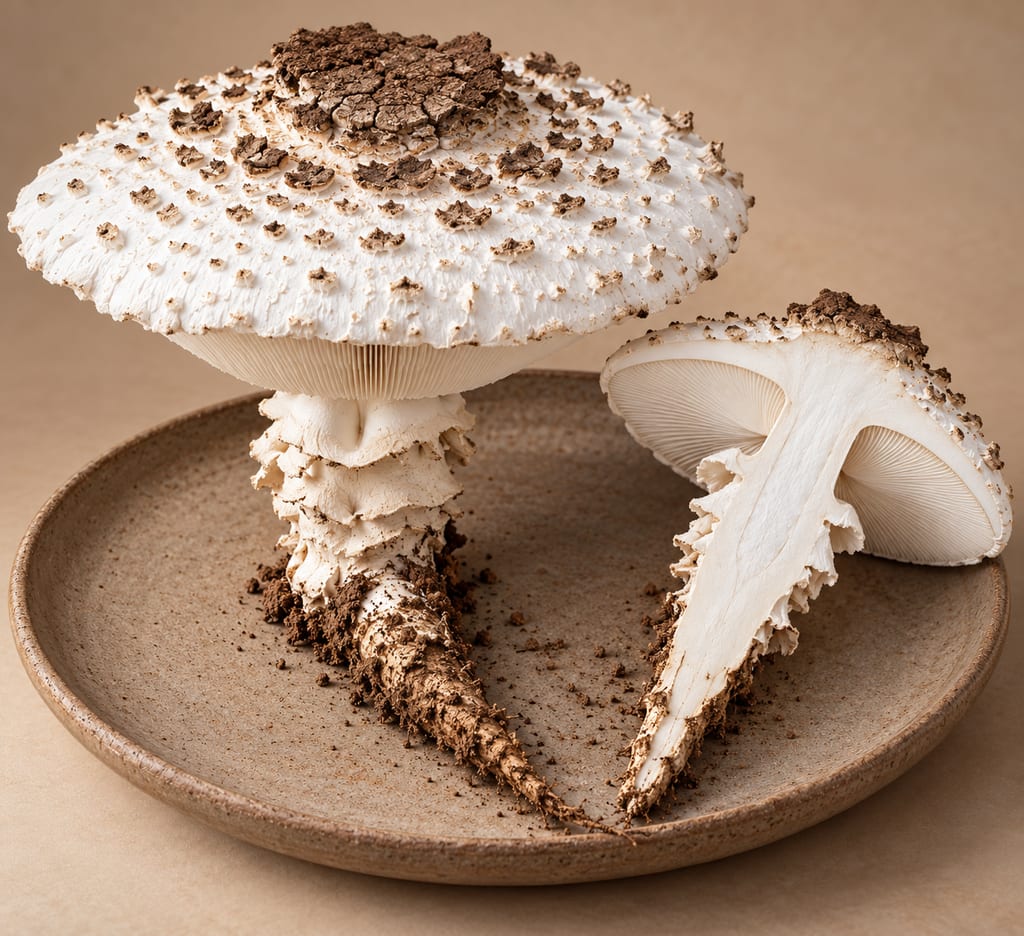
A large wild termite-associated mushroom gathered across parts of tropical Africa. Local food uses and fruiting seasons vary by place and rainfall; its appearance alone cannot establish a safe identification.
No community contributions have been published for this entry yet.
Sign in to contribute. Published comments and photos are free to read.
University of Namibia repositoryFood use · History · Decline
Kalahari Truffle: An underprized delicacySan and Khoisan people gather and eat the truffle.
Eaten raw or roasted; cooked in hot ash overnight; rich and nutty flavour.
Called the eggs of the lightning bird in San tradition.
Declining under harvesting, climate change and soil erosion.
Cited in: What the truffle is; Traditional gathering and eating; Decline and pressures; Safety
Rhodes UniversitySafety · Market
Rhodes University research repository record for the Namibia truffle studyInformal market sale in Namibia.
2022 study of microbiological quality, mycotoxins and heavy metals in raw truffles sold in Namibia; zearalenone 45 to 9,680 micrograms per kilogram (reported in a search summary; full text not checked).
Cited in: Markets in Namibia; Decline and pressures; Safety
SpringerTaxonomy
Supplied catalogue reference (Springer, s12231-008-9027-6)Supplied food-use and taxonomy reference for the species.
Cited in: Markets in Namibia
USDA Forest ServiceTaxonomy
Supplied catalogue reference (USDA Forest Service Treesearch 37236)Supplied reference for the species and its ecology.
Cited in: What the truffle is