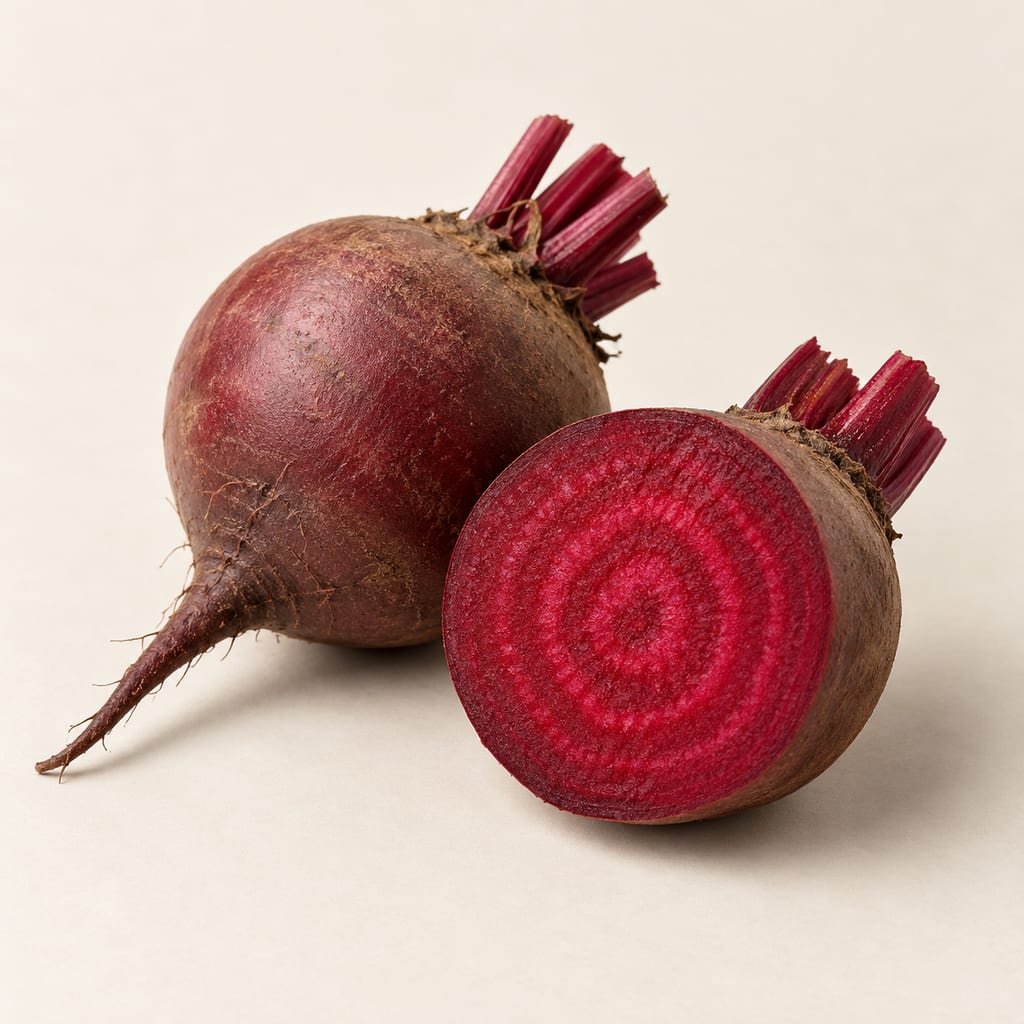
Beetroot
Beetroot is the red taproot of Beta vulgaris. In Poland its soured juice replaced hogweed as the base of barszcz from the eighteenth century, and beet leaven is still made for Christmas Eve.
 FermenteaWhere food goes to change
Cultures
Farmhouse brewing cultures are retained yeast populations used in farm and home beer in the Baltic region and northern Europe. Sampled cultures differ widely and share no single method.
European farmhouse brewing cultures are not one yeast or one stable regional formula. A 2026 study examined 1,760 isolates from 44 sampled cultures in Latvia, Lithuania, Russia and western and eastern Norway. The sampled populations ranged from near-monocultures to 33 distinguishable Saccharomyces cerevisiae strains. The study's sample does not identify an unsampled family culture or establish the age of an individual lineage.
The European Commission's published application for Kaimiškas Jovarų alus describes a naturally fermented, unpasteurised and unfiltered barley-malt beer associated with Jovarai, Lithuania. It attributes the beer's yeast to generations of local family brewers. Those statements concern this protected product's application. They are not a microbial test of a present-day sample or a description of every Lithuanian farmhouse beer.
An Estonian Folk Culture Centre entry documents home-beer practice on Hiiumaa and records named family accounts. One contemporary family says it buys yeast for each brew instead of retaining it on an older carrier. The entry also describes beer for family and community occasions. This regional heritage record is not a microbiological survey of Estonia.
A regional beer name, a retained household stock, a sampled culture and an isolated strain are different kinds of evidence. These sources do not establish a shared origin story or one maintenance method across Europe. They also do not provide a complete household process or universal rules for drying, storing, reviving or assessing these cultures. Further source-specific process evidence and review would be needed before presenting instructions or care limits.
The 2026 study sampled 44 cultures from these areas; the sample does not identify an unsampled culture.
The Kaimiškas Jovarų alus application describes one protected product; it is not a description of every Lithuanian farmhouse beer.
The Estonian Folk Culture Centre entry records selected local and family practice, not the practice of all Estonian brewers.
Beetroot is the red taproot of Beta vulgaris. In Poland its soured juice replaced hogweed as the base of barszcz from the eighteenth century, and beet leaven is still made for Christmas Eve.
A rye sourdough starter is a refreshed flour-and-water culture used to ferment rye dough. Its microbial community shifts with the flour, feeding routine and bakery environment.
No community contributions have been published for this entry yet.
Sign in to contribute. Published comments and photos are free to read.
Current BiologyHistory · Method
Distinctive domestication of farmhouse beer yeasts preserved pre-industrial genetic and phenotypic diversity1,760 isolates from 44 sampled cultures in Latvia, Lithuania, Russia and western and eastern Norway were examined.
Sampled populations ranged from near-monocultures to 33 distinguishable Saccharomyces cerevisiae strains.
Cited in: One catalogue label, many cultures; Culture identity and process remain specific
European Commission / Official Journal of the European UnionHistory
Commission Implementing Decision of 24 June 2019 on the publication in the Official Journal of the European Union of the application for registration of a name referred to in Article 49 of Regulation (EU) No 1151/2012 of the European Parliament and of the Council, Kaimiškas Jovarų alus (PGI)Kaimiškas Jovarų alus is a naturally fermented, unpasteurised and unfiltered barley-malt beer associated with Jovarai, Lithuania.
Its yeast is attributed to generations of local family brewers in the application.
Cited in: Kaimiškas Jovarų alus in Lithuania; Culture identity and process remain specific
Eesti Rahvakultuuri Keskus (Estonian Folk Culture Centre)History
Koduõlle valmistamine ja joomine HiiumaalHome beer practice on Hiiumaa; one family buys yeast for each brew instead of retaining it.
Cited in: Home brewing recorded on Hiiumaa; Culture identity and process remain specific