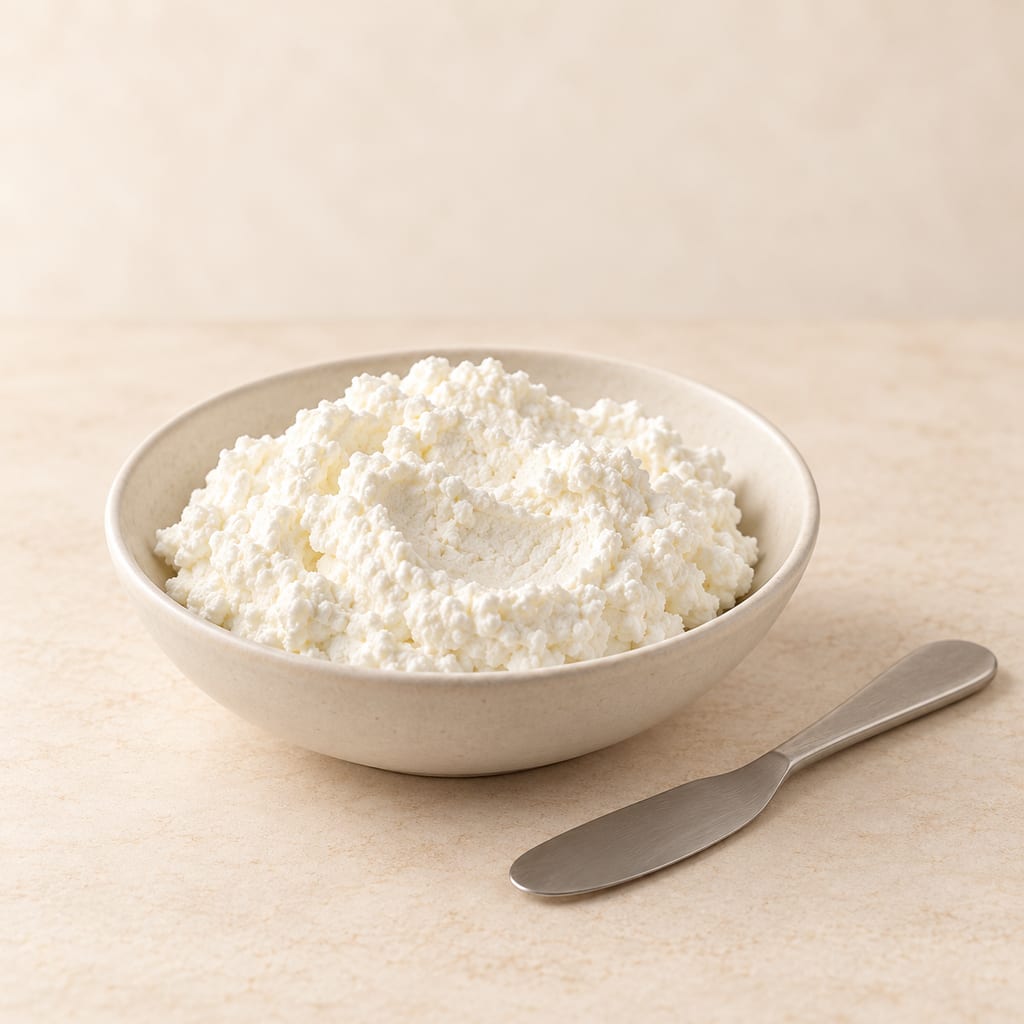
Quark
Quark is a soft, fresh curd cheese used in spreads and desserts. This small home batch sets milk with mesophilic culture and rennet before refrigerated drainage.
 FermenteaWhere food goes to change
Substrates
Full-fat fluid milk, available with different heat treatments and fat distributions; the linked Quark method permits homogenized or UHT forms.
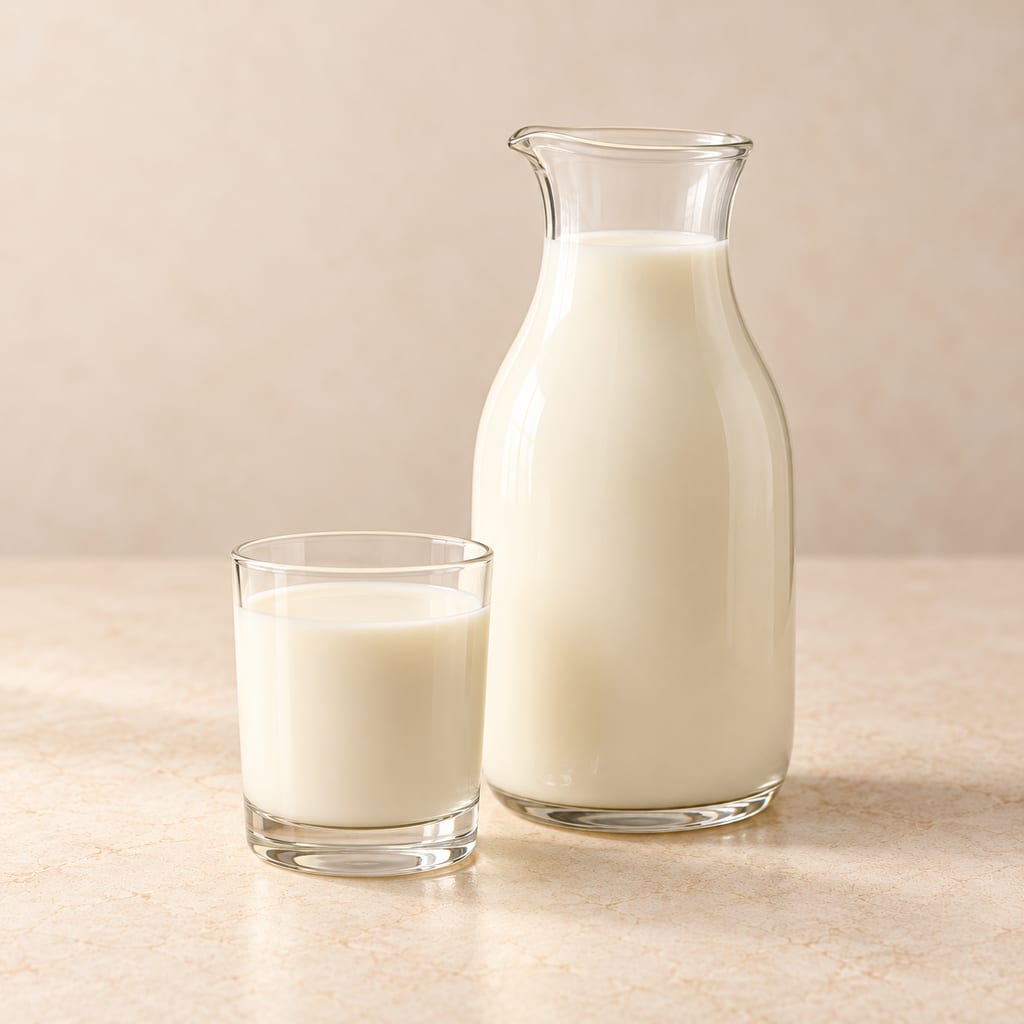
A layer of cream at the top of a milk bottle once made the separation of milk fat visible at the breakfast table. It remains a feature of non-homogenized full-cream milk. The milk below and the cream above belong to the same starting liquid, with fat globules gradually gathering at the surface. Mixing the bottle redistributes that richness; skimming the top removes part of it. Full-cream milk keeps the milk's full-fat character in the ingredient rather than selecting a reduced-fat or skimmed form.
Richness was not always a reliably uniform visual quality. Wellcome Collection's milk exhibition includes annatto-colouring labels from the 1890s, explaining how a creamy yellow appearance could be made more consistent through the year. It also displays a lactometer associated with testing milk density and describes efforts to control adulteration. These objects connect the history of milk with the question of what a customer was actually buying. Colour, a cream line and a seller's description offered clues, but none alone measured the full composition of the liquid.
Modern processing changes those clues. Homogenization can keep fat distributed through milk, so the absence of a cream line need not mean that fat has been removed. Fat standardization can also make a chosen grade more consistent. Full-cream milk now appears in quite different packages and processing forms: a refrigerated, non-homogenized milk with a visible cream layer and a homogenized UHT carton can both carry the name. The important distinction is between richness, fat distribution and heat treatment.
Full-cream describes the milk's fat grade. It is milk, rather than a container of separated cream, and it is not the same ingredient as heavy cream. A cook receives water, milk proteins, lactose and minerals along with dispersed milk fat. The fat declaration on the product identifies its particular composition. Applying one country's percentage to every product called full-cream would obscure differences between markets and suppliers.
The term does not, by itself, say whether milk has been homogenized. Bannister Downs describes its non-homogenized full-cream milk as low-temperature pasteurized and explains the resulting cream layer at the top of the bottle. Anchor's full-cream product page identifies a UHT milk. These are concrete examples of different processing choices within the same broad fat grade. Neither is evidence that a particular unnamed milk in a recipe came from those producers.
The linked Quark formulation makes this flexibility explicit. Omnom Cheese offers full-cream homogenized milk or full-cream UHT milk as its starting ingredient. It does not name the species, supplier or precise fat percentage. The first option's heat treatment is not specified by the word homogenized. Preserving both alternatives matters: replacing that ingredient with a categorical 'not UHT' description would remove an option the author actually provides.
Milk composition begins with biological variation. Animal species, feeding, breed and stage of lactation influence the relative amounts of its constituents. A dairy can then adjust milk fat by separating and blending streams. Tetra Pak's processing handbook describes standardization as adding cream or skim milk to obtain a chosen fat content. This makes a repeatable grade possible even when incoming milk varies. Standardization concerns composition; homogenization concerns the size and distribution of fat droplets.
A separator produces a cream stream and a skim-milk stream. Recombining appropriate quantities provides the desired fat balance in fluid milk. The cream remains a dairy ingredient carrying its own aqueous phase and milk constituents; the process is not simply adding pure oil to water. For a recipe developer, the result is a measurable starting material whose richness can be reproduced more closely than by judging the thickness of a risen cream layer.
This distinction is useful when considering substitutions. Skimmed milk supplies far less fat, whereas heavy cream supplies a much more concentrated fat fraction. Either substitution changes the composition of the mixture, even if the total liquid volume is kept the same. A recipe designed around full-cream milk balances its protein, liquid and fat together. Adding cream later can enrich a finished curd, but does not make the original setting stage identical to one that began with the stated full-cream milk.
Milk is an emulsion and a protein dispersion within a water-rich liquid. Fat globules have surfaces containing membrane material, while casein proteins occur in micelles in the surrounding phase. Lactose and soluble salts are also present in that liquid. These arrangements let milk flow while holding material that is not simply dissolved. Separating, homogenizing, heating and acidifying the milk each acts on a different part of this system.
Homogenization reduces fat-droplet size and creates additional interface. Milk proteins can associate with that surface, helping stabilize the dispersed fat. Tetra Pak's homogenization account explains that smaller globules cream more slowly, while the availability of interfacial material matters to stability. An even appearance therefore reflects how the fat is distributed as well as how much fat is present. It does not identify whether the milk is raw, pasteurized or UHT.
When milk is cultured, those fat droplets are present inside a developing protein structure. Wisconsin's Center for Dairy Research describes protein-covered droplets from homogenized milk participating in an acid gel. Fat contributes richness while proteins form the framework that retains liquid. This explains why changing homogenization or fat grade may alter texture without changing the basic fact that lactic cultures are consuming milk sugar. A smooth curd comes from several interacting features, rather than from the word full-cream alone.
Milk proteins do not all respond to heat in the same way. FAO's dairy manual distinguishes casein from the more heat-sensitive whey proteins. Ordinary pasteurization and stronger heating can produce different associations between these proteins and affect coagulation and drainage. These differences are relevant when choosing milk for cheese. The fact that one cheese source rejects a highly heated milk does not establish a universal rule for every fresh cultured product.
Omnom's Quark method deliberately lists a UHT alternative. Its process uses both mesophilic starter and a small rennet addition, with calcium chloride added to the milk before warming. That is the specific formulation in which the author offers the alternative. It should be followed as a complete method rather than taken as proof that UHT milk will behave identically in every rennet cheese, or that other recipes can discard their own milk-treatment instructions.
Heat treatment also has a separate microbiological purpose. Pasteurization uses controlled heating to kill harmful bacteria, while storage after treatment still requires appropriate handling. A heat-treated carton is not a culture packet. In Quark making, the selected starter is introduced later to guide acid development. The milk's manufacturing history and the organisms added in the kitchen both matter, but they do different jobs in the sequence from liquid milk to fresh cheese.
The Quark process begins with milk as a liquid substrate. Calcium chloride is mixed into the cold milk, the mixture is warmed, and mesophilic starter is added before the diluted rennet. Keeping those ingredients distinct clarifies their roles. The starter supplies the organisms intended to develop acidity, rennet supplies a coagulating enzyme, and calcium contributes to the conditions in which casein can aggregate. Full-cream milk supplies the material being transformed.
Lactic bacteria metabolize lactose and produce lactic acid. The changing acidity encourages casein particles to associate, while rennet acts on the proteins through a different route. These are complementary contributions in this formulation. Calcium chloride is not the starter and does not replace acid development; fat is not the lactose being consumed. The custard-like set described in the recipe represents milk constituents reorganized into a network, with liquid held within it.
The recipe then drains the curd in cheesecloth under refrigeration. Liquid whey escapes while the retained curd becomes more concentrated. Omnom explicitly relates longer drainage to a thicker result. This is a physical removal of part of the water-rich phase, rather than a need to keep fermenting until all milk has become solid. The final texture therefore depends on setting and drainage as well as on the starting milk's richness. A spoonable fresh cheese retains more liquid than a drier curd, even when both begin with the same milk.
Omnom lists cream as optional at the finishing stage. It can be mixed into the drained Quark for a richer consistency, while herbs and salt provide a savoury variation. This gives a clear example of two different places where dairy fat may enter a food: within the milk during setting, and as an additional ingredient after drainage. The optional addition should remain visible in the recipe rather than being silently folded into the definition of full-cream milk.
Quark's fresh-curd character makes it useful as a spread, dessert base or alternative to sour cream in the culinary uses described by the source. Those uses concern the finished cheese, with its acidity and concentrated protein structure. They are different from pouring the original milk into a sauce or drink. A reader choosing a milk for Quark is choosing the starting composition; a reader seasoning the finished Quark is adjusting a food that has already passed through culture, setting and drainage.
Full-cream milk also has uses beyond that linked cheese. The Canadian Dairy Commission describes fluid milk in frozen desserts, beverages, baked foods, soups and sauces. Water hydrates ingredients, proteins can help stabilize emulsions and form structure, and milk fat adds richness. Which property matters most changes with the dish. A cake batter, cultured curd and drinking milk do not ask the same things of the ingredient, even when the same carton can supply all three.
Choose the milk by the complete description requested in the method. For the linked Quark, retain the full-cream grade and one of the listed processing options. Read the actual package for species, ingredients, fat content, heat treatment and storage instructions. Homogenized does not mean ultra-pasteurized, and a cream layer does not establish that a milk is raw. A product's own declarations are more useful than trying to identify those treatments from colour or a photograph.
The storage requirements of different full-cream products may differ before opening because their treatment and packaging differ. Follow the label for both unopened and opened storage. Once handled, the milk can acquire new contamination from utensils, hands and containers. Clean transfer and closing the package protect its quality; the label's storage period should not be replaced with one universal duration attached to the words full-cream. Milk intended for a culture should be sound at the start of the method.
Unexpected souring in a stored carton is not the same process as adding a selected Quark starter. The latter uses a specified culture and preparation sequence; the former offers no dependable account of which organisms developed. Likewise, the appearance of a set does not identify every microbial event that has occurred. Treat milk selection, deliberate culture and finished-cheese storage as connected stages with their own requirements, rather than using one visual change as a substitute for the whole method.
Full-cream milk contains milk proteins and is a milk-allergen ingredient. Heat treatment does not remove the proteins responsible for milk allergy. Skimming fat would not remove those proteins either, so choosing a different fat grade is not an allergy solution. Optional cream added to Quark is also a milk-derived ingredient. The finished dish should be understood through all its ingredients, including any flavourings or accompaniments introduced later.
Lactose intolerance concerns digestion of milk sugar and is distinct from milk-protein allergy. Pasteurization does not remove lactose. Cultures consume lactose during fermentation, and drainage removes some of the liquid phase, but these processes do not establish a lactose-free result for an untested home batch. A specific product claim requires specific evidence. The full-cream designation answers a question about richness; it does not promise suitability for every dietary requirement or identify a health benefit from the food made with it.
milk
Quark source gives no milk supplier, farm, species or production place. Producer examples illustrate market forms and do not identify the ingredient used in that recipe.
Quark is a soft, fresh curd cheese used in spreads and desserts. This small home batch sets milk with mesophilic culture and rennet before refrigerated drainage.
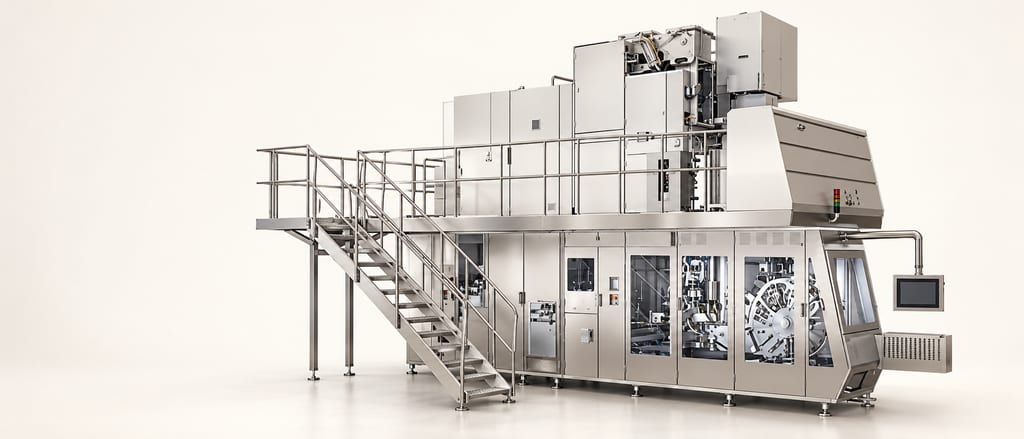
A modern filling system that transfers commercially sterile liquid into sterile packaging and closes it while keeping the product, downstream equipment, package and filling zone under controlled aseptic conditions.
No community contributions have been published for this entry yet.
Sign in to contribute. Published comments and photos are free to read.
Wellcome CollectionIngredient context
Milk: Exhibition textPersonally read original institutional captions on1890s annatto labels, lactometer/density/adulteration and homogenization/fat distribution. Historical creamy appearance and milk standardization context; no obsolete regulation universalized or origin date assigned.
Cited in: When a cream line told part of the story
Omnom CheeseIngredient context
QuarkPersonally read complete original ingredients/method/uses: full cream homogenised OR full cream UHT milk; unspecified species/fat%; calcium chloride before warming, mesophilic culture/rennet, set/drain refrigerated, optional cream/herbs/salt finishing. No formula quantities converted or process endpoints generalized.
Cited in: A fat grade with several processing forms; How a dairy sets the richness; Heat history and a fresh curd; From full-cream milk to Quark; Optional cream is a separate choice; Selecting and storing the actual product
Bannister Downs DairyIngredient context
Non-Homogenised MilkPersonally read original producer fullcream nonhomogenized product description, cream layer and low-temperature pasteurization. Product-specific processing example, not identification of linked Quark supply.
Cited in: When a cream line told part of the story; A fat grade with several processing forms; Selecting and storing the actual product
Anchor DairyIngredient context
Anchor Full Cream MilkPersonally read original product page: fullcream UHT identity and Contains Milk declaration. Product-specific alternative-form example only; numerical nutrition, shelf-life and marketing-health claims not adopted.
Cited in: A fat grade with several processing forms; Allergens and dietary distinctions
Tetra Pak Dairy Processing HandbookIngredient context
Centrifugal separators and milk standardizationPersonally read separation and standardization blending passages: cream/skim streams and fat adjustment. No industrial blend examples or target transferred.
Cited in: How a dairy sets the richness
Tetra Pak Dairy Processing HandbookIngredient context
HomogenizersPersonally read relevant droplet size/creaming, interface material, temperature/fat concentration and partial/full stream descriptions. General physical mechanism only, no industrial pressure/temperature targets adopted.
Cited in: When a cream line told part of the story; Fat droplets and the protein around them; Selecting and storing the actual product
FAOIngredient context
Small-Scale Dairy Farming Manual: Milk Composition Part1Personally read composition variation, fat membrane, casein/whey and heat/rennet passages. Cow-milk example distinguished from source-unspecified Quark milk; old numerical targets/nutrition assertions excluded.
Cited in: How a dairy sets the richness; Fat droplets and the protein around them; Heat history and a fresh curd
University of Wisconsin Center for Dairy Research; Daniel WilbanksIngredient context
Yogurt Monograph Series: ProductionPersonally read full original text: acid gels, casein/whey, homogenized fat association and water removal. General milk-gel mechanism used, no yogurt thermal/pH schedule imported into Quark.
Cited in: Fat droplets and the protein around them; From full-cream milk to Quark
Tetra Pak Dairy Processing HandbookIngredient context
CheesePersonally read original starter/calcium/rennet and casein-network passages: acidification, enzymatic destabilization and calcium-assisted interlinking, curd/drainage. Source recognizes quark often mainly acid-set; actual Omnom formulation includes small rennet addition. No dose or microbial safety endpoint imported.
Cited in: From full-cream milk to Quark
U.S. Food and Drug AdministrationIngredient context
Raw Milk Questions & AnswersPersonally read stable controlled-heat/refrigeration/spoilage and allergenic-protein/lactose sections; no old legal/outbreak/medical statistics adopted.
Cited in: Heat history and a fresh curd; Selecting and storing the actual product; Allergens and dietary distinctions
Canadian Dairy CommissionIngredient context
Liquid Whole MilkPersonally read milk physical phases, composition/function and uses. No universal milk-fat percentage, medical/nutrition/shelf-life claim adopted.
Cited in: A fat grade with several processing forms; Optional cream is a separate choice
FAOIngredient context
Small-Scale Dairy Farming Manual: Milk Composition Part2Personally read lactose/enzymatic metabolism and bacteria sections. No old bacterial count or storage schedule adopted.
Cited in: From full-cream milk to Quark; Allergens and dietary distinctions