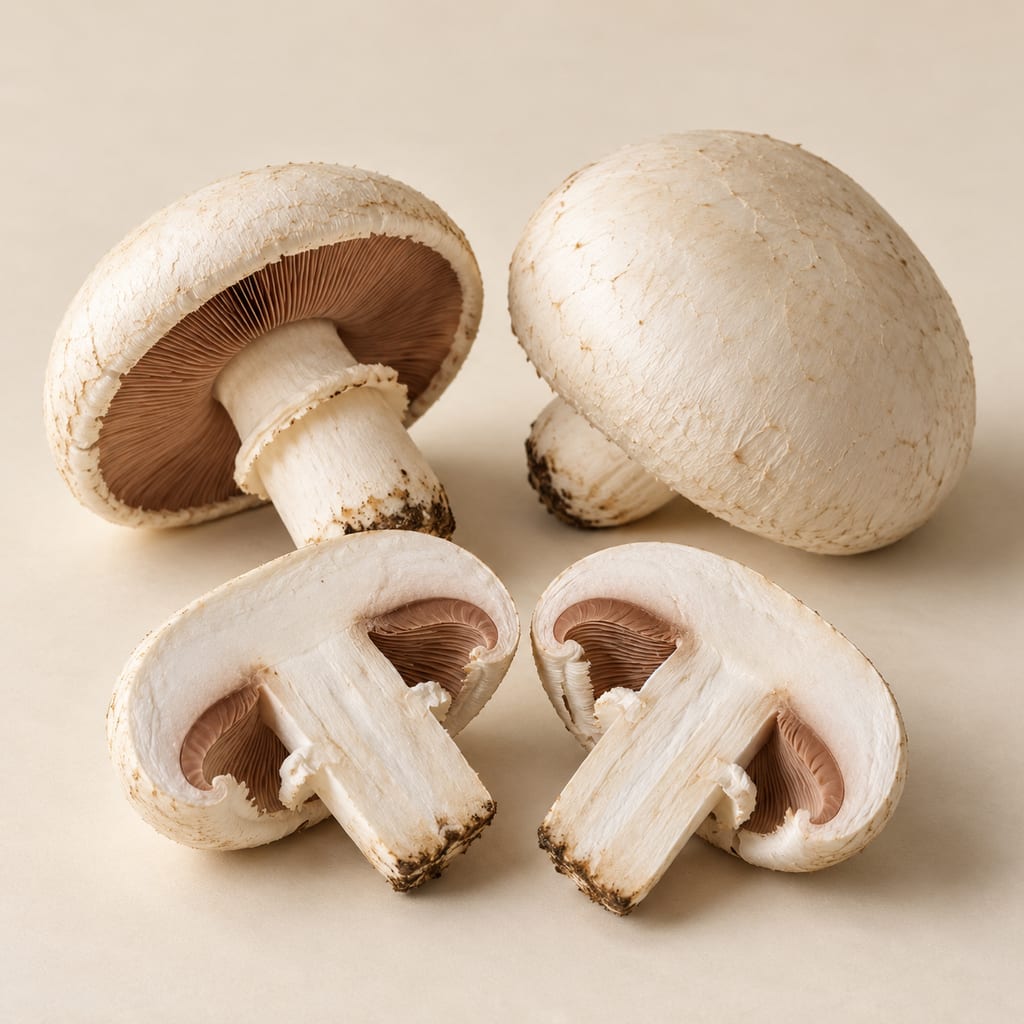
Field mushroom
The field mushroom (Agaricus campestris) is a wild grassland fungus with a long record of cooked food use in several regions. Local names, seasons and practices belong to particular communities.
 FermenteaWhere food goes to change
Mushrooms
Hongo real is the Spanish name recorded in Mexico for Amanita laurae, a forest mushroom that the Wixaritari of Jalisco have a documented food-use record for. The name is a local label, not an identification.
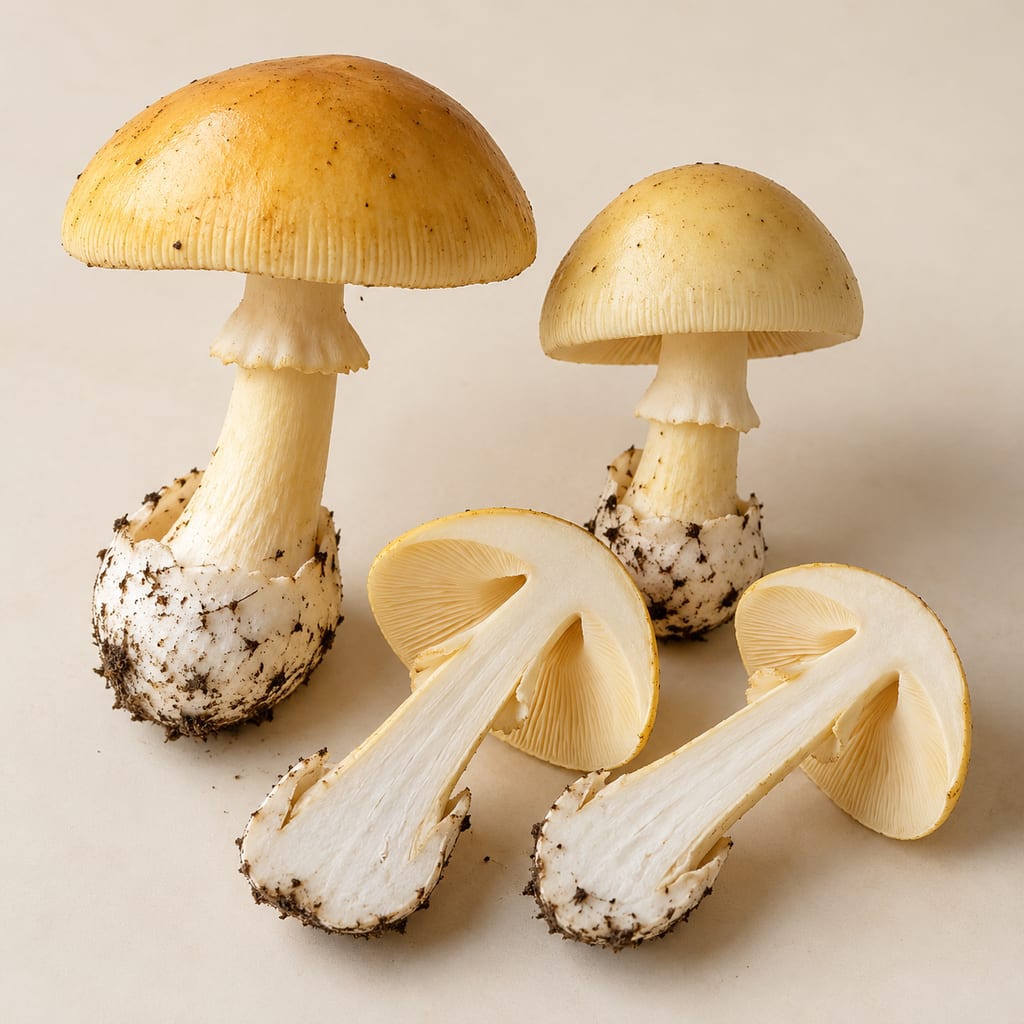
Amanita laurae is the name used in the supplied fungi catalogue for this macrofungus. The catalogue treats it as a research name, not a reconciled accepted name, and it does not validate the name against current taxonomic authorities. Synonyms and spelling have not been resolved in this entry.
The fungus is ectomycorrhizal, growing in forest with the roots of trees. The catalogue records its supply as wild: it is gathered, not cultivated.
The catalogue gives the local name hongo real for this taxon in Mexico and records it as a Wixarika food-use record. The paper that the catalogue cites is a study of mushroom knowledge among the Wixaritari and mestizo residents of Villa Guerrero, Jalisco, carried out through semi-structured interviews in ten communities.
That study reports that the Wixaritari treated 20 ethnotaxa as edible, four as without use, eight as toxic, one as medicinal, and one, Ganoderma oerstedii, as both food and medicine. Mestizos recognised 13 ethnotaxa. The Wixaritari also associated some toxic mushrooms with the divine. Amanita laurae does not appear in those counts, so its use and edibility are not established here.
The study also reports a loss of mushroom knowledge and practice tied to social change. The record is a description of local knowledge at one place and time; it is not a method of preparation.
The catalogue does not record a preparation method for this taxon, and no preparation is established here. Any account of cooking or serving would need its own source.
This entry is not an edibility verdict or an identification. Catalogue inclusion does not establish that the fungus is safe to eat. The catalogue marks the genus as dangerous and states that local usage does not validate identification elsewhere.
A documented local name and a documented local use are records of one community's knowledge. They do not transfer to another region, to a different collector, or to a lookalike that a forager may not recognise. Wild mushrooms must be identified by a qualified expert before any use.
The catalogue records a Wixarika food-use record for Mexico. The paper reports interviews in Villa Guerrero; it does not confirm the species-level link to this name in the abstract read here.
The field mushroom (Agaricus campestris) is a wild grassland fungus with a long record of cooked food use in several regions. Local names, seasons and practices belong to particular communities.
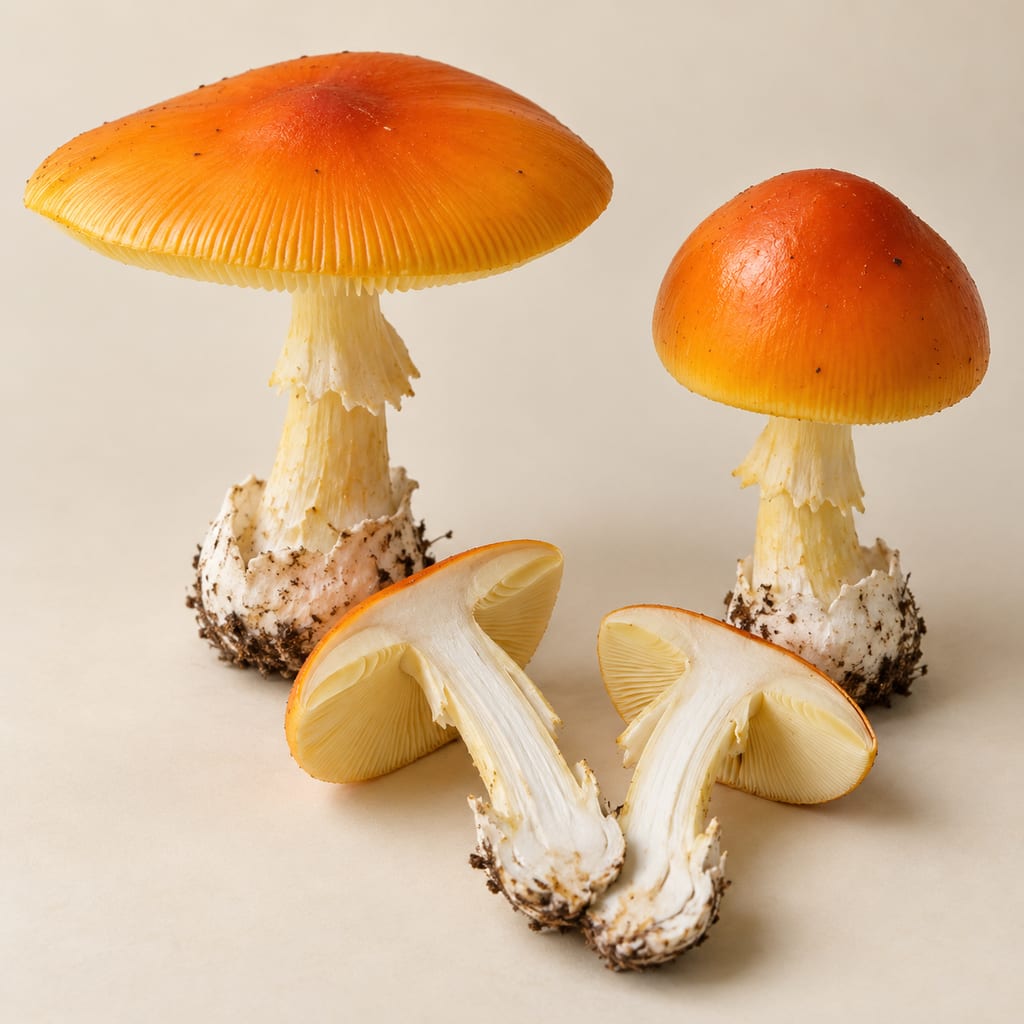
A wild Amanita valued in local foodways of Mexico and Guatemala. Community studies document seasonal gathering, market trade and distinct cooked preparations; species identity and Amanita safety require particular care.
No community contributions have been published for this entry yet.
Sign in to contribute. Published comments and photos are free to read.
IMA FungusHistory · Safety
Traditional knowledge, uses, and perceptions of mushrooms among the Wixaritari and mestizos of Villa Guerrero, Jalisco, MexicoWixarika and mestizo mushroom knowledge in Villa Guerrero, Jalisco; 20 edible, 8 toxic ethnotaxa for the Wixaritari; toxic mushrooms associated with the divine
Cited in: What it is; Local name and use in Mexico; Preparation; Safety and identification
Springer NatureHistory
IMA Fungus 10:14, doi 10.1186/s43008-019-0014-6Cited DOI for the Wixarika food-use record of this name; full text behind a login at the time of reading