
Avocado (ripe flesh)
Ripe avocado flesh is the soft, buttery, fat-rich pulp of Persea americana, eaten raw. It is low in acid, so it is a fresh ingredient that needs care in chilled dishes.
 FermenteaWhere food goes to change
Substrates
Pacaya, or tepejilote, is the edible male flower cluster of the palm Chamaedorea tepejilote, eaten in Honduras with egg, in tamales and soups, and sold pickled. Mexican farmers manage the palm in agroforests.
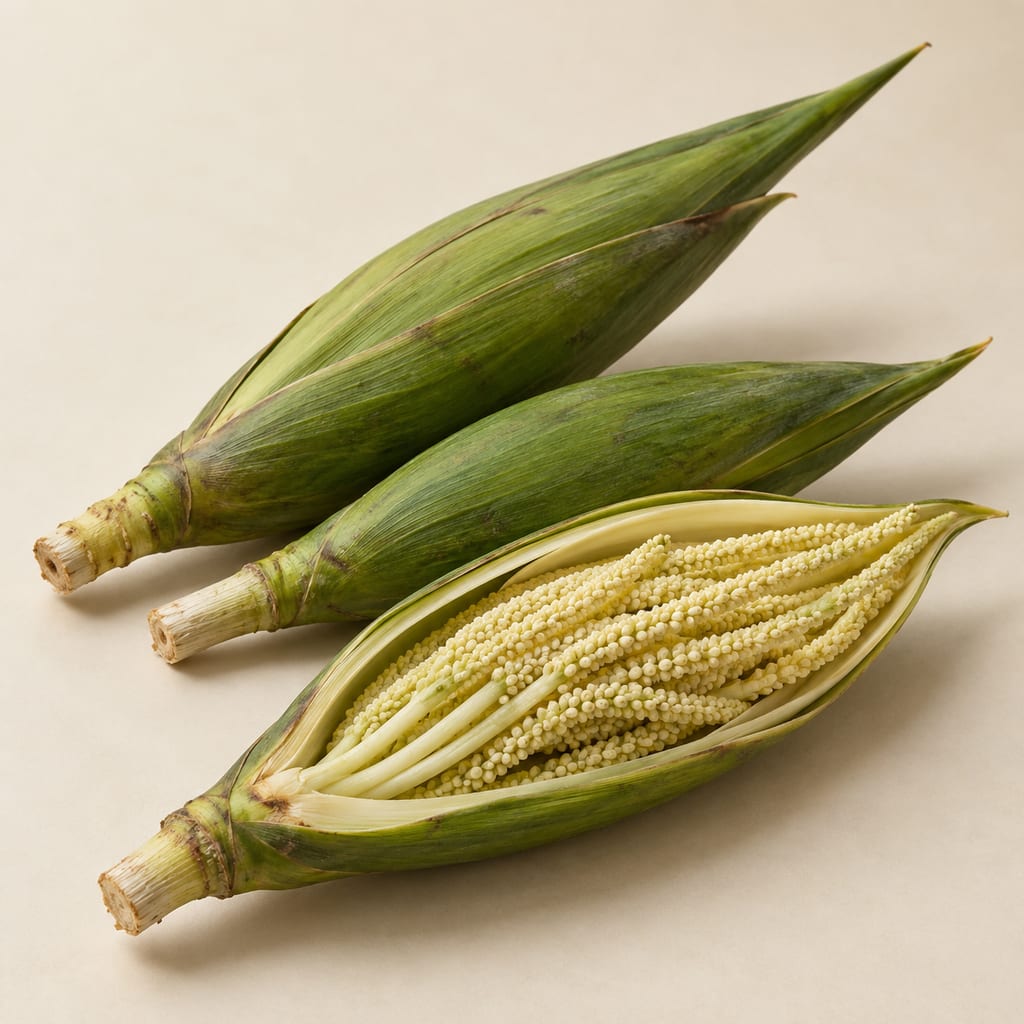
Pacaya is the food name, in Honduras, for the male flower clusters of Chamaedorea tepejilote Liebm., a palm in the family Arecaceae. Kew accepts the name and lists Honduras in the native distribution. The Honduran literature also gives Miskito-associated names, Ahtak popuhka and Twal. Its introduction and its name table differ on the Pech-associated forms, so those spellings are best treated as unsettled. A common name alone does not identify a market lot or a wild palm.
A 2024 synthesis of Honduran literature and herbarium collections reports the palm from 12 of Honduras's 18 departments, in wet tropical, cloud and dry-tropical forest from about 100 to 1,850 metres. The authors also interviewed seven people in Los Naranjos/Santa Cruz de Yojoa and Santa Rosa de Copan. Collection months vary by locality and elevation, and no general planting calendar is given.
Honduran accounts identify the male inflorescences as the edible part. Some separate source rows also name young shoots, called cogollos, and those should not be merged with the flower record. The dishes described include pacaya cooked with egg, roasted over embers, in rice dishes, in tamales made with masa and meat or beans and steamed in banana leaf, in soups and stews, and in salads. Commercially packed pickled pacaya comes from Ocotepeque, with Belen Gualcho and Jaralon named as supply communities; the account gives no formula or processing conditions. None of the descriptions gives measured quantities, yields, endpoints or storage evidence.
The Honduran study reports gathering from forest and says the palm is also common at homes and farms near its natural habitat. It describes cultivation in the Merendon area supplying San Pedro Sula markets. Its conclusion states that no large plantations were reported and that the supply consumed came from forest. The study does not reconcile the two accounts, so how much comes from cultivation and how much from the forest remains uncertain.
Interviewees described protecting or tolerating palms, sowing seed, moving seedlings, adjusting shade or crop density, and pruning. Some households reported germination in about 20 days and first flowering after two to four years. These are interview observations, not controlled propagation measurements.
The reviewed sources give no hardiness scheme, frost or heat limits, soil or pH needs for Honduras, irrigation, container size, greenhouse method, measured crop yield, harvest interval or regrowth schedule. The Honduran paper's abstract says population status and the effect of extraction are unknown, while its discussion attributes population decline to forest extraction without quantifying it. No validated household preservation process or storage period is described for pacaya, including the commercial pickle.
A 2024 ethnobotanical synthesis records the palm in 12 of 18 departments and describes food use; Kew lists Honduras in the native distribution. This is documented use and range, not a claim about the origin of the food tradition.
A 2026 study describes how households manage and sow the palm in agroforestry systems; it is a Mexico-specific record, not Honduran practice.
Ripe avocado flesh is the soft, buttery, fat-rich pulp of Persea americana, eaten raw. It is low in acid, so it is a fresh ingredient that needs care in chilled dishes.
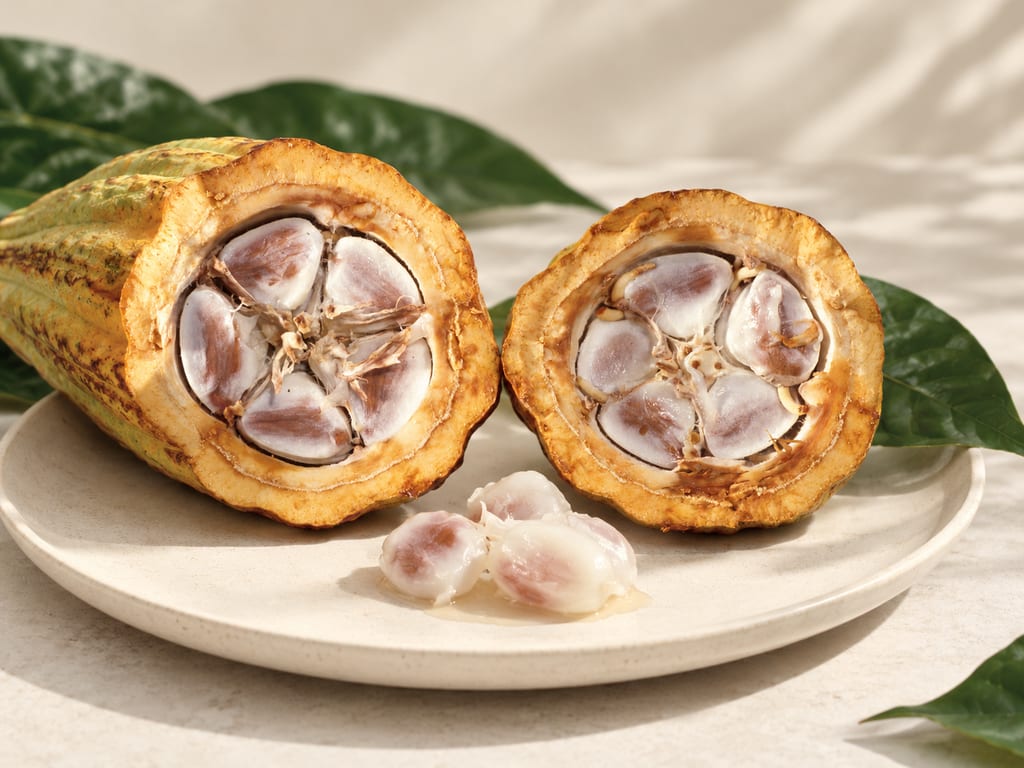
Cacao pulp is the moist, sweet-acid mucilage around cacao seeds. It fuels bean fermentation and can be extracted for fruit drinks, wine and vinegar.
No community contributions have been published for this entry yet.
Sign in to contribute. Published comments and photos are free to read.
Royal Botanic Gardens, Kew, Plants of the World Online / World Checklist of Vascular PlantsIngredient research
Chamaedorea tepejilote Liebm. | Plants of the World OnlineCited in: What pacaya is
Maynor J. Rodríguez, Sara Judith Padilla and Lilian Ferrufino-Acosta, Revista Etnobiología 22(1), 2024, pp.90–99Ingredient research
Breve panorama de los usos etnobotánicos del tepejilote (Chamaedorea tepejilote) en HondurasCited in: What pacaya is; Where it is recorded in Honduras; Parts eaten and dishes; Gathered and grown; What is not known
Viviana Andrade et al., Plants, People, Planet, 2026; DOI 10.1002/ppp3.70220Ingredient research
Management and incipient domestication of Chamaedorea tepejilote in agroforestry systems in MexicoCited in: Management in Mexico; What is not known