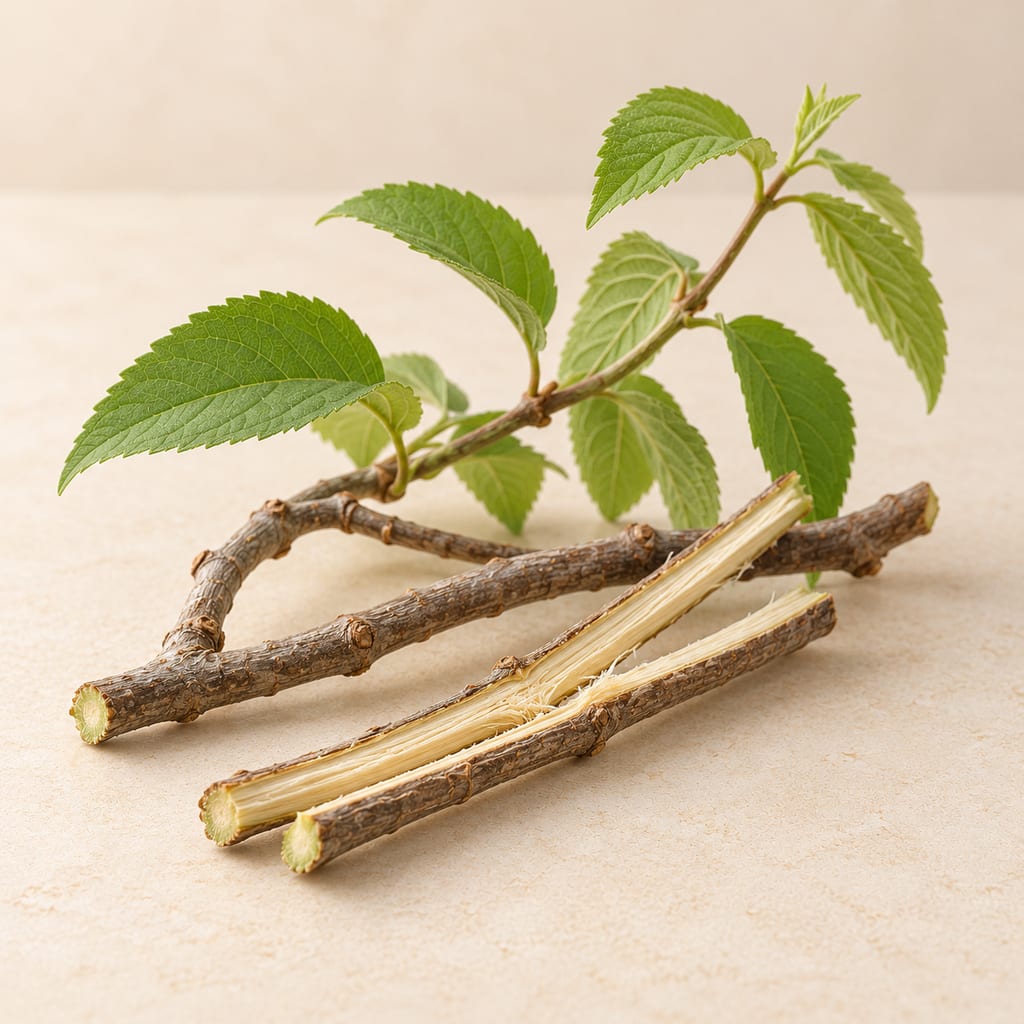
Gouania polygama
A woody climbing vine in the buckthorn family, Gouania polygama is gathered for fresh stems used in Cuban pru, where it helps give the fermented botanical drink its characteristic effervescence and taste.
 FermenteaWhere food goes to change
Spices and aromatics
French oregano, Coleus amboinicus, is a fleshy, strongly aromatic mint-family herb used as a seasoning in Cuba, where it is called orégano francés, and across the tropics.
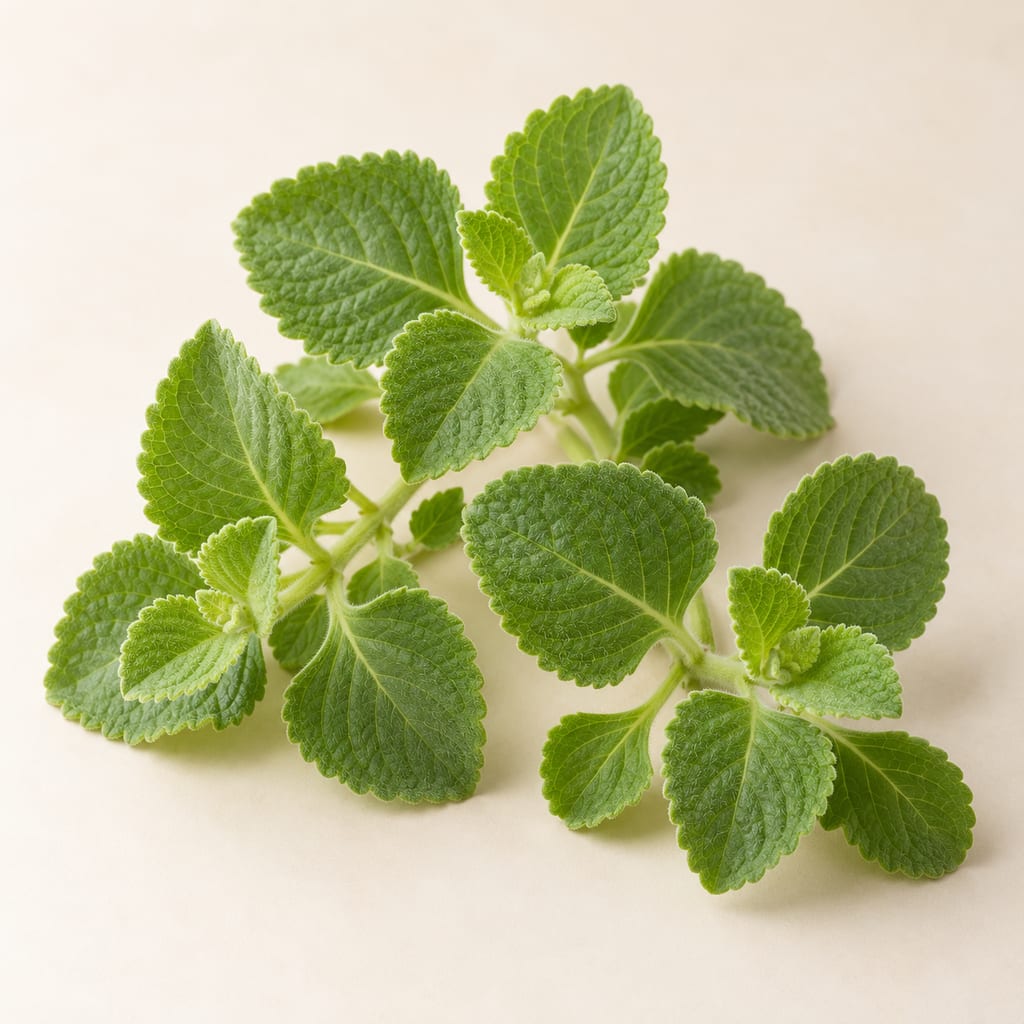
Coleus amboinicus Lour. is a semi-succulent perennial of the mint family, with fleshy stems and broad oval leaves. Its aroma is pungent and oregano-like with thyme notes, and its essential oil is mainly thymol and carvacrol, in proportions that vary with the sample. The leaves are the part used.
Kew accepts Coleus amboinicus and lists Plectranthus amboinicus (Lour.) Spreng. as a homotypic synonym. Cuban agronomy papers still use the Plectranthus name, and one title spells it Plecthranthus. English names include Cuban oregano and Indian borage; Kew records the species as introduced in Cuba.
The 1998 Cuban technical article calls the plant orégano, orégano francés and orégano de la tierra. The RHS profile gives Cuban oregano. These are the sources' own labels. They do not make the plant Origanum vulgare, Lippia micromera or Ocimum gratissimum, which appear in other oregano-related Cuban sources. A name that sounds like oregano is not an identification.
A 2007 Cuban national report on plant genetic resources lists Plectranthus amboinicus, under the name Oregano, as a condiment in an urban-agriculture inventory. The entry records the plant as a condiment, not how common that use was.
A 1998 technical article describes the plant as grown in patios and family gardens in Cuba, with a strong characteristic aroma. It does not name the plant part used, a dish, a quantity or a preparation. A 2010 thesis from Pinar del Río treats the plant as a medicinal crop.
The 2010 thesis tested terminal cuttings in nursery beds in Pinar del Río over 45 days, on alluvial sandy loam, for medicinal propagation. The thesis has inconsistencies in its fresh and dry foliage measures, so no corrected value or fertilizer recommendation is drawn from it. A 2022 paper hand-harvested leaves from open-sky 1 by 1 m polystyrene beds at INIFAT nine months after establishment and reports no yield, spacing, irrigation comparison or harvest interval.
The same 2022 paper measured moisture sorption in dried leaves in the laboratory at 27 ± 2 °C and interprets a moisture range of 5 to 13 percent for storage under Cuban conditions. That is a laboratory interpretation, not a validated drying endpoint, microbial challenge or shelf-life test. The RHS gives UK guidance for growing under glass and outdoors with an H1B hardiness rating from a UK scheme, which is not a measured frost limit for Cuba.
No Cuban recipe or measured household method was found: the inventory and the abstract say condiment and give no dish, ingredient list, amount, steps, yield or storage. None of the records documents a microbial culture, a fermentation role or a preservative effect. No Cuban frost trial, pest survey, container trial or greenhouse study was located, and introduced status in Kew does not establish invasiveness or conservation status. Smell does not establish that dried leaf is safe to keep. The full 1998 article and a 2008 intercropping paper were seen as abstracts only.
Kew records the species as introduced in Cuba. A 2007 national report lists it as a condiment; the record is not dated to any community and is not a distribution survey.
A woody climbing vine in the buckthorn family, Gouania polygama is gathered for fresh stems used in Cuban pru, where it helps give the fermented botanical drink its characteristic effervescence and taste.
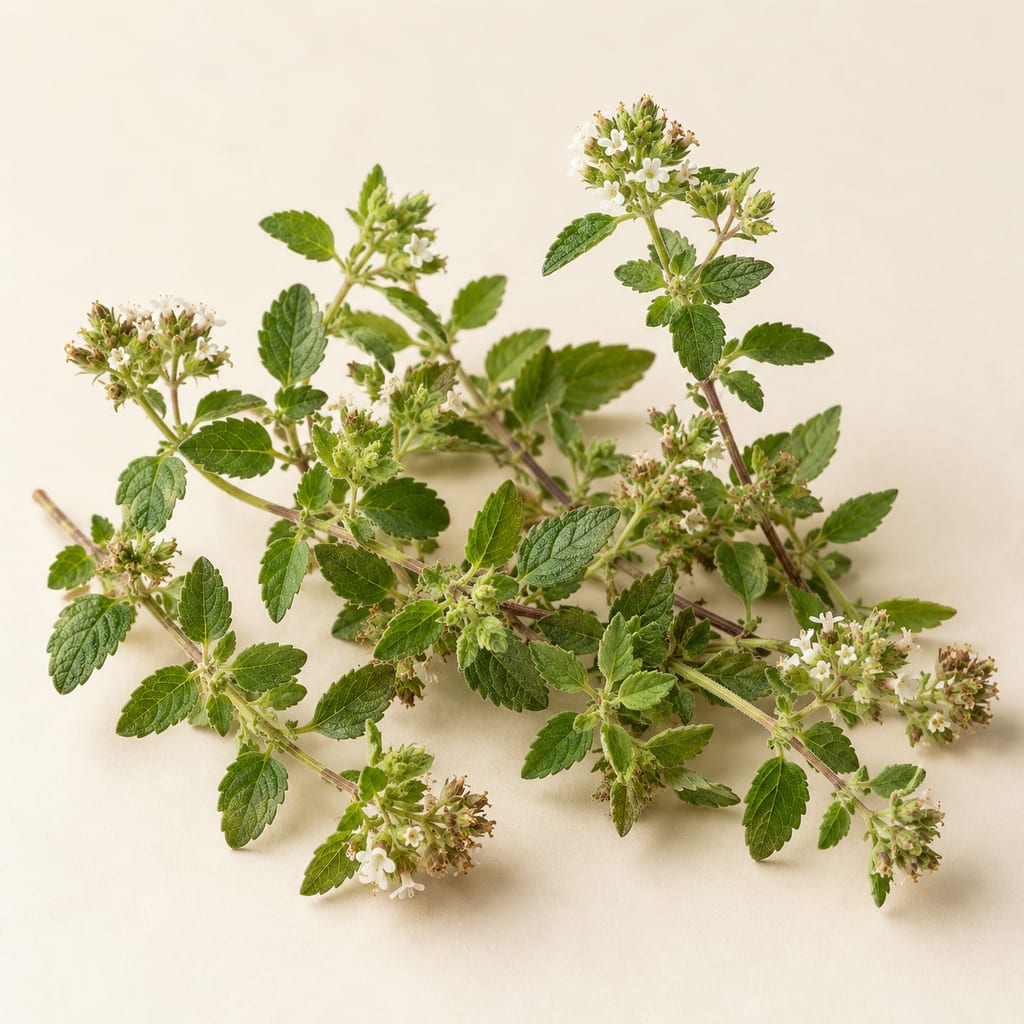
Oreganito, Lippia micromera, is a small aromatic shrub whose leaves the Flora de Cuba records as seasoning in place of oregano; no recipe, amount or method is documented.
No community contributions have been published for this entry yet.
Sign in to contribute. Published comments and photos are free to read.
Royal Botanic Gardens, Kew, Plants of the World OnlineIdentity
Coleus amboinicus Lour.Accepted name, Plectranthus amboinicus as homotypic synonym, introduced in Cuba
Cited in: What it is; What the sources leave open
FAO / Cuban Ministry of Agriculture (national report, 2007)Use
Cuba: Informe nacional sobre los recursos fitogenéticos para la alimentación y la agriculturaPlectranthus amboinicus, called Oregano, listed as a condiment in an urban-agriculture inventory
Cited in: As a seasoning in Cuba; What the sources leave open
Revista Cubana de Plantas Medicinales (Acosta de la Luz et al., 1998), visible abstractUse · Cultivation
Instructivo técnico del cultivo de Plecthranthus amboinicus (Lour.) Spreng (orégano francés)Names orégano, orégano francés and orégano de la tierra; grown in patios and family gardens; strong characteristic aroma
Cited in: Names and the oregano problem; As a seasoning in Cuba; What the sources leave open
Universidad de Pinar del Río (thesis, 2010)Cultivation
Efecto de la Fosforina, Rhizobium más Fosforina y Humus de Lombriz en condiciones de vivero para el cultivo Plecthranthus amboinicus, L. como planta medicinal45-day nursery cutting experiment in Pinar del Río on alluvial sandy loam
Cited in: As a seasoning in Cuba; Cultivation and drying evidence
Agrotecnia de Cuba 46(2), 2022Cultivation · Storage
Isoterma de adsorción de moléculas de agua en hojas secas de Plecthranthus amboinicus Lour SprengLaboratory moisture sorption of dried leaves at 27 +/- 2 C; hand-harvested leaves from 1 x 1 m beds at INIFAT nine months after establishment
Cited in: Cultivation and drying evidence
Royal Horticultural Society, garden profileIdentity · Cultivation
Plectranthus amboinicus, Cuban oreganoCommon name Cuban oregano; culinary foliage; UK growing guidance and H1B rating
Cited in: What it is; Names and the oregano problem; As a seasoning in Cuba; Cultivation and drying evidence
WikipediaBackground
Plectranthus amboinicusSemi-succulent perennial of Lamiaceae; oregano-like aroma; essential oil mainly thymol and carvacrol; other common names
Cited in: What it is