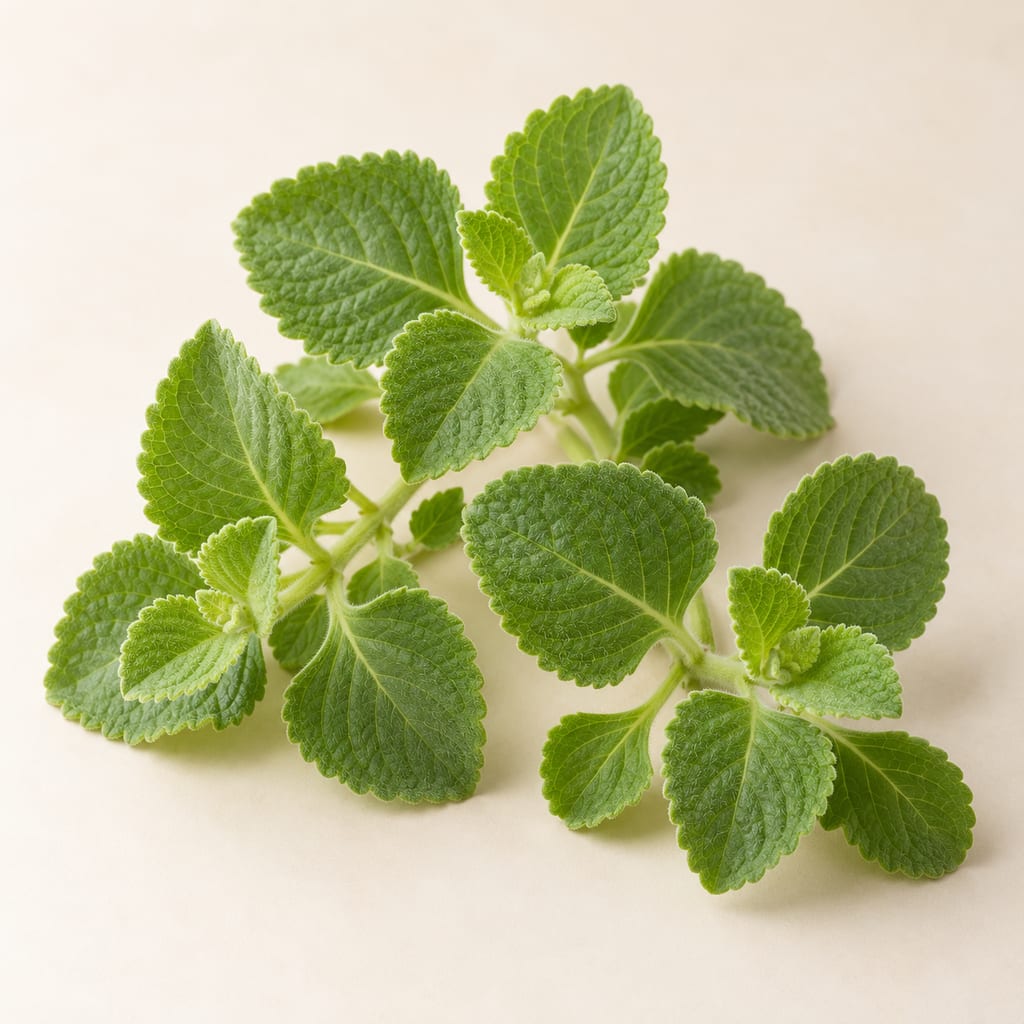
French oregano
French oregano, Coleus amboinicus, is a fleshy, strongly aromatic mint-family herb used as a seasoning in Cuba, where it is called orégano francés, and across the tropics.
 FermenteaWhere food goes to change
Spices and aromatics
Oreganito, Lippia micromera, is a small aromatic shrub whose leaves the Flora de Cuba records as seasoning in place of oregano; no recipe, amount or method is documented.
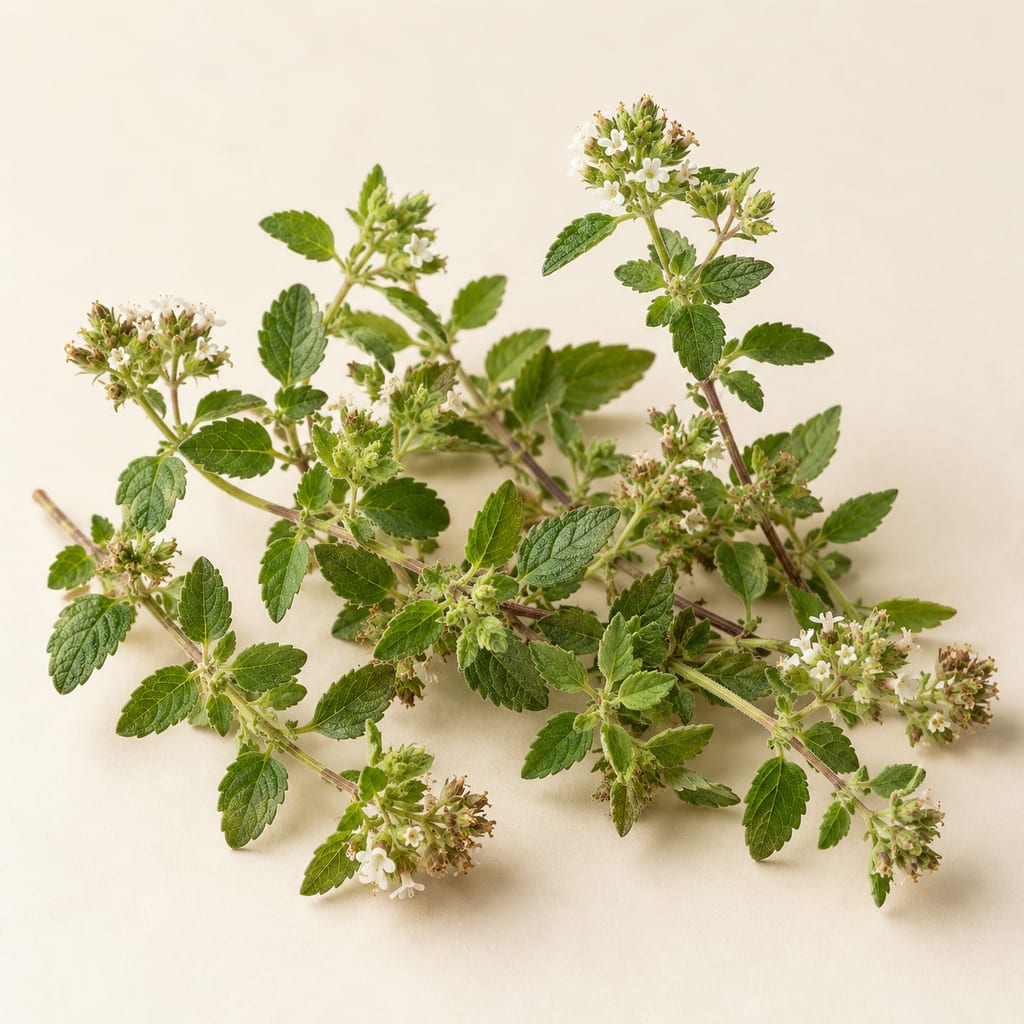
Kew accepts Lippia micromera Schauer, a member of the verbena family (Verbenaceae), and treats Lippia micromera var. helleri as a heterotypic synonym. The Flora de la República de Cuba recognises that variety in its own treatment. In Cuba the plant carries the names oreganito, oreganillo and orégano verdadero, which the Flora attributes to a separate 2002 source.
These are local labels. They do not mean every plant sold as oregano is this species: Coleus amboinicus and Origanum vulgare are different plants and must not be merged with it. No specimen was redetermined for this page.
On printed page 63 the Flora states that the leaves are used as seasoning in place of Origanum vulgare, attributing the statement to Méndez and Castellanos (1998) and Fuentes (2000). Those two papers were not obtained, so this page carries the Flora's attribution, not a household survey. A 1992 inventory of Cuba's cultivated plants likewise calls it a leaf spice and a substitute for Origanum vulgare.
No dish, quantity, preparation step, cooking stage, yield or storage endpoint is given in any source. The Flora adds that the species was cultivated in Cuba with some frequency.
An AGRIS record for a Cuban paper on oregano production recommends L. micromera for domestic production in place of imports, but its abstract describes essential-oil characterisation and sensory evaluation. A 1998 Journal of Essential Oil Research paper reports leaf-oil analysis of Cuban material. Neither gives a leaf-seasoning amount or a household recipe.
Essential oil is not a substitute for the culinary leaves, and no instruction for ingesting it is given.
Kew and USDA GRIN list Cuba within the native range. The Flora describes the species as indigenous in northern South America, Nicaragua, Hispaniola and Puerto Rico, reports that an earlier author (Alain, 1957) considered it native in eastern Cuba, and suggests it may have been subspontaneous there near the start of the twentieth century and apparently did not persist. A 1992 inventory gives Bolivia, Peru and Chile as its origin, a historical wording that does not override current taxonomy.
The Flora's flowering and fruiting notation, I to IX, is read as probably all year. That is phenology, not a sowing window, a harvest calendar or a regrowth schedule.
A 1999 title records in-vitro propagation of variety helleri, but only its bibliographic metadata was read. No seed, cutting or division method, pot or greenhouse trial, outdoor yield trial, pest or disease survey, or soil and pH guidance for Cuba was found. Culture advice that the USDA GRIN record cites from the Herb Society of America concerns Origanum and is not carried over to Lippia.
No storage life, safety control or conservation assessment was found, and the oil studies describe essential-oil characterisation, not food processing. Nothing here is a medicinal, identification or food-safety claim.
Seasoning use and cultivation in Cuba are recorded in the Flora de Cuba; no locality within Cuba is given.
French oregano, Coleus amboinicus, is a fleshy, strongly aromatic mint-family herb used as a seasoning in Cuba, where it is called orégano francés, and across the tropics.
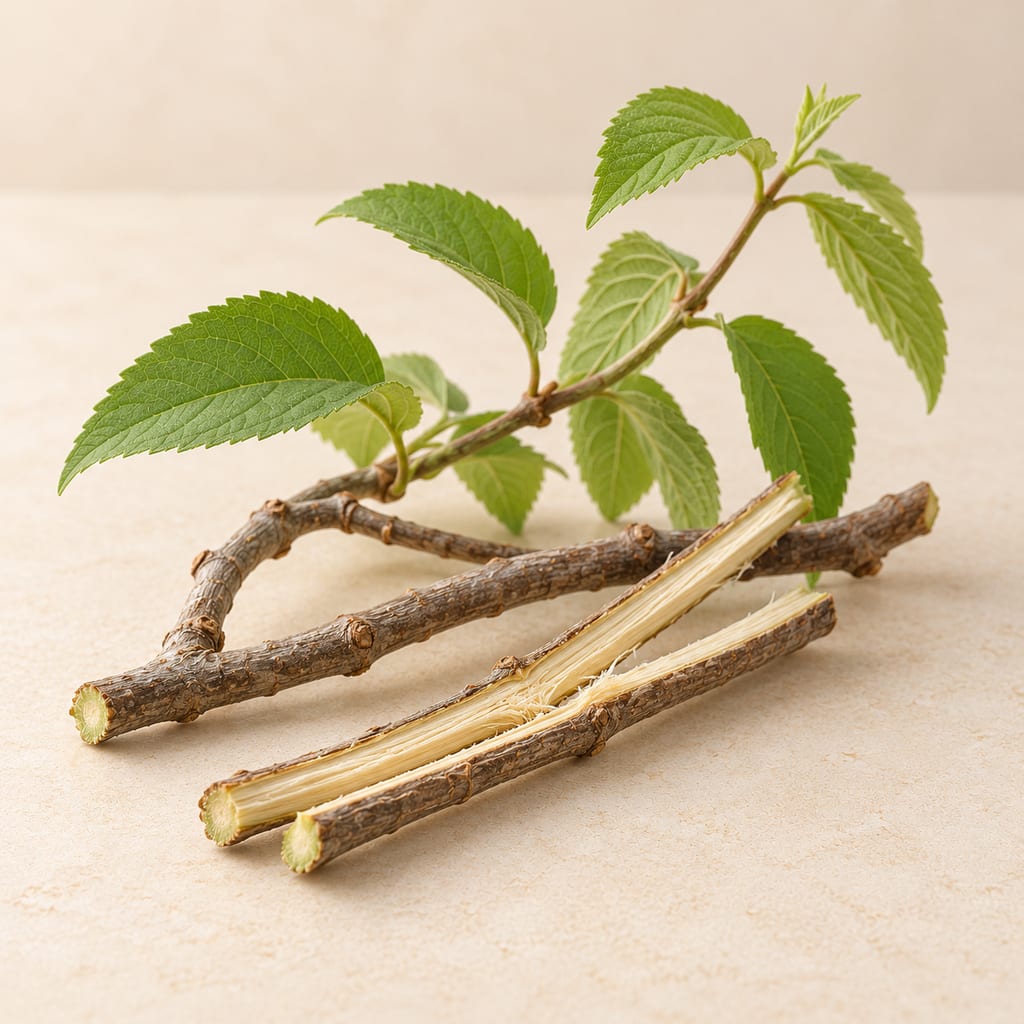
A woody climbing vine in the buckthorn family, Gouania polygama is gathered for fresh stems used in Cuban pru, where it helps give the fermented botanical drink its characteristic effervescence and taste.
No community contributions have been published for this entry yet.
Sign in to contribute. Published comments and photos are free to read.
Royal Botanic Gardens, Kew, Plants of the World OnlineIdentity · Geography
Lippia micromera SchauerAccepted name Lippia micromera Schauer
Variety helleri treated as a heterotypic synonym
Cuba within the native range
Cited in: What oreganito is; Natural range and early records
USDA ARS GRIN TaxonomyIdentity · Geography
Lippia micromera, nomen 101147Cuba within the native range
Cited in: Natural range and early records; What the sources leave open
Méndez Santos (2003), Flora de la República de Cuba, printed pp. 62-63Identity · Use · History
Verbenaceae, Flora de la República de Cuba 7(3)Local names oreganito, oreganillo, orégano verdadero
Leaves used as seasoning in place of Origanum vulgare, attributed to Méndez and Castellanos (1998) and Fuentes (2000)
Cultivated in Cuba with some frequency; older view of it as native in eastern Cuba
Indigenous range in northern South America, Nicaragua, Hispaniola and Puerto Rico
Flowering and fruiting notation I to IX
Cited in: What oreganito is; Use as a seasoning; Natural range and early records; What the sources leave open
FAO AGRIS record (Pino et al., Alimentaria 280)Use
Production of oregano in Cuba: an alternative to importationRecommends L. micromera for domestic oregano production; abstract describes essential-oil characterisation and sensory evaluation
Cited in: Oil studies are a different use; What the sources leave open
Archivos Latinoamericanos de Nutrición 54(1), 2004Use
El orégano: propiedades, composición y actividad biológica de sus componentesCites the Cuban oregano-production paper under a different year
Cited in: Oil studies are a different use
Journal of Essential Oil Research 10(2), 1998 (abstract only)Composition
Leaf Oil of Lippia micromera Schauer in DC. from CubaLeaf-oil analysis of Cuban material
Cited in: Oil studies are a different use
Hammer et al. (1992), Pl@ntUse transcriptionUse · History
Inventory of cultivated plants of Cuba, Lippia micromera entryLeaf spice and substitute for Origanum vulgare
Origin given as Bolivia, Peru and Chile in the 1992 inventory
Cited in: Use as a seasoning; Natural range and early records