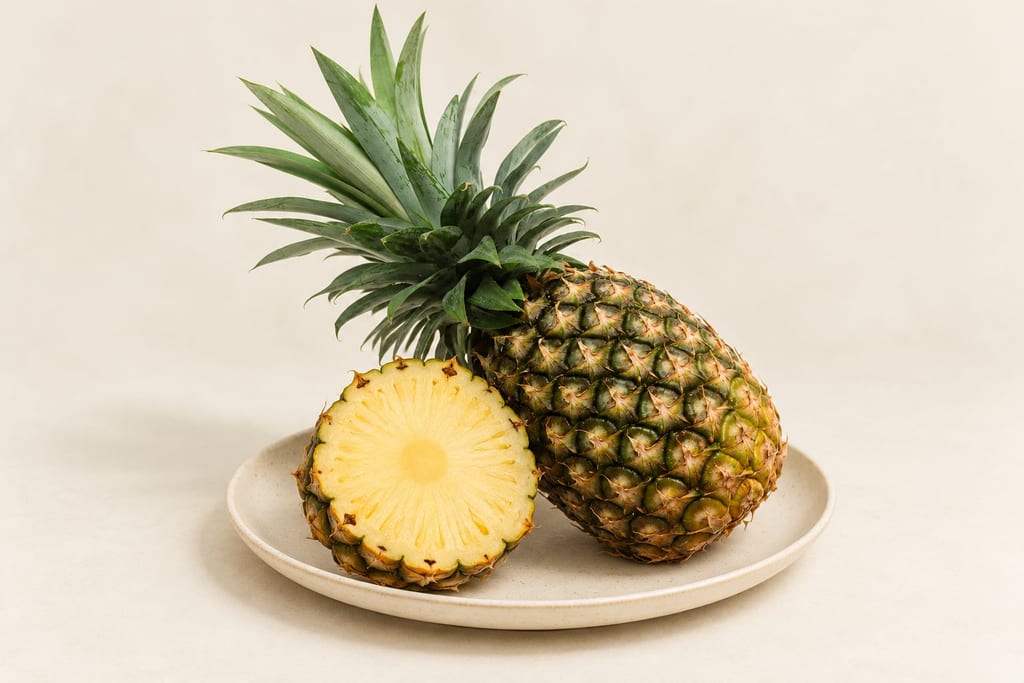
Pineapple
Pineapple is a sweet-tart tropical multiple fruit whose fresh flesh and peel supply sugars and acids to fruit ferments, while cultivar and maturity shape the balance.
 FermenteaWhere food goes to change
Spices and aromatics
The aromatic flower of Quararibea funebris, dried and toasted for tejate in Oaxaca; despite its name, it is not cacao.
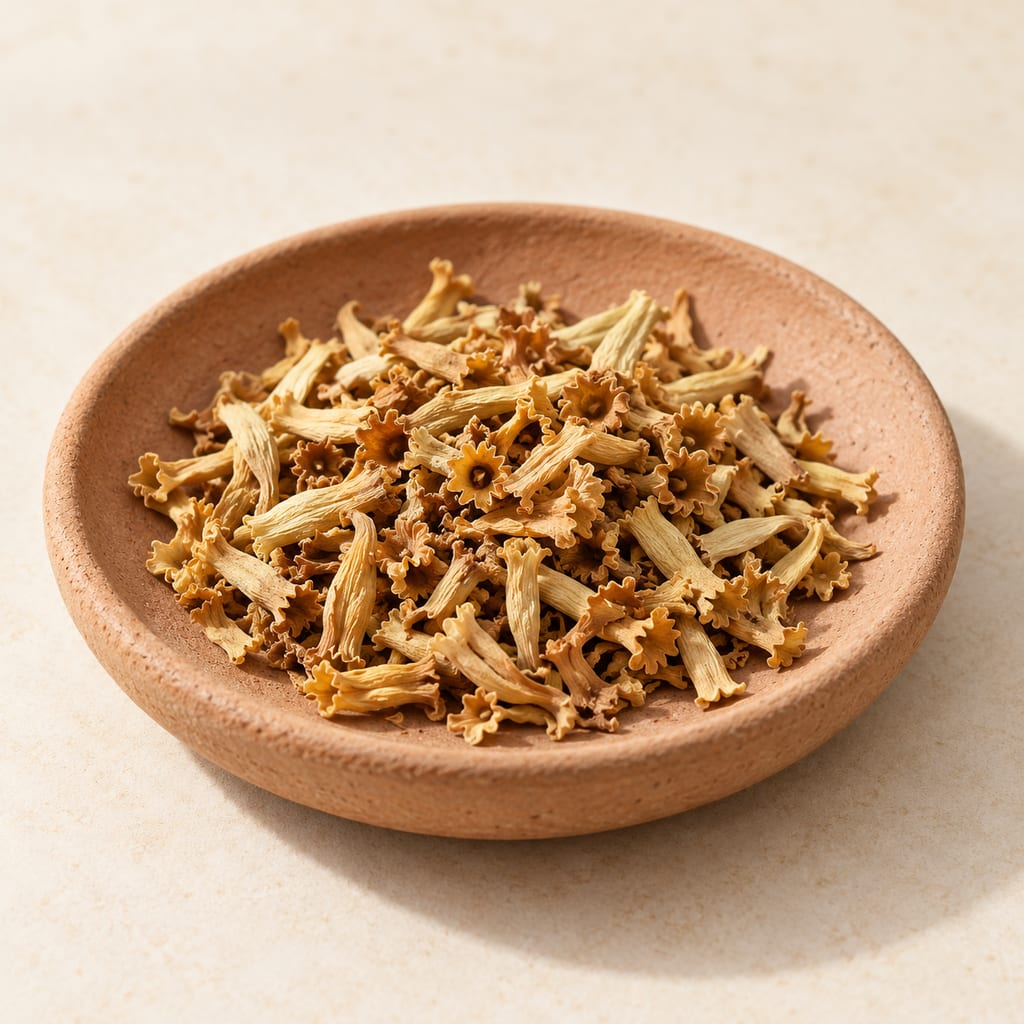
Rosita de cacao is the flower of Quararibea funebris, an accepted species in the mallow family, Malvaceae. Kew records it as a tree native from Mexico to Central America and growing primarily in wet tropical habitats. The Spanish common name and Nahuatl name cacahuaxóchitl connect the flower to cacao in culinary language, but the plant is not Theobroma cacao. In tejate, the two are separate ingredients: cacao contributes its own seed material, while rosita de cacao supplies the fragrance associated with the drink.
Names vary by place and source. Rosita de cacao, flor de cacao, cacahuaxóchitl and cacahuaxochitl are recorded names for this flower. The phrase flor de cacao can be mistaken for a literal cacao blossom; here it means the flower of Q. funebris. This page uses rosita de cacao only for that species, not for cacao flowers, cacao beans or cocoa.
In San Andrés Huayapam, Oaxaca, the tree is part of home gardens and the flowers are harvested for household use and sale to tejate makers. Accounts describe the association as longstanding, and the beverage itself has a much longer regional cultural story. The dated sources do not prove when the flower first entered the drink, so its earliest culinary attestation remains undated.
The flowers’ shared name with cacao reflects an aromatic and cultural relationship in the drink rather than botanical kinship. In accounts of tejate, the name rosita de cacao belongs to a flowering tree whose use is discussed alongside, but separately from, cacao brought into the drink. The central distinction is easy to lose when translating or compressing ingredient lists: “cacao flower” may sound like a flower from the cacao tree, while the named species here is a mallow-family tree. Keeping the scientific name alongside the regional ingredient name makes that distinction visible in recipes, market notes and research without displacing the community name. Cacahuaxóchitl is glossed as ‘cacao flower’ in a discussion of the name, but that translation is not a substitute for identifying the species.
The tree’s range is wider than the Oaxaca tradition most often associated with the ingredient. Botanical records place the native range from Mexico to Central America, while culinary sources document particular uses and names in distinct communities. A range map does not show that every population is harvested for food, and a use in Oaxaca does not establish that communities across the full range prepare the flower in the same way. The ingredient page therefore keeps its place claims tied to specific accounts: Huayapam for household cultivation, flower drying and tejate trade; central Oaxaca for wider marketing; and Veracruz for a separate reported aromatic use in pozol. These should be read as documented contexts, not an exhaustive map of food uses.
The culinary material comes from the fragrant white flowers of Q. funebris. Huayapam accounts distinguish petals from slender central flower parts called jarritos. That local vocabulary should not be mistaken for a standardized botanical grade. A floral morphology study describes distinct flower structures and notes their relevance to distinguishing the species from similar-looking material. A food-page image cannot identify a wild plant.
The tree grows in tropical regions across Mexico and Central America. In Huayapam, growers cultivate trees around homes. Research describes the local rosital as a courtyard tree managed by tejateras and household growers, and connects cultivation, flower collection, drying and sale with women’s work and knowledge passed between generations. Those details describe a documented community, not every place where the species grows or every culinary use.
A flower is not a uniform mass. The local distinction between petals and jarritos records a practical understanding of which visible parts are gathered and prepared, while botanical study separates the flower into calyx, corolla, androecium and gynoecium. Those levels of description serve different purposes: local terms follow customary handling, and botanical terms describe morphology. The food sources do not give a standardized commercial specification that equates every local term with one botanical structure, so this page preserves the local word without making that equivalence. The research literature notes that flower morphology can help distinguish Q. funebris from similar-looking material and avoid adulteration. This is a reason to keep the taxon clear, not a complete key for readers to identify a plant outdoors.
Flowers are gathered and dried before they are kept or sold. Huayapam reporting describes petals and jarritos being dried and toasted separately; petals are toasted on a clay comal. The resulting ingredient is dried flower parts, not a seed or cacao product. The sources do not specify a universal flower count, proportion of parts or toast level, so these details should not be turned into a standard recipe.
A field study documents a choice between shade drying on palm mats and faster sun drying on metal surfaces. Producers value the quality retained by shade drying, while accelerated drying can meet market demand with a perceived organoleptic trade-off. The same study records seasonal challenges: damp rainy periods can bring staining or decay, and dry-season production may decline. These are observations of local practice, not validated storage guidance, moisture endpoints or food-safety controls.
Research on dried flower aroma does not establish shelf life or packaging requirements for a household batch. The fragrant quality is central to its documented use, but no precise aroma standard or universally accepted dried form is established in the sources reviewed.
Processing begins with flowers from a tree that may be cultivated in a courtyard or obtained through local harvest and sale. The Huayapam accounts describe drying followed by toasting, with petals and jarritos handled separately. A clay comal is part of the documented local scene; it is not a universal piece of equipment requirement for every source or household. The result is incorporated as aromatic dry flower material. The records do not prescribe a target colour, temperature, or duration for the toast, and this page does not supply one. A photograph of a comal or a pile of dried parts illustrates a reported practice but cannot establish that a batch has been dried sufficiently or that it is microbiologically safe.
Drying has both sensory and practical dimensions. A recent study describes traditional drying in shade on palm mats as taking longer and producers’ shift toward faster sun drying on metal surfaces to meet demand. This preference reflects a trade-off in organoleptic quality, not a controlled comparison that sets one universally superior method. Weather also shapes the work: moisture-associated staining or decay can occur in the rainy season, while output may decline during dry periods. Those observations help explain why harvest, drying surfaces, household routines and sales are connected parts of the ingredient’s story. They do not establish a moisture threshold, safe storage period or corrective treatment for spoiled material.
In tejate, rosita de cacao is one ingredient among several, not a substitute for cacao. Documented preparation roasts cacao, pixtle (mamey seed) and flower material separately, grinds them with maize, then combines the mixture with water and beats it by hand to raise foam. The flower supplies aroma; the drink’s body and other flavours come from the combined ingredients and method. The sources do not establish one standard amount of flower, and producer-specific proportions should not be replaced with an invented measure.
A review of Mexican condiment plants records rosita de cacao flowers as a tejate flavouring in the Oaxaca valley. A Veracruz culinary-flower reference also records Q. funebris as an aromatic for pozol among Zoque-Popoluca communities. That source describes pozol as a maize drink that can sour or ferment. This supports a documented flavouring use in a fermented beverage, but does not make the flower a culture or show that it drives acidification. The source is a broad culinary account, not a fermentation protocol.
The botanical distinction from cacao matters in any recipe record: tejate may include both Q. funebris flowers and Theobroma cacao. They are separate materials with different roles.
Tejate combines the floral aromatic with ingredients that have other functions. Tejate combines maize, cacao, pixtle from mamey seed and rosita de cacao; accounts describe the components as roasted or toasted separately before grinding and mixing. Water is added and the mixture is beaten by hand to raise a foam. This broad outline situates the flower’s role without claiming that every producer uses the same sequence or quantities. The flower does not replace the maize base, the cacao or the mamey seed; nor does it alone make the foam. The available descriptions of the beverage are not a measured production formula for dried flower, and no amount should be derived from them by scaling a single reported batch.
The Veracruz mention widens the documented culinary context without changing the central Oaxaca association. A government culinary-flower catalog entry names Q. funebris among aromatics used in pozol by Zoque-Popoluca groups in southern Veracruz. It also describes the maize drink as commonly allowed to sour or ferment for some hours, days or longer. Since the PDF itself could not be fetched for a direct page-level check in this session, this narrower detail is retained only as a search-indexed source claim and marked with that limitation in its source record. It is evidence for a reported aromatic use, not a verified protocol, species identification guide or claim that the flower contributes a fermenting organism.
In Huayapam, flower sales connect household growers with tejate makers and local markets. Reporting describes women’s knowledge of gathering and preparing the flowers as part of a wider food tradition. Recent field research links home-garden trees, water management, harvest timing and drying to local livelihoods and the continuing supply of flowers. Its observations about yield and weather relate to the study area and should not be generalized to every part of the species’ range.
The broader histories of tejate and maize beverages do not by themselves date the beginning of rosita de cacao use. Contemporary documentation and accounts of tradition establish its cultural importance, but not an ancient date for this particular ingredient.
Food sources document the flower as a culinary aromatic, but the sources reviewed do not provide a species-specific allergen assessment, validated contaminant limits, validated drying endpoint or tested shelf-life standard. Ethnographic drying and toasting accounts describe practice; they are not controlled safety guidance. Some sources discuss traditional medicinal claims and research on extracts or animal models. Those do not establish human therapeutic benefit or the safety of medicinal doses, and this page makes no medical-use recommendation. The image is editorial, not a field identification aid; no foraging guidance is offered.
Commercial availability is tied to living tree care and to the people who gather and prepare the blossoms. Reports from Huayapam describe home-garden trees, harvest for household use and sales to tejate makers, with women’s expertise transmitted between generations. Field research considers how irrigation, shade, temperature and dry-season conditions affect the trees and flowers in this peri-urban landscape. It also notes producers’ concern about tree age, sunlight stress and changing flower yields. These concerns help explain the importance of preserving local cultivation and knowledge, but they should not be treated as proof of a particular conservation status or as a forecast of scarcity everywhere. The botanical page lists the species’ range and growth biome; the local study describes one managed community landscape.
The written sources do not supply a validated food-safety protocol for drying, toasting, storage or transport of rosita de cacao. They also do not establish an acceptable concentration of any naturally occurring compounds for ordinary food use. A government research report notes medicinal traditions and describes studies involving chemical extracts and experimental models. Such work raises questions that differ from culinary use: an extract is not the same exposure as a portion of a traditional drink, and findings in animals do not set a safe human serving. The ingredient’s well-documented use in food is not proof of medicinal efficacy, and pharmacological research is not evidence that a home-prepared medicinal dose is safe. This profile makes no health claim.
No allergen-specific assessment was located in the reviewed sources. That is an evidence gap, not a finding that allergy is impossible or that the ingredient is allergen-free. Likewise, the absence of a cited contaminant standard or tested shelf-life does not mean the traditional material is unsafe; it means this page cannot provide a validated limit. Readers seeking a commercial product should use material sold and identified for food use and follow the supplier’s handling information. Gathered flowers require reliable species identification, which this editorial image cannot provide. The page intentionally does not turn photographs, vernacular names or family resemblance into do-it-yourself foraging advice.
A documented cultivation, preparation and market context, not the species' sole culinary range or place of origin.
A research report describes the flower marketed for tejate in several communities in central Oaxaca.
Pineapple is a sweet-tart tropical multiple fruit whose fresh flesh and peel supply sugars and acids to fruit ferments, while cultivar and maturity shape the balance.
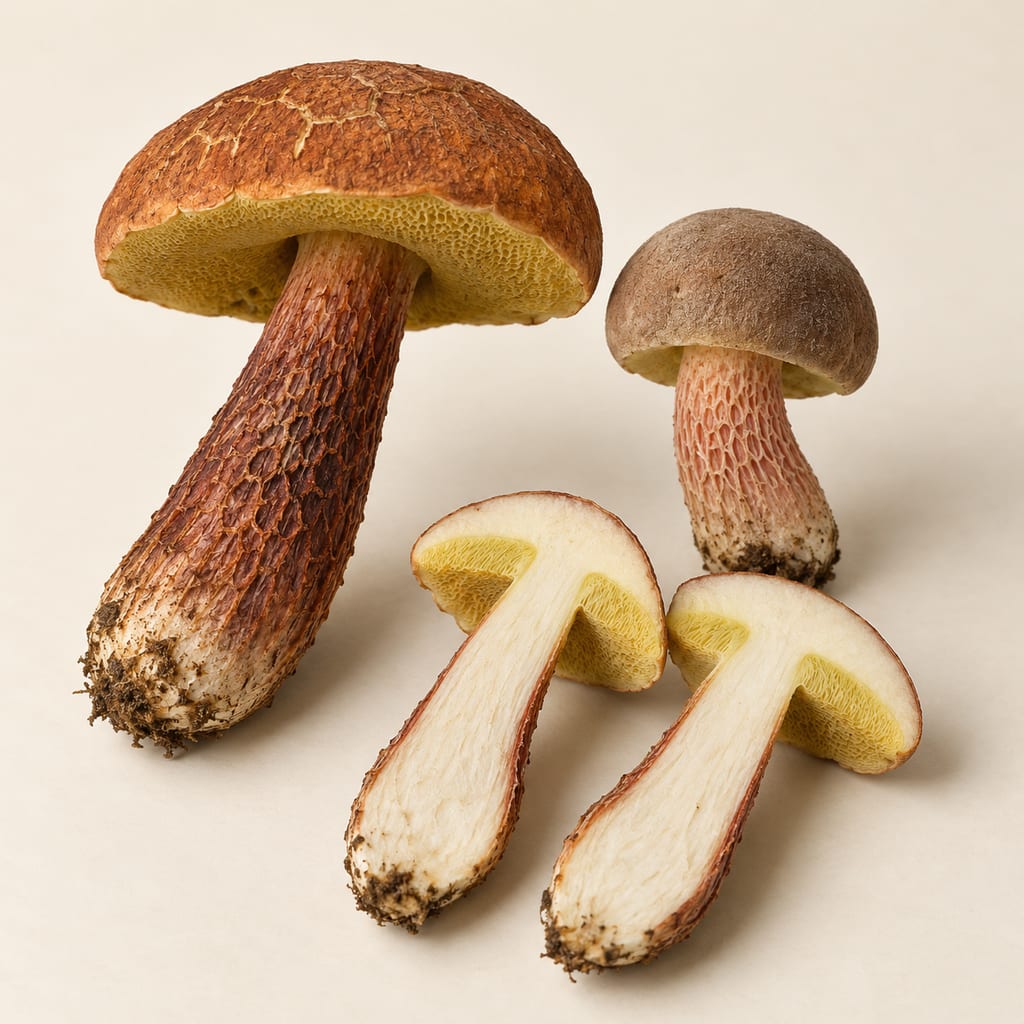
Russell’s bolete is a woodland bolete now called Aureoboletus russellii, with documented regional food use in Mexico and an unresolved historical China claim.
No community contributions have been published for this entry yet.
Sign in to contribute. Published comments and photos are free to read.
Plants of the World Online, Royal Botanic Gardens, KewTaxonomy · Range
Quararibea funebris (La Llave) VischerAccepted species name, family Malvaceae, tree, native range Mexico to Central America and wet tropical biome.
Cited in: A flower whose name can mislead; Flower parts and local knowledge
Arqueología MexicanaCulinary use · Geography · Food history
Ghilo, flor del tejateRosita de cacao is translated from cacahuaxóchitl; associated with San Andrés Huayapam; harvested for home use and sale to tejate makers; distinguishes flower from cacao seed material.
Cited in: A flower whose name can mislead; How it flavours drinks
NVI NoticiasCulinary use · Preparation · Geography · Culture
Rosita de cacao: esencia del tejate en Huayápam, OaxacaLocal names for flower parts; drying and separate toasting; Huayapam practice and knowledge transfer; distinction from cacao.
Cited in: Flower parts and local knowledge; From blossom to dried aromatic; Cultivation, continuity and limits
NVI NoticiasPreparation · Culinary use · Image reference
VIDEO | Rosita de cacao, flor de Oaxaca que aromatiza a Huayapam y su tejateFlower parts are dried and toasted for tejate; photograph documents toasted parts on a comal.
Cited in: From blossom to dried aromatic
SustainabilityCultivation · Geography · Processing · Sustainability
Eco-Physiological Vulnerability of Quararibea funebris in Peri-Urban Landscapes: Integrating Gender and Nature-Based Solutions in the Central Valleys of Oaxaca, MexicoLocal home-garden management; seasonality and flower drying practices, including reported quality trade-offs.
Cited in: Flower parts and local knowledge; From blossom to dried aromatic; Cultivation, continuity and limits
Revista Mexicana de BiodiversidadCulinary use
Plantas americanas utilizadas como condimento en la cocina mexicanaFlowers flavor tejate in the Oaxaca valley.
Cited in: How it flavours drinks
Secretaría de Cultura, Dirección General de Culturas Populares, Indígenas y UrbanasCulinary use · Fermented beverage context
Las flores en la cocina veracruzanaSearch-indexed catalog text records Q. funebris as aromatic for pozol among Zoque-Popoluca communities and describes pozol as fermented; PDF could not be fetched in this session.
Cited in: How it flavours drinks
UNAM, Programa de Apoyo a Proyectos de Investigación e Innovación TecnológicaCulinary use · Research · Safety limits
Estudio químico y farmacológico de Quararibea funebris (La Llave) Vischer: Informe finalFlower marketed for tejate in central Oaxaca; reported medicinal claims and extract/animal studies are not food-dose evidence.
Cited in: A flower whose name can mislead; From blossom to dried aromatic; Cultivation, continuity and limits
Chemistry & BiodiversityBotanical morphology · Culinary use
Micro-Morphology characterization and HS-SPME-GC-MS Analysis of Floral parts of Quararibea funebris (La Llave) Vischer, traditionally known as Rosita de CacaoFlowers are used for aroma, flavour and consistency in tejate; morphology distinguishes floral parts and helps address similar-looking material.
Cited in: Flower parts and local knowledge; Cultivation, continuity and limits