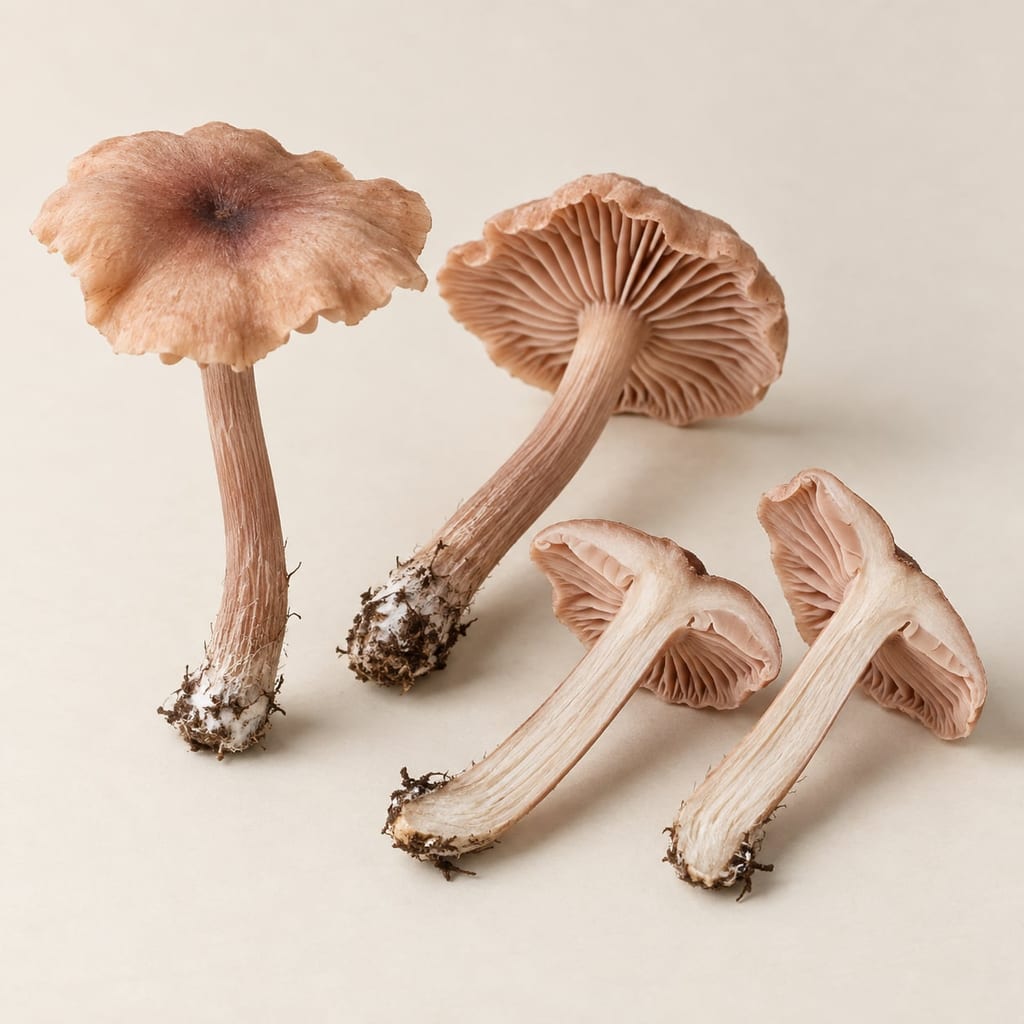
Asian deceiver
Laccaria vinaceoavellanea is a small ectomycorrhizal mushroom sold as food in Yunnan and Sichuan, and it accumulates arsenic in its caps, which the sources treat as a main safety caveat.
 FermenteaWhere food goes to change
Mushrooms
Termitomyces bulborhizus is a large agaric of the termite mushroom genus, described in 2004 from Sichuan and listed as edible in the 2026 Chinese species catalogue; its culinary use is not yet documented.
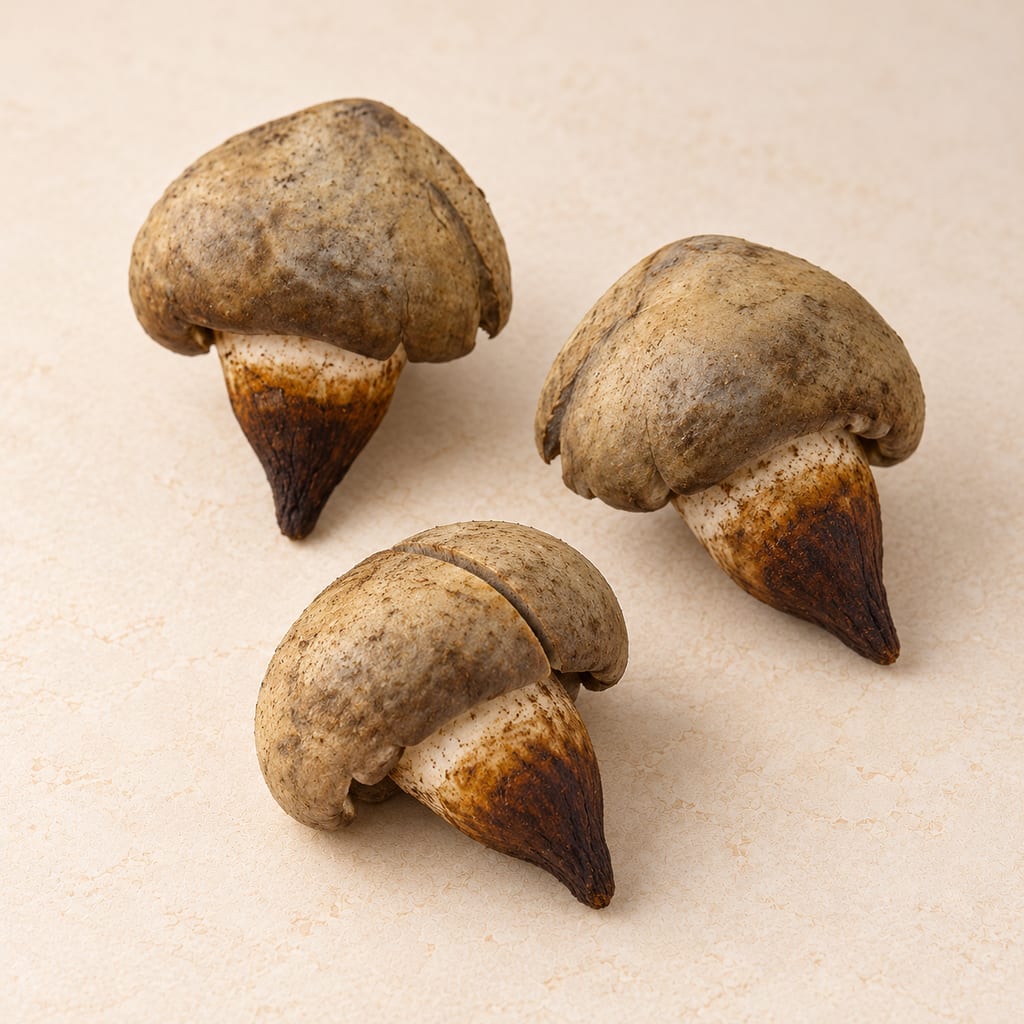
Termitomyces bulborhizus is a mushroom of the family Lyophyllaceae. It was described in 2004 by T.Z. Wei, Y.J. Yao, B. Wang and Pegler. The cap can reach 22 centimetres across, and the species name refers to the bulbous base of the stipe.
The genus Termitomyces is known for growing in association with termites. The catalogue records this species as a termite-associated fungus that grows wild.
The original description places the species in Sichuan, China. A 2019 survey of Termitomyces from a subtropical forest in Xishuangbanna, Yunnan, lists it among the specimens it documents, according to the search summary of that paper.
The catalogue gives the regional context as China. It gives no locality beyond that, and no cultivation or market supply.
A 2026 Chinese species catalogue lists the species as edible or edible and medicinal. A catalogue listing is not an independent safety assessment.
The 2019 Xishuangbanna survey, as summarised in search results, gives the species an edible rating with high culinary value. Termitomyces mushrooms in general are described in a review as highly sought after for their culinary value. The sources reviewed do not describe how this species is prepared or eaten, and this page does not supply a method.
The description gives no look-alike comparison beyond a key to allied species, and the Wikipedia treatment states no caution. The catalogue says this record is a research lead, not a safety assessment.
This page is not an identification guide and gives no verdict on whether a wild specimen is safe to eat. Termite mushrooms should not be picked for food on the basis of this page, and the listing as edible does not establish a safe preparation.
Original locality as given in the description; no edibility is recorded for Sichuan in this source.
Laccaria vinaceoavellanea is a small ectomycorrhizal mushroom sold as food in Yunnan and Sichuan, and it accumulates arsenic in its caps, which the sources treat as a main safety caveat.
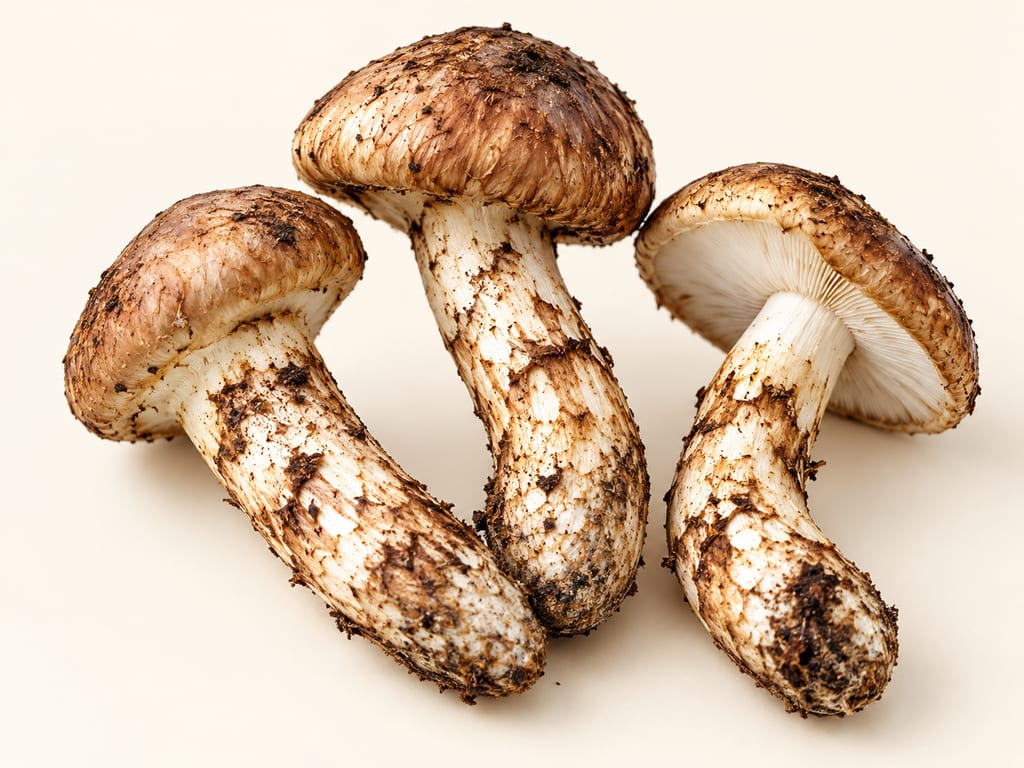
Matsutake is a prized wild ectomycorrhizal mushroom associated with pine and other forest trees, valued especially in Japan, Korea and China for its distinctive spicy aroma, firm texture and seasonal rarity.
No community contributions have been published for this entry yet.
Sign in to contribute. Published comments and photos are free to read.
WikipediaTaxonomy · Geography
Termitomyces bulborhizusDescribed 2004 by T.Z. Wei, Y.J. Yao, B. Wang and Pegler; Lyophyllaceae; found in Sichuan, China; cap up to 22 cm; epithet refers to the bulbous stipe base; no edibility or caution stated.
Cited in: What it is; Where it is recorded; Identification and safety
CAST journal archive (Chinese)Food use · Safety
Supplied catalogue source for the 2026 Chinese edible-fungus species catalogueListed as edible or edible-and-medicinal in the 2026 Chinese species catalogue; checklist lead requiring direct food-use evidence (supplied record; primary article not reopened).
Cited in: What it is; Food use; Identification and safety
Mycobiology (Taylor and Francis)Geography · Food use
A Survey of Termitomyces (Lyophyllaceae, Agaricales), Including a New Species, from a Subtropical Forest in Xishuangbanna, ChinaDocuments T. bulborhizus from Xishuangbanna, Yunnan; edible with high culinary value (search summary only; article page returned an access error).
Cited in: Where it is recorded; Food use
PubMed CentralFood use
Termite Mushrooms (Termitomyces), a Potential Source of Nutrients and Bioactive Compounds Exhibiting Human Health Benefits: A ReviewTermitomyces mushrooms highly sought after for culinary value (search summary only; article text not opened).
Cited in: Food use