Yeast and the world's fermented drinks
People kept, traded and steered living ferments for thousands of years before anyone saw a yeast cell. This is that history, region by region, and a guide to what a yeast strain is today.
 FermenteaWhere food goes to change
Xiaoqu (小曲) is a family of small Chinese grain starters for rice wines and baijiu: mixed moulds, yeasts and bacteria that convert starch and ferment it, not one strain or formula.
Xiaoqu (小曲) is a grain-based starter used in some Chinese rice wines and in baijiu fermentations. Researchers place it in the Chinese starter family called jiuqu, next to larger or differently made forms such as daqu and fuqu. The term names a prepared starter culture, not one species of yeast, and not one fixed recipe.
A review of baijiu classification describes xiaoqu as a smaller starter than daqu and reports rice or rice bran among the materials used for it. A 2023 review treats it as a saccharifying starter: its microbial community and enzymes support grain conversion during production, and raw materials, strains and process controls are variables rather than a single formula. None of this means every xiaoqu uses the same grain, mould, production method or community.
Studies document different xiaoqu products and practices. One examines traditional and commercial samples from Guizhou. Another compares the named Bing Wan, Jiu Bing and San qu forms used by a Guangdong distillery for a chi-flavour liquor, and sets them beside a round-koji-maker starter. A separate study reports xiaoqu-linked rice wines from Xinhua County. These show regional and product variation and do not define one universal starter.
The studies find changing combinations of moulds, yeasts and bacteria in the samples. A 2015 comparison detected different groups in its single xiaoqu sample, and a later Guizhou study found differences among six collected samples. These results describe particular starters and laboratory methods. They are not a standard culture, and they are not a recommendation to isolate any detected organism.
Hu and colleagues compared fermentation communities in Chinese xiaoqu baijiu made by traditional and mechanised technologies. Their 2021 work reports five core microorganisms in the fermenting material and differences in community activity and abundance between the systems. Those are observations about the fermentation and do not show that every xiaoqu cake contains the same five organisms in the same proportions.
A starter is introduced into a larger grain fermentation, where organisms and their activity change with the process. A fermentation study therefore cannot be read as a label for a commercial starter or as a full account of how a starter is made.
One paper calls the practice ancient but gives no dated primary attestation in the reviewed text. The 2021 baijiu work documents contemporary use, not a first date or a birthplace. The sources do not establish an earliest origin, a universal storage life, a household preparation method, household equipment or a safety control for an unspecified starter.
The cited study documents Chinese xiaoqu baijiu fermentation. This country-level association does not locate the origin of xiaoqu or define every producer's method.
Traditional and commercial xiaoqu samples were collected in Guizhou; this does not make it the origin.
A Guangdong distillery's Bing Wan, Jiu Bing and San qu starters were compared; the row does not claim an origin.
People kept, traded and steered living ferments for thousands of years before anyone saw a yeast cell. This is that history, region by region, and a guide to what a yeast strain is today.
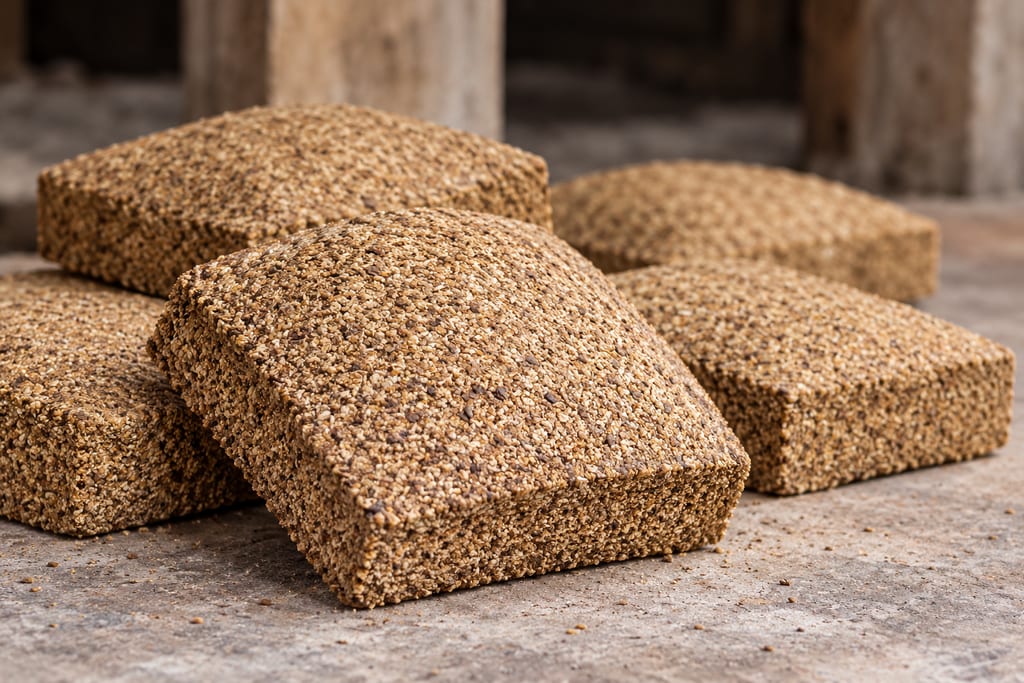
High-temperature daqu is a formed, mixed-community grain starter used for sauce-aroma (Maotai-flavor) baijiu, made by a separate heat-driven process and sold or kept as dry bricks.
No community contributions have been published for this entry yet.
Sign in to contribute. Published comments and photos are free to read.
Food Research International; PubMed recordUse · Fermentation · Microbiology
Study on microbial communities and higher alcohol formations in the fermentation of Chinese Xiaoqu Baijiu produced by traditional and new mechanical technologiesThe study compares Chinese Xiaoqu Baijiu fermentation under traditional and mechanised technologies. It reports five core microorganisms in the fermenting community and differences between the technologies. The measured fermentation community is not a species list for every xiaoqu cake or a universal recipe.
Cited in: The starter and the ferment are different evidence; History and what is not established
China Brewing / SciOpenIdentity · Function · Comparison
Research progress on strains culture and saccharification by XiaoquThe review describes xiaoqu as an important saccharifying starter in baijiu brewing and summarizes the roles of moulds, yeasts and bacteria and the effects of raw materials and process control. Its account is a review, not one standardized starter formula.
Cited in: A small starter system; The starter and the ferment are different evidence
Journal of Ethnic FoodsIdentity · Comparison
Baijiu (白酒), Chinese liquor: History, classification and manufactureThe review describes xiaoqu as a smaller starter than daqu and reports rice or rice bran among its documented substrates. It contrasts xiaoqu with the different grain composition and larger format of daqu.
Cited in: A small starter system
Journal of the Institute of Brewing 121(4):620-627; WileyIdentity · Microbiology
Characterization of the microbial community in three types of fermentation starters used for Chinese liquor productionPlaces xiaoqu in the jiuqu family beside daqu and fuqu; one xiaoqu sample examined in 2015.
Cited in: What microbial studies found
Frontiers in Microbiology 11:2103Microbiology · Geography
Profiling of Fungal Diversity and Fermentative Yeasts in Traditional Chinese XiaoquTraditional and commercial xiaoqu samples from Guizhou; differences among six collected samples; the practice is called ancient without a dated primary attestation.
Cited in: A small starter system; Regional forms; What microbial studies found; History and what is not established
Frontiers in Microbiology 9:1053Microbiology · Geography
Comparison of Bacterial Diversity Between Two Traditional Starters and the Round-Koji-Maker Starter for Traditional Cantonese Chi-Flavor Liquor BrewingBing Wan, Jiu Bing and San qu forms used by a Guangdong distillery compared with a round-koji-maker starter.
Cited in: Regional forms
LWT 170:114000; ElsevierUse · Geography
Microbial community starters affect the profiles of volatile compounds in traditional Chinese Xiaoqu rice wine: Assessment via high-throughput sequencing and gas chromatography-ion mobility spectrometryXiaoqu-linked rice wines from Xinhua County; publisher abstract only was accessible.
Cited in: Regional forms