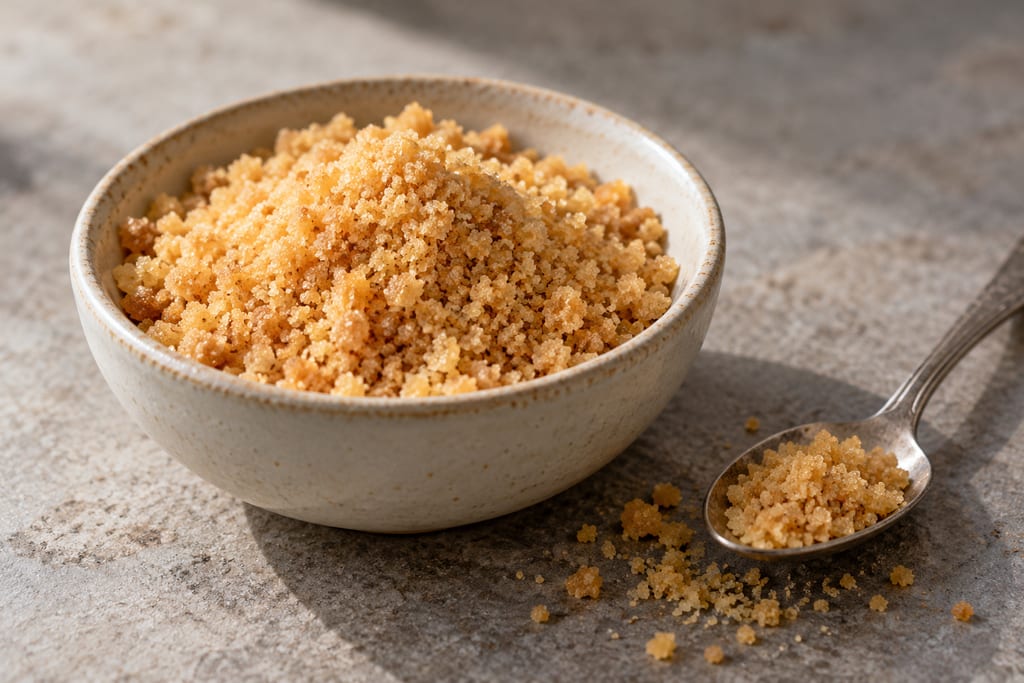
Maple sugar
Maple sugar is sap from maple trees boiled down until it granulates. Great Lakes Indigenous makers stored the concentrated sugar for later use and for exchange.
 FermenteaWhere food goes to change
Manoomin · manoomin · parched wild rice · Ojibwe wild rice
Harvested wild rice dried, parched over heat and hulled, a step that keeps the grain for storage in Ojibwe food systems and does more than cook it.
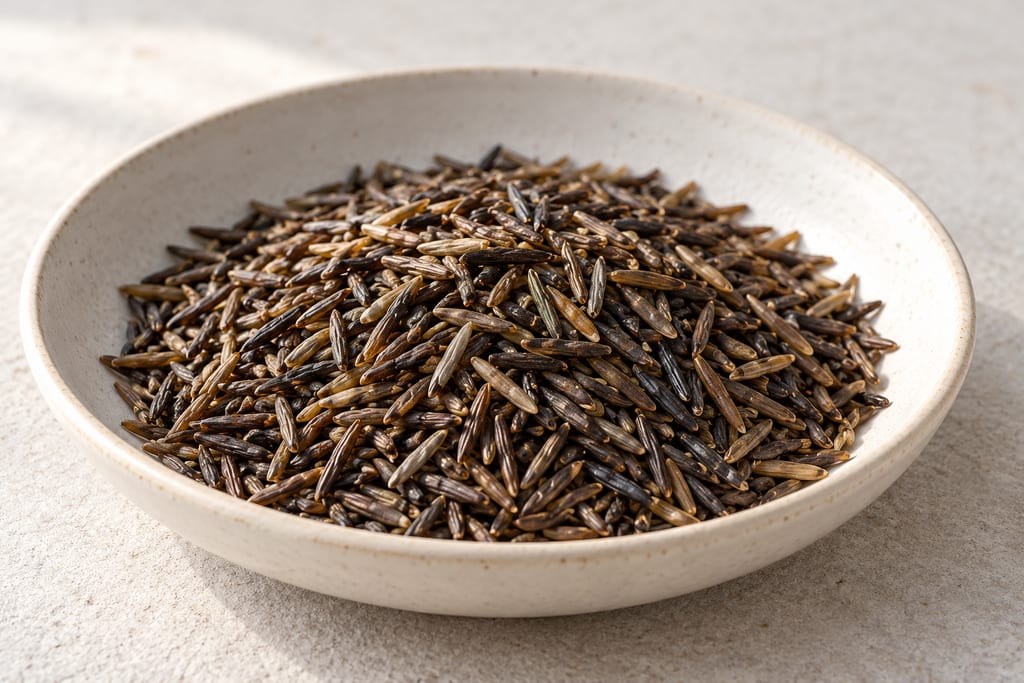
Parching is controlled heating of harvested seed. The catalogue treats it as a preservation step: it dries the grain further and prepares it for durable storage, beyond the cooking that a meal later requires.
Among Ojibwe communities, wild rice was processed through drying, parching and removal of the hull. Together these steps made the harvest storable.
The sequence begins with drying the harvested seed. Parching then applies heat, which dries the grain further and loosens the hull, and the hull is removed afterwards.
The sources do not give temperatures, durations or the method of hull removal in detail.
Parched, hulled grain is a drier product than the fresh harvest and is suited to storage, but the catalogue gives no shelf life.
The same parching principle appears in other grain traditions, where roasting or parching the seed prepares it for keeping.
The catalogue does not give the parching temperature, the time, or the equipment used. This page does not state a home method; it records the sequence described in the source.
Parching is listed among the Indigenous North American methods for preparing grain for storage. In the Ojibwe process, drying, parching and hull removal together make a preserved grain, not only a cooked one.
Scaling: source batch only
The catalogue cites Ojibwe wild-rice processing; the source names the homeland rather than a single site.
Maple sugar is sap from maple trees boiled down until it granulates. Great Lakes Indigenous makers stored the concentrated sugar for later use and for exchange.
No community contributions have been published for this entry yet.
Sign in to contribute. Published comments and photos are free to read.
Smithsonian National Museum of the American IndianHistory · Method
Ojibwe homeland (Smithsonian National Museum of the American Indian)Ojibwe wild-rice processing: drying, parching and hull removal
Cited in: Parching as preservation; Drying, heat and hulling; Storage and use; What the record does not settle