A temporary tie for rolled peel
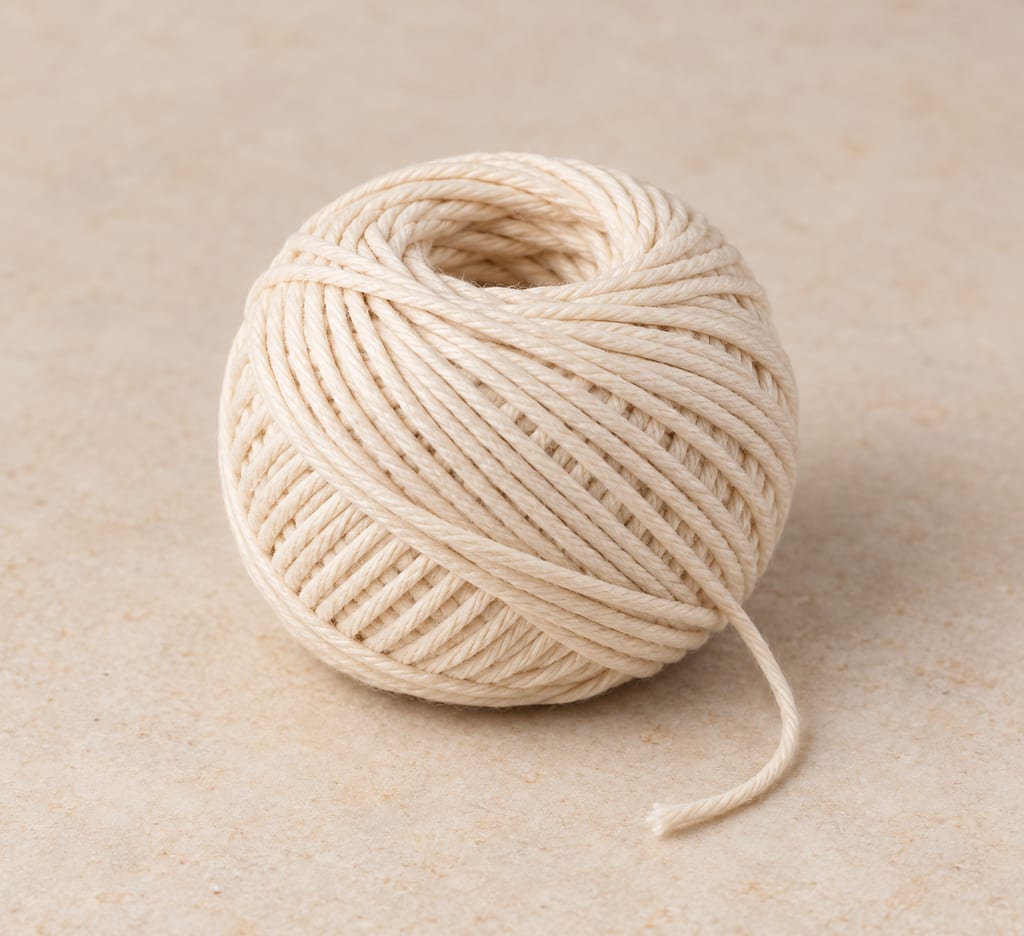
Kitchen string is a flexible cord used here to keep narrow citrus-peel strips rolled into spirals. A needle carries the rolls onto the cord so they stay grouped during the cooking sequence. The cord is removed afterward; it is not an ingredient, a vessel, or a closure for the storage jar.
The use is specific rather than universal. In the documented Antalya bitter-orange preserve, string carries the rolled peel through blanching and syrup cooking. The sources do not describe string as necessary for every marmalade or preserve, and they do not give a standard length, thickness or knotting pattern.
Sources for this section
The Antalya peel method
The Antalya Provincial Directorate of Culture and Tourism recipe begins with bitter-orange peel cut into strips and cleaned of white pith. The strips are rolled into spirals and threaded onto string with a needle. The linked cord then keeps the individual rolls together as they are boiled, cooled in water, and blanched again; the published method repeats this sequence three times to draw out bitterness before the peel is cooked with sugar and lemon juice.
A supplied small-batch adaptation based on the Antalya technique describes using clean kitchen string temporarily and removing it before serving. Its quantities are identified as a new refrigerator/freezer prototype, not a traditional fixed formula or validated canning process. That distinction matters: the source supports the rolled-and-threaded shape, while the adaptation supplies the temporary removal instruction.
Sources for this section
What the sources leave open
The regional recipe calls the material string but does not say whether it is cotton, linen or another fiber, how it is finished, or what temperature or duration it can tolerate. It gives no dimensions, supplier, cleaning method or reuse guidance. A packaged modern butcher's-string photograph shows one marketed example, but its label and packaging do not establish a universal specification for the Antalya technique.
This cord is distinct from the food-contact cloth used for steaming or the jelly bag used to drain fruit pulp. In the peel method it temporarily binds rolled pieces; it does not filter liquid, cover a vessel, or create a fermentation seal. The recipe page is undated, so the technique's first attestation and the string's historical origin remain unestablished.
Sources for this section
History
An undated Antalya Provincial Directorate of Culture and Tourism page records string threaded through rolled bitter-orange peel in a regional preserve recipe. It does not establish the cord's origin or first use.
Equipment details
SizeThe recipe gives no length, diameter or standard dimensions for the string.
CareThe supplied adaptation specifies clean kitchen string and removes it before serving. Neither source gives a washing, reuse, storage or replacement procedure.
Made of
- String; fiber and construction unspecified — Holds rolled peel in a coil during the recipe's boiling steps
The Antalya recipe says the rolled peel is threaded with a needle onto string; it gives no fiber, coating, weave, diameter or heat rating.
Limits
The source documents string as a temporary tie for rolled bitter-orange peel; it does not define the material, construction, dimensions or heat suitability.
Source →Places
Antalya, Turkey
Documented use · Region evidenceThe regional recipe documents rolled peel threaded onto string for cooking. It does not claim that kitchen string originated in Antalya or Turkey.