
Clean kitchen string
A short length of kitchen string holds rolled bitter-orange peel in a coil during a documented Antalya preserve method. The recipe specifies string and a needle, but does not identify the fiber, construction or heat rating.
 FermenteaWhere food goes to change
Equipment · Jars, pots and crocks
testi · testi kebabı jug · testi pot
A purpose-made earthenware testi jug acts as the cooking chamber for testi kebabı. A documented Nevşehir account describes a cloth-and-dough closure with a small vent; size and craft specifications are not established.
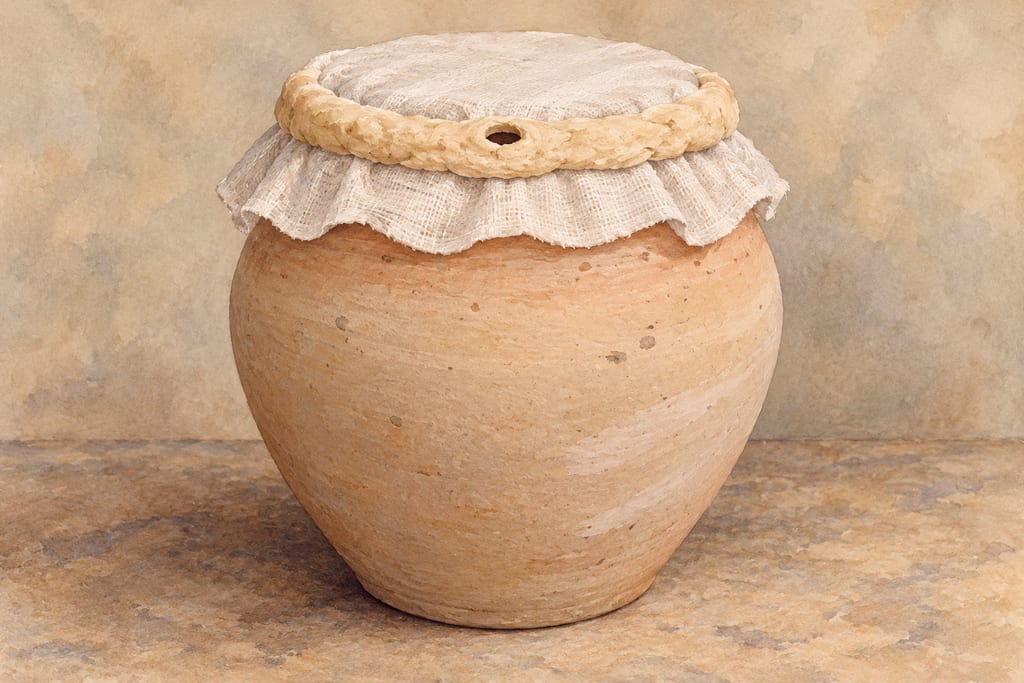
The testi kebab jug is a purpose-made earthenware cooking chamber associated with testi kebabı in Nevşehir and Cappadocia. It holds the meat-and-vegetable dish while heat reaches it from outside. The cited cultural account describes the pot as heat-safe earthenware, but it does not publish a universal clay recipe, firing temperature, wall thickness or capacity. A reader should not infer those specifications from the word “earthenware” or from a photograph of one restaurant serving.
The vessel is not a sealed pressure cooker. In the documented Nevşehir description, a cloth and dough close the opening and a small hole remains in the dough. That vent is part of the described closure; the source does not assign the jug a pressure rating or present it as a pressure vessel.
The Turkish cultural inventory describes meat first heated with oil, then vegetables and seasoning added before the jug is closed and returned to embers for about two hours. The jug then rests before opening. This sequence explains why the vessel must be intended for cooking and why its closure is not simply an airtight lid. It is a description of one regional practice, not an instruction to transfer its timing or fire arrangement to an unrelated pot.
A modern vocational training text offers a separate four-to-six-person formula using a food-safe pot. It is useful evidence of contemporary instruction, but it does not establish the size or construction of traditional jugs. The two sources therefore answer different questions: the cultural inventory describes a named regional practice, while the training material gives a current teaching recipe.
The cultural inventory says that breaking the jug's neck at the table is a tourist presentation rather than part of the older described procedure. A 2009 Göreme photograph shows a pot after opening, with cooked food visible inside and a broken rim. It documents one serving scene; it cannot be used to infer the complete intact shape, clay mix or pre-cooking closure.
The photo makes the distinction concrete: the meal may be served from a broken vessel even though breaking it is not itself the cooking method. The jug belongs to the cooking stage; a service display belongs to a later performance and should not be mistaken for a required tool feature.
The available accounts do not provide a general capacity, dimensions, maker, firing specification, food-contact certification, cleaning routine or long-term storage method for testi jugs. Use only cookware made and sold for cooking, and check its maker's instructions; an antique, decorative or otherwise unassessed clay vase is not a substitute. The current training source's phrase “food-safe pot” concerns its own formula, not every object called a testi.
The cultural account's approximately two-hour ember stage belongs to its described method, not to all jug sizes, fuels or dishes. This page records equipment context rather than a household recipe. Its vented closure and earthenware material describe a cooking practice; they do not establish a pressure vessel, a standard product or a universal thermal design.
Testi kebabı uses a heat-safe earthenware jug as its cooking chamber. The Ministry of Culture and Tourism account describes a vented cloth-and-dough closure and notes that breaking the neck at service is a tourist presentation, not part of the older described practice. A modern vocational training recipe is a separate contemporary source and does not date the vessel tradition.
The small hole in the dough closure belongs to the described source method; the jug is not a pressure vessel and no pressure rating is established.
Source →The approximately two-hour ember stage is one documented account, not a universal cooking time or vessel specification.
Source →The vocational recipe uses a food-safe cooking pot but does not establish the capacity or construction of a traditional testi jug.
Source →The cultural inventory places the dish in Nevşehir; the Commons file documents a modern Göreme serving scene. This is not an origin claim for every clay-pot kebab.
A short length of kitchen string holds rolled bitter-orange peel in a coil during a documented Antalya preserve method. The recipe specifies string and a needle, but does not identify the fiber, construction or heat rating.
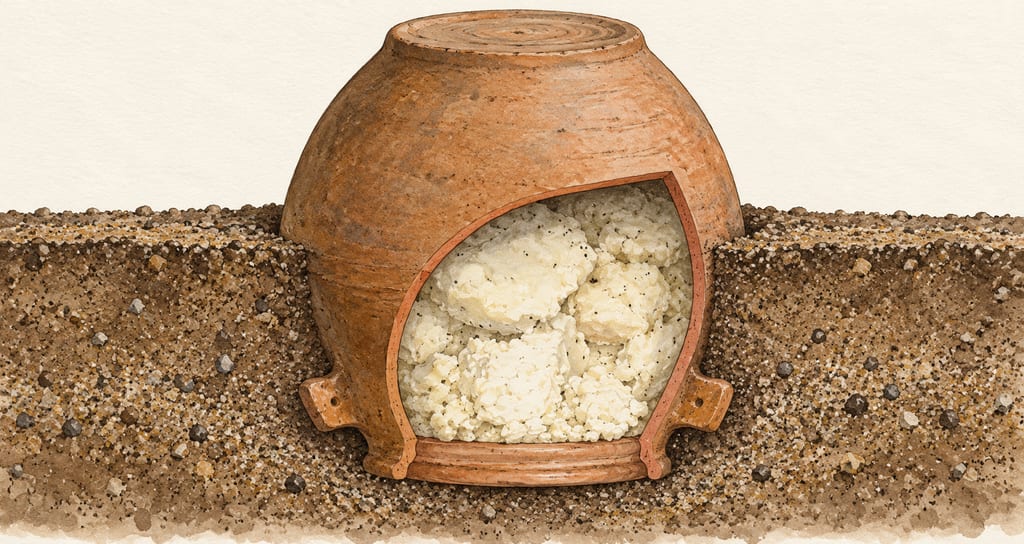
Küp names the vessel used for regional buried-cheese methods in Türkiye. Sources describe both pottery in the historical tradition and plastic containers in contemporary practice; they do not establish one standard shape or capacity.
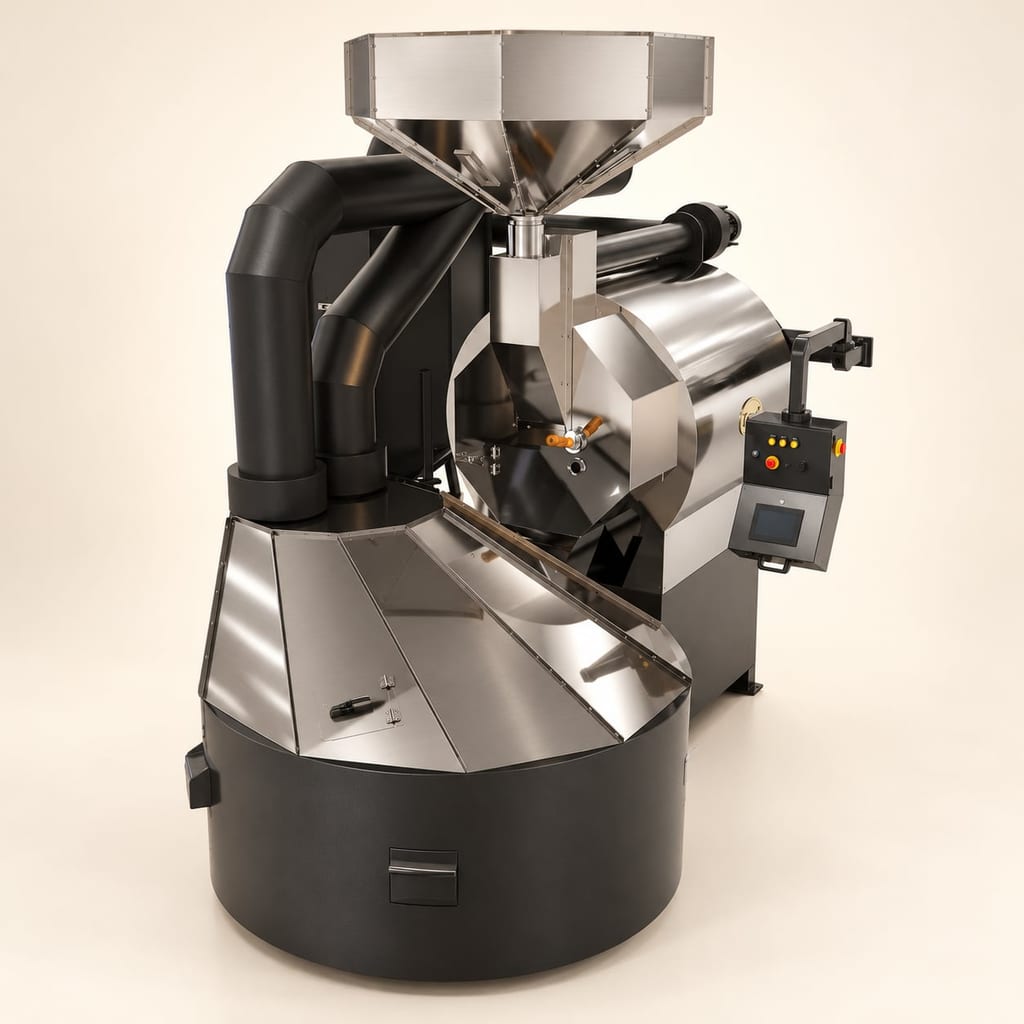
A food roaster is a machine class rather than one fixed design: batch drums, hot-air chambers and continuous lines heat and move different seeds, nuts, grains or beans.
No community contributions have been published for this entry yet.
Sign in to contribute. Published comments and photos are free to read.
Turkish Ministry of Culture and Tourism, Kültür PortalıDocumented use · Geography · Vessel operation · History
Test kebabıThe cultural inventory describes a heat-safe earthenware jug used as the cooking chamber, with meat and vegetables, a cloth-and-dough closure and a small vent hole.
It describes an approximately two-hour return to embers followed by rest; this is a source-specific account, not a universal jug specification or general cooking instruction.
The source distinguishes a neck-smashing tourist presentation from the older described practice and associates the dish with Nevşehir/Cappadocia.
Cited in: A cooking jug, not a pressure pot; How the documented vessel is used; Opening and serving are a separate stage; What the sources leave unspecified
Turkish Ministry of National Education, vocational training materialModern adaptation · Documented use · Limits
Testi kebabı for 4–6A contemporary vocational training formula presents a four-to-six-person version using a food-safe pot.
The training recipe is a modern cooking source and does not establish the traditional jug's universal capacity, dimensions, manufacture or historical origin.
Cited in: How the documented vessel is used; What the sources leave unspecified
Wikimedia Commons; photograph by Niels Elgaard LarsenVisual reference · Documented use · Geography · Rights
File:TestiKebabGoreme.jpgThe photograph is dated 14 May 2009 and shows an earthenware testi kebab pot after opening in Göreme; it shows the rounded body, broken rim, cooked food and dark support, not an intact vessel or its cooking closure.
The file is licensed CC BY-SA 3.0.
Cited in: A cooking jug, not a pressure pot; Opening and serving are a separate stage