
Sesame seeds
Sesame seed, from Sesamum indicum, is about half oil and is eaten whole, ground into paste or pressed into oil. It was a crop of South Asia by the Harappan period and reached Mesopotamia before 2000 BC.
 FermenteaWhere food goes to change
Equipment · Industrial and laboratory plant
Food roaster · Roasting machine
A food roaster is a machine class rather than one fixed design: batch drums, hot-air chambers and continuous lines heat and move different seeds, nuts, grains or beans.
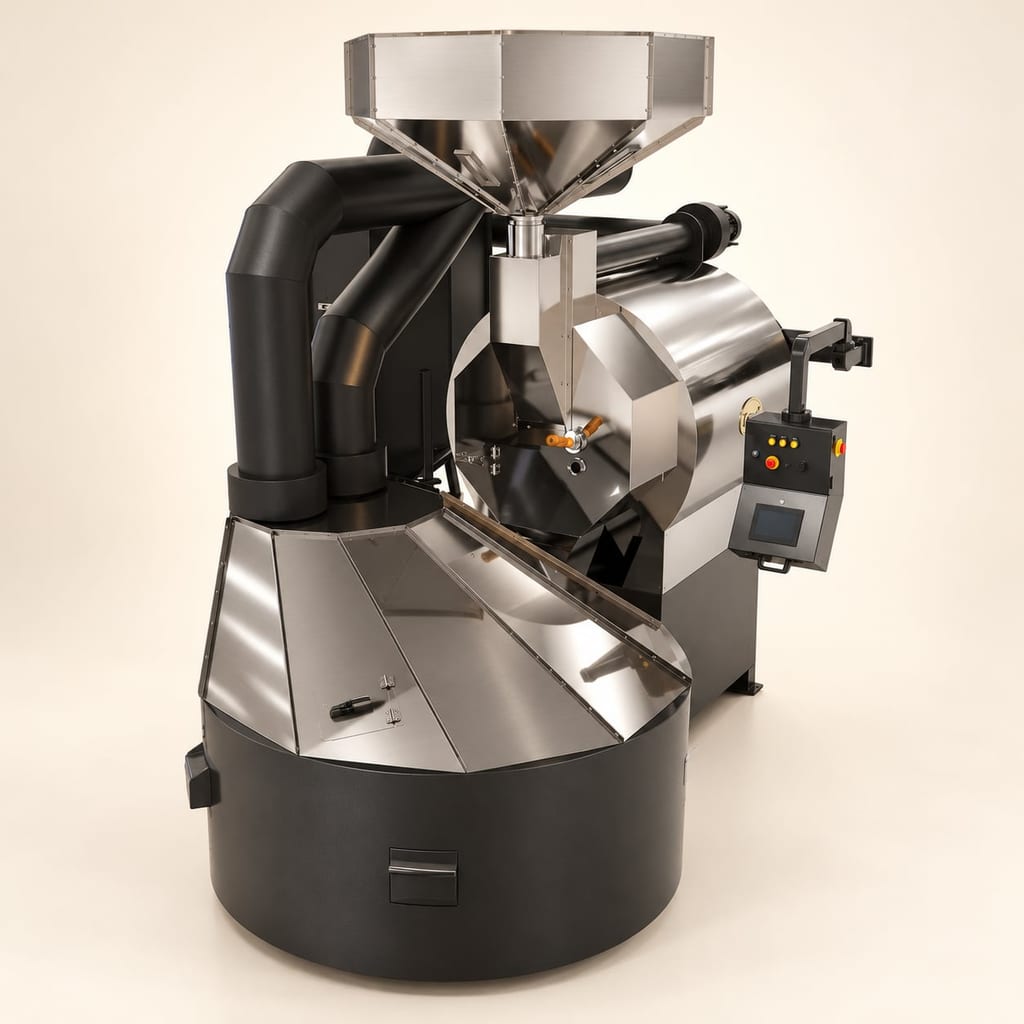
A food roaster is equipment that heats a product to develop a chosen roast, but the word covers several machine designs. This account concerns manufactured food-processing equipment rather than every pan, hearth or household oven used for roasting. The inspected catalogues distinguish batch drum machines, hot-air systems and continuous roasting lines; the shape and movement of the product depend on the design and the material being processed.
The machine has to transfer heat while keeping its feed moving or evenly exposed. In a batch unit, a measured charge is roasted and then discharged; in a continuous line, product enters and leaves as the process runs. Roaster choice is therefore tied to feed, desired roast and production scale, not simply to a generic temperature setting.
Toper lists a TIS 120 roaster for sesame, malt and cocoa. Its product page specifies thermal and hot-air heating, adjustable flame control, and optional programmable control and water injection. Those details describe one manufacturer's model family, not every roaster. The inspected product photograph shows a hopper above an enclosed cylindrical chamber, associated ducting, a control panel and a broad lower metal assembly.
Coffee equipment illustrates another design distinction. NEUHAUS NEOTEC offers the CTR II batch drum roaster for longer roasting profiles and an RFB hot-air system. Its descriptions distinguish how the beans are moved and how heat is transferred. A drum roaster is not interchangeable with a hot-air chamber simply because both produce roasted coffee; the process equipment and profile development differ.
Roasters are used for coffee, cocoa, sesame, nuts and malt, among other products. Toper's catalogue lists equipment for nut, malt and cacao roasting, while its TIS pages name sesame as a feed. NEUHAUS NEOTEC documents roasting systems for coffee. These examples establish a broad equipment class, but they do not mean one machine safely or effectively handles every food.
Roasting is one stage in a longer process. Coffee is roasted after the green seed has been separated from the fruit and prepared; cocoa beans are later cracked and winnowed before nibs are ground. The cooling, dust or chaff separation, conveying and milling equipment may be integrated or separate. Do not treat a roasting machine as a fermentation vessel, seed cleaner or grinder unless its own documentation identifies that function.
Toper's current product catalogue includes coffee and food roasters, and its company history places its first workshop in İzmir, Turkey, in 1954. The company says it manufactures coffee-processing equipment and lists its address in Torbalı, İzmir. This is a documented manufacturer association, not evidence that roasting apparatus began in Turkey or that all models are made at one site.
The available sources describe contemporary commercial machines and selected manufacturer histories, not the earliest roasting equipment or a single traditional regional form. The roaster class therefore has no asserted universal origin, standard material, capacity or power supply. A specific machine should be evaluated against its manufacturer's specifications and the particular product line.
Current manufacturer sources document batch drum, hot-air and continuous roasters for different products. Toper's company history concerns that manufacturer's development and markets, not the invention date of the equipment class.
Toper says it manufactures coffee-processing equipment and its product pages list roasting machines; the company gives an İzmir, Turkey address. This is a manufacturer association, not an origin claim for roasters or proof that every listed model is made at that address.
Sesame seed, from Sesamum indicum, is about half oil and is eaten whole, ground into paste or pressed into oil. It was a crop of South Asia by the Harappan period and reached Mesopotamia before 2000 BC.

A short length of kitchen string holds rolled bitter-orange peel in a coil during a documented Antalya preserve method. The recipe specifies string and a needle, but does not identify the fiber, construction or heat rating.
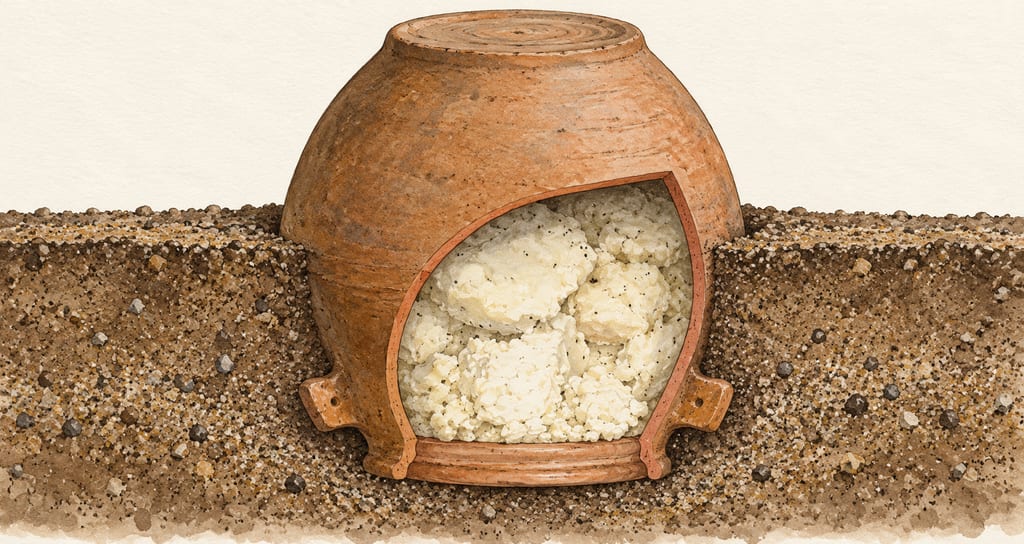
Küp names the vessel used for regional buried-cheese methods in Türkiye. Sources describe both pottery in the historical tradition and plastic containers in contemporary practice; they do not establish one standard shape or capacity.
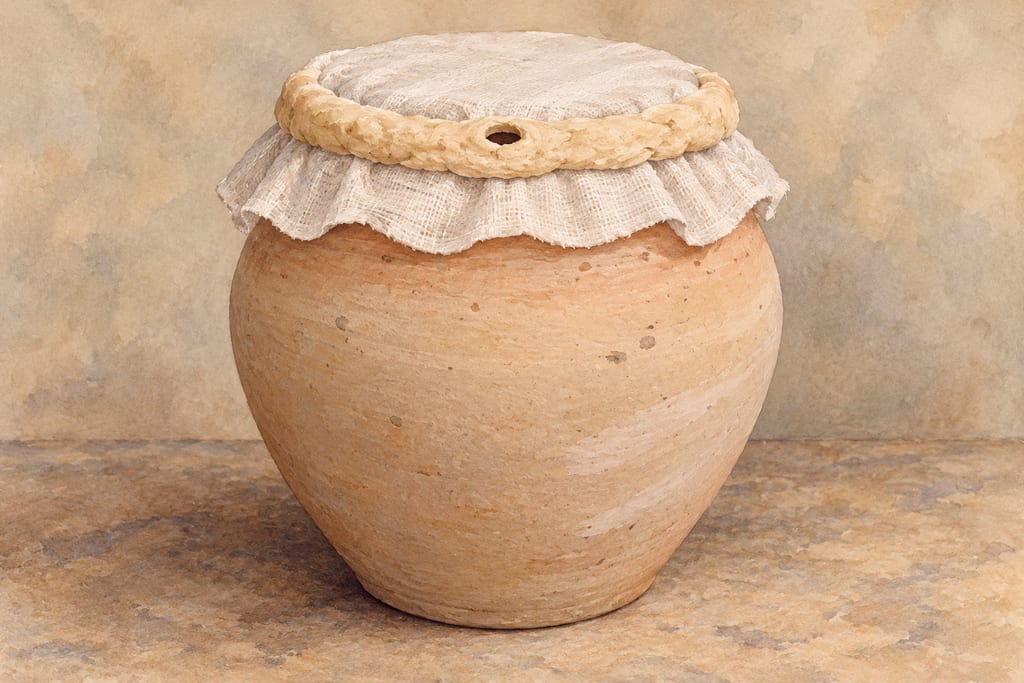
A purpose-made earthenware testi jug acts as the cooking chamber for testi kebabı. A documented Nevşehir account describes a cloth-and-dough closure with a small vent; size and craft specifications are not established.

Soft, spreadable Calabrian pork sausage made with a great deal of red chilli and fatty pork, stuffed into natural casings, sometimes smoked and matured while staying soft.

A way to add independent temperature logging to an existing food dehydrator without changing its built-in controls or protections. It is a monitoring method, not a rewiring plan.

Pleurotus cystidiosus is the abalone mushroom, a cultivated oyster-type fungus with dark brown caps that grows more slowly and is more demanding than other Pleurotus species.

A dark, balanced vinegar from Emilia-Romagna made by combining cooked or concentrated grape must with wine vinegar, then acetifying and refining it in wood under a protected specification.

A living dairy inoculum that starts controlled cream fermentation, developing acidity and aroma before sour cream or cultured butter is finished.

A small electric incubator holds jars at a selected temperature for yogurt and other documented warm food preparations. Controls, capacity and vessel arrangement vary by model.

Adygean salt is a seasoned table salt associated with Adygea and the wider North Caucasian culinary tradition. Salt is blended with garlic and a variable selection of herbs and spices; the exact mix depends on the named style and maker.

The African Caesar-group mushroom, Amanita masasiensis, is a wild ectomycorrhizal species of central and southern African woodlands, eaten locally. The genus contains deadly poisonous species, so identification needs care.
No community contributions have been published for this entry yet.
Sign in to contribute. Published comments and photos are free to read.
ToperCurrent equipment · Food applications · Heat transfer
Sesame, Malt and Cocoa Roaster TIS 120Toper lists the TIS 120 as a sesame, malt and cocoa roaster, gives thermal/hot-air heating, and identifies roasting time and electrical supply for that model.
The manufacturer describes adjustable flame controls and optional PLC and water-injection features; these are model examples, not universal roaster properties.
Cited in: Drum and hot-air examples
ToperEquipment range · Food applications
Nut, Malt and Cacao RoastersToper separately lists coffee roasting equipment and nut, malt and cacao roasters, showing food-specific machine families rather than one universal apparatus.
Its category identifies roasters for nut, malt, sesame and cocoa products and describes control over time and temperature.
Cited in: A machine class, not one standard shape; Different feeds, different downstream work
NEUHAUS NEOTECDesign variation · Coffee equipment
Roaster Series CTR IIThe manufacturer describes a batch drum coffee roaster with indirect heat, a closed hot-air circuit, adjustable heat-transfer balance and batch-specific size.
The CTR II is presented for longer roasting times; these are manufacturer-specific design attributes.
Cited in: A machine class, not one standard shape; Drum and hot-air examples; Manufacturers and geographic limits
NEUHAUS NEOTECDesign variation · Process line
Complete PlantsThe manufacturer offers both RFB hot-air roasting and drum roasting and says equipment choice depends on product requirements.
Roasting equipment is part of larger coffee-processing plants alongside conveying, storage and grinding systems.
Cited in: A machine class, not one standard shape; Drum and hot-air examples; Different feeds, different downstream work
ToperGeography · Manufacturer history
About UsToper dates its start to a small İzmir workshop in 1954, initially associated with a coffee grinder; this is company history, not the origin of the roaster class.
The company states it manufactures coffee-processing equipment and reports international markets; these are manufacturer claims, not evidence of a universal historical distribution.
Cited in: Manufacturers and geographic limits
ToperManufacture · Product context
ProductionToper describes research, production and customer solutions for coffee and food industries; it lists its contact address in Torbalı, İzmir.
Cited in: Manufacturers and geographic limits