A copper tacho in São Bartolomeu
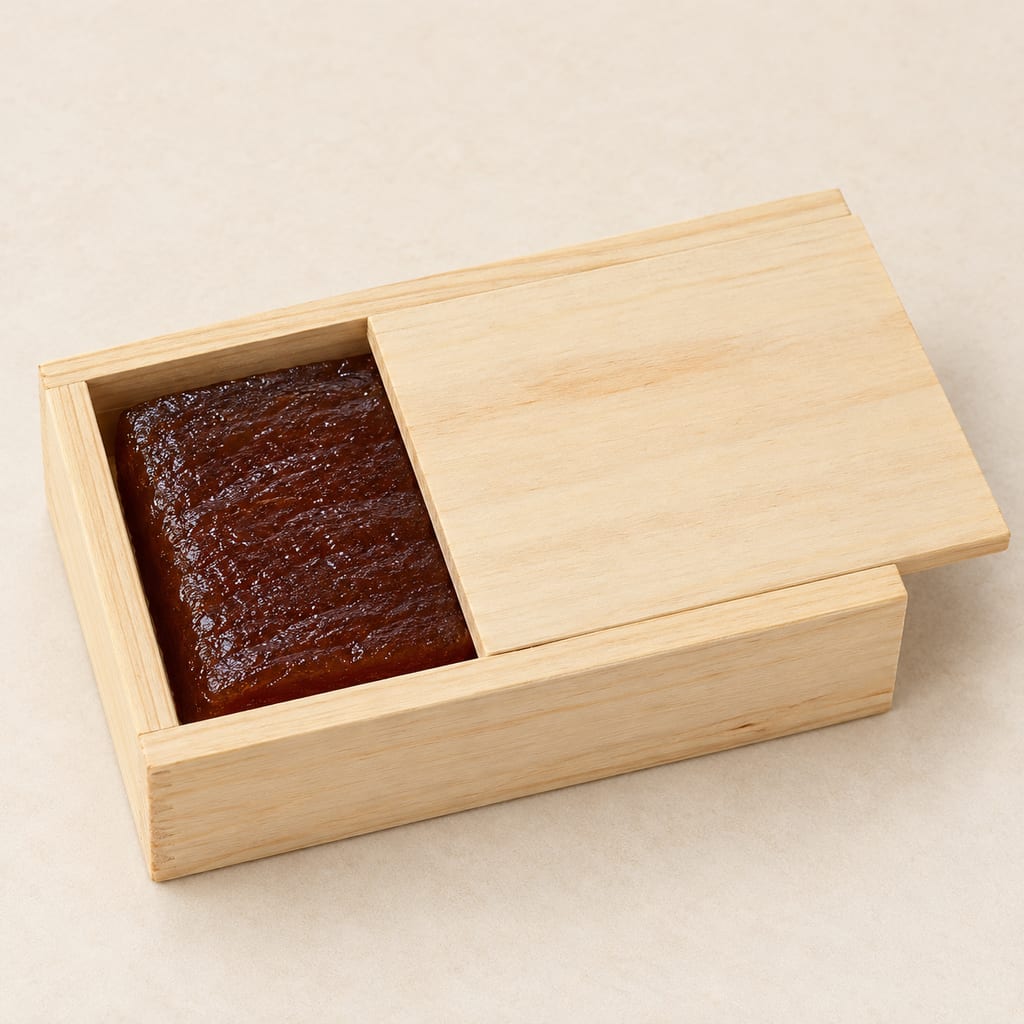
The copper kettle called a tacho de cobre belongs to a particular Brazilian fruit-sweet tradition. In São Bartolomeu, a district of Ouro Preto in Minas Gerais, makers cook guava with sugar into goiabada cascão, a cuttable sweet that keeps pieces of peel. The copper vessel is part of the local craft rather than a universal pan for every Brazilian guava preserve.
The district's fruit-sweet making received municipal intangible-heritage recognition in 2008, and its Festa Cultural da Goiaba has been held since 1993. Those dates mark public recognition and celebration, not the invention of goiabada or the first copper tacho. A local historical guide recounts an early nineteenth-century report of sweets in the district by John Pohl; the cited account describes the earlier sweetmaking tradition, not a copper kettle for goiabada.
Sources for this section
The movable kettle and the fixed hearth
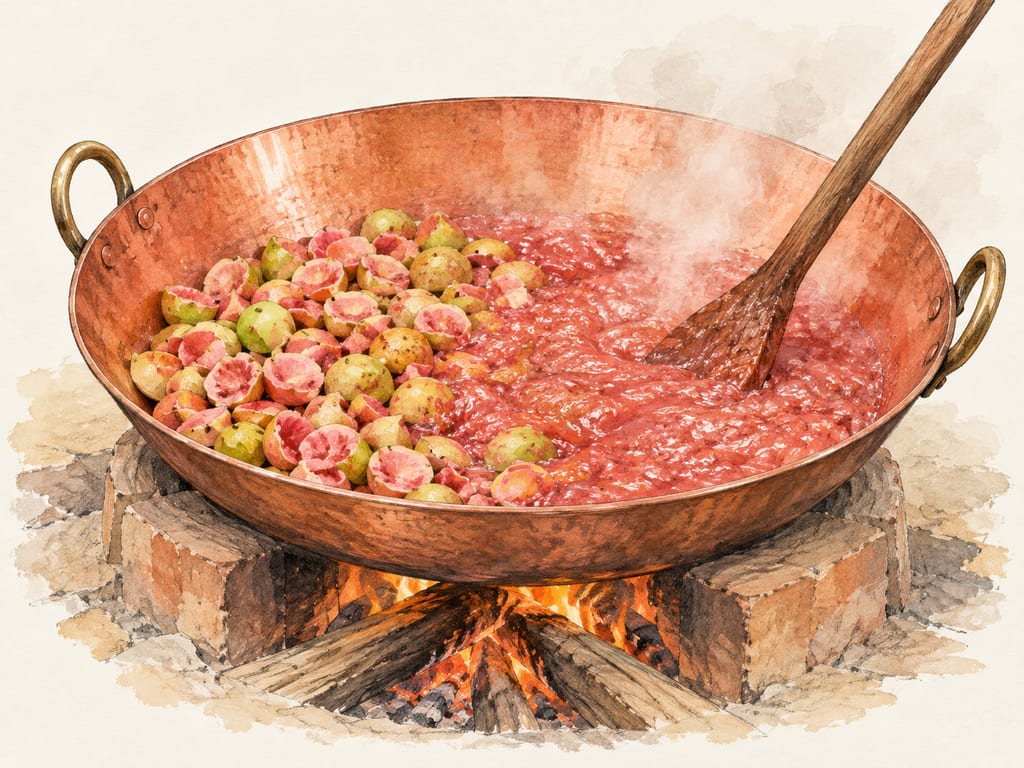
A tacho is a broad, open copper kettle used over heat. Local accounts describe the tacho and the hearth as different objects: the kettle can be inherited or passed between producers, while the round brick fornalha is built in place and fed with firewood through an opening. The paddle used to keep the fruit moving is wood, another separate tool. The vessel itself is not a fermentation jar.
One account from the local tradition says copper tachos are inherited from family doceiros or acquired from owners of former rapadura farms. That is evidence of a historic local route of transfer, not a current retail directory. The record does not identify a present-day maker, supplier, or a standard kettle shape.
Sources for this section
Cooking the fruit to a cuttable point
The tacho holds guava and sugar while heat drives the sweet toward a thick, sliceable consistency. The local goiabada cascão method separates pulp from seed and retains pieces of peel; a wooden paddle keeps the mass moving as it cooks. This is a heated concentration stage, not fermentation in the kettle.
Two accounts show why no universal time belongs on the equipment record. One describes roughly two hours before the sweet begins to bubble and splash toward the cuttable point; a 2023 report of producer Pia Chaves records about two and a half hours of stirring. These are accounts of particular local work, not a kettle timer or a standard batch setting. The craft description values copper for distributing heat and maintaining the sweet's familiar bright colour; it does not provide a measured comparison with another metal.
Sources for this section
Copper, cleaning and food-contact rules
Copper is the documented kettle material, but the consulted photographs and descriptions do not specify an alloy, wall thickness, inner coating, or the condition of any particular tacho. Local guidance stresses attention to cleaning and maintenance; it does not give a standardized schedule or a validated cleaning formula.
Brazil's RDC 854/2024 sets the current food-contact conditions for metal equipment. It lists copper, brass and bronze with a complete coating of technically pure gold, silver, nickel or tin. It also allows uncoated copper equipment for particular industrial or artisanal foods at the competent health authority's discretion, provided its technological function is demonstrated. The sources here do not establish whether a specific goiabada tacho has that authorization. Long use in a craft is not, by itself, proof of an individual vessel's present regulatory status.
Sources for this section
What the record can measure
The literature and local accounts give no standard kettle capacity or diameter for this equipment. The photo helps readers recognize the broad open form, but does not establish a measurement, lining, metal thickness, or a universal specification. Differences in the tacho, hearth, guava, sugar, and the maker's timing belong to the local practice.
The wood-fired brick hearth is important to the documented setup, but it is a built structure and not part of this movable kettle. This entry follows the copper vessel alone; its typed link connects it to the goiabada cascão preparation that uses it.
Sources for this section
History
Local accounts document copper tachos in present-day goiabada cascão production and describe the wider fruit-sweet tradition. A local guide recounts an early nineteenth-century account of sweets in the district, but that record does not establish a copper kettle for goiabada at that date.
Equipment details
CapacityNo measured capacity or working range is recorded for the São Bartolomeu copper tachos.
SizeNo standard diameter or height is established. The source photograph shows a broad, shallow open kettle but supplies no measurement.
PowerFire or solid fuel A local account describes wood fuel in a separate circular brick hearth beneath the tacho; the hearth is a fixed structure, not part of this movable kettle.
How you get oneNot established A local guide reports tachos inherited from family doceiros or acquired from owners of former rapadura farms. The consulted sources do not identify a current maker, retailer or market route.
CareA local account notes careful cleaning and maintenance of copper tachos as part of the craft. It does not give a validated cleaning formula, inspection schedule, surface condition or replacement interval.
Made of
- Copper — Kettle body
Local accounts identify copper tachos. They do not specify alloy, wall thickness or the inner surface coating of any particular kettle.
Limits
Brazil's RDC 854/2024 requires food-contact metal equipment to meet its material requirements. Copper, brass or bronze must be fully coated with technically pure gold, silver, nickel or tin; uncoated copper equipment for particular industrial or artisanal foods is permitted only at the competent health authority's discretion when its technological function is demonstrated. Approval of any individual kettle is not established here.
Source →Places
São Bartolomeu, Ouro Preto
Traditional preparation · Locality evidenceThese accounts document a local copper-tacho tradition in São Bartolomeu; heritage recognition dates the recognition of fruit-sweetmaking, not the invention of this kettle.
Southern Minas Gerais
Traditional preparation · Region evidenceThe regional account describes copper-tacho goiabada cascão as typical of southern Minas Gerais; it does not claim that all Brazilian guava sweets use this vessel.