A package made by its producers
Wooden boxes are part of the documented presentation of Marmelada de Santa Luzia, the firm quince paste associated with the Mesquita/Cidade Ocidental area of Goiás, Brazil. The Goiás Legislative Assembly reports that marmelada producers make the boxes by hand, and the Slow Food Brasil profile likewise describes the boxes as made by the producers. This is a locally documented packaging practice, not a claim that every fruit paste or every wooden box follows one design.
In Brazil, marmelada here means quince paste rather than citrus marmalade. The state recognized the sweet and its cultural practice as Goiás heritage in 2022. The package belongs to that specific product tradition, with producer families and quilombola communities named in the sources; it should not be detached from that context and presented as a universal old-fashioned container.
Sources for this section
What the sources show about the box
The sources support wood as the packaging material and document boxes made by the marmelada producers. Slow Food Brasil reports that the paste is kept in contact with the wood and says this contact helps preserve it, with a thin layer forming at the top. That is the profile’s account of the local practice; it does not provide controlled shelf-life results, a food-contact specification or safe storage instructions.
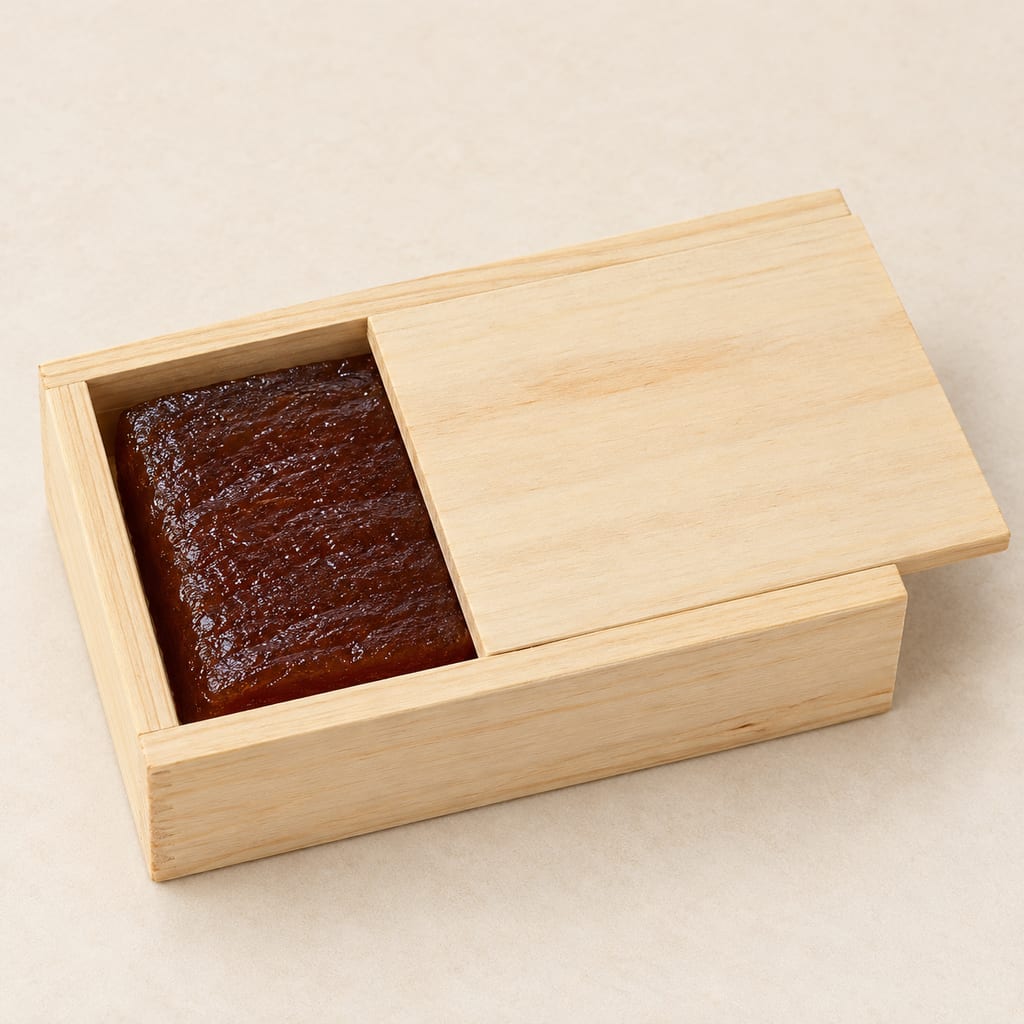
A current product photograph shows one shallow, rectangular package with a cover panel and a block of paste inside. It is useful as a reference for one real presentation, not as a template for every maker. The sources do not name a wood species, board thickness, dimensions, joinery, coating or standard capacity. This entry therefore describes a handmade wooden package, not a fixed blueprint.
Sources for this section
Use and limits
The box packages the cooked, set quince paste after production. The linked Marmelada de Santa Luzia preparation is the related food; this equipment record does not imply that its recipe prescribes a particular box, construction or storage duration. The product image shows a filled package, while the written accounts describe the producers’ handmade boxes.
The available sources do not explain how boxes are made, cleaned, finished, sealed or reused. They do not establish shelf life or food-safety performance for wood contact. For those reasons, the tradition is described as reported, while dimensions, materials beyond wood and handling guidance remain unspecified.
Sources for this section
History
Goiás's 2022 legislative account describes producers making handmade wooden boxes for Santa Luzia marmelada. A Slow Food profile describes the finished quince paste packaged in local wooden boxes and reports the product's traditional association with contact with wood. Neither source dates the origin of this packaging form.
Equipment details
CapacityNo general capacity is documented; product sizes vary by producer and no universal box volume is established.
SizeNo source gives the boxes' dimensions or a standard shape. A current product photograph shows one shallow rectangular package, which should not be treated as a universal pattern.
How you get oneNot established Sources describe boxes made by marmelada producers and show filled products for sale, not a standard empty box or general retail source.
Made of
- Wood — documented packaging material
The sources identify wooden boxes made by producers; they do not name a wood species or grade.
Limits
No inspected source specifies the wood species, dimensions, joinery, lid design, finish or a standard box capacity; avoid treating one product photograph as a universal pattern.
Source →The Slow Food profile reports a preservation benefit from contact with wood, but gives no validated shelf-life, sanitation or food-safety procedure; do not turn that account into storage advice.
Source →Places
Cidade Ocidental, Goiás
Traditional use · Locality evidenceSources place Santa Luzia marmelada producers and their handmade wooden packages in the Mesquita/Cidade Ocidental area; this documents the package's use with this product, not the origin of wooden boxes generally.