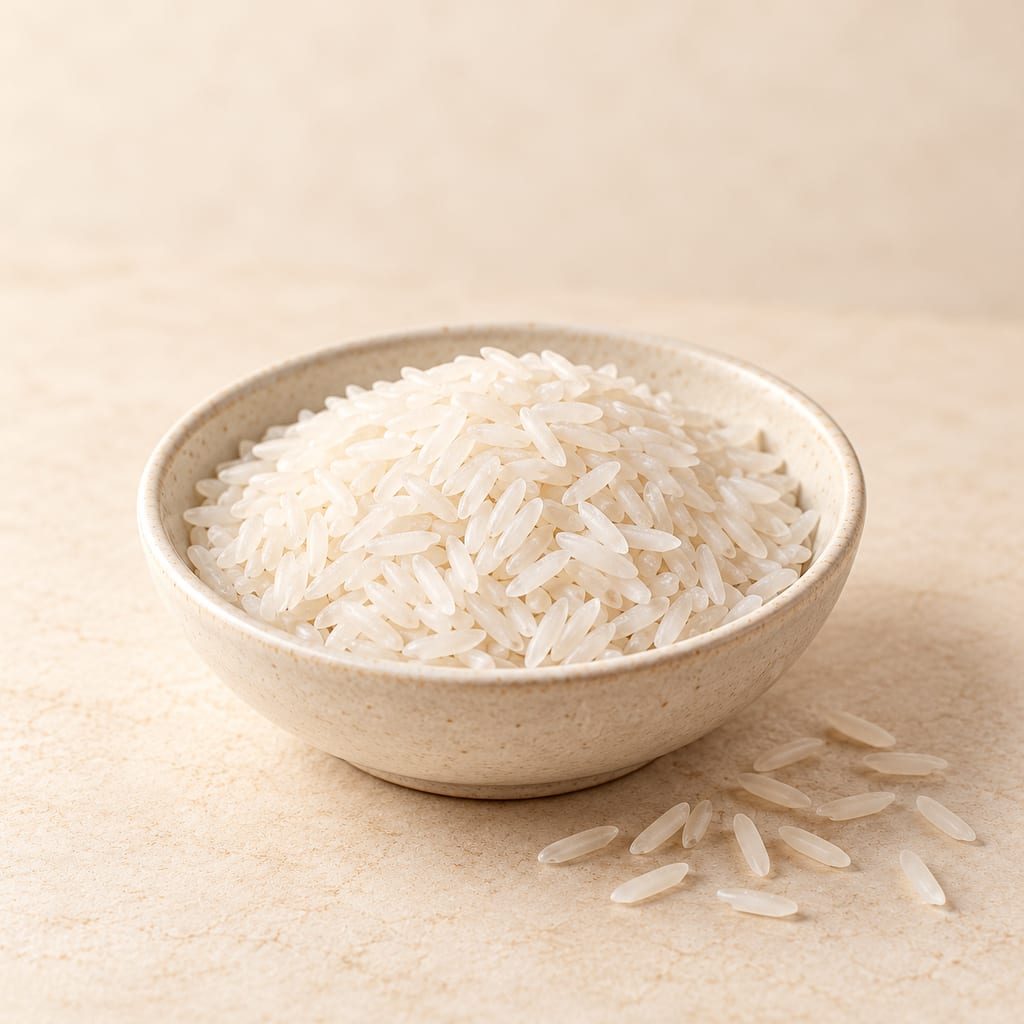
Rice
Rice contributes starch to flatbreads, steamed breads, batters and many distinct fermentations. Its species, milling and starch character shape how it cooks, binds, expands and feeds enzymes.
 FermenteaWhere food goes to change
Built structures · raised-storehouses
kundej · kuti · kūti · kūndəj
A kundej is a raised rice barn documented in central and eastern Gilan, Iran. Its regional forms store harvested sheaves above damp ground while ventilation helps dry them.
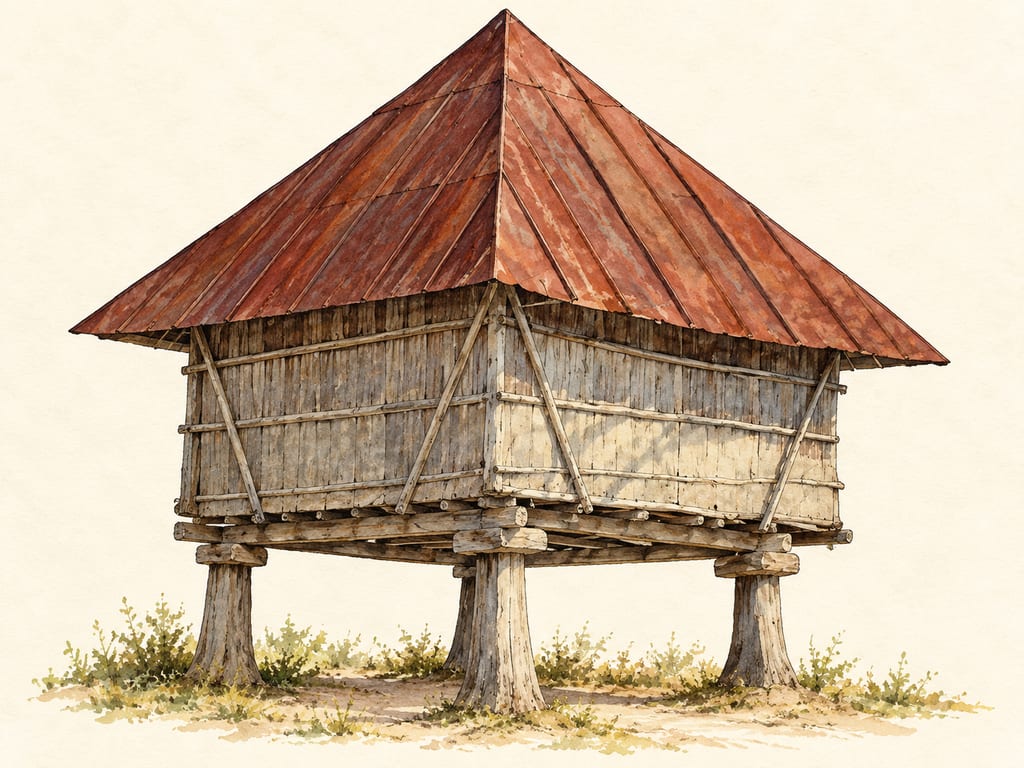
Kundej is the name Christian Bromberger records for elevated rice barns in central and eastern Gilan; at Pāresar, a subdistrict of Rezwanshahr, the local term is kuti. These are farm outbuildings associated with harvested paddy sheaves, not underground cellars and not buildings for making ice. A separate structure in the Rešt district used to dry paddy is named dudḵāna, garmḵāna or bujḵāna, while telembār and kūrūj describe long, low barns built directly on the ground in parts of western Gilan. The forms should not be collapsed into one generic granary plan.
The raised stores sit on pilings above damp ground, which helps protect the sheaves from moisture and pests. Bromberger and Bazin describe a central flue within the stored sheaves; airflow through this opening ventilates and dries the crop. In their account, the raised stores are the form that efficiently keeps sheaves for later sale, allowing stocks to remain for months or even years. This is storage and gradual drying after harvest, not a claim that the building itself performs rice smoking: the same Iranica account describes smoking as a separate local step in the Caspian rice-drying process.
The rice article notes several stake-built variants: rounded, elongated roofs west of Anzali lagoon; pyramid-like buildings in central Gilan; and house-shaped, cubical forms with four-section roofs in eastern Gilan and western Mazandaran. The housing account identifies kundej in central and eastern Gilan and kuti in Pāresar. A separate regional entry describes a high, round paddy barn on strong wooden pilings at Para Sar, showing that documented examples are site-specific. The sources do not establish one universal material list, set of dimensions, construction sequence or date of origin, so this page does not prescribe a reconstruction.
A build is made where it stands: moving it means building it again.
Iranica identifies kundej as the name for elevated rice barns in central and eastern Gilan; no single building is implied.
The local name kuti is documented at Pāresar; the article describes a high round paddy barn in this subdistrict.
Rice contributes starch to flatbreads, steamed breads, batters and many distinct fermentations. Its species, milling and starch character shape how it cooks, binds, expands and feeds enzymes.
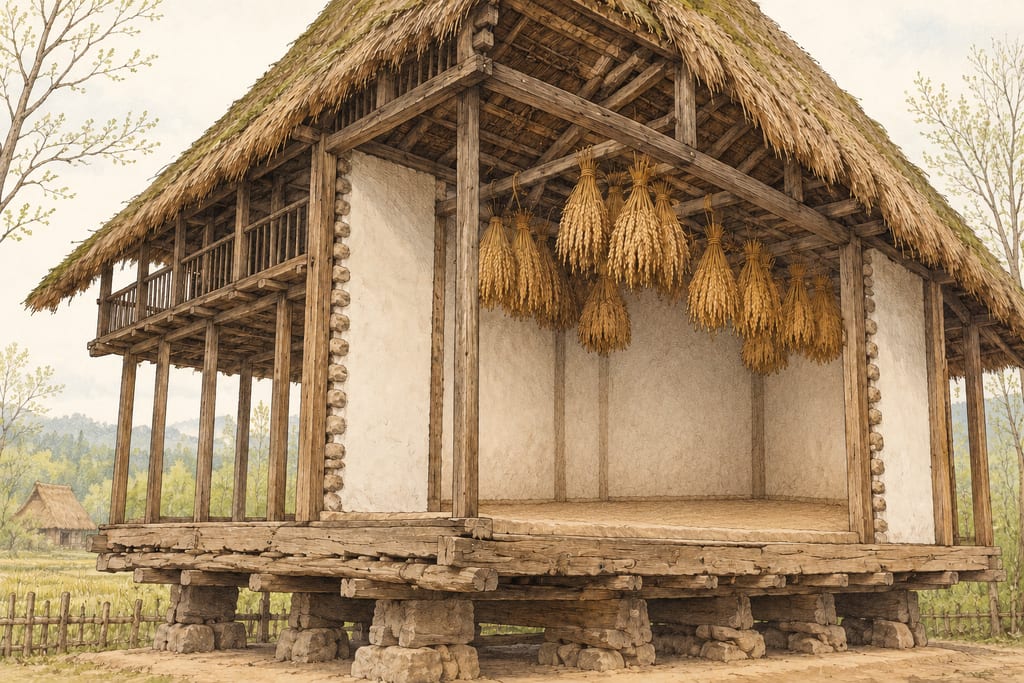
Bojkhāne names a rice-smoking room in some Gilan accounts. It was part of a flexible household room tradition, not a single standardized plan.
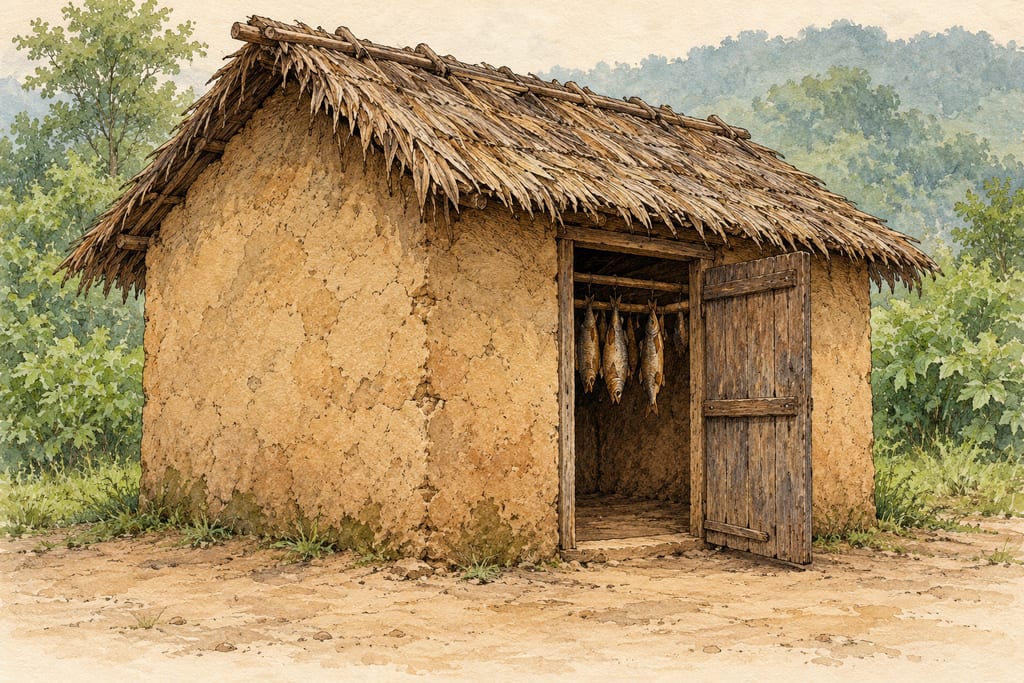
Dudkhāneh is a smokehouse term used in Gilan. A field report documents one fish-smoking workshop at Mobandan; its mud-plastered room and thatched roof are one local example, not a universal plan.
No community contributions have been published for this entry yet.
Sign in to contribute. Published comments and photos are free to read.
Encyclopaedia IranicaForm · Geography · Use
Gilān xii. Rural HousingElevated rice barns called kundej in central and eastern Gilan and kuti in Pāresar.
The Rašt district also has separate paddy-drying buildings, named dudkhaneh, garmkhaneh or bujkhaneh.
Cited in: A raised barn in the rice-growing plain; Regional forms, not a single template
Encyclopaedia IranicaForm · Use · Geography
Berenj (“rice”) i. In IranRegional forms and distribution of stake-built rice barns across Gilan and Mazandaran.
Raised stores protect sheaves above damp ground and pests; a central flue ventilates and dries them for storage for months or years.
Other forms and separate rice-smoking processes are identified; they are not interchangeable with the raised barn.
Cited in: A raised barn in the rice-growing plain; Why raise the sheaves; Regional forms, not a single template
Encyclopaedia IranicaForm · Geography
ReżvānshahrA high round paddy barn on strong wooden pilings, called kuti, is documented in the Para Sar subdistrict; site-specific evidence.
Cited in: A raised barn in the rice-growing plain; Regional forms, not a single template