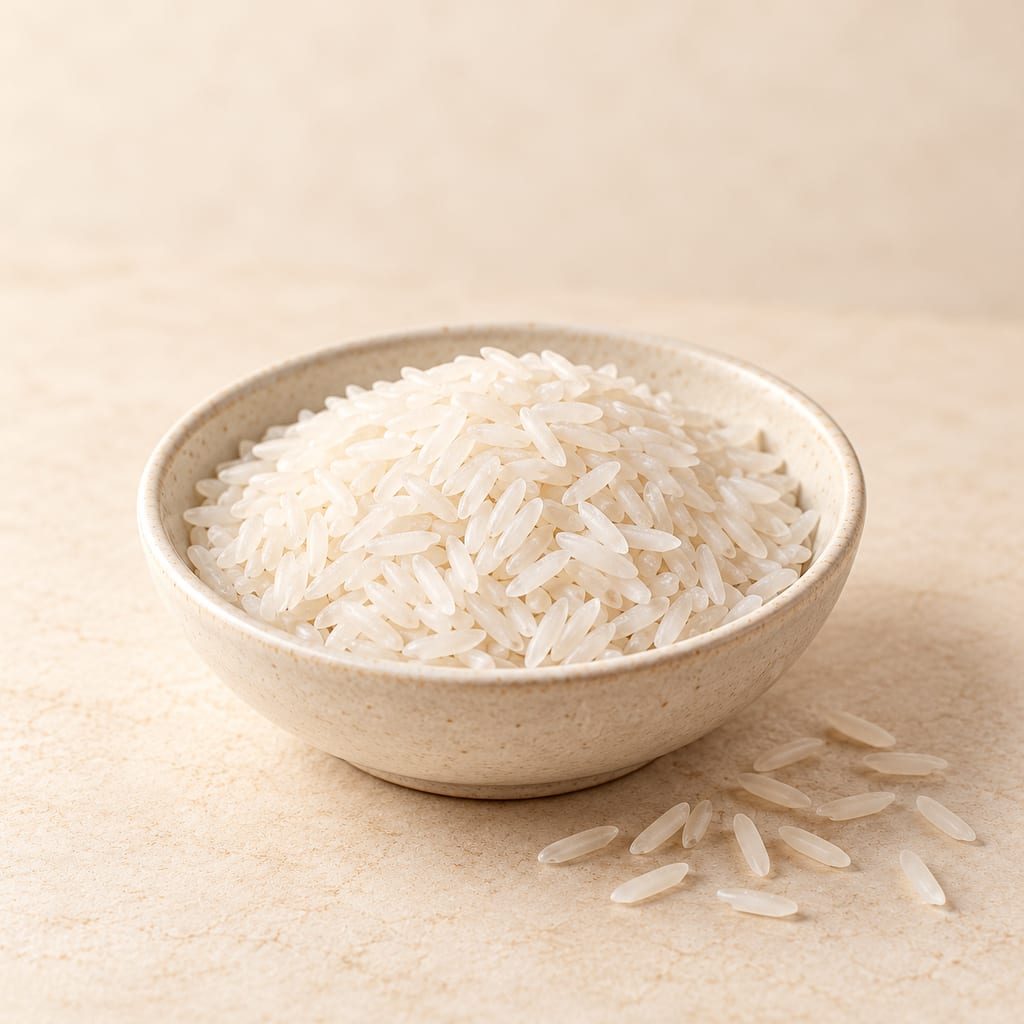
Rice
Rice contributes starch to flatbreads, steamed breads, batters and many distinct fermentations. Its species, milling and starch character shape how it cooks, binds, expands and feeds enzymes.
 FermenteaWhere food goes to change
Built structures · Smokehouses and smoke rooms
Bojkhāne names a rice-smoking room in some Gilan accounts. It was part of a flexible household room tradition, not a single standardized plan.
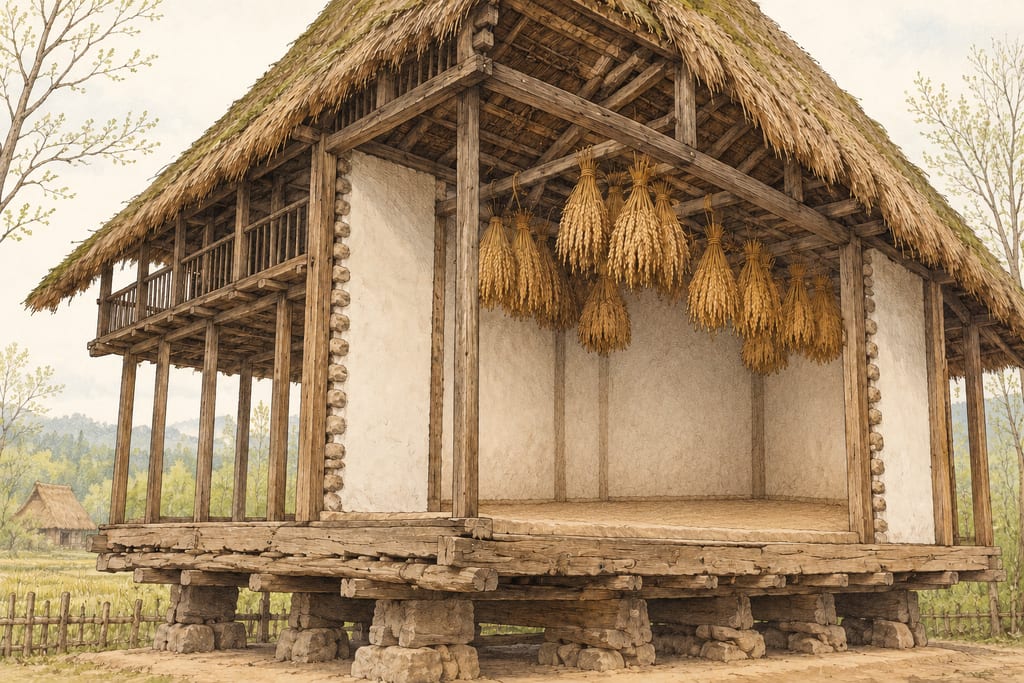
Bojkhāne is the name used for a rice-smoking room in some accounts of northern Iran; Garm-a khāne is recorded as a related term. The ICOMOS Iran bulletin uses other local names, including dūd-khāneh, do’k and ātesh-khāneh, in its account of Gilan houses. These names do not establish one uniform building type or plan. Smoke and rice work appear among several tasks carried out in a winter room, alongside cooking and everyday household life. [B1] [B2]
This is best understood as a room within a dwelling, not automatically as a separate outbuilding. It could be the main ground-floor room, a central room, or a separate room with lesser importance. Functions and room positions vary with the household and the house. Many examples are said to have high ceilings, but small, low rooms are also recorded; the high-ceiling form is not universal. [B1]
In Gilan, smoking could finish the drying of rice. One recorded method hangs sheaves in a room warmed by the slow combustion of wood and rice chaff. Slow drying matters in that account: drying too quickly can make grains more liable to break during husking. Smoking is recorded as one stage in the harvest and processing sequence, not as a standalone recipe or a single fixed room layout. [B2] [B3]
Bromberger and Bazin distinguish this sheaf method from smoking paddy after threshing: the separated grain may be spread on prepared racks or put in vessels. These are different grain stages and arrangements. A source describing one cannot establish that every bojkhāne held whole sheaves, racks, or vessels. [B3]
The architectural bulletin includes a floor-plan example and room photographs, while the regional accounts explain household uses and rice-processing variants. Together they support a bounded description of the room, not a reconstruction of one named historic house. They do not give a standard footprint, a dated origin, a measured fire chamber, or operating temperatures. The illustration represents one documented high-ceiling room arrangement and is not a plan for all Gilan homes. [B1] [B2] [B3]
A Wikimedia Commons photograph of a traditional house in the Gilan Rural Heritage Museum shows regional vernacular materials and exterior context; it does not identify that building as a bojkhāne. The source image is credited to MasoudK and licensed CC BY-SA 4.0. [B4]
The ICOMOS Iran bulletin records seasonal and household uses; Christian Bromberger's regional account discusses smoke rooms used for rice drying and other work. Neither establishes a construction date or a universal plan.
A build is made where it stands: moving it means building it again.
Country-level setting for the documented Gilan household room and rice-smoking practice.
These are regional accounts, not a claim about one specific building.
Rice contributes starch to flatbreads, steamed breads, batters and many distinct fermentations. Its species, milling and starch character shape how it cooks, binds, expands and feeds enzymes.
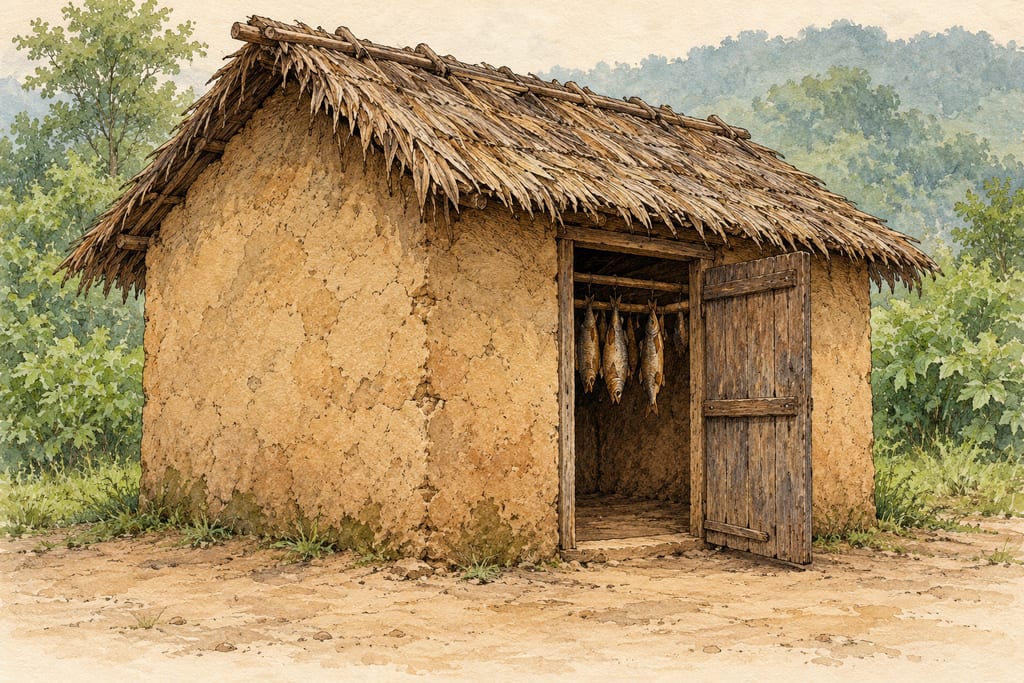
Dudkhāneh is a smokehouse term used in Gilan. A field report documents one fish-smoking workshop at Mobandan; its mud-plastered room and thatched roof are one local example, not a universal plan.
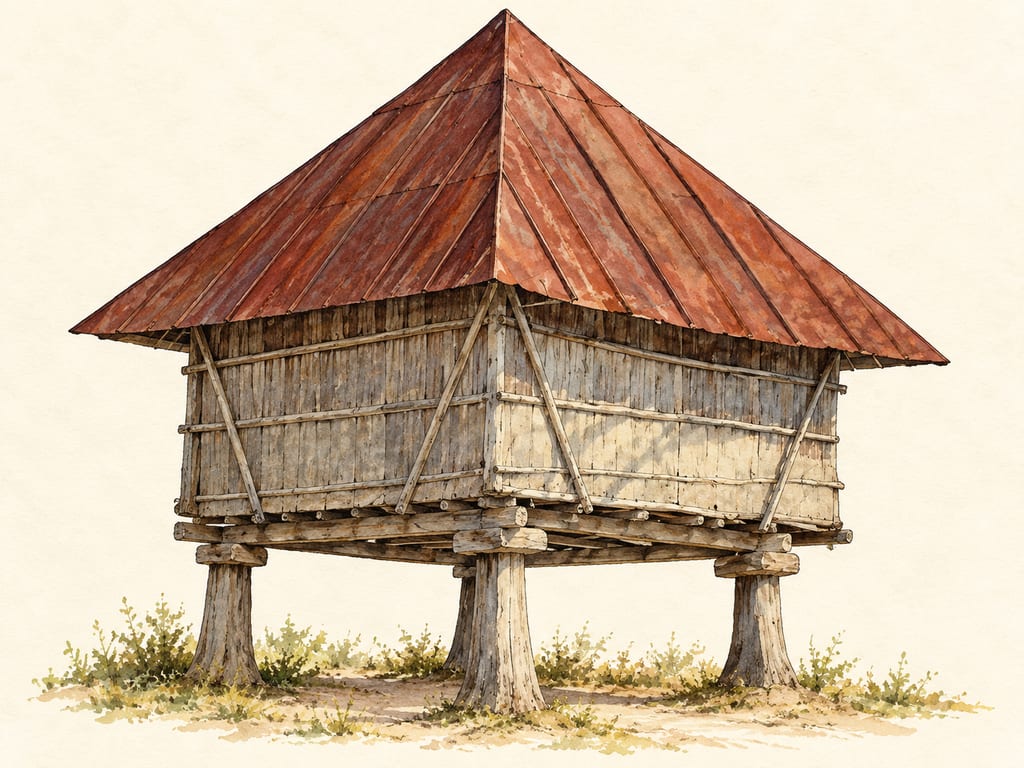
A kundej is a raised rice barn documented in central and eastern Gilan, Iran. Its regional forms store harvested sheaves above damp ground while ventilation helps dry them.
No community contributions have been published for this entry yet.
Sign in to contribute. Published comments and photos are free to read.
Sara Ashtari Majalan; ICOMOS Iran Scientific Committee, Bulletin No. 9, Winter 2022Architecture · Room use · Geography
The Vernacular House in Gilan and Its Spatial Elements (Part 3) [درآمدی بر شناخت خانه بومی در گیلان و عناصر فضایی آن]A winter room served for cooking, smoking and drying rice, livestock shelter, and daily/nightly living.
Many rooms are high enough to hang rice sheaves beneath the roof, while some are small and low.
The room may occupy several positions within a dwelling; the source does not establish one standard plan.
Cited in: A room in the household; What the record leaves open
Encyclopaedia IranicaEthnography · Method · Regional context
Gilan xviii. Rural Production TechniquesSmoke was traditionally used in humid Gilan for drying rice and other products.
A smoke room was used for drying sheaves and stifling cocoons.
Rice-drying methods relate to roof forms and household materials.
Cited in: A room in the household; Rice at different stages; What the record leaves open
Encyclopaedia IranicaRegional context · Rice processing
Berenj (“Rice”) i. In IranSmoking completed drying in the Caspian provinces.
Sheaves heated in a room over slow wood and rice-chaff combustion are distinct from post-threshing paddy smoked on racks or in vessels.
Drying sheaves too quickly can increase grain breakage during husking.
Cited in: Rice at different stages; What the record leaves open
Wikimedia CommonsImage reference · Architecture
Gilan Rural Heritage Museum By MasoudK 001.jpgThe photograph shows a stilted house at the Gilan Rural Heritage Museum, with timber supports, plastered wall surfaces, and a thatched roof; these are visible features of this pictured example only.
The file page licenses the author's work CC BY-SA 4.0.
Cited in: What the record leaves open