Built structures
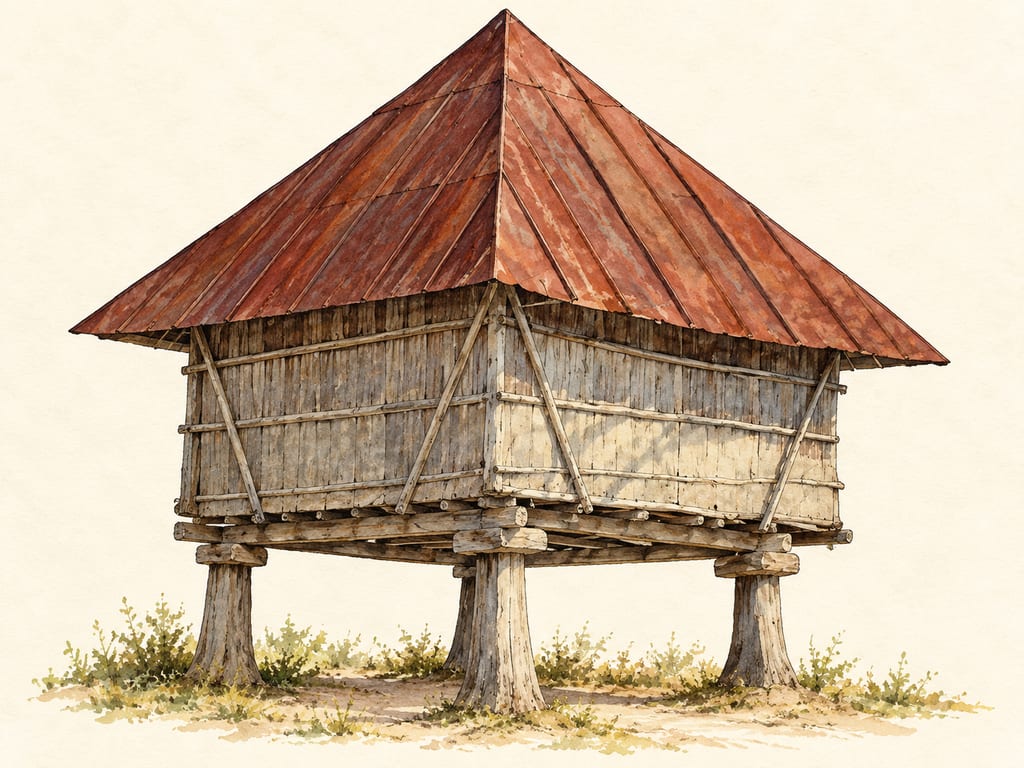
Kundej (Gilan raised rice barn)
A kundej is a raised rice barn documented in central and eastern Gilan, Iran. Its regional forms store harvested sheaves above damp ground while ventilation helps dry them.
 FermenteaWhere food goes to change
626 sourced equipment pages: vessels, tools, appliances and built structures.
A kundej is a raised rice barn documented in central and eastern Gilan, Iran. Its regional forms store harvested sheaves above damp ground while ventilation helps dry them.
A sardāb is a deep cellar in Iranian vernacular houses, used in summer to keep perishable food cool. Sources describe varied depths and ventilation, so this is not one fixed design.
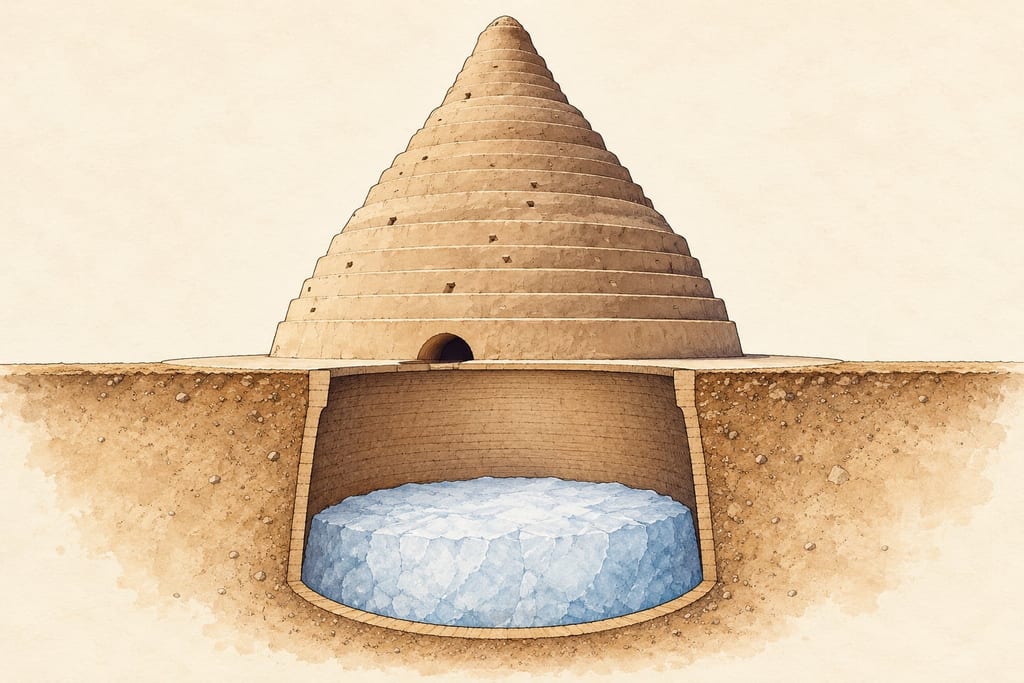
A yakhchāl is an Iranian building or covered pit for storing ice harvested in winter for summer distribution. Its forms vary, and the sources do not show that it was a food cellar.
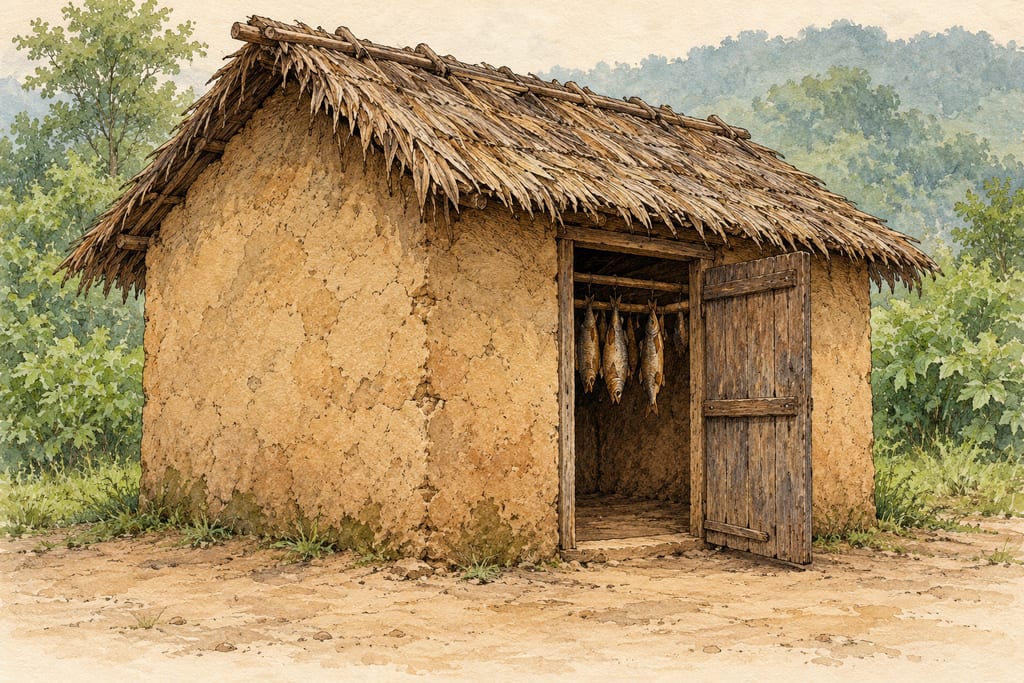
Dudkhāneh is a smokehouse term used in Gilan. A field report documents one fish-smoking workshop at Mobandan; its mud-plastered room and thatched roof are one local example, not a universal plan.
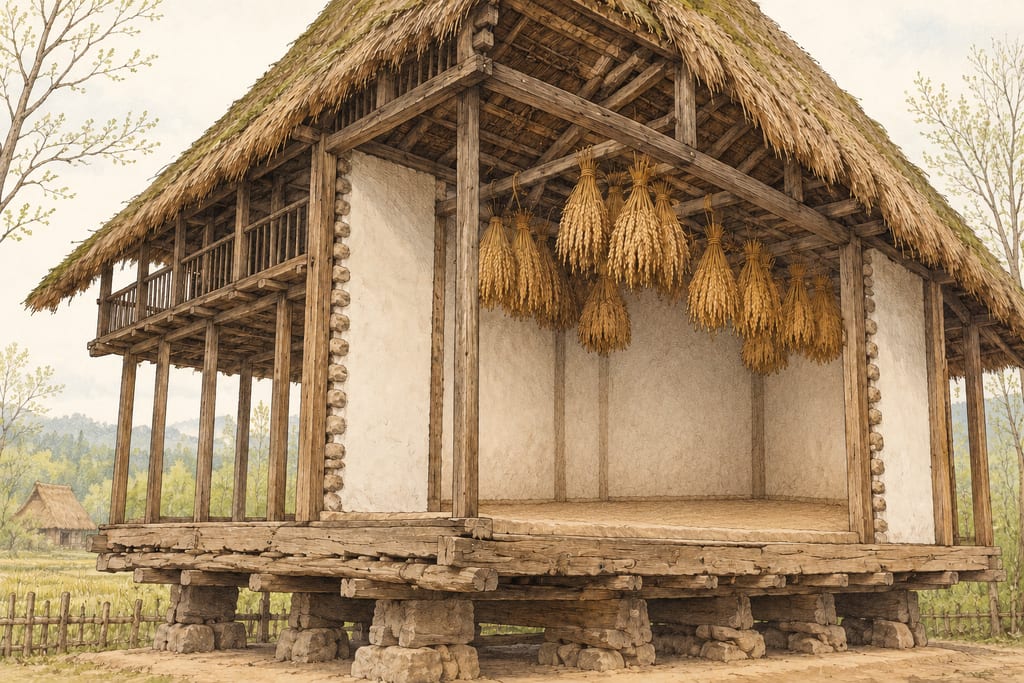
Bojkhāne names a rice-smoking room in some Gilan accounts. It was part of a flexible household room tradition, not a single standardized plan.
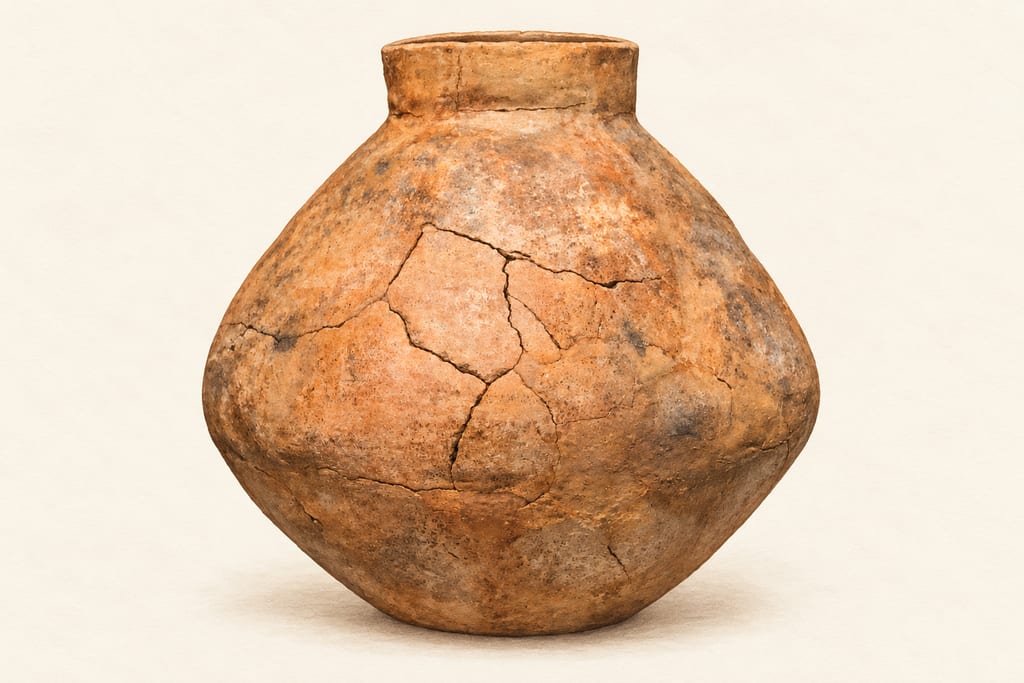
A reconstructed ceramic jar from Hajji Firuz Tepe, dated 5400–5000 BCE. Wine and terebinth resin residues identify its contents, while its museum record calls it a storage jar.
Show on map