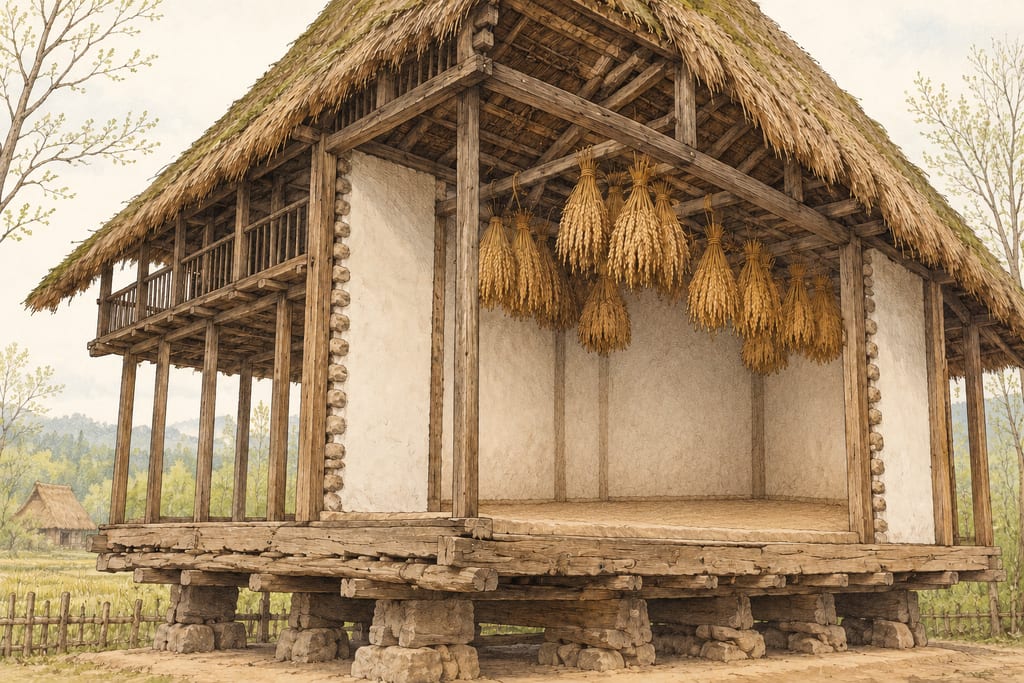
Bojkhāne
Bojkhāne names a rice-smoking room in some Gilan accounts. It was part of a flexible household room tradition, not a single standardized plan.
 FermenteaWhere food goes to change
Built structures · Cellars, caves and ripening rooms
A sardāb is a deep cellar in Iranian vernacular houses, used in summer to keep perishable food cool. Sources describe varied depths and ventilation, so this is not one fixed design.
The 2015 article synthesizes earlier architectural research on zir-zamin and sardāb forms, including reports of older elite houses in Yazd. It does not date the origin of the type or show that every house used its cellar for food storage.
The sources locate examples in Yazd, including a measured historic house; they do not claim one design or use across the city.
Bojkhāne names a rice-smoking room in some Gilan accounts. It was part of a flexible household room tradition, not a single standardized plan.
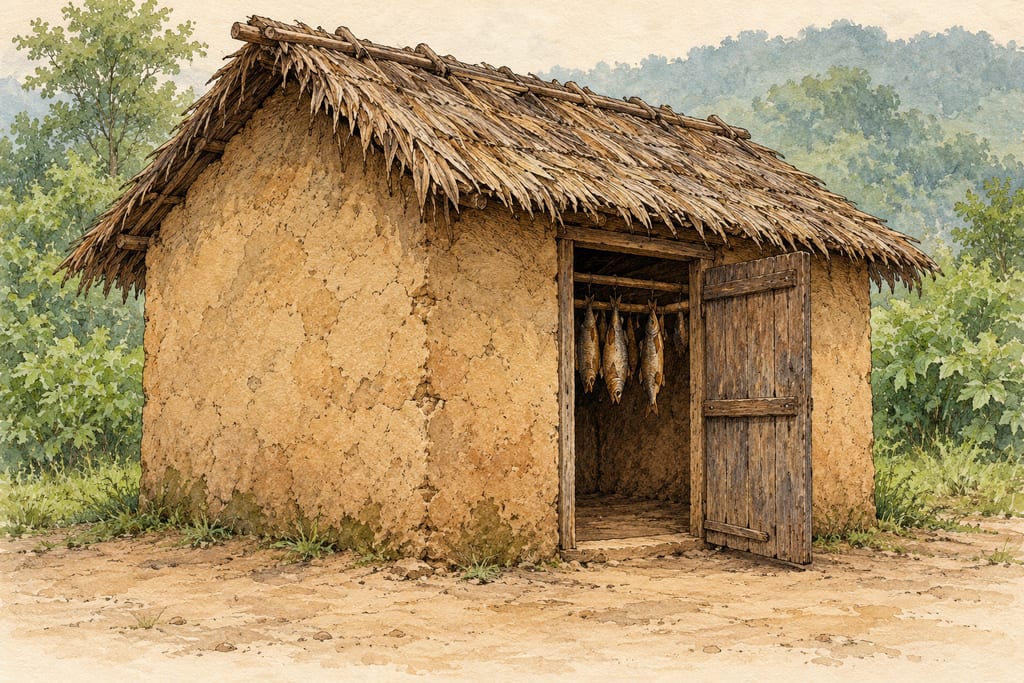
Dudkhāneh is a smokehouse term used in Gilan. A field report documents one fish-smoking workshop at Mobandan; its mud-plastered room and thatched roof are one local example, not a universal plan.
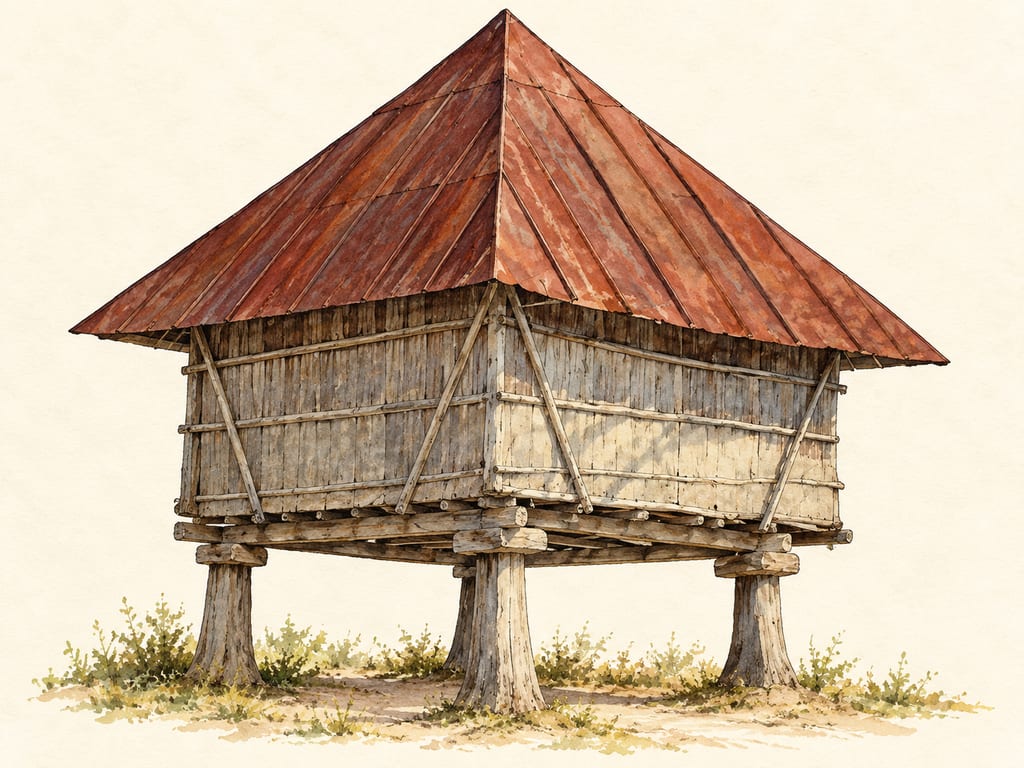
A kundej is a raised rice barn documented in central and eastern Gilan, Iran. Its regional forms store harvested sheaves above damp ground while ventilation helps dry them.
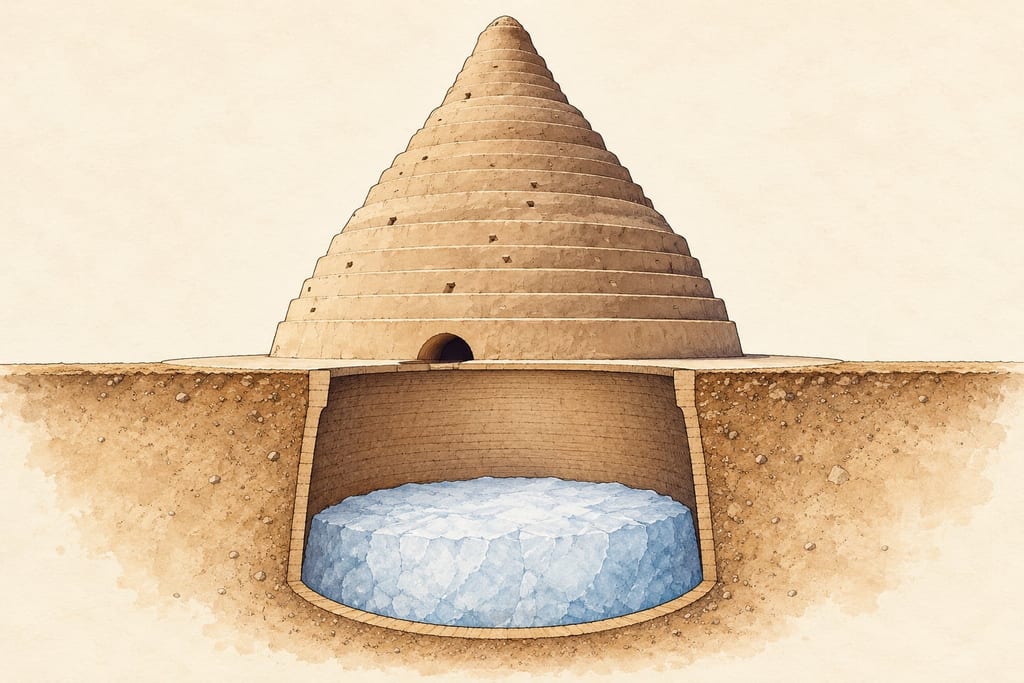
A yakhchāl is an Iranian building or covered pit for storing ice harvested in winter for summer distribution. Its forms vary, and the sources do not show that it was a food cellar.
No community contributions have been published for this entry yet.
Sign in to contribute. Published comments and photos are free to read.
International Journal of Urban Sustainable Development, 7(2), 232–244Vernacular architecture · Use · Form · Geography
Basements of vernacular earth dwellings in Iran: prominent passive cooling systems or only storage spaces?The source distinguishes zir-zamin living basements from deeper sardāb cellars and reviews divergent accounts of depth and ventilation.
Some older elite Yazd houses reportedly had rooms up to 6.5 m below courtyard level, with water access and perishable-food cooling.
The article says sardābs were traditionally used to store perishable food in summer and could connect to qanats or wind-catchers.
Knowledge of Conservation and Restoration, 7(2), 87–96Architectural documentation · Geography · Form
Introduction to Metric Visualization of the Kolahdoozha House in Yazd (Yazd Water Museum)Measured architectural documentation of the Kolahdoozha House, now the Yazd Water Museum, identifies sardāb and payāb levels in a sectional elevation.
This source documents a named house and below-ground levels, but does not establish food storage use for that specific room.
Encyclopaedia IranicaComparison · Terminology
YAḴČĀLIranian yakhchāls stored solid ice for later summer distribution and were not used for refrigerating foodstuff; this distinction prevents conflating the icehouse with a sardāb food cellar.