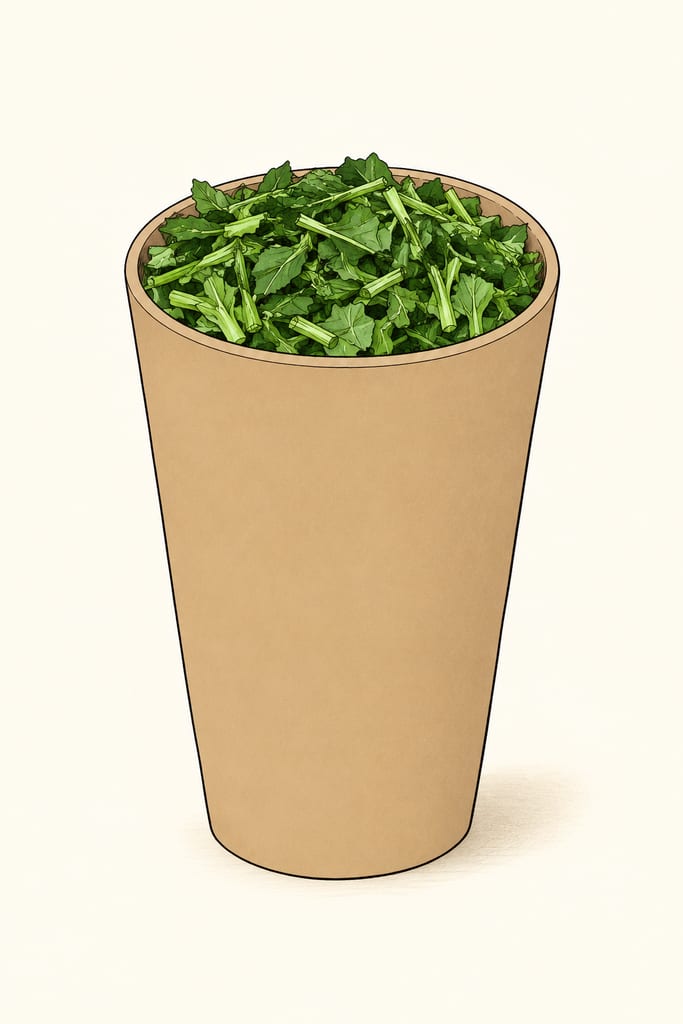
Gundruk pot and dhungro
Gundruk pots and dhungro are fermentation containers documented in Nepal and one Darjeeling household. FAO describes earthenware; a 2024 figure identifies a bamboo-made airtight dhungro buried in a pit within a cow-dung heap.
 FermenteaWhere food goes to change
Equipment · Baskets, trays and beds
Woven bamboo drying tray · Supo
A Nepali woven bamboo tray used for winnowing and drying foods. A Sagarmatha field report records mushrooms drying on nanglo above Namche; contemporary sources also document its ongoing manufacture and sale.
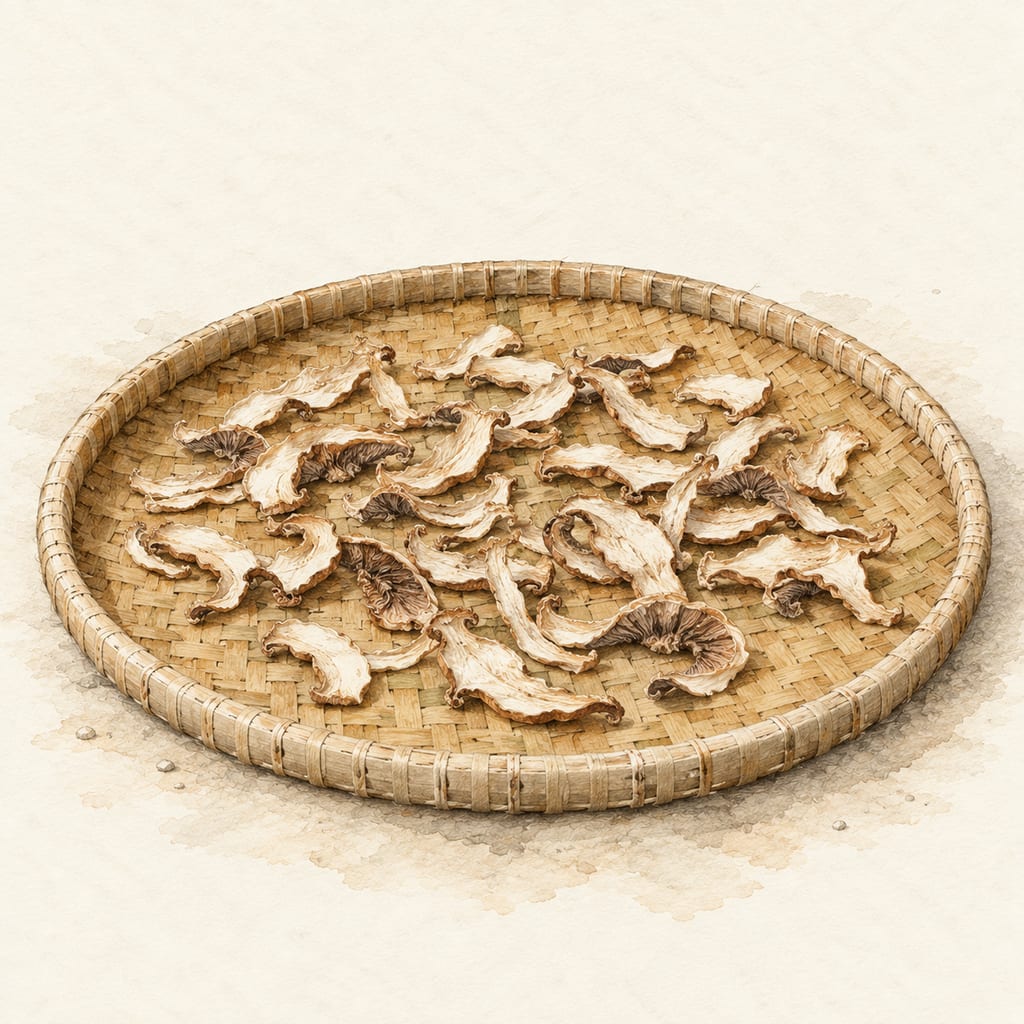
A nanglo is a round woven tray made in Nepal. A current Nepal E Market listing describes one as a local handcrafted Nepali kitchen tray and sells a plain version with a 21-inch diameter. The listing describes the tray as useful for separating dust and husks from grain and for drying vegetables, fruit and other foods in the sun. That description supports the broad form and function, but its size belongs to that seller's product rather than to every nanglo.
The tray is equipment: a portable object made and used by people. It is not a drying room, shelf structure or building. The supplied and inspected photographs show a flat woven centre and a low bound rim. Sources do not specify a single weave pattern, bamboo species, rim binding material or standard load capacity, so this entry does not turn one current product photograph into a universal construction plan.
A field report by Anjana Giri, Prabina Rana and Sanjib K. Shrestha documents a specific use in the Sagarmatha region. Its discussion says that below Namche local people hardly preserved mushrooms for culinary use, while above Namche the researchers frequently observed mushrooms drying on nanglo, described in the report as a bamboo-woven tray, and mushrooms being preserved as pickle. This is evidence of a place-specific practice in the report's field area; it does not establish a single Nepal-wide mushroom tradition.
The report's photograph section shows freshly collected and dried mushrooms, but does not identify the dried specimens in the picture to species. Its prose also stops short of giving a drying schedule, a storage duration or a pickle formula. In particular, “pickle” alone does not say whether the product was acidified, salted for storage or fermented. The tray links the equipment record to mushroom drying without turning that short observation into an invented recipe.
DGM Nepal describes Balihang Magar Bheja, a Magar community group in Rainadevichhahara-6, Palpa, that produces traditional everyday bamboo wares including winnowing trays called Supo/Nanglo. This contemporary account is useful alongside the Sagarmatha report: it documents ongoing making in a different part of Nepal, not the maker or exact construction of the tray observed above Namche. Another current retailer's listing shows that a Nanglo can also be sold as kitchenware, while the local group account documents production as a community craft.
Together these sources support more than one association: mushroom drying in the high-altitude Sagarmatha area, and contemporary bamboo-tray manufacture in Palpa. Neither establishes the object's invention place or an earliest date. The word “traditional” appears in contemporary descriptions, but the sources read here do not date how long this tray form has existed.
The report does not give the dimensions of the nanglo used for mushrooms, how many trays were used, how the mushrooms were prepared, or how long drying took. The seller's 21-inch listing is a useful example of one available tray and should not be substituted for those missing field measurements. The sources also give no cleaning, repair or lifespan instructions for bamboo trays.
A tray cannot tell a forager whether a wild mushroom is safe to eat. The Sagarmatha report itself warns against relying on general folk rules to distinguish edible from poisonous mushrooms. Its evidence here is about local harvesting and preservation, not a validated identification guide or a food-safety method.
The Sagarmatha report records mushroom drying and pickling but gives no drying schedule, storage duration, species-specific process or pickle formulation.
Source →A published retail dimension describes one Nanglo Plain tray and is not a standard specification for the form.
Source →A woven tray does not identify wild mushrooms as safe to eat; the field report says general folk rules are not reliable for distinguishing poisonous from edible fungi.
Source →A local observation in the report's study area, not a claim that all Nepalese communities used the same tray or preserved mushrooms this way.
This is one documented Magar community's production, not evidence of the makers of the Sagarmatha report's tray.
Gundruk pots and dhungro are fermentation containers documented in Nepal and one Darjeeling household. FAO describes earthenware; a 2024 figure identifies a bamboo-made airtight dhungro buried in a pit within a cow-dung heap.
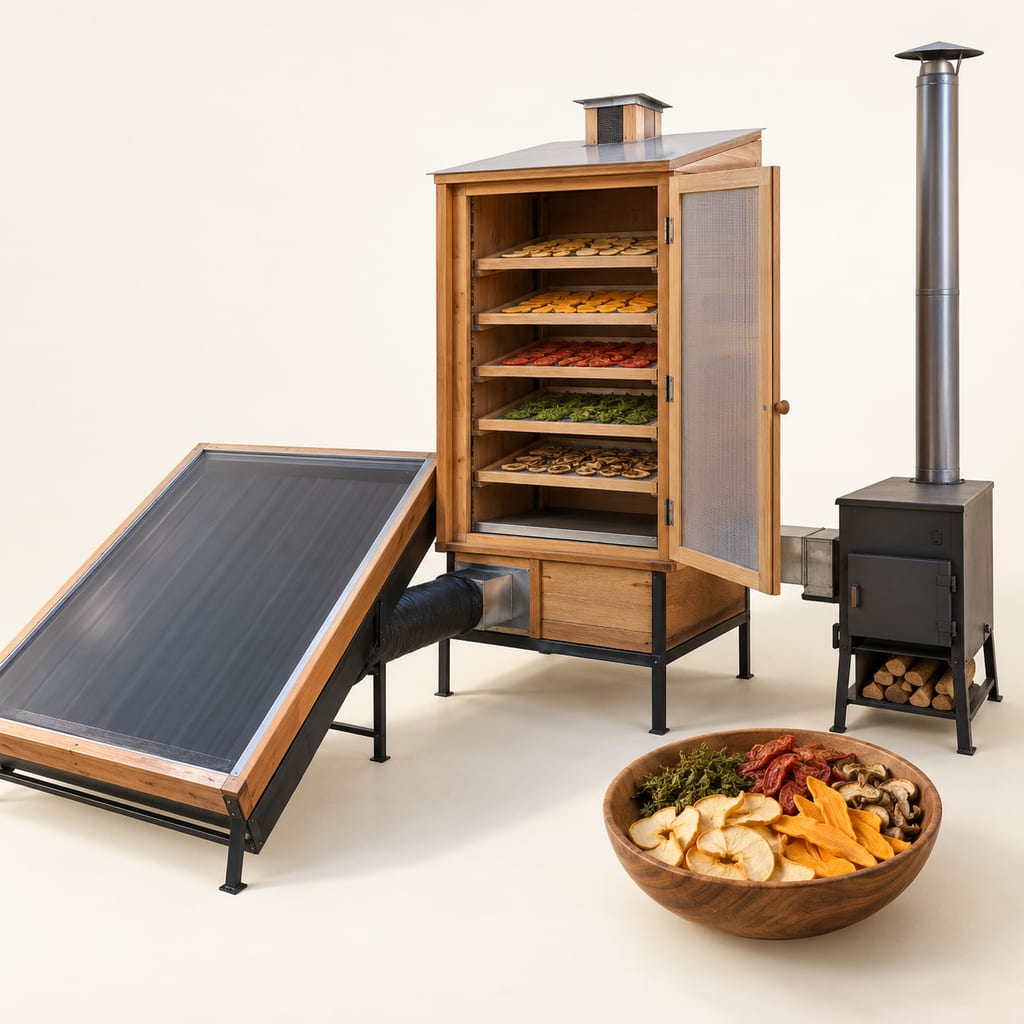
A cabinet dryer that takes its heat from a flat-plate solar collector by day and from a separate biomass stove when the sun is not enough, with the stove's flue kept apart from the drying air.
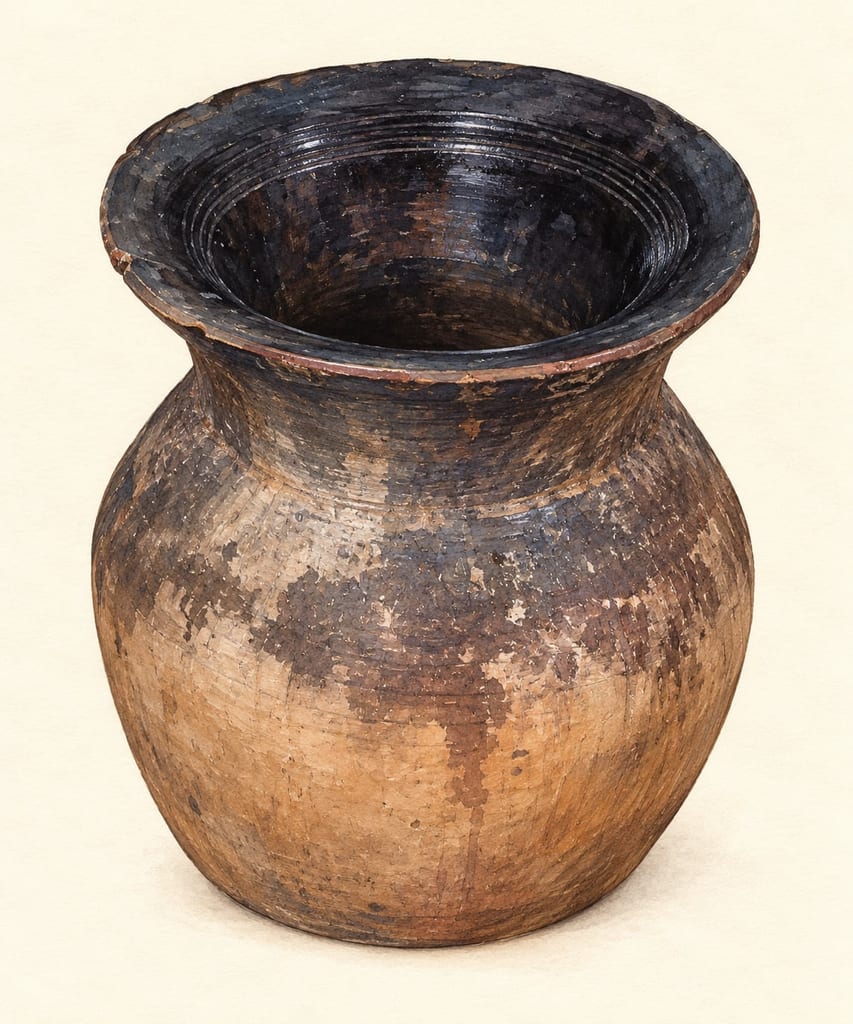
A carved, close-necked wooden vessel used for dahi in Nepal. Established thekis could be used without added starter; new vessels were conditioned.
No community contributions have been published for this entry yet.
Sign in to contribute. Published comments and photos are free to read.
Ev-K2-CNR / Royal Nepal Academy of Science and Technology (RONAST)Local use · Geography · Mushroom drying · Visual context
Study of Mushroom Diversity and Its Economic Value in Sagarmatha National ParkThe report states that below Namche local people hardly preserved mushrooms for culinary use, while above Namche the field survey frequently observed mushroom drying on nanglo (bamboo woven tray) and preserving mushrooms as pickle.
Figure 6, captioned freshly collected and dried mushrooms by locals, shows dried mushrooms on shallow round trays; the caption does not name a species or the tray construction.
The report does not provide a nanglo specification, drying time, or process details for the pickle.
Cited in: A shallow tray with a local name; Mushroom drying above Namche; Limits of the record
Nepal E MarketContemporary form · Traditional use · Dimensions · Image
Nanglo PlainThe listing describes a local handcrafted round woven Nepali tray used for winnowing or separating grain and for sun-drying vegetables, fruit and other foods.
The product listing states a 21-inch diameter; this is one commercial product dimension, not a general specification for Nanglo or the report's specimen.
Cited in: A shallow tray with a local name; A related craft elsewhere in Nepal; Limits of the record
DGM NepalContemporary craft · Geography · Manufacture
Balihang Magar BhejaDGM Nepal describes a Magar community group in Rainadevichhahara-6, Palpa, preserving local customs and producing traditional daily-use bamboo products including winnowing trays identified as Supo/Nanglo.
This is a particular contemporary production community, not evidence that the group made the tray in the Sagarmatha mushroom report.
Cited in: A related craft elsewhere in Nepal