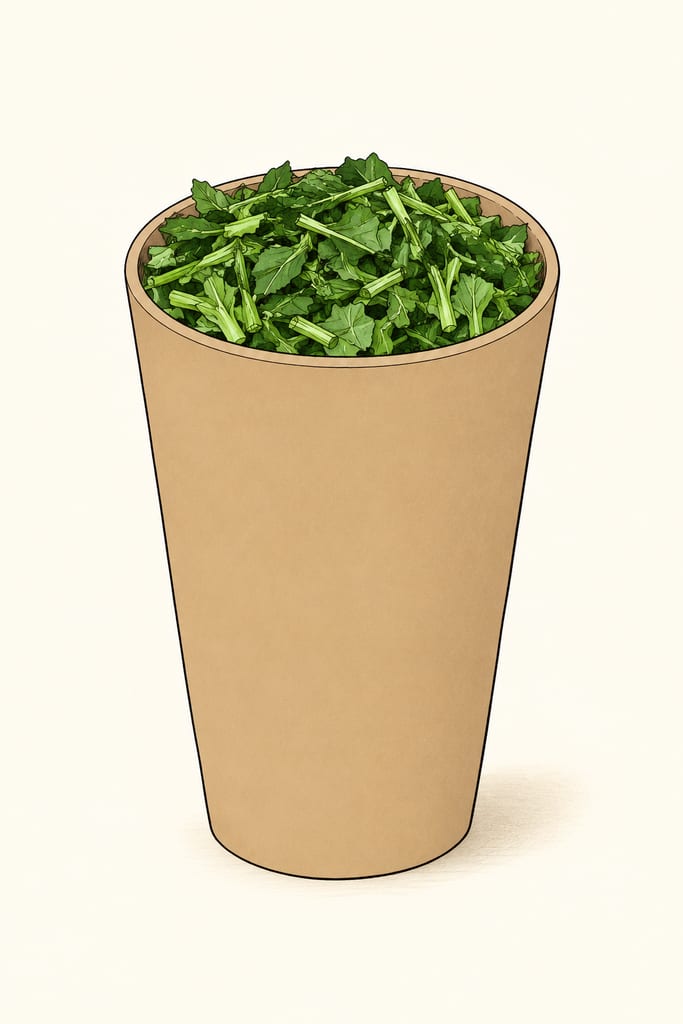
Gundruk pot and dhungro
Gundruk pots and dhungro are fermentation containers documented in Nepal and one Darjeeling household. FAO describes earthenware; a 2024 figure identifies a bamboo-made airtight dhungro buried in a pit within a cow-dung heap.
 FermenteaWhere food goes to change
Equipment · Drying kilns and dryers
A cabinet dryer that takes its heat from a flat-plate solar collector by day and from a separate biomass stove when the sun is not enough, with the stove's flue kept apart from the drying air.
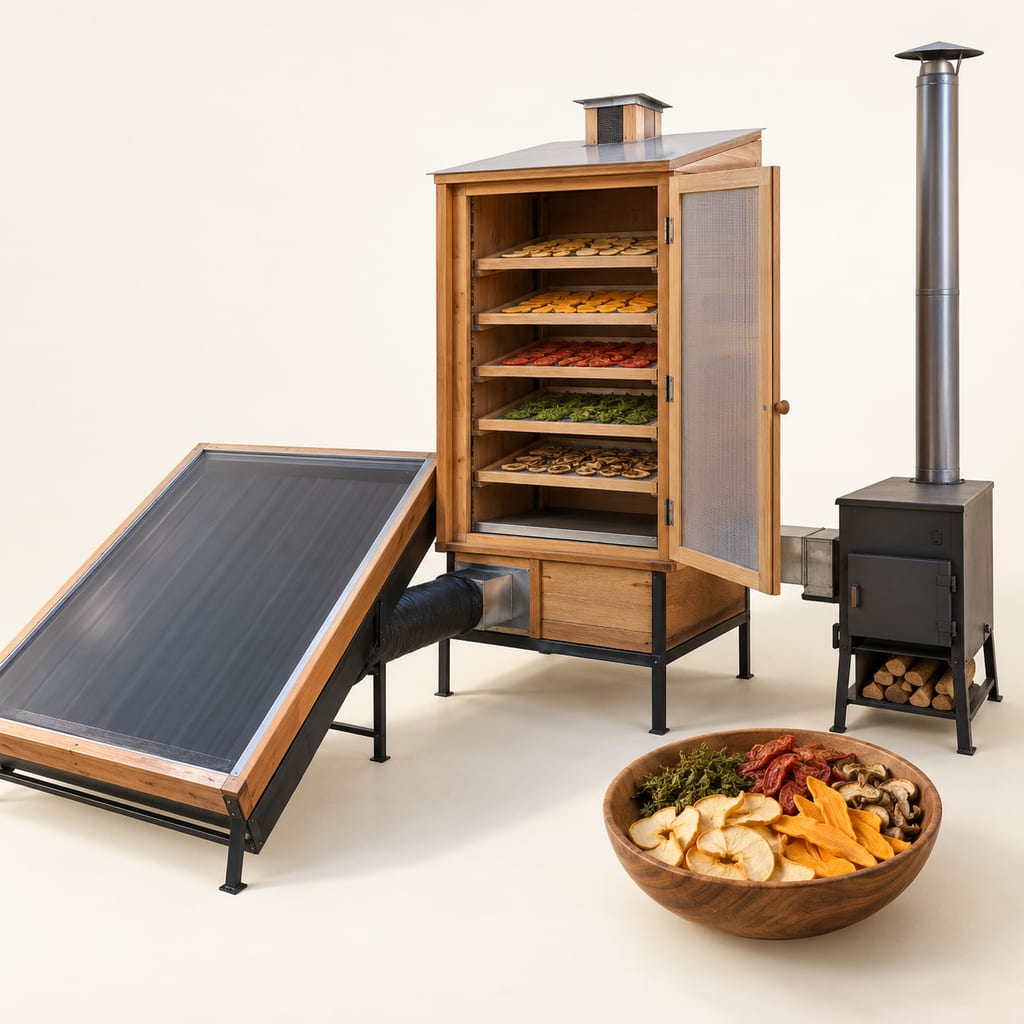
A solar dryer uses the sun to heat the air that moves across the food, and the air is then carried into a chamber where the food is set out to dry. Where the sun is reliable the arrangement is simple. Where it is not, the dryer needs a second source of heat, and this design gives it one: a biomass stove that burns briquettes and heats the same drying chamber when the collector cannot.
The cabinet has three working systems. A flat-plate solar air collector, with a single layer of glazing and an area of 3.2 square metres, warms the ambient air. A drying chamber holds nine trays and is loaded from three doors at the rear. A combustion stove, with its heat exchanger and a 1.7 metre flue chimney, supplies the heat when sunlight is short. The source describes this as a hybrid, and the hybrid is the point of the design: the dryer keeps working through a cloudy spell instead of stopping.
Ambient air is warmed in the solar collector and rises into the chamber, where it crosses the trays. Warm, humid air leaves through a chimney at the top. The circulation is natural, with no fan described in the source. When the stove is in use, its heat reaches the process air through a finned rectangular aluminium-pipe heat exchanger. The flue gases travel in their own chimney.
This separation is the central control. The source states that flue gas can carry smoke, soot and harmful gases, and that it must not come into contact with the product. The stove therefore heats the air through a wall rather than mixing its exhaust into the drying air. Whether the joints, hood and heat exchanger hold that separation is a question the source leaves for the builder to test, and the research lists flue leakage and soot deposits among the prototype checks.
The stove is a small steel box: a 2 mm mild-steel plate, a body about 600 by 300 by 150 millimetres, and a grate of 5 millimetre rods set roughly 60 millimetres apart, about 50 millimetres above the base. It has adjustable primary-air openings and an upper hood that connects through the heat exchanger to the flue. The fuel is a briquette of charcoal and clay about 130 millimetres across and 90 millimetres high, and the stove takes up to eight at a time.
The source reports a chamber temperature of 50 to 60 °C for this system. Those figures describe one arrangement in one period, and the source gives them as observations. They are not a drying setting that a reader can copy, and they are not a safety limit for any food.
The source names the parts: the collector, the cabinet and its stand, nine removable trays with their doors, the stove with its grate and sliding air covers, the upper hood, the connecting flue, the heat exchanger and the separate exhaust chimney. A builder would fabricate the cabinet and collector, mount them on the stand, fit the trays and doors, make the stove, join the hood and flue through the heat exchanger, and then check that the flue gas stays isolated from the process air. This order is inferred from the design. The source does not give the joints, clearances or hole positions, and those need the drawings in the original manual.
The tools the source names for comparable construction in the same booklet are a tape, square, straightedge, caliper, sheet-metal cutter, drill, riveting tool, screwdriver and hacksaw. Welding is implied by the steel stove and hood. The source does not list it as a task for every builder, and a qualified metalworker is the practical route for the steel parts.
The source gives the solar collector's area but not its dimensions, the cabinet's outer envelope, the chimney cross-section or the dimensions of the heat exchanger. Those figures are missing from the booklet's specification table, and this page does not supply them. The design is a documented precedent for a hybrid dryer, not a verified build, and no measured drying performance is recorded for it.
Anyone adapting it to food should treat the stove's exhaust, the temperatures and the product's own drying behaviour as matters for their own measurement. The source does not validate meat or fish drying with this equipment.
The design appears in Package 7 of Technology Packages: Solar, Biomass and Hybrid Dryers, a 2005 booklet from the Regional Energy Resources Information Center of the Asian Institute of Technology. The booklet credits project teams in Nepal and the Philippines. It does not date the first prototype.
Keep the stove's flue gas and smoke out of the drying air. The source warns that flue gas can contain smoke, soot and harmful gases.
Flue gas can contain smoke, soot and harmful gases. The source says it must not touch the product, so the stove's exhaust has to stay on its own route.
Source →Solar heat alone depends on available sunlight. The stove is the design's answer for the periods when the sun is insufficient.
Source →The source reports drying-chamber temperatures of 50 to 60 °C for this stove system. These are historical observations of one arrangement, not a set point or a food-safety limit.
Source →The design was developed with RECAST, Nepal, from an AIT regional programme. Only the country is recorded; no locality is given.
Gundruk pots and dhungro are fermentation containers documented in Nepal and one Darjeeling household. FAO describes earthenware; a 2024 figure identifies a bamboo-made airtight dhungro buried in a pit within a cow-dung heap.
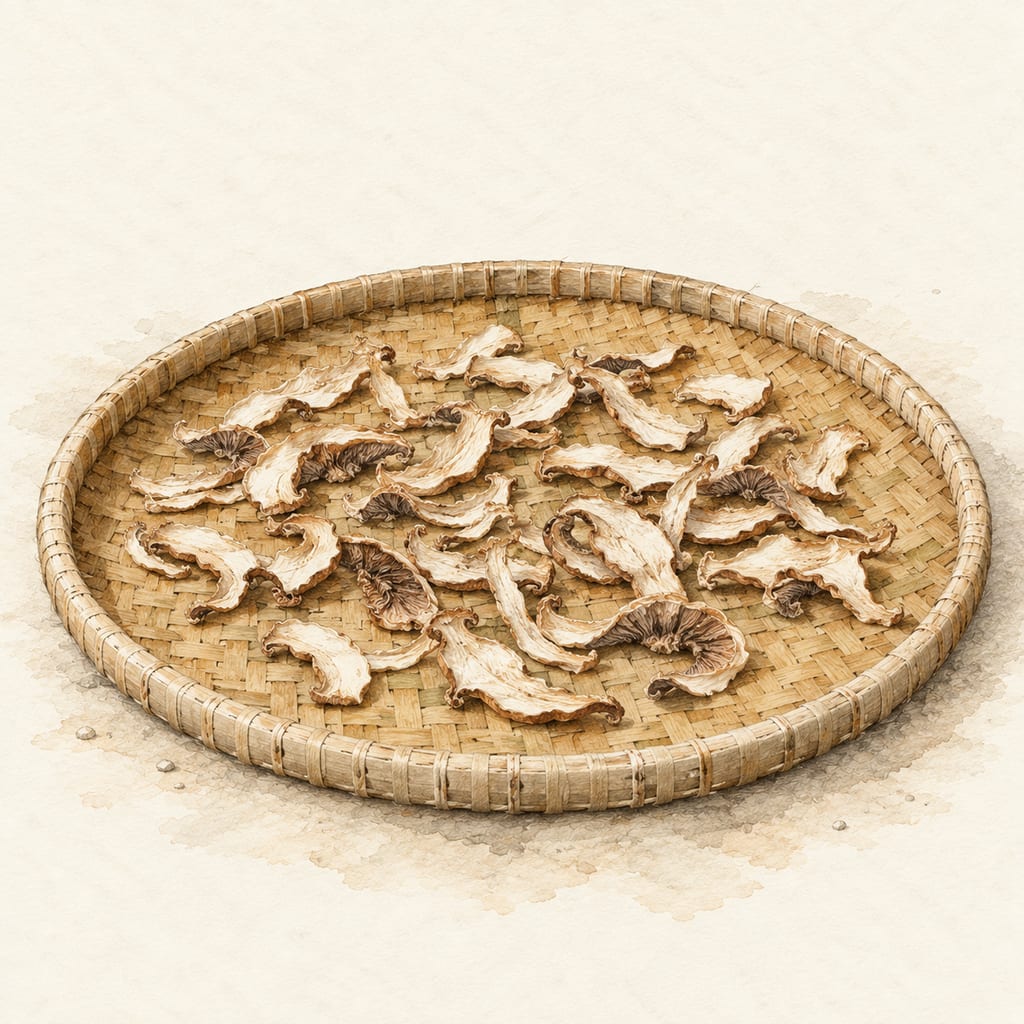
A Nepali woven bamboo tray used for winnowing and drying foods. A Sagarmatha field report records mushrooms drying on nanglo above Namche; contemporary sources also document its ongoing manufacture and sale.
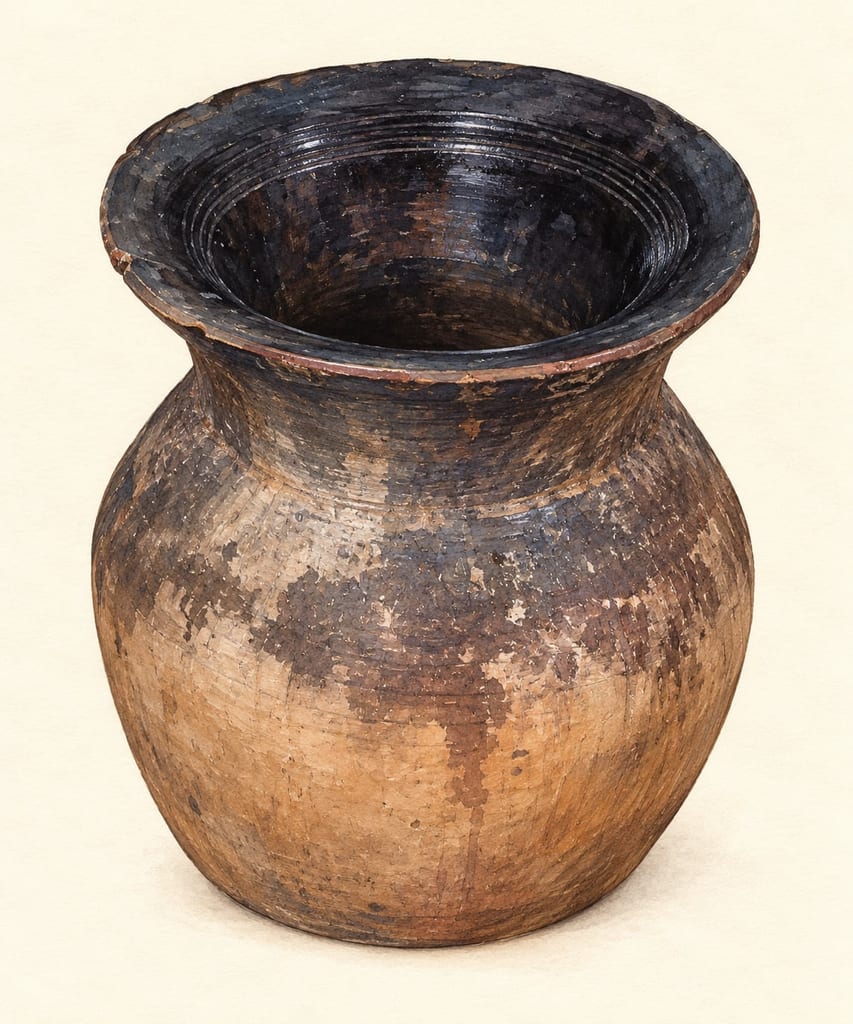
A carved, close-necked wooden vessel used for dahi in Nepal. Established thekis could be used without added starter; new vessels were conditioned.

Soft, spreadable Calabrian pork sausage made with a great deal of red chilli and fatty pork, stuffed into natural casings, sometimes smoked and matured while staying soft.

A way to add independent temperature logging to an existing food dehydrator without changing its built-in controls or protections. It is a monitoring method, not a rewiring plan.

Pleurotus cystidiosus is the abalone mushroom, a cultivated oyster-type fungus with dark brown caps that grows more slowly and is more demanding than other Pleurotus species.

A dark, balanced vinegar from Emilia-Romagna made by combining cooked or concentrated grape must with wine vinegar, then acetifying and refining it in wood under a protected specification.

A living dairy inoculum that starts controlled cream fermentation, developing acidity and aroma before sour cream or cultured butter is finished.

A small electric incubator holds jars at a selected temperature for yogurt and other documented warm food preparations. Controls, capacity and vessel arrangement vary by model.

Adygean salt is a seasoned table salt associated with Adygea and the wider North Caucasian culinary tradition. Salt is blended with garlic and a variable selection of herbs and spices; the exact mix depends on the named style and maker.

The African Caesar-group mushroom, Amanita masasiensis, is a wild ectomycorrhizal species of central and southern African woodlands, eaten locally. The genus contains deadly poisonous species, so identification needs care.
No community contributions have been published for this entry yet.
Sign in to contribute. Published comments and photos are free to read.
Regional Energy Resources Information Center, Asian Institute of TechnologyEquipment · Method · History · Safety
Technology Packages: Solar, Biomass and Hybrid Dryers (Package 7, pp. 36-40)The hybrid cabinet has a 3.2 m² single-glazed flat-plate solar collector, nine trays, three rear loading doors and a natural-circulation air path.
The biomass stove heats process air through a finned rectangular aluminium-pipe heat exchanger; flue gas is carried away separately and must not contact the product.
The stove body is 600 × 300 × 150 mm in 2 mm mild steel; the flue chimney is 1.7 m high; briquettes are 130 × 90 mm and up to eight fit the stove.
The source reports 50-60 °C inside the drying chamber for this stove system as an observation.
Cited in: A solar dryer with a stove for the cloudy hours; How the air and the flue gas take separate routes; What is known about the stove; Building one; What is not yet established