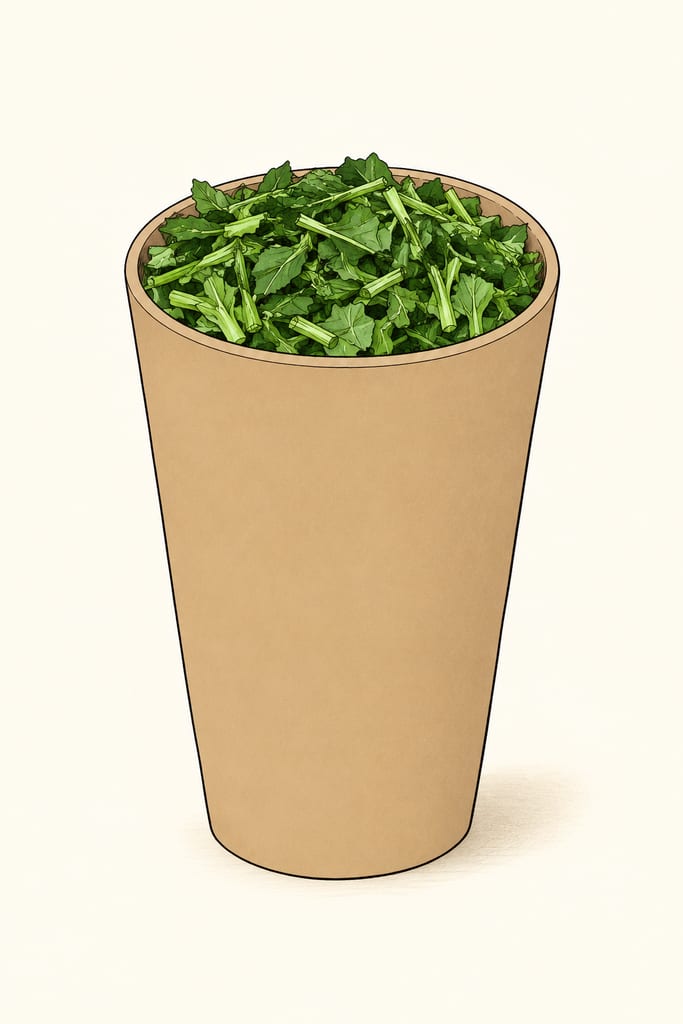
Gundruk pot and dhungro
Gundruk pots and dhungro are fermentation containers documented in Nepal and one Darjeeling household. FAO describes earthenware; a 2024 figure identifies a bamboo-made airtight dhungro buried in a pit within a cow-dung heap.
 FermenteaWhere food goes to change
Equipment · Gourds, calabashes and carved bowls
ठेकी · daar theki
A carved, close-necked wooden vessel used for dahi in Nepal. Established thekis could be used without added starter; new vessels were conditioned.
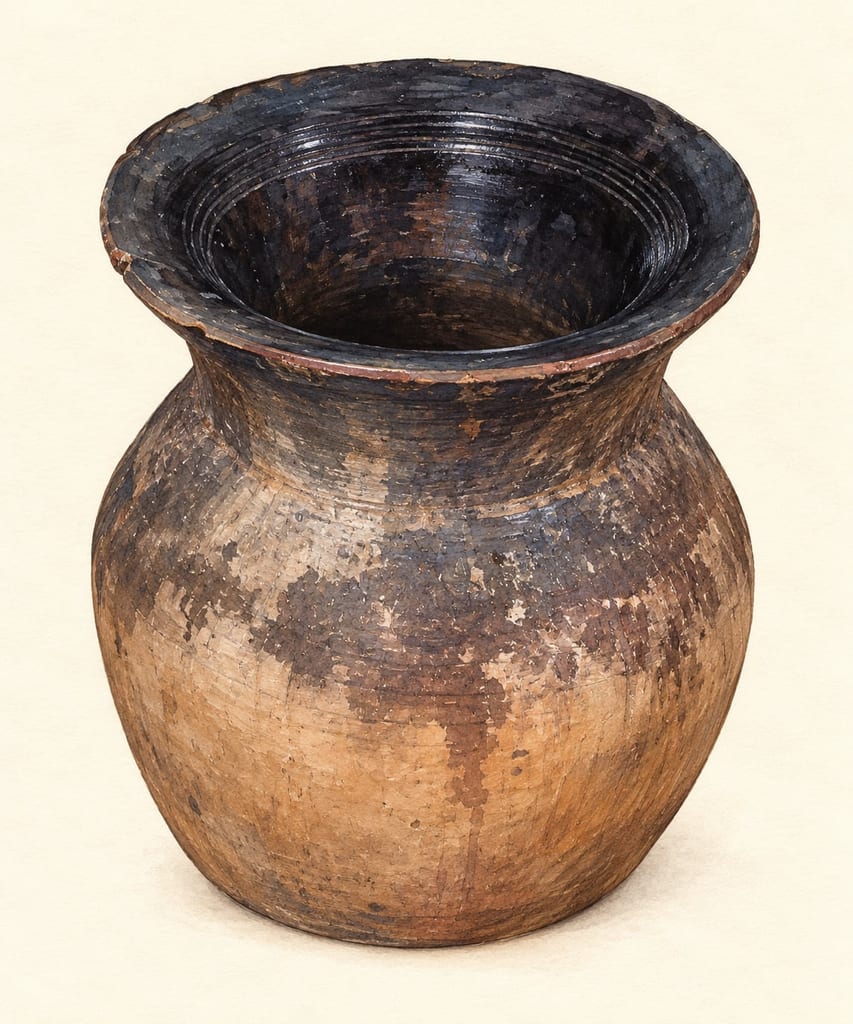
The theki (ठेकी) is a hollowed wooden vessel with a body that swells below a narrowed neck and a spreading lip. Its close mouth and carved body distinguish it from a coopered bucket: the form is not assembled from staves and hoops. The eastern Nepal survey identifies daar as a preferred wood and lists other trees used when cost or availability leads makers to choose another material. The article's spelling, daar, and its botanical identification, Boehmeria rugulosa, are retained as reported rather than generalized to every vessel called a theki.
The theki is the container; the madani is a separate churn stick. A photo of theki with curd shows the vessel at the dahi stage, while a 2024 report documents a theki used later to churn buttermilk. The same container can therefore appear in different dairy operations, but a churning assembly should not be mistaken for the vessel alone.
In the eastern Nepal survey, many mountain and hill households fermented dahi in theki. Respondents described established vessels as working without an added starter. New vessels were treated differently: some makers added previous dahi or mohi, while others ran several batches before relying on the vessel. The researchers explain this practice by microorganisms retained in cracks in the wood. That is an interpretation of the reported process, not a controlled measurement of which organisms persist on each surface.
This history helps explain why the vessel is part of the fermentation method rather than just a serving pot. In the source account, milk is transferred to the carved wooden theki and left to ferment; vessel use and repeated batches are part of how local makers carry the process forward. The paper also reports that some users value dahi made in daar wood for its flavor, while households in the Terai more often use an earthenware kantari. These are regional practices, not a claim that every Nepalese household uses one vessel or obtains the same result.
The 2013 survey describes theki use in Nepal's eastern hills and mountains. Its 236 respondents came from a range of districts and communities; the findings describe those sampled practices rather than every region of Nepal. A separate 2024 report places a theki at a cattle-grazing shed within Dhorpatan Hunting Reserve, across Eastern Rukum, Baglung and Myagdi, where a farmer was churning buttermilk. That later account documents use outside the survey's eastern Nepal field area.
Woodworkers interviewed in Khanidanda, Waling Municipality–13, described making theki and reported a seasonal production period in September and October. They named jackfruit and Darigitha as woods they considered suitable. This report ties the craft to local makers; it does not provide a universal design, material standard, current price, or evidence that all theki are made from the same tree.
The survey reports washing the vessel with hot water between batches and records another local response when dahi spoiled. These are descriptions of practice, not a validated sanitation procedure or a safety guarantee. The sources do not give a standard capacity or dimensions for the theki, nor a single construction specification, wood species, or measured microbial community that applies to every example. They also do not establish when the vessel originated. The account is strongest where it describes a particular household tradition, named form, or documented use.
The earliest dated account used here is a 2013 survey of 236 respondents in eastern Nepal. It documents theki as a carved wooden vessel for dahi and records established vessels used without added starter, while new vessels were conditioned with earlier dahi or mohi, or through repeated batches. The survey documents reported practice; it does not establish the vessel's origin date or identify the organisms on each vessel. A 2024 report records a theki in use for churning buttermilk at a grazing site in Dhorpatan, and a separate account describes active woodworkers in Waling. Together these sources show documented use and craft, not an unbroken universal history.
The theki is not the only vessel used for dahi across Nepal: the 2013 eastern Nepal survey reports earthenware kantari used in the Terai in place of theki.
Source →The survey sampled households across eastern Nepal; this records documented traditional use, not an exclusive origin.
A 2024 report describes a theki in use for churning buttermilk at a grazing-site shed within the reserve.
The report describes local woodworkers making theki, without claiming this is the only place they are made.
Gundruk pots and dhungro are fermentation containers documented in Nepal and one Darjeeling household. FAO describes earthenware; a 2024 figure identifies a bamboo-made airtight dhungro buried in a pit within a cow-dung heap.
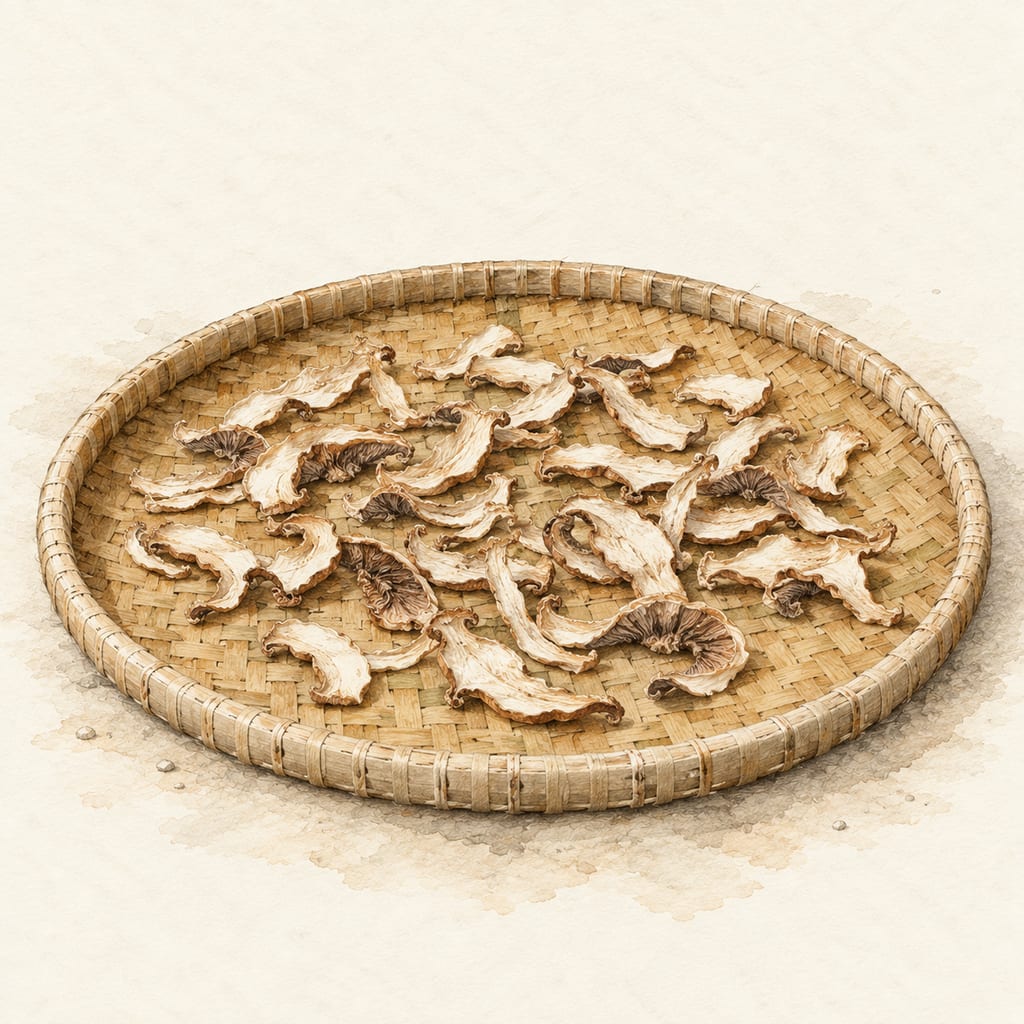
A Nepali woven bamboo tray used for winnowing and drying foods. A Sagarmatha field report records mushrooms drying on nanglo above Namche; contemporary sources also document its ongoing manufacture and sale.
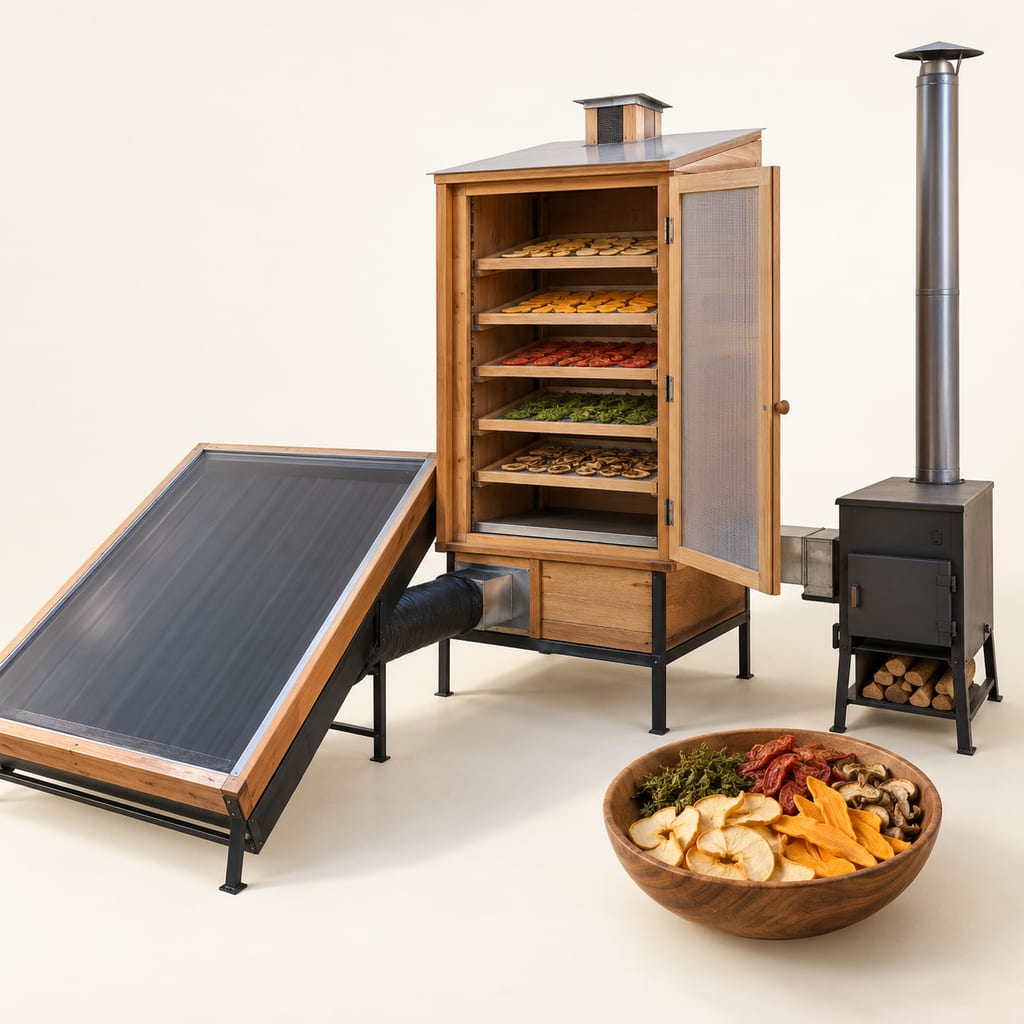
A cabinet dryer that takes its heat from a flat-plate solar collector by day and from a separate biomass stove when the sun is not enough, with the stove's flue kept apart from the drying air.

Soft, spreadable Calabrian pork sausage made with a great deal of red chilli and fatty pork, stuffed into natural casings, sometimes smoked and matured while staying soft.

A way to add independent temperature logging to an existing food dehydrator without changing its built-in controls or protections. It is a monitoring method, not a rewiring plan.

Pleurotus cystidiosus is the abalone mushroom, a cultivated oyster-type fungus with dark brown caps that grows more slowly and is more demanding than other Pleurotus species.

A dark, balanced vinegar from Emilia-Romagna made by combining cooked or concentrated grape must with wine vinegar, then acetifying and refining it in wood under a protected specification.

A living dairy inoculum that starts controlled cream fermentation, developing acidity and aroma before sour cream or cultured butter is finished.

A small electric incubator holds jars at a selected temperature for yogurt and other documented warm food preparations. Controls, capacity and vessel arrangement vary by model.

Adygean salt is a seasoned table salt associated with Adygea and the wider North Caucasian culinary tradition. Salt is blended with garlic and a variable selection of herbs and spices; the exact mix depends on the named style and maker.

The African Caesar-group mushroom, Amanita masasiensis, is a wild ectomycorrhizal species of central and southern African woodlands, eaten locally. The genus contains deadly poisonous species, so identification needs care.
No community contributions have been published for this entry yet.
Sign in to contribute. Published comments and photos are free to read.
Journal of Food Processing & TechnologyPrimary research · History · Method · Geography
Scientific Study on Indigenous Technology of Dahi Making of Eastern NepalA 2013 survey of 236 respondents from eastern Nepal documents theki use for dahi in hill and mountain communities and reports earthenware kantari in the Terai.
The source describes one-piece close-necked theki, wood names, established-vessel use without added culture, and conditioning of new vessels.
It describes theki's use in dahi making and cleaning practice, which is presented here as reported practice rather than validated safety guidance.
Cited in: A one-piece wooden dairy vessel; A vessel that carries a dairy culture; Regional work and present use; Care and limits of the record
The Himalayan TimesCurrent use · Geography
In Picture: Churning buttermilk in ThekiA 2024 photo report places a farmer churning buttermilk in a wooden theki at a shed within Dhorpatan Hunting Reserve, spanning Eastern Rukum, Baglung and Myagdi.
Cited in: A one-piece wooden dairy vessel; Regional work and present use
The Rising NepalCraft · Materials · Geography
Art of making Theki dyingA report from Khanidanda, Waling Municipality-13 describes local woodworkers making theki, a September-October production season reported by makers, and makers' preference for jackfruit and Darigitha woods.
Cited in: Regional work and present use
Wikimedia CommonsVisual reference · Image licence
File:Theki (ठेकी) with curd.jpgThe image depicts a carved theki with curd and is released by its author under CC BY-SA 4.0.
Cited in: A one-piece wooden dairy vessel