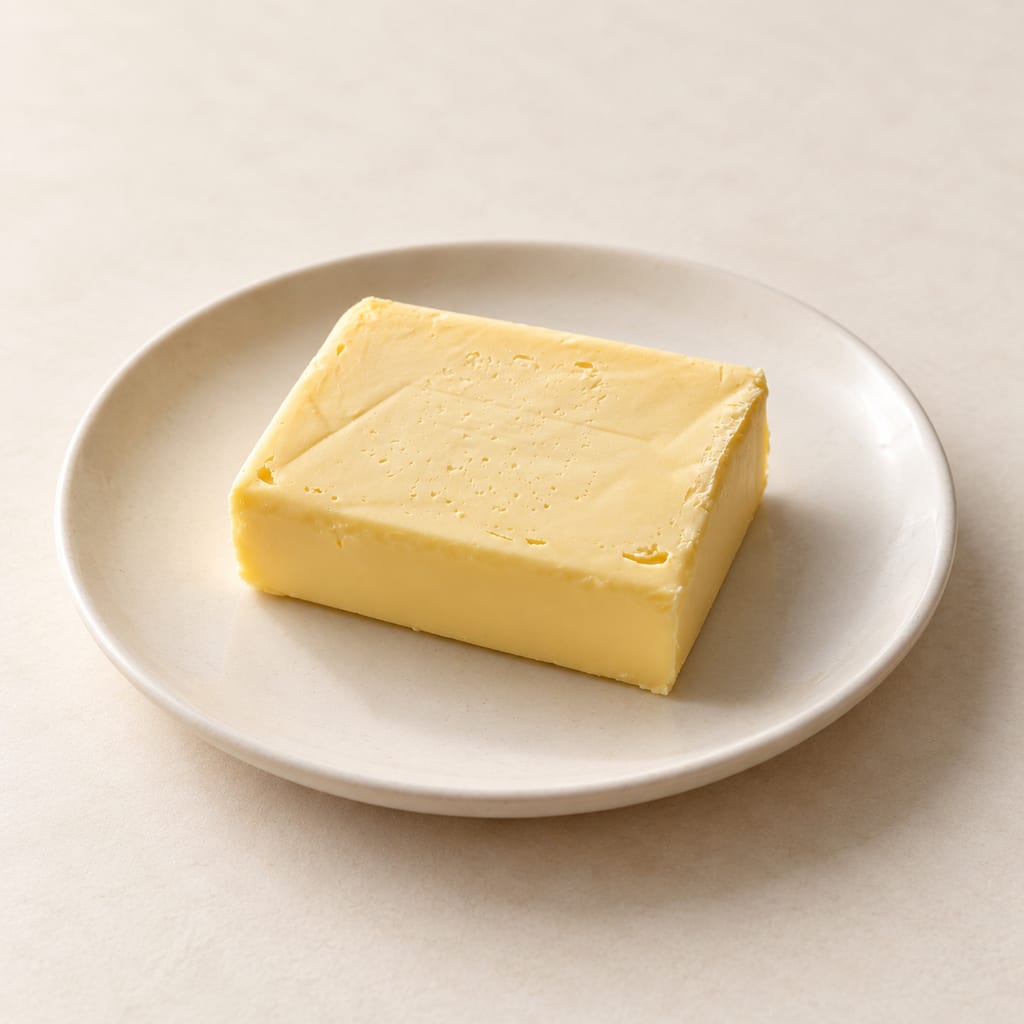
Butter
Butter is a milk-fat emulsion made by churning cream. It enriches dough or finishes bread; melted, cool and room-temperature butter serve different recipe roles.
 FermenteaWhere food goes to change
Equipment · Bags, sacks and casings
qarın · qaryn · karyn
A prepared animal-stomach pouch holds butter in Kazakh and Kyrgyz traditions. Field images document empty and filled qarın in southern Kyrgyzstan, while a Kazakh tutorial distinguishes animal-specific qaryn forms.
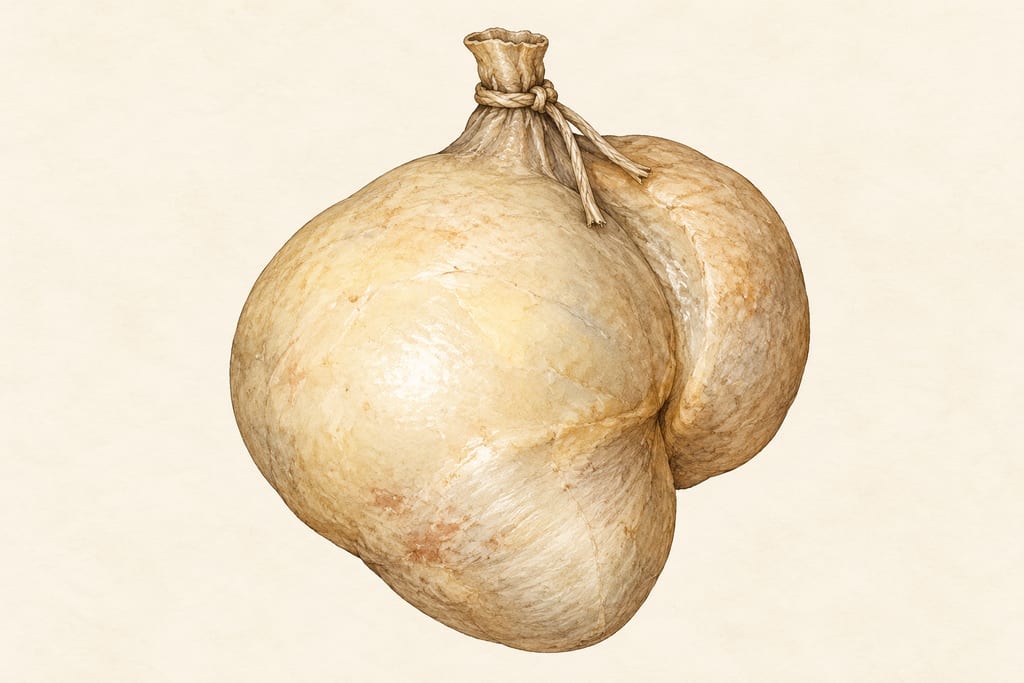
Qaryn, also written karyn or qarın, names an animal-stomach container used to keep butter. The University of Washington's field account describes sheep or goat stomachs used as storage bags and identifies a qarın hanging empty in a Kara-Suu Valley hut in the Pamir-Alai of southern Kyrgyzstan. A second photograph in that home shows Jamila with one filled with butter. The same page records a dried stomach hanging at a tent frame in the Uryam Valley.
The Kazakh university tutorial uses karyn for butter kept in a specially treated animal rumen. It distinguishes ram, lamb and calf rumen forms, and says that when a rumen is unavailable, a smaller stomach section called buyen can hold excess butter. These descriptions are related uses of animal stomach tissue, but the sources do not establish that every local qarın is made from the same species or anatomical compartment.
The Kyrgyz field account says the stomach is removed after slaughter, cleaned, processed while still wet and hung to dry. Its photographs show the empty container suspended inside a hut and a filled one being shown in the same household. The account does not provide a recipe-like sequence for cleaning or treating the organ, so details beyond those named steps should not be inferred.
The Kazakh tutorial describes the butter as made by separating cream from milk and beating it. It says the resulting butter is repeatedly cut with the blunt side of a knife to remove hairs caught in it; the water is drained and the butter salted. It is packed in the treated rumen without air or water, the opening is tied, and the outside is sprinkled with salt. For summer storage, the tutorial specifies a cool, dark place. It warns that foreign matter entering the butter can spoil it.
In the Kyrgyz field account, the empty qarın waits ready to be filled, and the filled pouch is kept for valued occasions: the household opens it for special guests or special events. The author reports that butter kept in a stomach can last more than a year without spoiling and is considered better-tasting than unstored butter. That is the account's description of local storage and preference, not a universal duration for every pouch or butter.
The Kazakh tutorial similarly presents qaryn as a valued store and gift. It says the pouch is opened at solemn occasions, including a child's birth and celebrations, or when honored guests and relatives arrive. A filled qaryn may be given to friends or relatives as a sign of affection and respect. The pouch therefore stores a concentrated dairy food while also marking when it is served and who is welcomed.
William of Rubruck's account of the Mongols describes cow's-milk butter boiled down until dry, put without salt into sheep paunches kept for the purpose, and saved for winter. His journey took place in 1253–1255, and the text is a written medieval comparison for the broader practice of keeping butter in an animal stomach. It does not use the name qarın, identify the modern Kyrgyz or Kazakh examples, or establish when this particular regional container began.
The field photographs and descriptions establish the container's broad form and uses, but provide no dimensions, capacity, exact stomach compartment, complete preparation method or modern care instructions. The Kazakh text's animal-specific terms should be kept beside the Kyrgyz account's sheep-or-goat description rather than collapsed into one universal specification. There is no source-grounded basis here for treating the container itself as a fermenter: the documented role is storing butter.
William of Rubruck's account of Mongol food customs, written after his 1253–1255 journey, describes butter boiled down and stored for winter in sheep paunches. This is an earlier comparison for stomach-based butter storage, not proof that the medieval account used the local name qarın or describes the same regional form.
The page locates the empty qarın in the Kara-Suu Valley and a dried stomach in the Uryam Valley; these are field examples, not a claim that the practice is limited to this area.
The tutorial covers Kazakh national food practice at country level; it does not specify a narrower region for butter kept in karyn.
Butter is a milk-fat emulsion made by churning cream. It enriches dough or finishes bread; melted, cool and room-temperature butter serve different recipe roles.
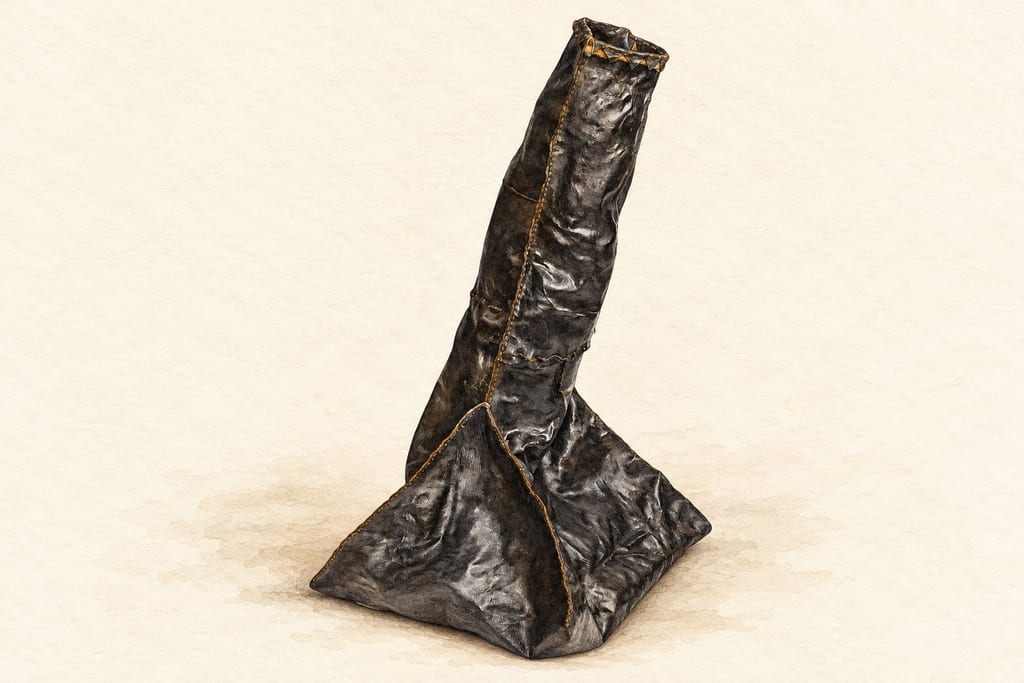
Saba is a large Kazakh horsehide vessel used to prepare and keep kumis. An Omsk museum specimen shows a tall, narrow neck above a broad, gusseted body, with seams stitched in hair thread and hide smoked to make it water-resistant.
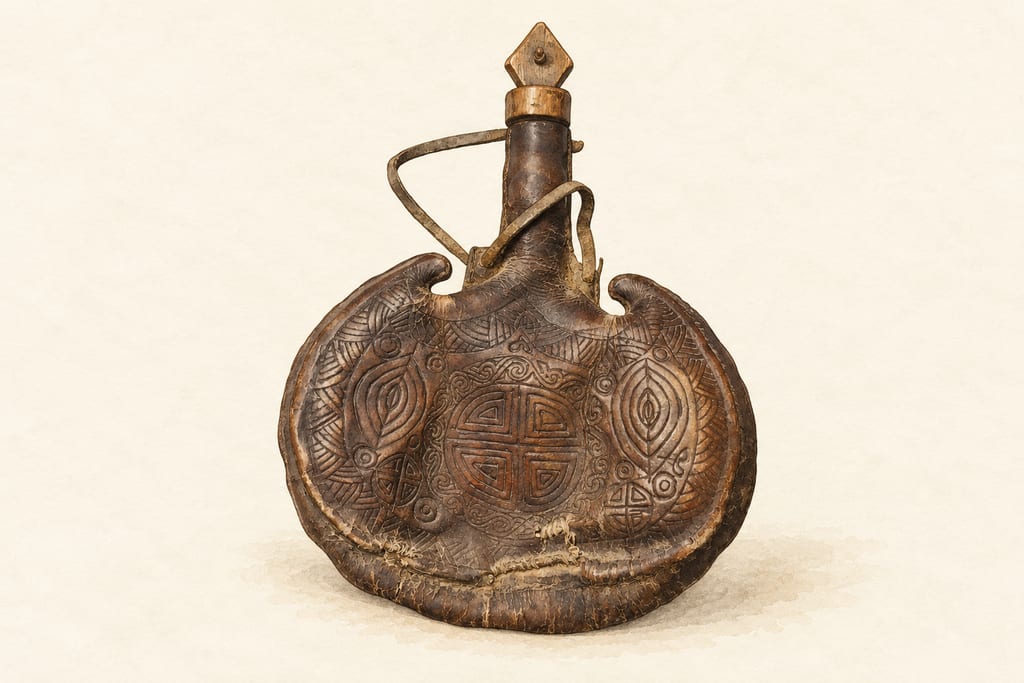
Torsyk is a portable Kazakh leather flask for carrying and keeping drinks such as kumis and shubat. Museum examples have a flattened decorated body, a narrow neck and a stopper; evidence for fermentation inside the travel flask is lacking.
No community contributions have been published for this entry yet.
Sign in to contribute. Published comments and photos are free to read.
Silk Road Seattle, University of WashingtonMaterials · Use · Geography
Traditional Culture: FoodThe page identifies sheep and goat stomachs as butter-storage bags and describes their removal, cleaning while wet, processing while wet and hanging to dry.
Field photographs document a dried stomach in the Uryam Valley and an empty qarın and butter-filled qarın in a Kara-Suu Valley hut in the Pamir-Alai, southern Kyrgyzstan.
The author reports that butter in a stomach could be kept for more than a year and opened for special guests or occasions.
Cited in: A regional butter store; Preparing and filling the pouch; Storage, guests and special occasions; What the sources leave open
S. Toraighyrov Pavlodar State University, KerekuMaterials · Method · Use · Geography
Technology of National Food Production in Kazakhstan and Central Asia: TutorialThe 2018 tutorial describes butter made from separated cream, cleaned of hairs, salted and packed without air or water into a treated animal rumen called karyn; the opening is tied and the container salted outside.
The tutorial names ram, lamb and calf rumen types and a smaller-stomach buyen alternative; it says butter quality improves in rumen storage and qaryn is opened for solemn occasions or honored guests.
The tutorial says summer butter is kept cool and dark and warns that foreign matter can spoil it.
Cited in: A regional butter store; Preparing and filling the pouch; Storage, guests and special occasions; What the sources leave open
Silk Road Seattle, University of WashingtonHistory · Comparison
Rubruck on foodWilliam of Rubruck travelled to Mongolia in 1253–1255; the text is Rockhill's translation published in 1900.
The account says butter from cow's milk was boiled down dry, kept unsalted in sheep paunches and stored for winter.
Cited in: A medieval comparison, not a single origin story