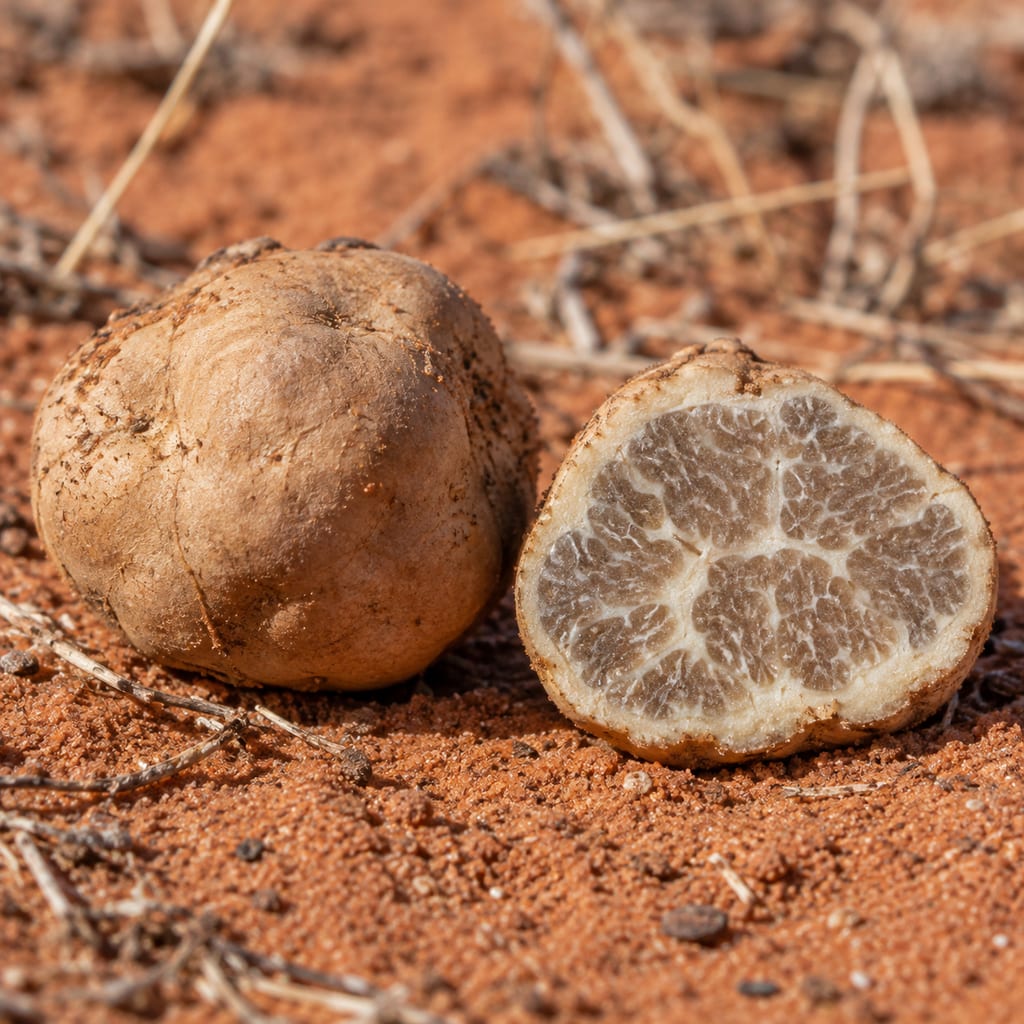
Eremiomyces echinulatus
Eremiomyces echinulatus is a subterranean desert truffle of the Kalahari, recorded as food in regional ethnomycology and easily confused with the better-known Kalahari truffle, Kalaharituber pfeilii.
 FermenteaWhere food goes to change
Substrates
Cowpea leaves are eaten cooked and sun-dried in Botswana, where the dried product is called morogo wa dinawa. Studies of the crop add leaf-removal results and trial-site growing conditions.
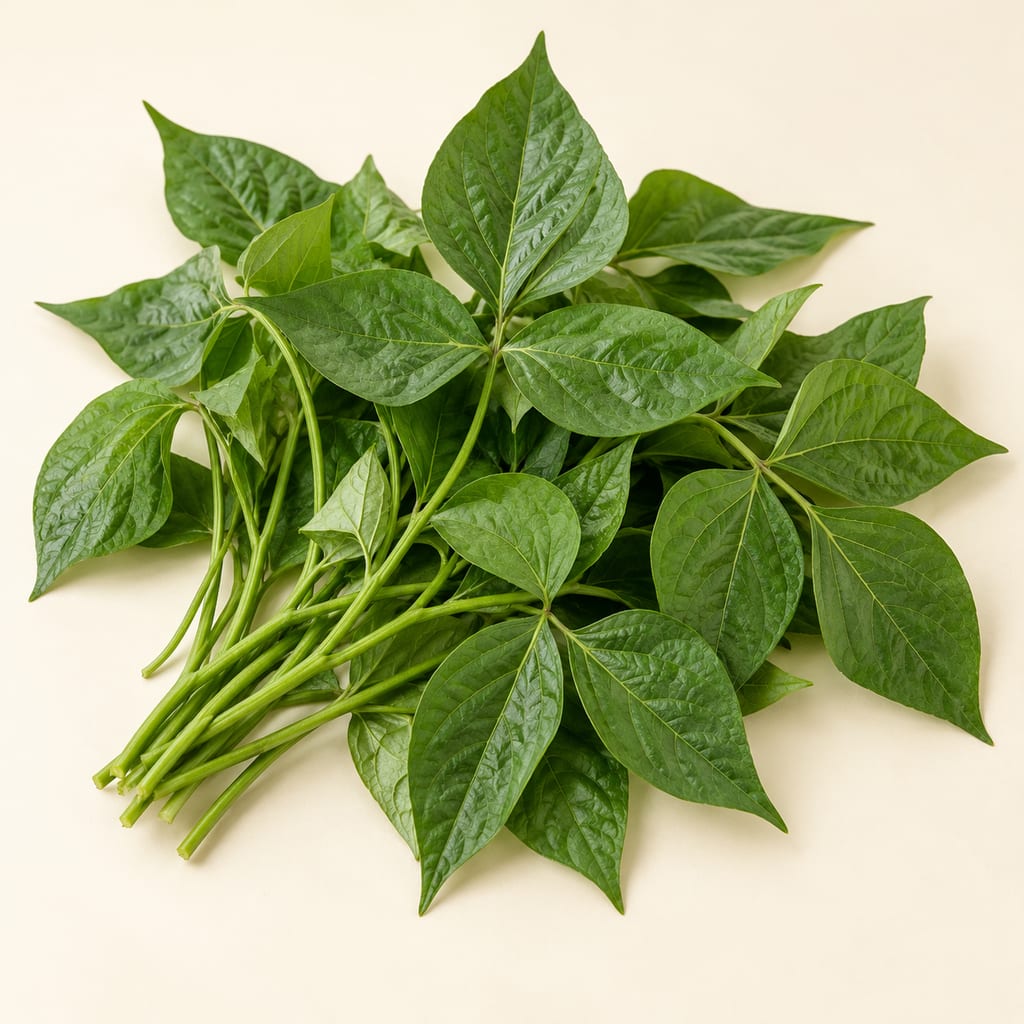
Kew accepts Vigna unguiculata (L.) Walp. in the legume family, Fabaceae, and describes it as an annual. The seeds are the better-known food; this page covers the leaves, which Botswana village studies record as a cooked and dried vegetable. A name on a food account does not by itself identify a cultivar, accession or gathered plant.
The Ramotswa study reports cowpea leaves in morogo wa dinawa but gives no voucher or accession for that passage. The Slow Food Ark of Taste links its curated Morogo wa Dinawa product to dried Vigna unguiculata leaves and places it in Central Botswana. That is a product-level link and not proof that the Ramotswa sample, or every dish with this name, came from the same plant material.
The sources document cowpea grain and cowpea leaves as food, and these are different uses. The Ramotswa account describes a cooked and dried cowpea-leaf food and reports it available from April to June. The Slow Food account says the leaves are gathered from November to April and that the dried product is commonly eaten in winter. The two calendars come from different sources and are not combined into a single Botswana schedule.
The Gumare village study lists cowpea leaves among domesticated leafy vegetables without a voucher or named cultivar. Grain dishes such as dikgobe say nothing about the leaf product.
The Ramotswa study describes leaves cooked in water, pounded, spread on an open sack to dry, and later rehydrated and cooked. Salt, onion, tomato and oil are named as optional additions. The Slow Food page describes a different sequence: leaves blanched and kneaded to a pulp, formed into balls and dried in the sun. The two are kept apart and not merged into one method.
Neither account gives a complete measured batch, a drying or moisture endpoint or a validated storage process. Ramotswa respondents reportedly described storage of about a year, and some linked the product with diarrhoea or heartburn; that report is neither shelf-life validation nor evidence that a particular ingredient caused the symptoms. The Slow Food page describes a long shelf life without storage conditions. These passages are food reports and not preservation instructions.
A 1999 abstract reports two field seasons testing 0, 25, 50 and 75 percent leaf removal on the varieties Tswana, Blackeye, ER 7 and TVx 3236. Grain yield responded differently by variety: it rose with up to 50 percent removal for Tswana and Blackeye and fell at 75 percent, while ER 7 and TVx 3236 lost yield at every tested level. The full article was not accessible, so the site, timing, definitions and methods cannot be checked. These are grain-yield results, not measurements of leaf yield or a recommendation for household picking.
A Botswana germplasm paper describes 432 cultivated-origin accessions collected from five districts between 1972 and 1987. Researchers recorded 54 descriptors, analysed 37 traits and used 300 accessions with passport data in a GIS subset. Evaluations took place at Sebele in the rainy seasons of 1982, 1983, 1985 and 1987; 2016 is the paper's publication year and not the evaluation period.
Field trials of 24 cowpea genotypes over three seasons, 2012-13 to 2014-15, measured crop, seed and biomass traits rather than edible leaf yield. A 2018 trial of six genotypes at four planting dates in one season reports grain yield and water use.
The Sebele trials give site context and not a species-wide recipe. The 2016 paper describes well-drained, coarse sandy chromic Cambisol at least 90 cm deep, with topsoil pH 5.1 to 6.0 and subsoil pH 6.6 to 7.8. The 2020 paper describes shallow sandy-loam to medium-coarse soils with low water-holding capacity. The 2020 trial sowed two seeds per hole and thinned to one plant at day 21; the 2018 trial irrigated for establishment through four weeks. These are study inputs, not household instructions or temperature tolerances, and none of the Botswana work tested containers, greenhouses or frost response.
Three United States guides add regional garden context for seed and pod crops. Maryland Extension describes a frost-tender annual sown after frost danger has passed and the soil has warmed, with at least six hours of direct sun. NC State separates cowpea cover-crop culture, with full sun, warm-soil germination and pH 5.5 to 6.5, from a climbing long-bean vegetable account. Clemson gives soil pH 5.8 to 6.3 and sowing in soil of at least 60 degrees F (about 15.6 degrees C). These are regional recommendations; they are not merged with each other or applied to Botswana leaf production.
No accession-matched leaf sample from Ramotswa or Central Botswana, measured edible leaf yield, validated drying or storage endpoint, or Botswana-specific home growing conditions was found. The full 1999 leaf-removal article was unavailable, and the Botswana university thesis on soil water deficit was available only as metadata and an abstract.
Village studies and a Slow Food Ark of Taste entry document leaf use; this is documented use and does not claim Botswana as the origin of the crop.
A village food study reports a cooked and dried cowpea-leaf food here.
A village study lists cowpea leaves among domesticated leafy vegetables, without a voucher or cultivar.
Eremiomyces echinulatus is a subterranean desert truffle of the Kalahari, recorded as food in regional ethnomycology and easily confused with the better-known Kalahari truffle, Kalaharituber pfeilii.
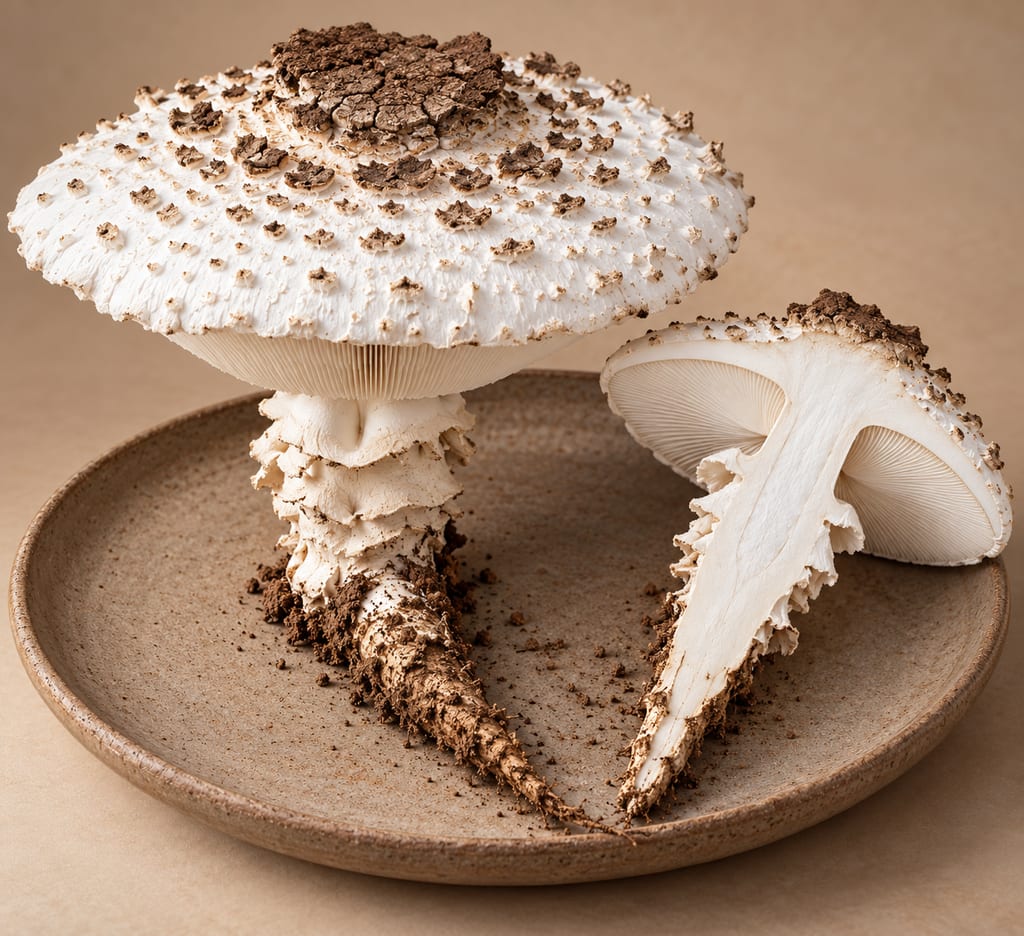
A large wild termite-associated mushroom gathered across parts of tropical Africa. Local food uses and fruiting seasons vary by place and rainfall; its appearance alone cannot establish a safe identification.
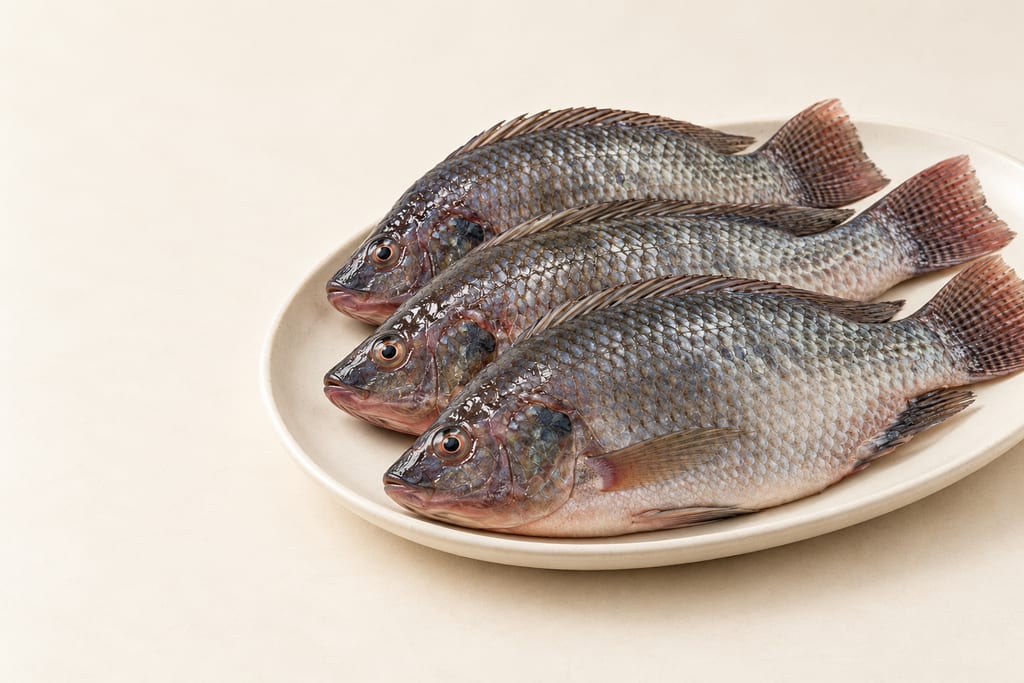
Tilapia is a common market name for several African freshwater cichlids, not one species. It is eaten fresh, farmed and preserved in distinct regional forms, including Ghanaian koobi and Botswana salt-dried fish.
No community contributions have been published for this entry yet.
Sign in to contribute. Published comments and photos are free to read.
Royal Botanic Gardens, KewIngredient research
Vigna unguiculata (L.) Walp. | Plants of the World OnlineCited in: What the leaves are
International Journal of Biodiversity and Conservation 8(7):153–163; Academic JournalsIngredient research
Phenotypic variation in cowpea (Vigna unguiculata [L.] Walp.) germplasm collection from BotswanaCited in: Crop studies in Botswana; Growing conditions and their limits
African Journal of Agricultural Research 16(9):1317–1324; Academic JournalsIngredient research
Field evaluation of introduced and local cowpea genotypes performance in BotswanaCited in: Crop studies in Botswana; Growing conditions and their limits
Biodiversity & Ecology 6:282–287Ingredient research
Grain yield water use efficiency of cowpea (Vigna unguiculata L. Walp.) in response to planting dates in BotswanaCited in: Crop studies in Botswana; Growing conditions and their limits
UNISWA Journal of Agriculture 8:5–11Ingredient research
Response of cowpea (Vigna unguiculata (L) Walp) varieties to leaf harvesting in BotswanaCited in: What leaf-removal research found; What is not known
Journal of Ethnic Foods 7, article 1 (2020), Springer NatureIngredient research
Plant-based traditional foods and beverages of Ramotswa Village, BotswanaCited in: What the leaves are; Leaves and grain as separate foods; Two dried-leaf methods
Slow Food Foundation, Ark of TasteIngredient research
Morogo wa Dinawa | Ark of TasteCited in: What the leaves are; Leaves and grain as separate foods; Two dried-leaf methods
Food Production, Processing and Nutrition 5, article 28 (2023), Springer NatureIngredient research
Plant-based traditional foods and beverages of Gumare Village, BotswanaCited in: Leaves and grain as separate foods
Botswana University of Agriculture and Natural Resources repositoryIngredient research
Effect of soil water deficit on water use efficiency of cowpea (Vigna unguiculata L. Walp)Cited in: What is not known
University of Maryland ExtensionIngredient research
Growing Southern Peas in a Home GardenCited in: Growing conditions and their limits
NC State ExtensionIngredient research
Vigna unguiculata, Extension Gardener Plant ToolboxCited in: Growing conditions and their limits
Clemson Cooperative ExtensionIngredient research
Southern Peas, HGIC 1319Cited in: Growing conditions and their limits