
Koobi
Koobi is Ghanaian salted and dried tilapia. Sources differ on the brief ripening stage and drying period, and do not establish a single validated household process. This entry records documented variants and their limits.
 FermenteaWhere food goes to change
Substrates
Tilapia is a common market name for several African freshwater cichlids, not one species. It is eaten fresh, farmed and preserved in distinct regional forms, including Ghanaian koobi and Botswana salt-dried fish.
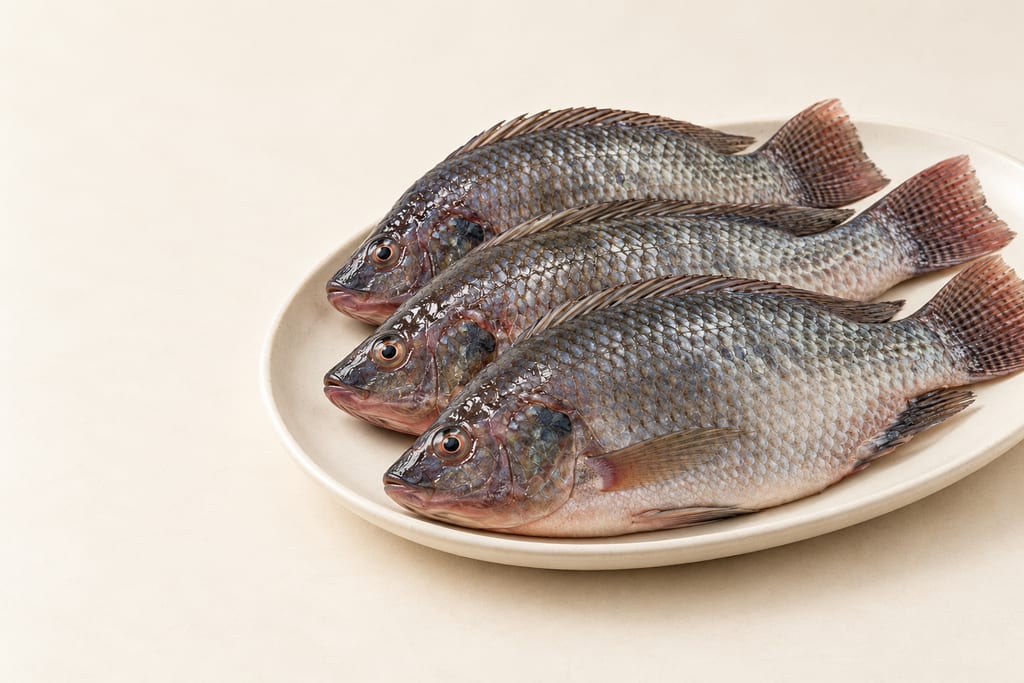
Koobi is a Ghanaian salted-dried fish commonly identified in fisheries literature as tilapia. The name describes a preserved product, not one tilapia species. A Ghanaian processing review describes fish being scaled, gutted, salted, held for a short maturation period and then dried. One account records two or three days of salting followed by two to four days of drying; those figures describe that documented process, not a general schedule for other fish, sizes, weather or equipment.
Koobi should be distinguished from momone or momoni, a separate, strongly flavoured Ghanaian fish condiment made from several species and often described as fermented or matured. The two products do not become the same thing because both may use salt or develop a strong flavour. A short holding stage in one description does not prove that every koobi batch is a controlled microbial fermentation. Evidence supports a preservation family that can include maturation; a stronger fermentation claim needs a source about that particular product and process.
Koobi is used as a preserved cooking ingredient. A 1999 University of Ghana thesis studied retail koobi and laboratory-processed tilapia, measuring histamine along with salt, moisture, water activity and microbial counts. That work is useful evidence about specific samples and handling, not a recipe or product standard for every item sold under the name.
A fisheries report on Botswana documents salting and drying in remote Okavango and Chobe river communities. In the described practice, tilapia were scaled and split while catfish were filleted, then fish and salt were layered in draining containers. The salted fish was dried on raised wire or woven-reed racks, shaded from intense direct sun and protected from rain. The report describes drying for about a week at ambient temperature in that particular system.
The practice grew alongside a government purchasing programme that created a market for seasonal catches during drought. The report says the market mattered to processors and notes that salt could be costly or hard to distribute. It also warns that salting cannot restore poor-quality raw fish. This is a documented fisheries history, not proof of an ancient tradition or a universal Botswana recipe.
The report recorded particular moisture and salt results and described a soaking practice before cooking. Those measurements belong to the study samples; they cannot serve as universal home targets. The source does not identify all tilapia to species, so this page leaves the Botswana fish species unspecified.
A 1975 study of fish from Ghana's Volta Lake examined salting, drying and smoking of fish identified in the paper as Tilapia galilae. The paper tested dressing, brining, drying, smoking and storage. Its species label belongs to the historical publication; it should not silently be treated as a current universal name for all tilapia or for every Volta Lake fish.
The article reports one experimental process and its results under study conditions. It is evidence that this named fish was used in a Ghanaian preserved-fish investigation, not a household instruction set. A measured process may help explain product development while still being unsuitable for a different species, size, climate or equipment.
Tilapia is a familiar name for a group of freshwater cichlids. It does not identify one species. Fisheries and aquaculture sources commonly discuss species in the genera Oreochromis, Sarotherodon and Tilapia; newer taxonomic work has also moved some fish formerly called Tilapia into Coptodon or other genera. Names in older fishery reports may not match current scientific names one-to-one.
The best-known farmed member is Nile tilapia, Oreochromis niloticus. Other fish discussed or sold as tilapia include Mozambique tilapia (O. mossambicus), blue tilapia (O. aureus), mango tilapia (Sarotherodon galilaeus), and species now placed in Coptodon. These examples are not a complete list. Some names in older records are misspellings or outdated combinations; a source's original identification should be kept distinct from later taxonomic interpretation.
A market label that says only “tilapia” can leave the species unknown. This page follows the broad ingredient name and keeps that uncertainty visible. It does not claim that a Ghanaian koobi, a Botswana salted fish or a photograph labelled tilapia must all contain the same species.
Tilapia cichlids are associated with African and Middle Eastern fresh waters. In Africa, different groups occupy rivers, lakes, swamps and other habitats, with species distributions that do not follow modern boundaries on a map. A broad account of “tilapia in Africa” is not a claim that every species occurs in every country.
Nile tilapia is now farmed far beyond its native range. A 2023 review describes its introduction to many countries, especially during the second half of the twentieth century, for aquaculture and fisheries enhancement. An imported or farmed Nile tilapia in a new region remains the same species, but its presence does not prove that all local fish called tilapia are Nile tilapia.
Wild capture and aquaculture both supply food. Farming can provide a more regular market supply, while lake and river fisheries follow their own seasons, species and local rules. Buyers may encounter whole fish, split fish, steaks or fillets. The retail name and cut alone do not reveal whether a fish was wild or farmed, where it was raised, or which species it is.
A tilapia ingredient may be a freshly caught or chilled whole fish, a dressed fish, or a cut portion. Skin, scales, head, fins and body depth vary with species, size and condition. A broad ingredient page cannot offer a dependable visual key for identifying every species; use a qualified fish-identification source when the exact species matters.
The flesh is sold cooked or raw according to the product and market. Its thickness affects how it cooks and how a processor handles it. A small fish may be left whole in a local dish; a larger one may be scaled, split or filleted. A label that says “tilapia fillet” tells the cut, but not necessarily the species or whether the fish was preserved before sale.
Fresh appearance is not a safety test. A whole fish can look familiar while its temperature history, water quality or handling is unknown. Where species, harvest area, production method or preservation status matter, use the supplier's label and traceability information rather than guessing from colour or body shape.
Salting removes some water from fish tissue and adds salt; drying removes more water. Both can reduce the water available for some microorganisms, but the result depends on how the fish is handled and how evenly salt and drying reach the flesh. A dry surface does not show what remains in the thickest part, and visual dryness does not prove a product is shelf-stable.
Size, species, whether the fish is gutted or split, how pieces are stacked, salt distribution, humidity and temperature all change processing time. The Codex fish code says drying conditions depend on species, size and handling, and recommends sorting salted fish by species and size. These are reasons that one koobi description or one Botswana report cannot become a universal process.
Maturation may involve biochemical changes in the fish and, depending on the product, microbial activity. Some preserved fish are deliberately fermented; others are salt-cured, dried or smoked without evidence that fermentation defines the process. Salt and drying alone do not justify a fermentation label. For tilapia, describe the named regional product and its documented processing rather than treating every preserved fish as the same ferment.
Fish form matters to salt penetration and drying. The Botswana report describes tilapia split open but catfish filleted; the Volta Lake study also found that larger fish took longer in its particular process. These examples show why size and cut belong in the record. Neither study gives a time that can safely be transferred to a different fish or setting.
The first safety question is the condition of the fish when it reaches a processor. Delay, poor temperature control, damage to the fish and dirty water or equipment can affect the final product. The University of Ghana koobi thesis found higher histamine in tilapia when icing after catch was delayed in the study comparison. This supports prompt, careful handling; it does not show that every tilapia species or preserved product carries the same histamine risk.
The thesis measured histamine in retail koobi samples and reported a range for those samples. A low result in a limited sample does not certify another batch, and salt or drying cannot be relied on to remove histamine that has already formed. In the study, unsalted tilapia also showed elevated histamine under some conditions. The practical lesson is to avoid prolonged unchilled holding of fresh fish and to buy preserved fish from a reliable supplier.
Codex lists viable parasites, scombrotoxins and botulinum toxin among potential hazards at specific salting or maturation steps for fish products. These are general fish-processing hazards, not a claim that every tilapia batch contains each one. The code ties controls to the product, species, salt absorption, time and temperature; some fish that accumulate histamine require cold control and checks. A household description without validated limits cannot be promoted as a safe preservation method.
Dried or salted fish may need cooking, soaking or other preparation before use, depending on the actual product. Follow its producer's handling instructions. Neither a familiar smell nor a dry feel proves safety, and a traditional duration or appearance is not a substitute for a validated process. This page supplies no universal salt dose, safe pH, water-activity target, storage time or room-temperature schedule.
In that 1999 thesis, retail koobi samples ranged from 7.06 to 32.15 micrograms of histamine per gram. Those are results from the sampled outlets, not a safe limit or a guarantee for a new batch. The study also compared tilapia iced promptly with fish whose icing was delayed; the delayed sample had more histamine.
Choose the form that a dish or preparation names: fresh whole tilapia, a dressed fish, a fillet or a particular preserved product such as koobi. For preserved fish, check whether the source identifies it as salted, dried, smoked, fermented, or made by more than one of those steps. The word “tilapia” alone says nothing about that treatment.
For an African preserved-fish recipe, keep the product name, species and method as close as possible to its source. If a source says only tilapia, do not upgrade it to Nile tilapia. If a source describes salted and dried fish but does not establish a fermentation stage, keep its product family and explain the uncertainty.
Tilapia has many other uses, including fresh cooking and aquaculture production. Koobi and the Botswana salted-dried fish record show how fish type, cut, salt and local markets shape preservation. They do not establish that other communities preserve tilapia the same way.
Fish allergy can cause serious reactions. U.S. Food and Drug Administration guidance includes tilapia among bony fish covered by its major-allergen interpretation and says U.S. labels must declare the fish species. A broad market name is not enough to infer the species in a particular preserved product; people with a fish allergy should use reliable product information and the rules that apply where they buy it.
The evidence here supports a broad African association for the tilapia group, a Ghanaian link for koobi, a Botswana record for salt-dried tilapia, and a Volta Lake study of a named fish under an older taxonomic label. These are different kinds of location evidence: broad species distribution, a regional food product, a documented fisheries technology and a study site.
No source used here dates the first human use of tilapia as food or establishes one place where the common name began. The page therefore leaves earliest history unknown. Its regional examples are evidence for particular uses, not origin claims for the fish group or a template for every tilapia product.
The fisheries literature documents koobi as salted-dried tilapia in Ghana; it does not identify one tilapia species for every product.
A 1975 study examined processing of a fish identified there as Tilapia galilae; this is a study association, not a universal species claim.
An FAO fisheries paper documents salted-dried tilapia among seasonal fisheries in Botswana; it does not name all tilapia to species.
The fisheries report locates the documented salting-and-drying work in remote Okavango and Chobe communities.
Koobi is Ghanaian salted and dried tilapia. Sources differ on the brief ripening stage and drying period, and do not establish a single validated household process. This entry records documented variants and their limits.
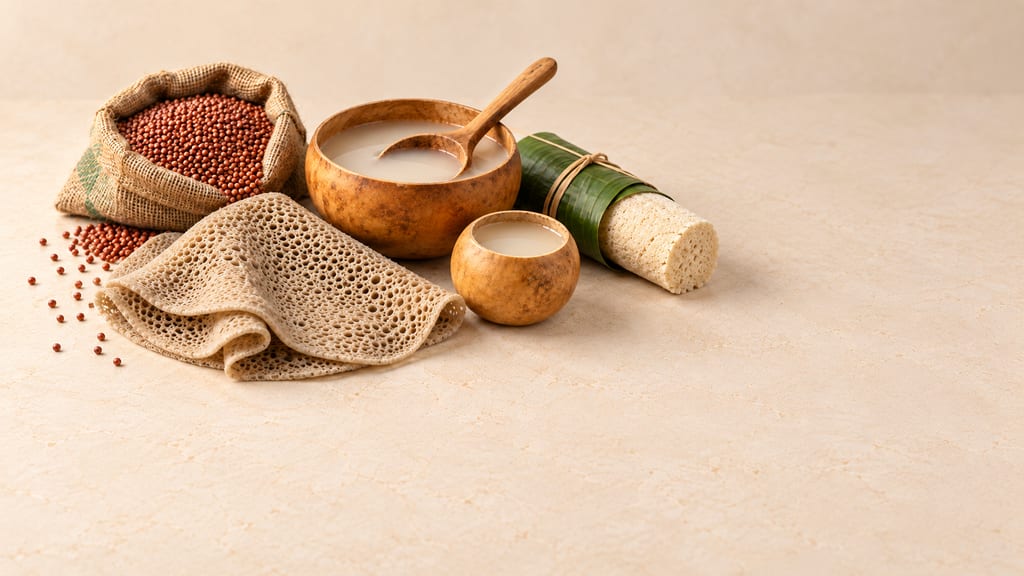
From sour breads and milk to savoury seeds, cassava staples and living beers, African fermentation follows the crop, the community and the work of transformation.
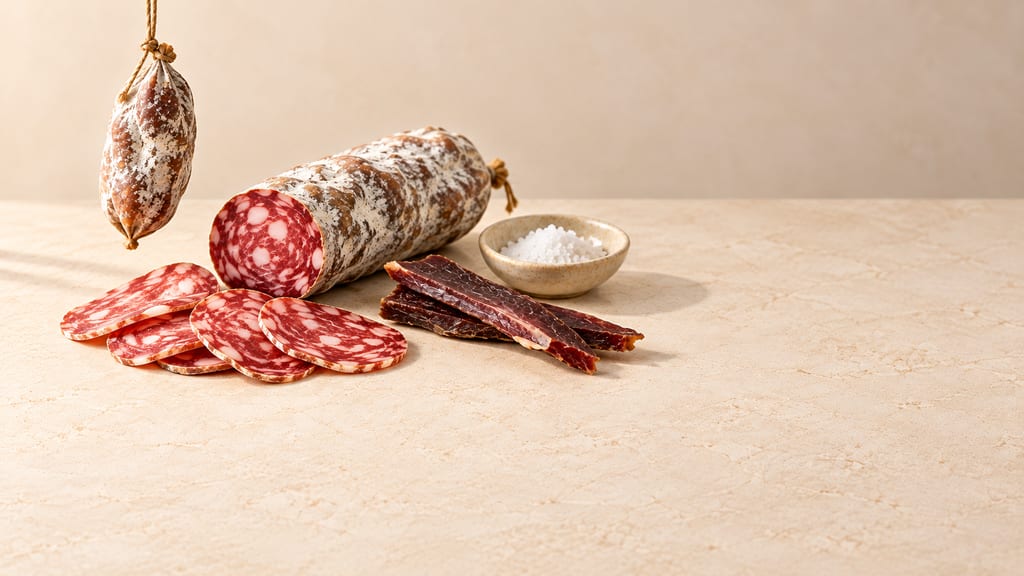
Dry salami, sour pork with rice, matured sheep and aged blubber follow different paths from animal to food. Their stories connect microbes with climate, slaughter, migration and the meals people share.
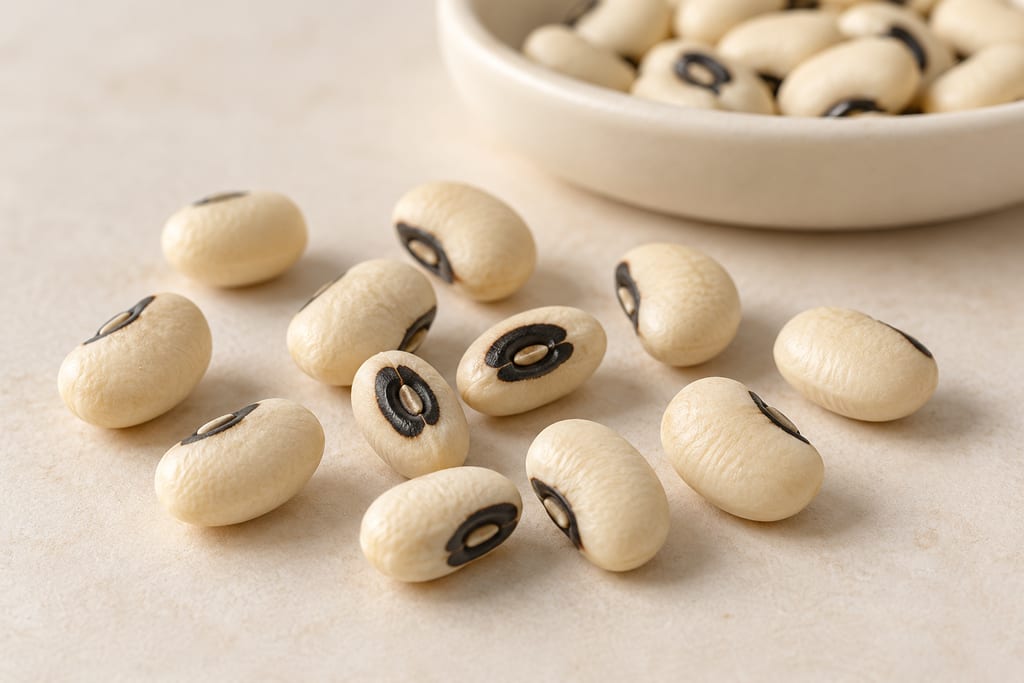
Cowpeas are the seeds of Vigna unguiculata, eaten green and freshly shelled or fully mature and dry. Across Africa they serve as food, fodder and a crop partner, while research also examines them in fermented pastes and cereal doughs.
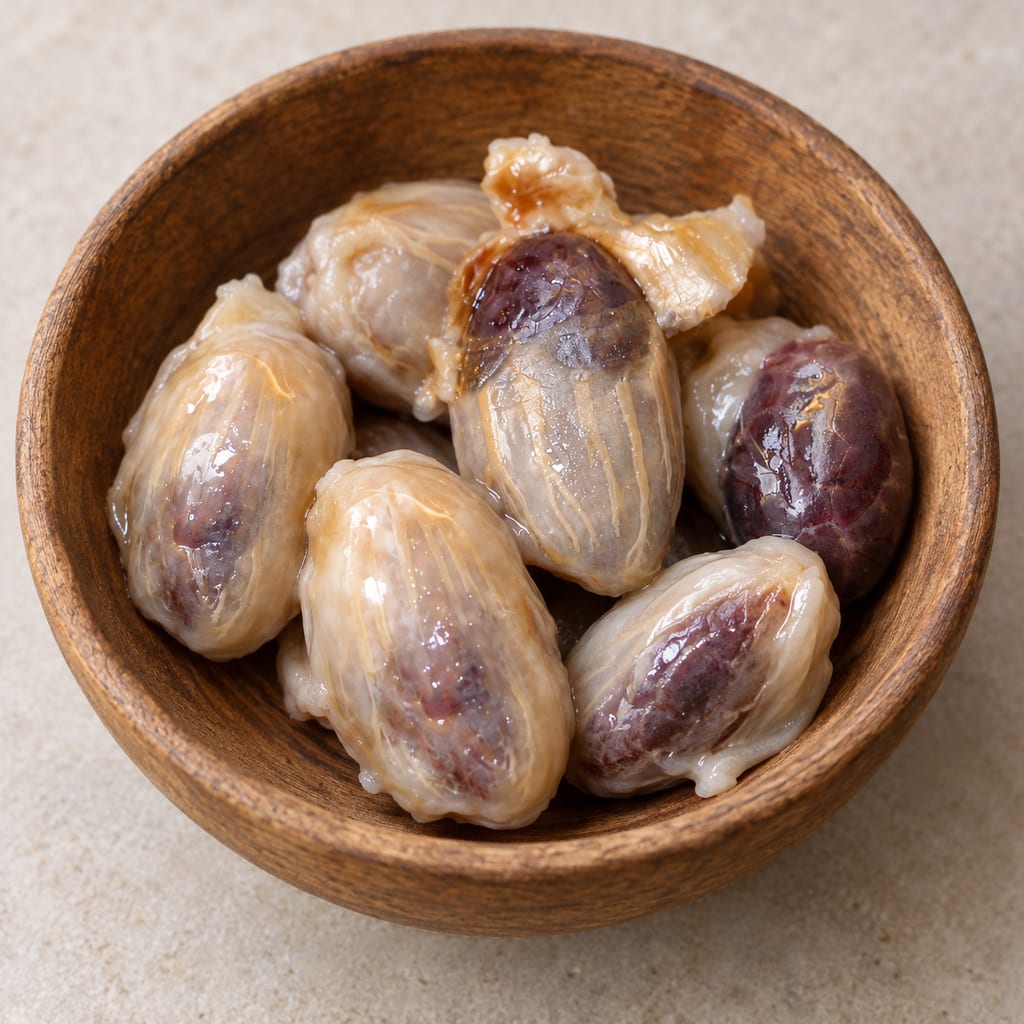
Fresh cocoa beans with pulp are cacao seeds newly removed from the pod while the sweet-acid white mucilage still clings to them. The seed-and-pulp mass is the starting material for post-harvest cocoa fermentation.
Kudeme is described in research as a traditional Ghanaian inoculant for fermenting cassava dough into Agbelima. Its exact microbial composition and a single canonical preparation are not established by the sources reviewed.
Sugar-rich liquid tapped from different palms, gathered fresh or transformed into local drinks and sweeteners; species and collection stage shape its composition.
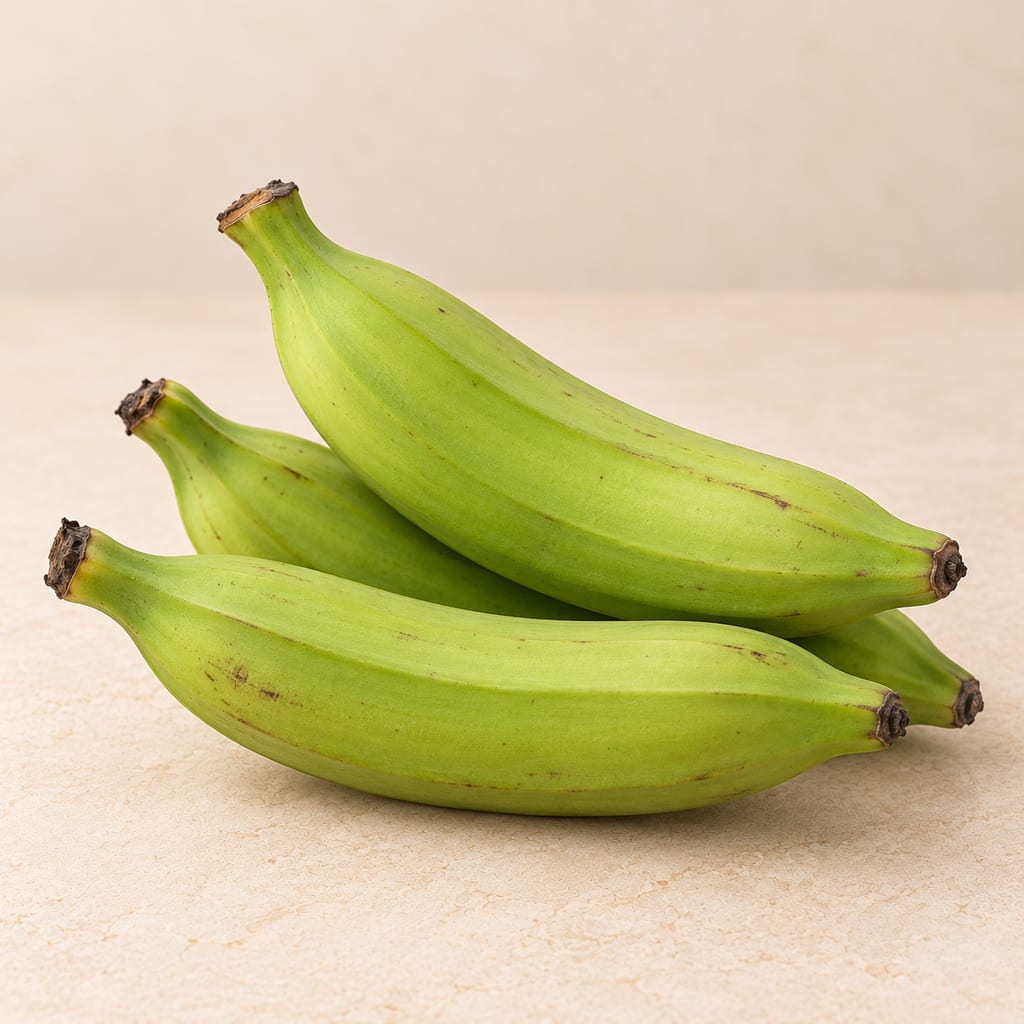
Plantains are starchy cooking bananas used green through fully ripe. Their firmness and sweetness shift with maturity, and ripe mashed fruit appears in a University of Rhode Island Liberian rice-bread adaptation.
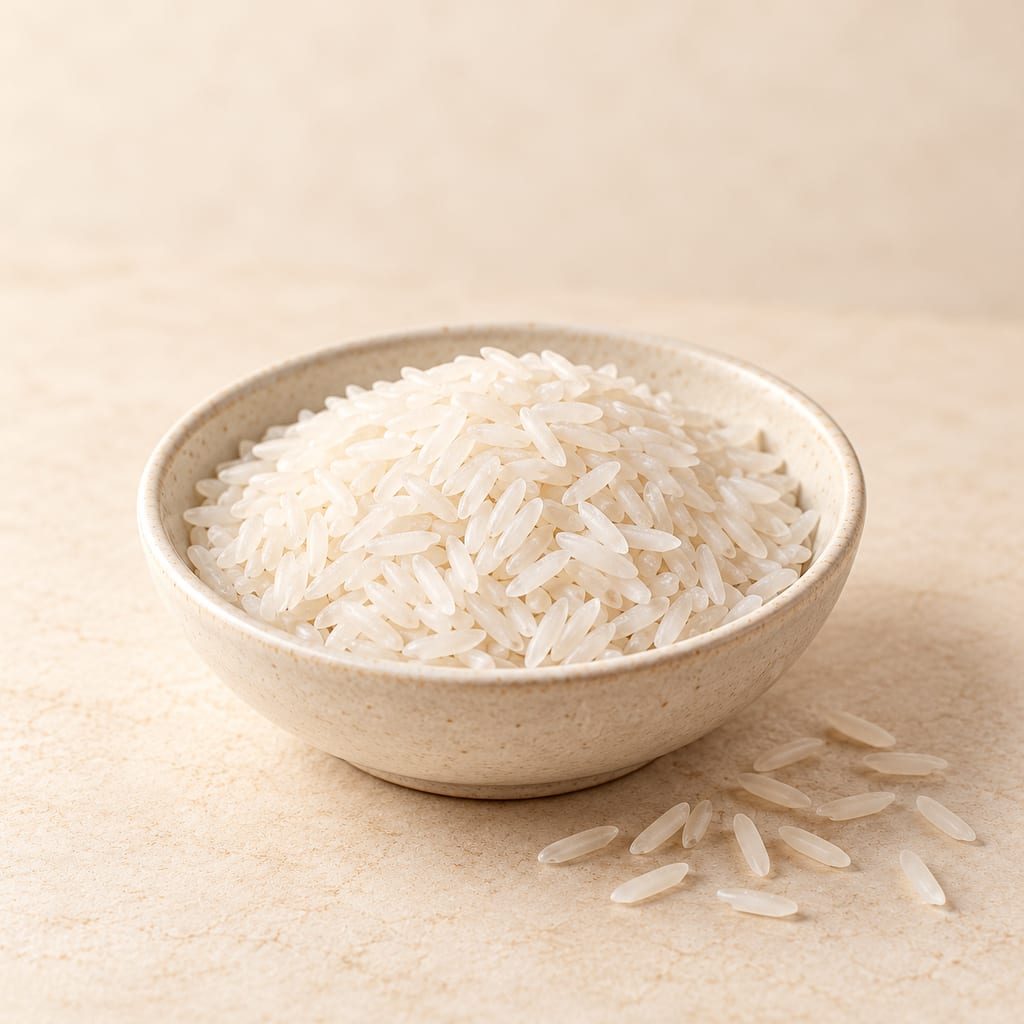
Rice contributes starch to flatbreads, steamed breads, batters and many distinct fermentations. Its species, milling and starch character shape how it cooks, binds, expands and feeds enzymes.
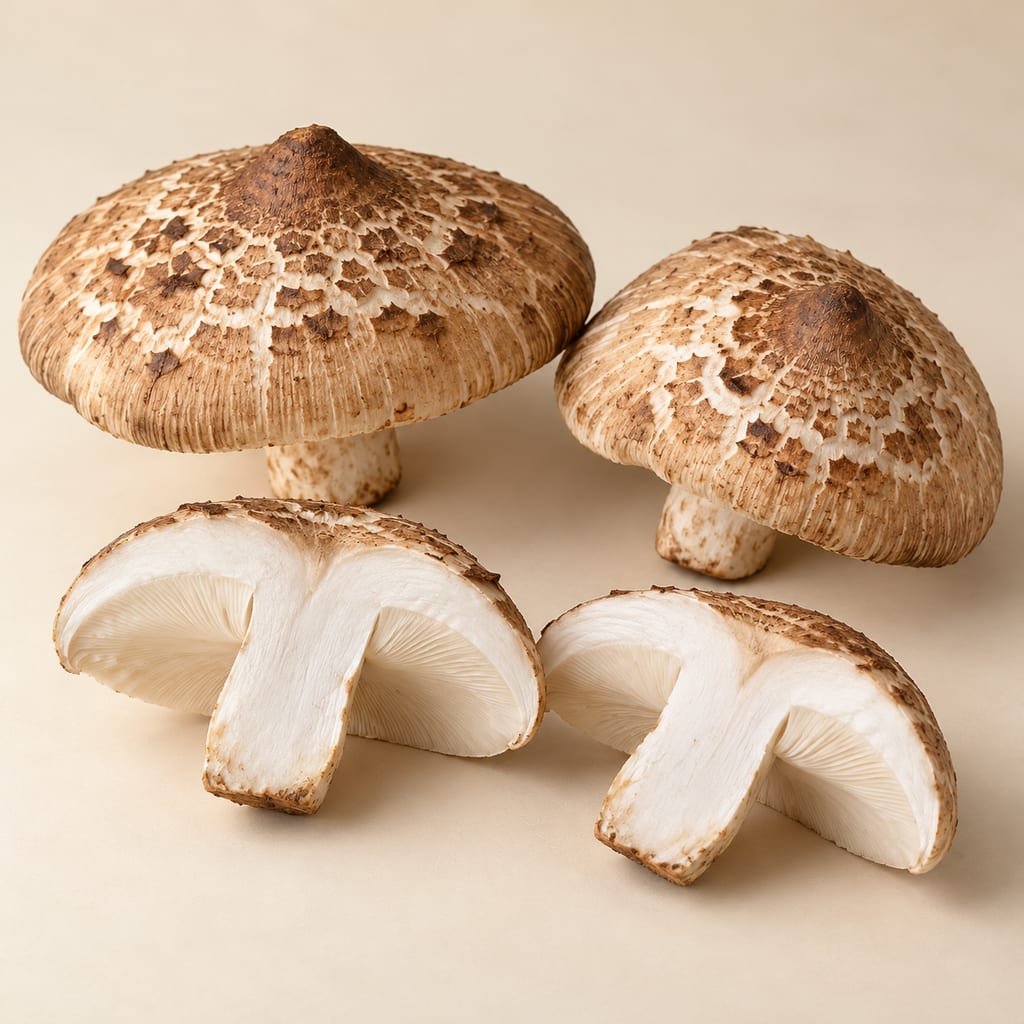
The termite mushroom, a large wild fungus of tropical Africa that fruits on Odontotermes termite mounds. The EFTA inventory lists it but gives no edibility rating or preparation.
Termitomyces reticulatus is a termite mushroom that grows with Odontotermes termites in African woodland. The European Food Safety Authority list records it as edible, but its identity and preparation need checking.
No community contributions have been published for this entry yet.
Sign in to contribute. Published comments and photos are free to read.
Food and Agriculture Organization of the United NationsTaxonomy · Species · Geography
Tilapia: Species and geographical distribution in AfricaFAO-hosted presentation describes tilapia as diverse African and Middle Eastern freshwater cichlids in several genera; classification is changing.
It lists multiple African species and notes broad habitats and species-specific distributions.
Cited in: A common name, not one fish; African freshwater fish and a global farmed species; What arrives at the market; Buying and using the ingredient; Where the record is specific and where it is not
Reviews in AquacultureTaxonomy · Aquaculture · Geography
From Africa to the world—the journey of Nile tilapiaNile tilapia (Oreochromis niloticus) is African and has been introduced into many countries, especially during the second half of the twentieth century, mainly for aquaculture and fisheries enhancement.
The review describes reclassification and ongoing taxonomic variation in tilapia species.
Cited in: A common name, not one fish; African freshwater fish and a global farmed species; What arrives at the market
Ghana Sustainable Fisheries Management Project / SNVHistory · Uses · Preservation
Post-harvest processing and value-chain literature reviewThe supplied research atlas uses this fisheries synthesis to distinguish koobi (salted-dried tilapia) from momone and related products.
It describes a reported scaling, gutting, salting, maturation and drying sequence; recorded durations are source-specific.
Cited in: Ghanaian koobi: salted and dried tilapia; Buying and using the ingredient; Where the record is specific and where it is not
University of GhanaSafety · Preservation
A Study of the Effects of Handling, Processing and Storage on the Histamine Content in Salted, Fermented Telapia (Oreochromis nilotica)Thesis analyzes histamine and related measurements in koobi and laboratory-processed tilapia; retail sample values and processing comparisons are not universal targets.
The study reports higher histamine after a 24-hour delay before icing than with immediate icing in its comparison.
Cited in: Ghanaian koobi: salted and dried tilapia; Handling hazards and preservation limits
Nippon Suisan GakkaishiPreservation · Geography · History
Salting, Drying and Smoking of Tilapia from Volta Lake, GhanaStudy examines a particular fish identified as Tilapia galilae from Volta Lake and evaluates dressing, brining, drying, smoking and storage; its tested method is not a universal home process.
Cited in: A Volta Lake study and the limits of a method description; What salt, drying and maturation do; Where the record is specific and where it is not
Food and Agriculture Organization of the United NationsUses · Preservation · Geography · History
Sun-dried salted fish as a means of reducing post-harvest losses in BotswanaBotswana fisheries report documents salted dried fish from the Okavango and Chobe river systems, including splitting tilapia and filleting catfish.
It describes the technology's development alongside a government purchase programme during drought and warns salting does not improve poor raw-fish quality.
Process details and measurements are specific to the report, not universal safety limits.
Cited in: Botswana: salt-dried fish from seasonal fisheries; What salt, drying and maturation do; Buying and using the ingredient; Where the record is specific and where it is not
Food and Agriculture Organization of the United Nations / World Health Organization, Codex AlimentariusSafety · Preservation
Code of practice for fish and fishery productsCodex lists product-stage-specific hazards for salting and maturation, including viable parasites, scombrotoxins and botulinum toxin.
Codex says maturation depends on species, size, fish quality, temperature and salt absorbed; drying depends on species, size and handling.
The code directs processors to sort salted fish by species and size and does not establish one universal tilapia process.
Cited in: What salt, drying and maturation do; Handling hazards and preservation limits
Food and Agriculture Organization of the United NationsPreservation · Safety
Fish salting: what you need to knowFAO explains salting in terms of water loss and water activity and emphasizes clean handling, food-grade salt, good raw material and species-specific cold control where relevant.
Cited in: What salt, drying and maturation do; Handling hazards and preservation limits
U.S. Food and Drug AdministrationSafety · Uses
Guidance for Industry: Questions and Answers Regarding Food Allergens, Including the Food Allergen Labeling Requirements of the Federal Food, Drug, and Cosmetic Act (Edition 5)FDA guidance identifies tilapia as a bony fish within its interpretation of fish for U.S. major-allergen labeling; it says the species of fish must be declared under the cited U.S. law.
Cited in: Buying and using the ingredient