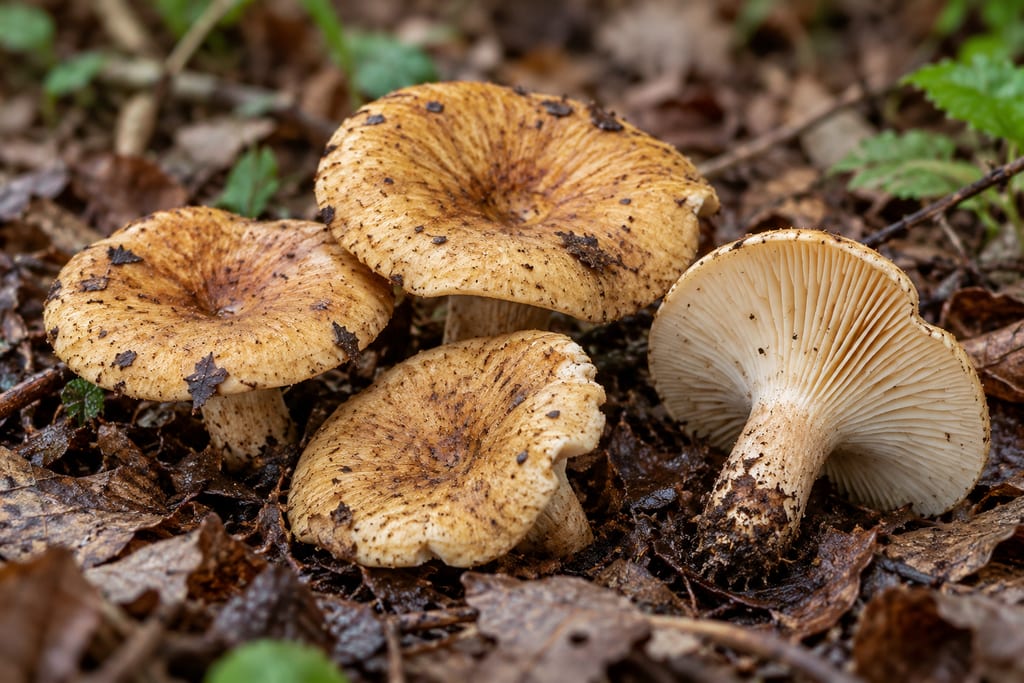
Lactifluus pinguis
Lactifluus pinguis is a wild milk cap fungus of forests in Yunnan, China, and Laos, where the catalogue records it as marketed. Its identity and local safety still need species-level review.
 FermenteaWhere food goes to change
Spices and aromatics
Fresh raspberry leaves are reported as a colour-giving material in Phongsaly lao-lao distillation. The account does not identify the plant species.
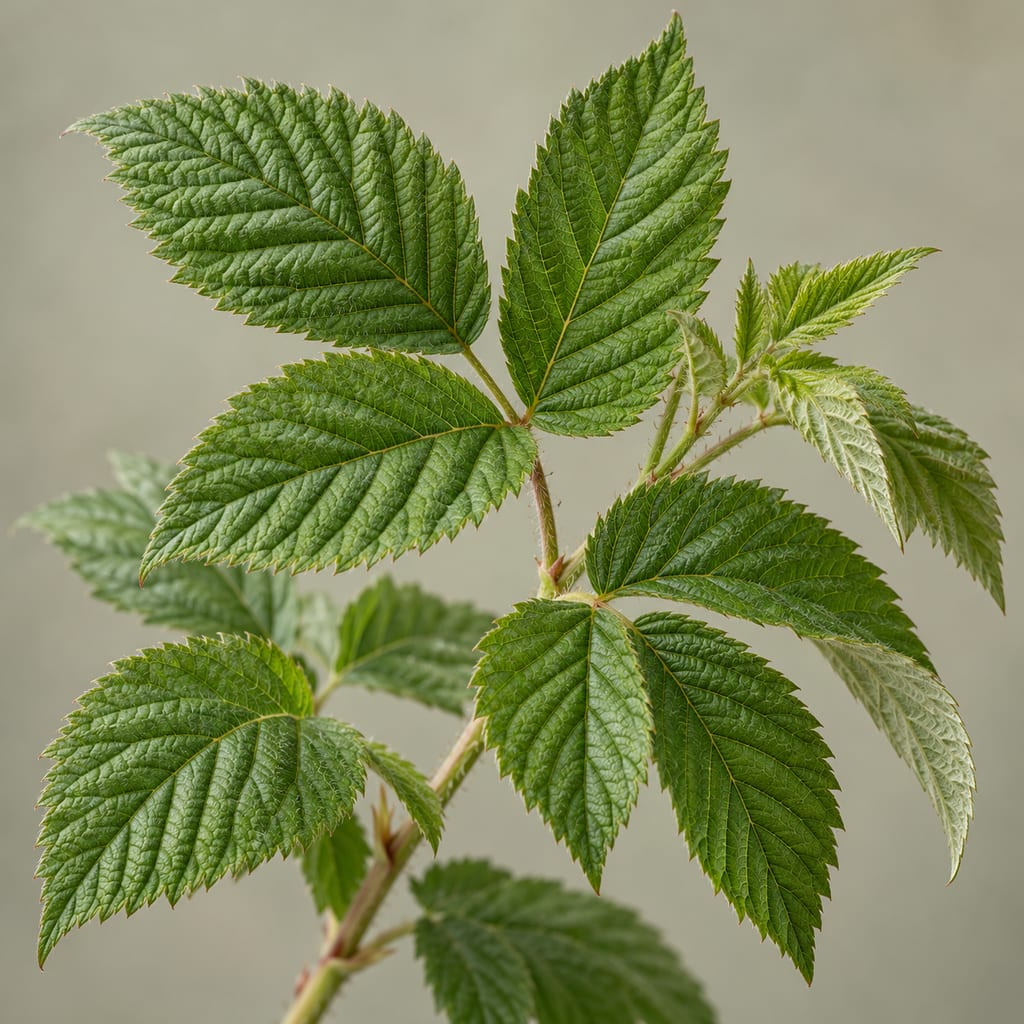
“Raspberry leaf” does not by itself identify a species. European herbal references use the name for the leaf of Rubus idaeus L., red raspberry, a shrub in the rose family. Kew accepts R. idaeus and gives its native range as the temperate Northern Hemisphere to Mexico. The common name can also be applied to other bramble-like Rubus plants; the name alone is not a botanical determination.
This distinction matters in Phongsaly, northern Laos. A provincial tourism account describes fresh “raspberry leaves” used during the final stage of local lao-lao distillation, but does not give a Latin name, specimen, local-language plant name or diagnostic description. It establishes a named local use, not that the plant is R. idaeus. The identification remains uncertain until a reliable local botanical source resolves it. The European medicinal literature below concerns R. idaeus leaf and must not be transferred to the unidentified Lao material.
The account says freshly picked raspberry leaves are placed in the path of lao-lao, a local rice spirit, during the last stage of distillation; the spirit takes on green colour. This is a finishing use of leaves, not a fermentation ingredient: the description places it at distillation’s end and attributes the colour to contact with the leaves. It does not report that leaves ferment rice, create alcohol or preserve the spirit.
The report supplies no batch quantity, contact time, preparation steps, yield, flavour description or safety assessment. It also does not say how common the practice is, which community first used it, or when it began. This page therefore records the account without turning it into a reproducible distillation method or assigning it a broader Lao history. The provincial setting is documented; a unique origin is not.
Green colour is named as the result, but no pigment or chemical cause is identified. It would be speculation to assign a mechanism or infer the finished spirit’s taste. The available account does not establish whether the same effect occurs with dried leaves, another Rubus species or a different spirit.
In European herbal products, raspberry leaf means R. idaeus leaf. The EMA describes dried, cut leaf and dry extracts used as teas, mouth or throat infusions and solid preparations. The Committee on Herbal Medicinal Products recognises traditional-use indications for certain preparations in adults: relief of minor menstrual spasms, mild mouth or throat inflammation, and mild diarrhoea. These are traditional-use conclusions, not proof of clinical efficacy; the EMA notes that clinical studies are insufficient.
That assessment applies to specified preparations of R. idaeus. It does not establish effects or suitable use for fresh leaves, unidentified species, homemade extracts or leaves used to colour a distilled drink. Preparation and extraction matter, and the evidence does not justify assuming that all products sold under a shared common name have the same composition or strength.
Red raspberry leaf is promoted for making labour easier or shorter. The US National Institutes of Health Office of Dietary Supplements says the evidence supporting this use is very limited and pregnancy safety has not been well studied. The UK Committee on Toxicity's 2024 assessment concluded the risk during pregnancy appeared low but with high uncertainty. Its review identified limited human evidence and uncertainties about active constituents, preparations, dose, biological effects and contaminants. The committee could not establish a safety reference point.
The EMA does not recommend medicinal raspberry-leaf preparations during pregnancy or lactation because evidence is insufficient, and it does not recommend them for people under 18. These agency conclusions show why traditional reputation should not be presented as established benefit or blanket safety. A person who is pregnant or breastfeeding and considering a supplement should consult a qualified clinician rather than rely on labour claims or online dose advice.
The available assessments concern R. idaeus preparations and do not evaluate the unidentified Phongsaly leaves or the safety of the leaf-finished spirit. Neither familiar naming nor colour confirms plant identity, composition or safety. No household wild-harvest or distillation advice can be derived from the sources cited here.
For a product intended as an herbal medicine, check that the label identifies the plant as Rubus idaeus and states the plant part and preparation. A label that says only “raspberry leaf” cannot settle species. The consulted sources do not establish a general wild-identification method, harvest season, storage life or home preparation for the Phongsaly use; this page does not supply one.
Fresh leaves are described only in the Phongsaly account; dried and cut leaves or extracts are the forms discussed by the EMA. They should not be treated as interchangeable: the sources provide no conversion between them. If a documented recipe names raspberry leaf, keep the source's form and preparation rather than substituting another bramble leaf by appearance. Further local botanical evidence is needed to resolve the Phongsaly species and the historical depth of that use.
A provincial account documents raspberry leaves as a green-colour-giving material in the final stage of local lao-lao distillation. It does not identify the plant species or establish origin or wider distribution.
The page's wider geographic history is unknown: the Phongsaly source gives no species identification and the consulted botanical and herbal sources do not trace the origins of raspberry-leaf use.
Lactifluus pinguis is a wild milk cap fungus of forests in Yunnan, China, and Laos, where the catalogue records it as marketed. Its identity and local safety still need species-level review.
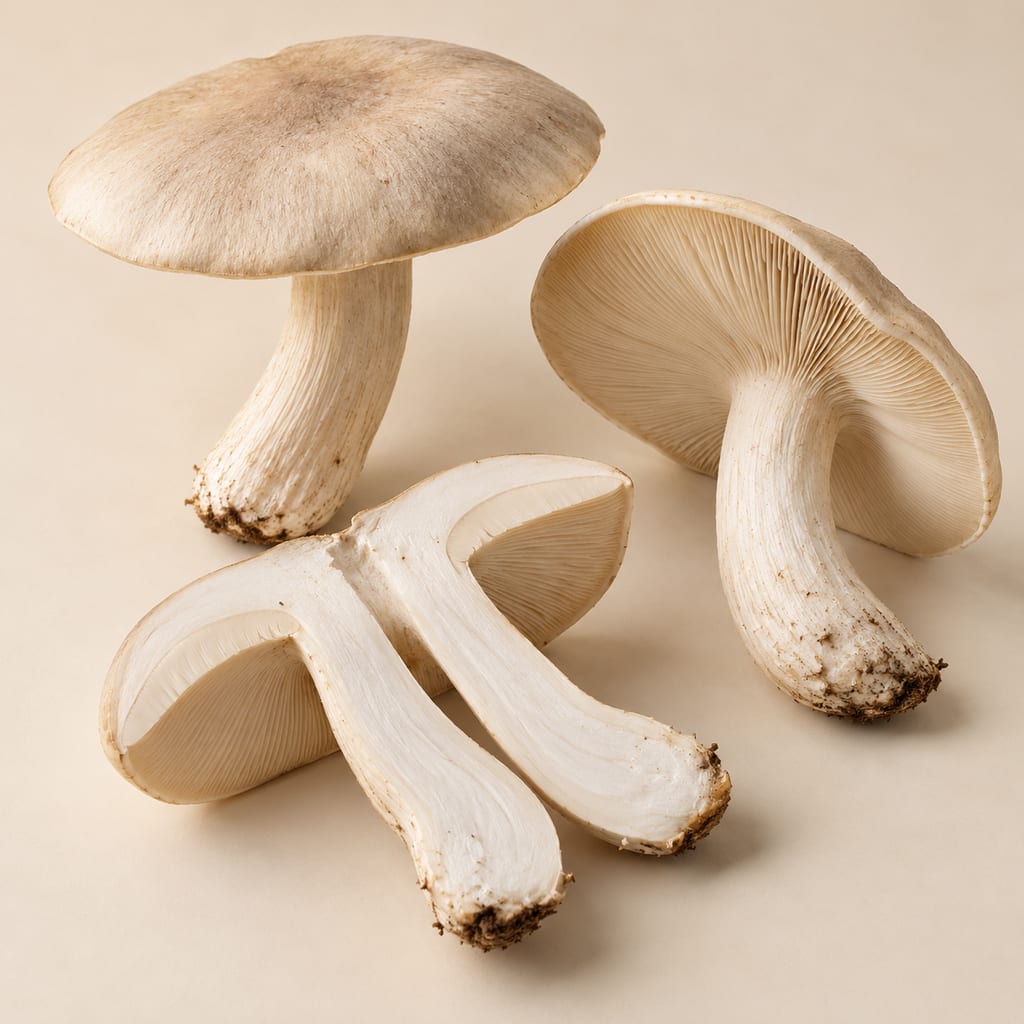
Macrocybe gigantea is a large wild mushroom of tropical and subtropical Asia that is sold in markets in Laos and Yunnan, China. Its local identification and safety still need species-level review.
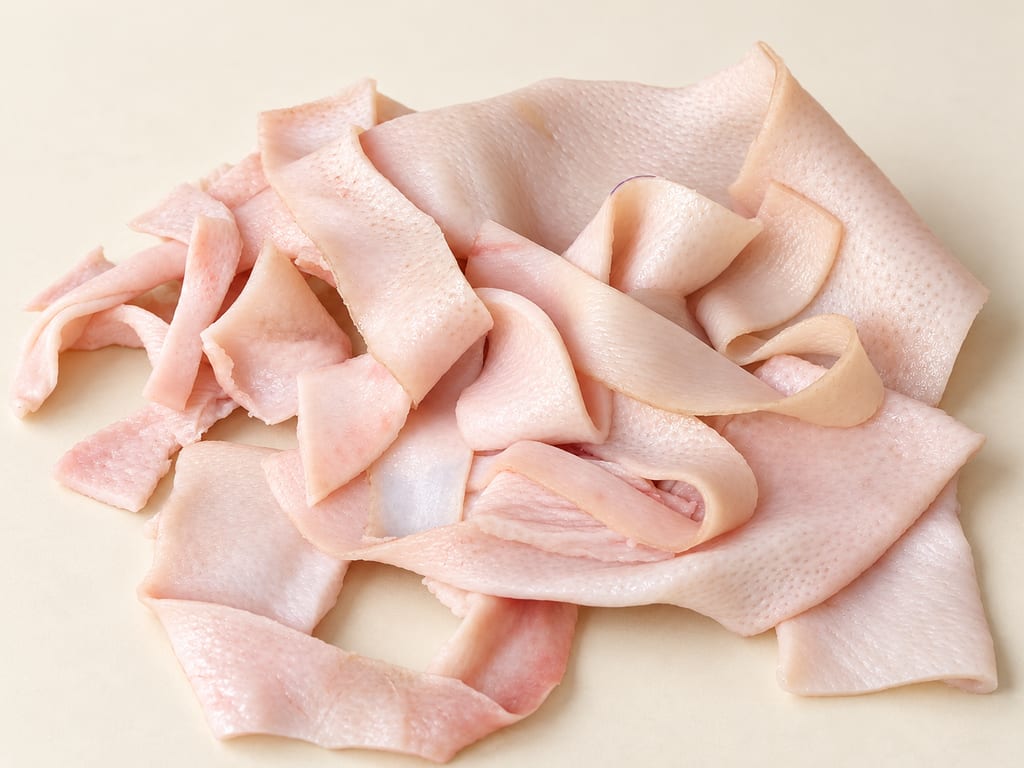
Pork skin is collagen-rich pig skin used fresh or cooked; in documented Southeast Asian meat ferments it is usually prepared separately before it joins the pork.
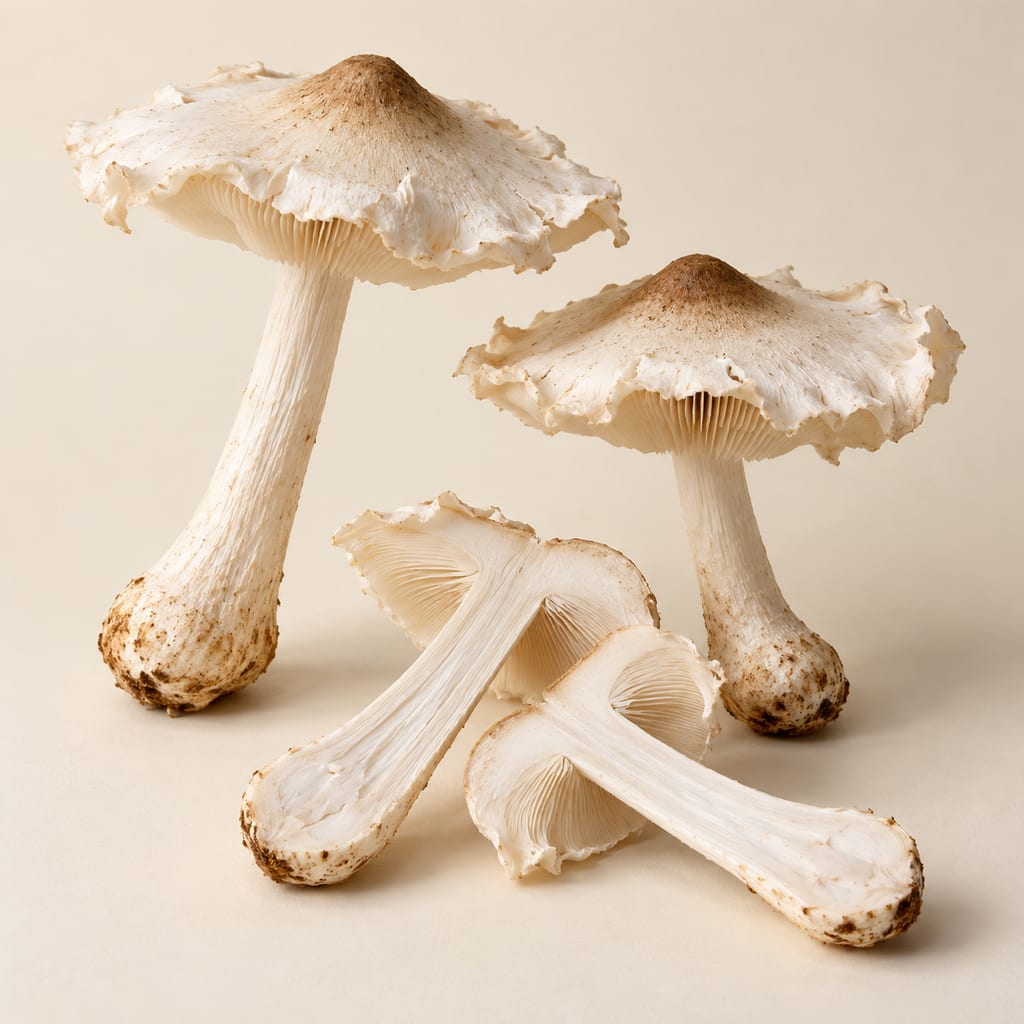
Termitomyces heimii is a wild termite mushroom that grows with fungus-growing termites in Yunnan, Laos and across South and Southeast Asia. It is sold in local markets and cooked in soups and fried dishes.
No community contributions have been published for this entry yet.
Sign in to contribute. Published comments and photos are free to read.
KPL Lao News AgencyDocumented use · Regional context
Phongsaly ProvinceDescribes freshly picked raspberry leaves used at the final stage of local lao-lao distillation and giving the spirit green colour. Does not identify botanical species, quantity, method parameters, safety or historical origin.
Cited in: A common name that needs care; The documented Phongsaly use; Buying and handling
Plants of the World Online, Royal Botanic Gardens, KewTaxonomy · Distribution
Rubus idaeus L.Kew accepts Rubus idaeus L. and describes a native range spanning the temperate Northern Hemisphere to Mexico. The Lao common name does not establish that species identity.
Cited in: A common name that needs care
European Medicines AgencyIdentity · Medicinal use · Safety
Rubi idaei folium - herbal medicinal productDefines raspberry leaf for its assessment as Rubus idaeus L. leaf; describes dried/cut and extract forms and traditional-use indications for adults. States clinical evidence is insufficient and pregnancy/lactation use is not recommended due to insufficient evidence.
Cited in: Red raspberry leaf as an herbal product; Pregnancy claims and safety uncertainty; Buying and handling
US National Institutes of Health, Office of Dietary SupplementsSafety · Pregnancy
Dietary Supplements and Life Stages: Pregnancy - Health Professional Fact SheetStates evidence for red raspberry leaf to facilitate labour is very limited and safety during pregnancy has not been well studied.
Cited in: Pregnancy claims and safety uncertainty
UK Committee on Toxicity of Chemicals in Food, Consumer Products and the EnvironmentSafety · Pregnancy
The potential health effects of raspberry leaf in the maternal dietThe Committee described substantial uncertainty in pregnancy-safety assessment, including limited human studies, variable preparations, uncertain active constituents and contaminant exposure. The 2024 assessment concluded risk appeared low but with high uncertainty.
Cited in: Pregnancy claims and safety uncertainty