
Fermented meat around the world
Dry salami, sour pork with rice, matured sheep and aged blubber follow different paths from animal to food. Their stories connect microbes with climate, slaughter, migration and the meals people share.
 FermenteaWhere food goes to change
Substrates
Pork skin is collagen-rich pig skin used fresh or cooked; in documented Southeast Asian meat ferments it is usually prepared separately before it joins the pork.
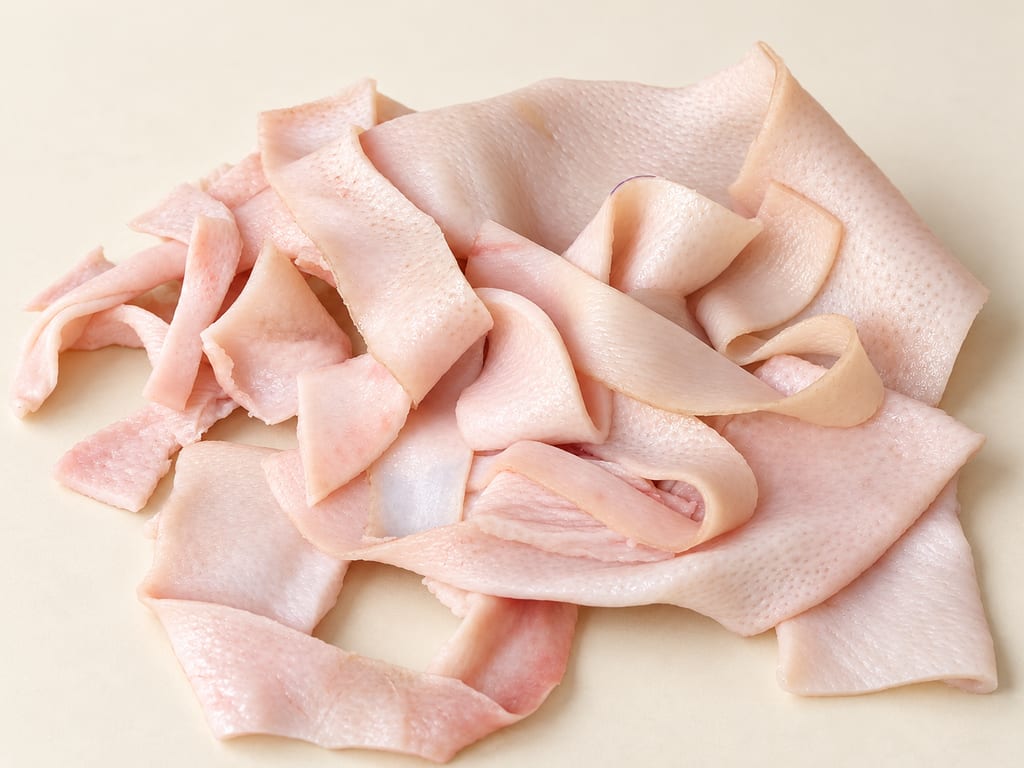
Pork skin is the edible outer covering of a pig. In food writing, “skin” and “rind” may mean the raw tissue or a prepared food made from it, so a recipe needs to make the stage clear. Fresh skin is a flexible sheet with a pale, uneven surface and a dense, springy feel. Fat may remain attached or be trimmed away. Boiling can soften it; drying and frying can make it puff into a crisp, brittle crackling. Those forms look and behave differently and cannot be swapped without changing the preparation.
Pork skin is connective tissue, not muscle. Its collagen-rich structure gives it a firm, chewy texture and makes it swell and bind in some processed meat mixtures. The result depends on the skin, its treatment, how it is cut and the process that follows. Shreds can remain distinct in a sausage; finely chopped skin disperses through the mixture; fried crackling is already a cooked snack rather than a raw ingredient.
Research on pork skin texture examines collagen fibers and reports changes after specific salt, enzyme and alkali treatments. This helps explain the tissue’s toughness and why processing can alter its chew, but the experimental reagents and sequence are not a home recipe. No treatment schedule should be inferred from that study.
Collagen is a structural protein in connective tissue. The Food and Agriculture Organization describes pig skin as high in collagen and notes its swelling and binding abilities in meat products. In cooked sausages, prepared skin can contribute body and water-binding. That role differs from lean meat, whose muscle proteins help hold a comminuted mixture together, and from fat, which contributes its own texture and flavour.
Heating changes collagen-rich tissue; depending on the conditions and the skin’s structure, it can soften and become pliable. The boiled shreds used in some Southeast Asian ferments contribute a chewy contrast to the ground meat. Their function is physical as well as culinary: they add a defined strip or piece to an otherwise minced mixture. They are not equivalent to gelatin powder or extracted collagen, which are separate processed ingredients.
JIRCAS documents Thai Naem, also named Naem Moo-som, with minced red pork, pork rind, garlic, salt and cooked glutinous rice. In the described preparation, hair and excess fat are removed from the skin, which is boiled and shredded before it is mixed into the meat. Regional ingredient amounts and fermentation periods on that entry belong to Naem; they should not be copied into another preparation.
A research article on Vietnamese nem chua similarly describes lean ground pork mixed with boiled pig skin cut into thin strings. The article calls the meat product uncooked because the mixture is not heated after fermentation. That does not mean its skin was raw when it joined the meat. Distinguish the state of each component from the state of the finished product.
A Lao practitioner’s account of Som Moo names pork, skin and rice packed for sour maturation. It documents an observed household practice rather than a validated process. Across these examples, skin is a separate component with its own trimming, heating and cutting. The fermentation happens in the combined meat mixture, not in a universal process applied to unprepared skin.
Edible skin must be distinguished from hide prepared for leather and from an unprocessed carcass surface. The FAO meat-processing account lists scalding, dehairing, singeing, scraping, washing and defatting as industrial preparation steps for pork skin used in cooked sausages. This overview describes processing controls in that context; it is not a domestic instruction set or proof that every market product receives the same treatment.
Some suppliers sell skin already trimmed or scalded, while other recipes begin from raw skin and describe preparation. Check the product label and the recipe to learn whether the skin is raw, scalded, boiled or already cooked. Where a recipe says it is boiled and shredded separately, preserve that sequence. A general ingredient name is not enough to infer the cut, the amount of attached fat or its readiness for use.
“Pork rind” can identify the prepared skin in a meat recipe or a ready-to-eat fried snack. In the Naem entry and nem chua paper cited here, it means cooked skin mixed into the pork. A package of puffed pork rinds is a different stage. Images of market snacks and braised skin therefore illustrate pork-skin foods, but they are not photographs of the raw ingredient.
The regional terms belong to their preparations: แหนม (naem) in Thailand, Som Moo in Laos, and nem chua in Vietnam. They name fermented meat products, not varieties of skin. Keep those product names attached to the right source and do not present them as evidence for a single origin or one shared formula.
Use skin sold or supplied as food and follow the specific preparation in the recipe. Check whether the skin is fresh or already treated, and keep raw pork and its juices away from ready-to-eat food. Clean hands, knives and surfaces after contact. USDA identifies bacteria and parasites that may be present in raw or undercooked pork. General cooking advice for ordinary pork does not validate a fermented-meat process.
Nem chua is described in a scientific paper as a lactic-fermented product consumed raw; microbial changes were measured during the study. This is evidence about the studied product, not proof that acidification alone makes every raw-meat batch safe. A sour taste, smell, bubbles or appearance cannot establish safety. No generic salt, pH, time, temperature or storage limit for pork skin was established by the sources reviewed here; use only a qualified, process-specific source for those limits.
The sources inspected here document pork skin’s use in current meat processing and in several regional fermented meats. They do not date the first use of edible pork skin or establish a single place where it originated. The available evidence supports a varied ingredient with distinct food-processing roles, not an ancient origin story.
A medieval recipe collection preserves two different uses for pig skin. In a Würzburg manuscript dated about 1345–1354, the recipe for a stuffed roasted suckling pig keeps the skin attached after the animal is scalded and dehaired. The skin is left in place while the pig is stuffed, briefly boiled so it does not split, then roasted. Here the skin is both part of the animal presented at table and a structural covering that must stay intact through cooking. It is a specific show dish, not a general instruction for handling pork skin.
A separate recipe, “Pork puree,” survives in a Viennese manuscript collection with material dated to the mid-fifteenth century. It cooks pork belly until the meat is nearly ready to separate from the rind, removes the skin, chops it finely, and returns it to the broth with bread and pepper. That account uses the cooked rind as a chopped component in a soft meat preparation. The two records show that skin could remain whole in one dish and be cut into the meat in another; they do not establish when or where people first ate it.
These are translated and catalogued manuscript recipes, not evidence that present-day Thai, Lao or Vietnamese ferments descend from medieval Central European cooking. They provide dated attestations for particular preparations and help explain why “pork skin” covers several culinary roles. The manuscript material does not offer modern processing controls, and its historical sequence should not be treated as a safe contemporary method.
Pork skin reaches the table through several different processing routes. Some preparations leave it attached to meat; others trim it away, cook it and cut it into pieces. Puffed pork rinds start with skin that is dried and expanded by heat, while cracklings can retain more of the fat that was attached to the skin. A puffed snack is a finished food with a dry, brittle texture. It is not interchangeable with pliable boiled skin in a meat mixture.
A Japanese food-science study evaluated puffed snack production from pigskin recovered as a meat-processing by-product. It reports that hair removal and a staged heating, drying and expansion treatment produced a collagen-rich puffed food; baked samples had less fat than fried samples. Those results describe the study’s tested products, not a household recipe or a control for fermenting pork. They also show how much the final texture depends on processing rather than on the word “skin” alone.
The Food and Agriculture Organization describes properly prepared pork skin as useful in cooked sausage because collagen-rich tissue swells and binds. That industrial account names scalding, dehairing, singeing, scraping, washing and defatting as part of the preparation it discusses. Gelatin is further removed from the ingredient’s original form: it is produced by extracting and transforming collagen. A sausage binder, a gelatin powder, a sheet of fresh skin and a bag of fried rinds are related materials, but they are not the same ingredient state.
A 2025 Global Alliance for Improved Nutrition review likewise groups pork skin among animal by-products that may be directed to food products, including snack foods, gelatin, edible coatings and protein ingredients. It cautions that uses, processing, acceptability and feasibility differ by place and by product. The label “by-product” describes where skin may arise in meat processing; it does not mean that every piece is food-grade or ready to eat. The supplier and recipe need to make that status clear.
A purchase or ingredient list that says only “pork skin” may leave several practical distinctions unresolved: whether it is fresh or already cooked, whether hair has been removed, whether it is a sheet or a cut piece, and how much subcutaneous fat remains. The FAO description treats skin, connective tissue and fatty tissue as different tissues, while noting that fat lies between skin and muscle. This matters because a fatty rind and a trimmed sheet do not contribute the same texture to a preparation.
Recipes signal those differences through verbs and modifiers. 'Boiled and shredded' describes a cooked component ready to mix; 'skin-on' describes a piece of meat whose surface remains attached; 'rind' may name either that tissue or a snack made from it. When translating an older recipe, check the surrounding actions instead of assuming a modern packaged product is intended.
For fermented meat, ingredient identity should be recorded separately from process control. The sources here establish that particular preparations add pork skin after boiling, and that other products use skin in cooked sausage or puffed snacks. They do not establish a universal skin preparation for fermenting meat. A recipe-specific, validated process must define its own ingredients and controls; this ingredient account supplies no fermentation limit.
Preparation also changes the words a food historian or researcher may encounter. “Hut,” indexed in CoReMA as pork rind, appears in recipes where the surrounding instructions reveal whether the skin remains on the animal or is removed and chopped. The translated label alone does not tell the whole story. Modern product names work the same way: “pork rind” on a snack package points to a finished snack, while a meat recipe may use rind to mean cooked skin strips. Identify the stage from the documented actions and keep the historical term, modern product name and raw ingredient distinct in notes.
JIRCAS documents cooked, shredded pork rind in Naem; this is a use association, not an origin claim.
A practitioner account documents skin in Som Moo; it does not validate a process.
Studies identify skin in nem chua; one process account describes boiled skin and does not equate raw meat with raw skin.
A Würzburg manuscript records one stuffed roasted suckling-pig preparation with pork rind; this is a dated recipe attestation, not the origin of pork-skin food.
Dry salami, sour pork with rice, matured sheep and aged blubber follow different paths from animal to food. Their stories connect microbes with climate, slaughter, migration and the meals people share.

Pleurotus cystidiosus is the abalone mushroom, a cultivated oyster-type fungus with dark brown caps that grows more slowly and is more demanding than other Pleurotus species.

A wild Asian Amanita reported as food in regional literature and listed in China’s edible-fungi catalogue. Lookalikes include lethal species; this record is not a guide to identifying wild mushrooms.
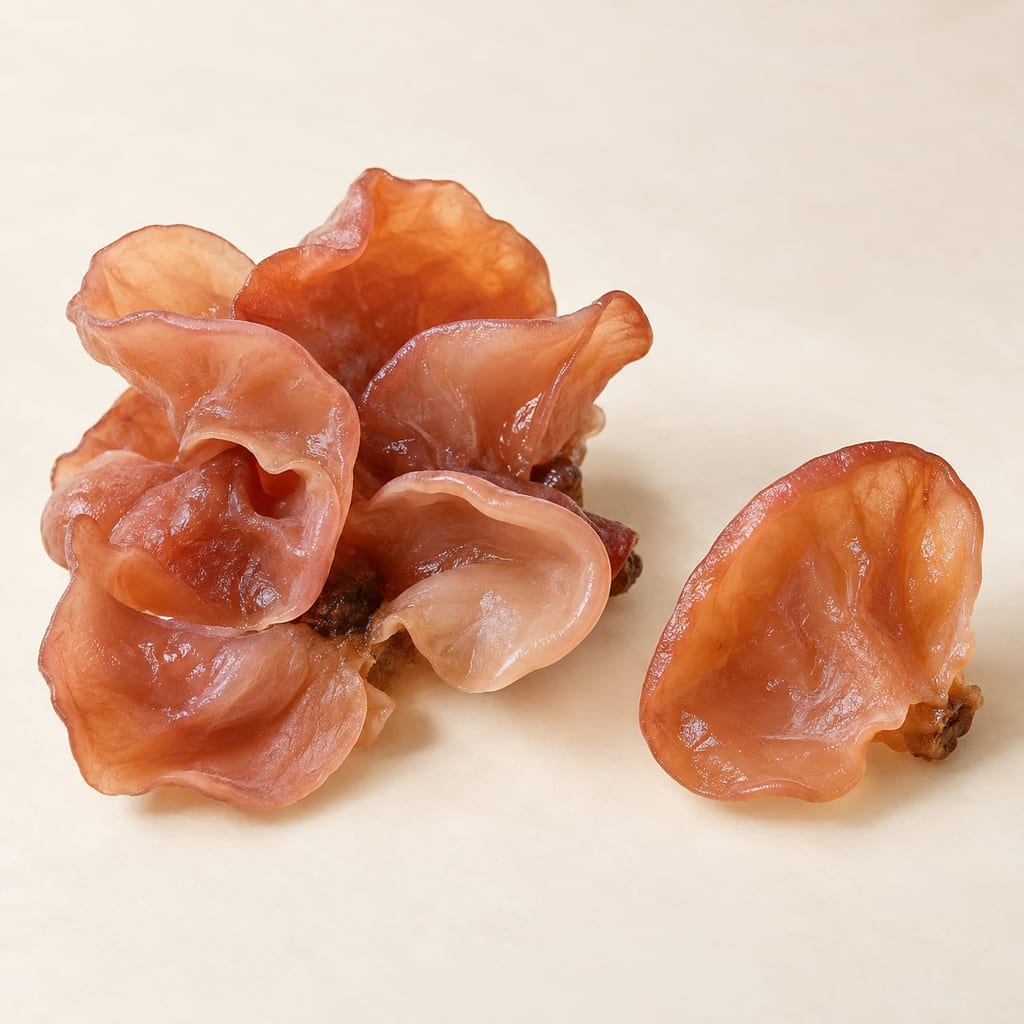
Auricularia thailandica is a thin, gelatinous wood ear described from Southeast Asian collections. Research reports it edible and experimentally cultivable, but species-specific recipes and everyday handling guidance are scarce.
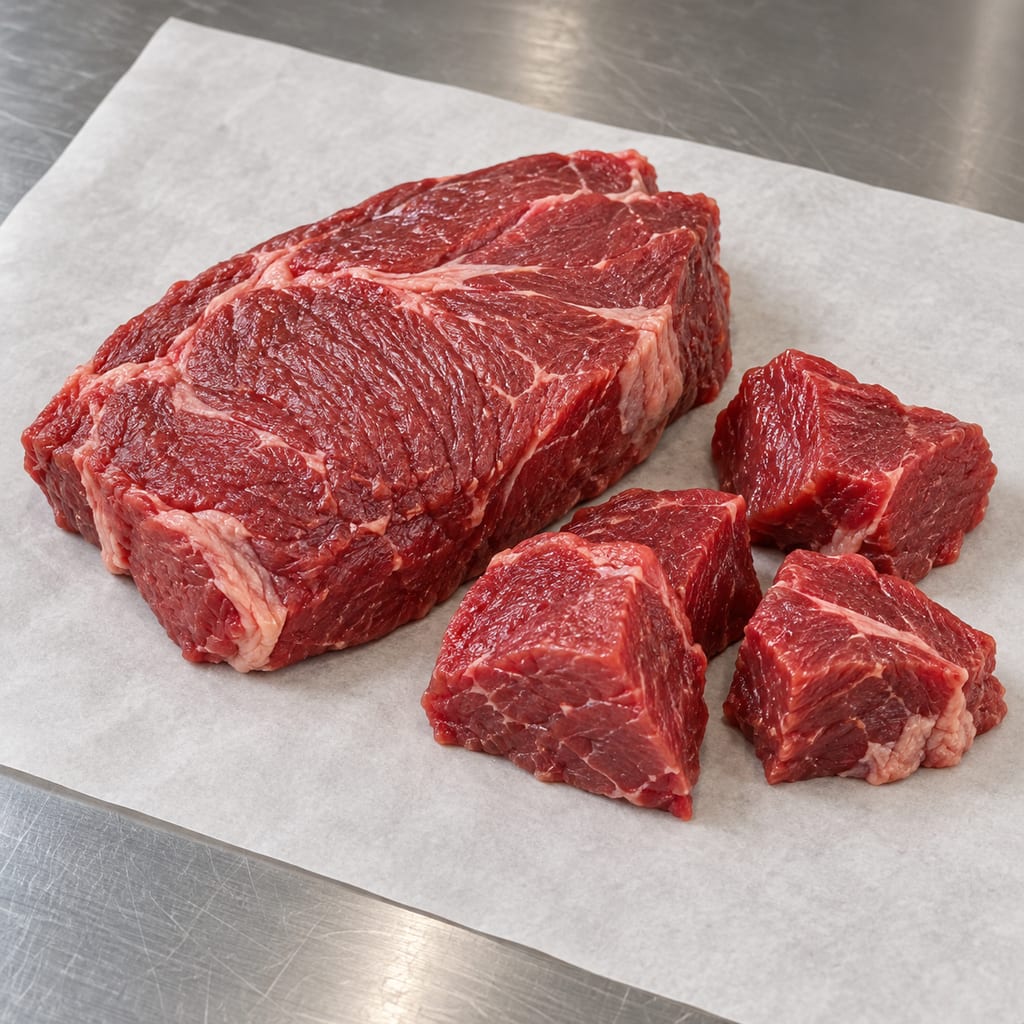
Water-buffalo meat, often called carabeef, is the flesh of Bubalus bubalis; its colour, texture and fat vary with animal, cut and production system. “Buffalo” can also mean bison or African buffalo in other contexts.
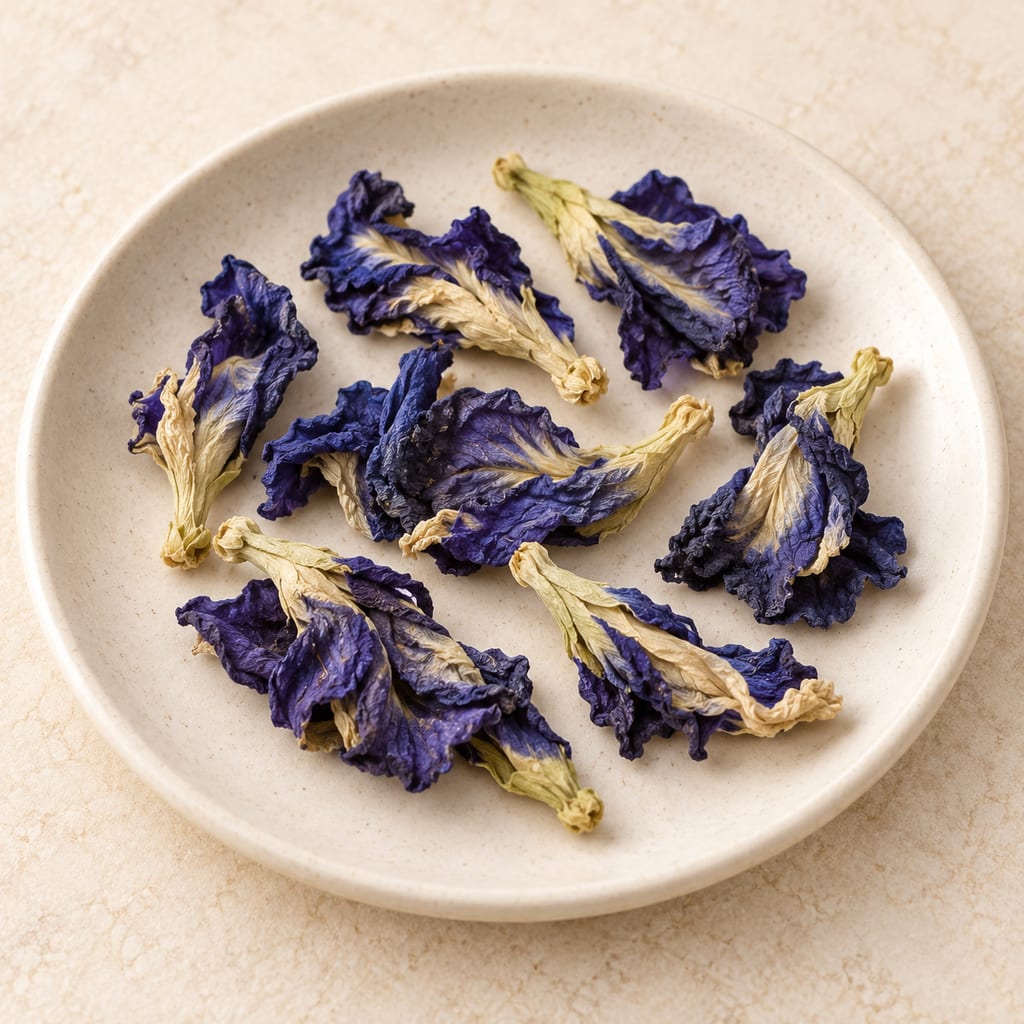
Clitoria ternatea's blue flower is used as a colourant and appears in a Thai dried-flower tea product. Food use is preparation-specific; EFSA raised safety objections to a dried-flower traditional-food notification.
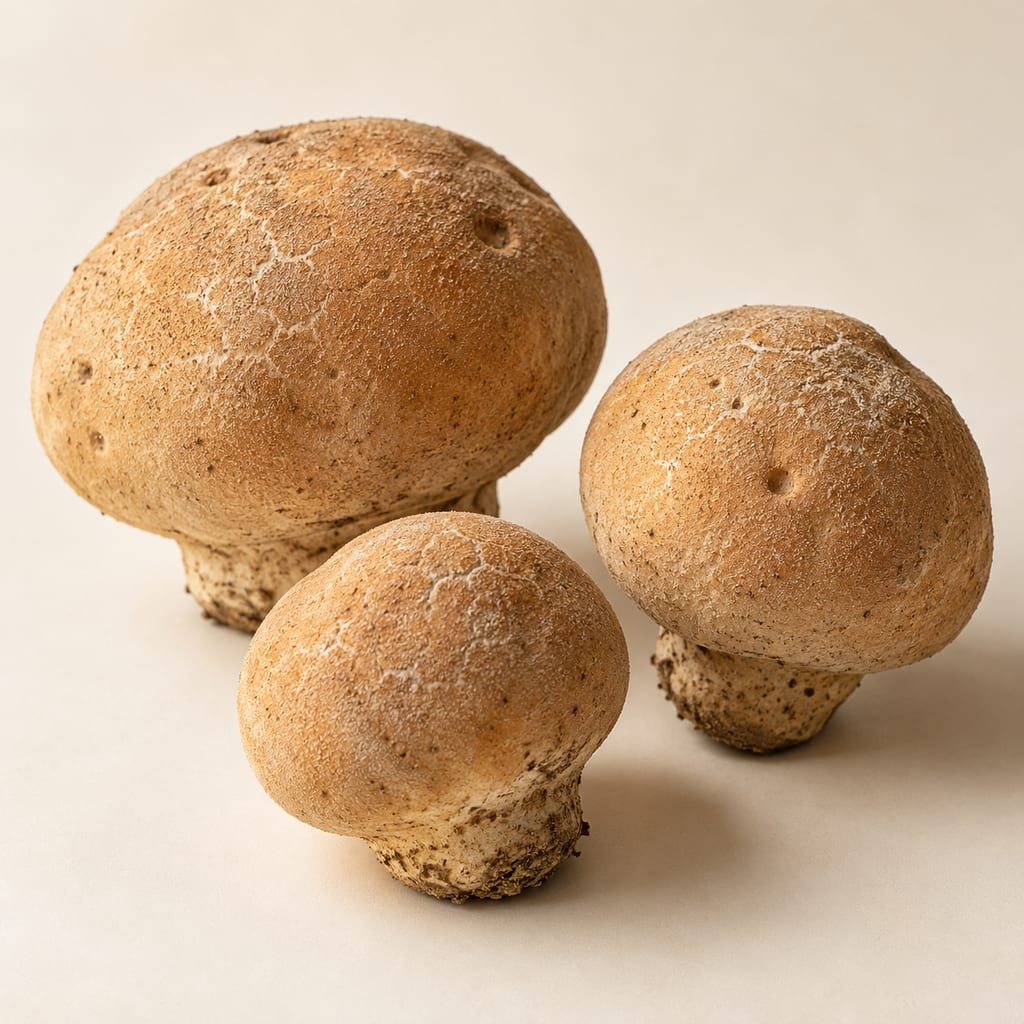
Calvatia boninensis is a large puffball described from the Bonin (Ogasawara) Islands of Japan, reported as edible in some catalogues and local accounts, with no species-specific safety or preparation study.
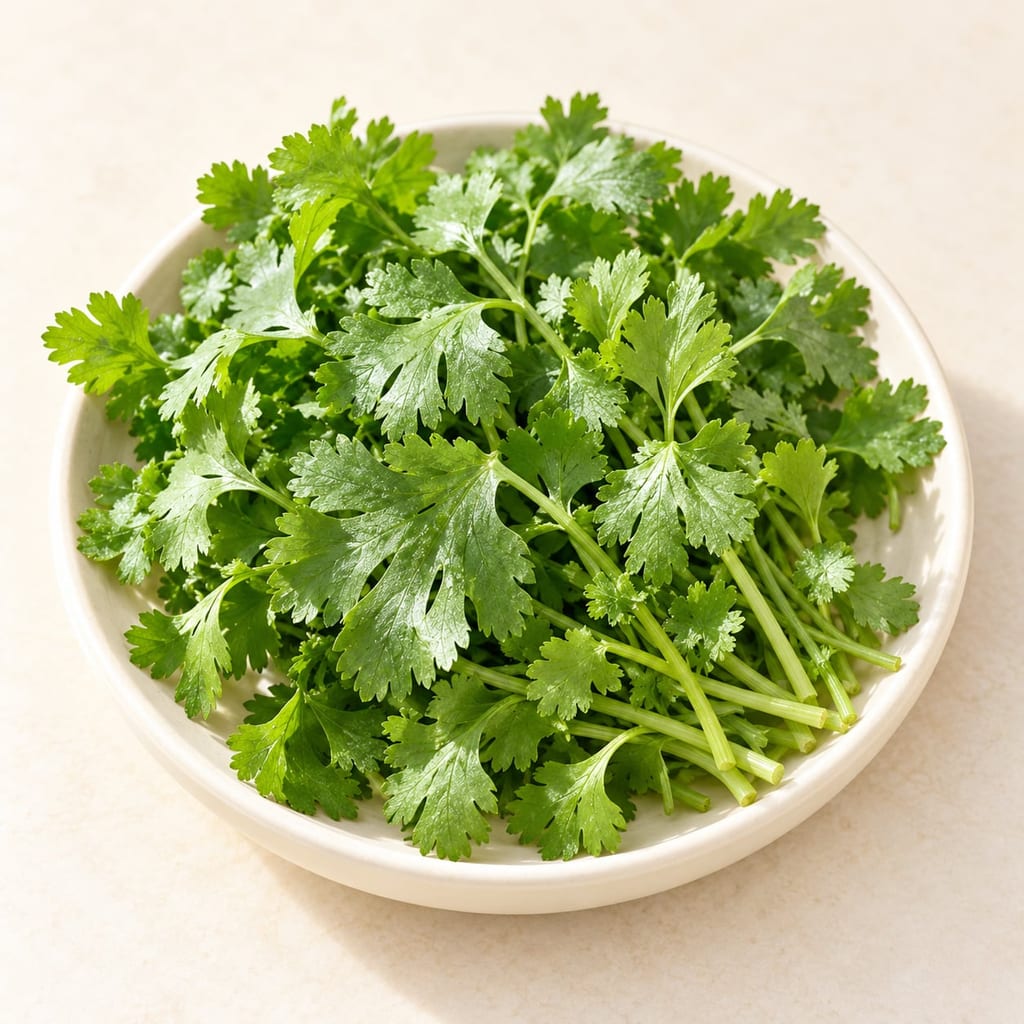
Cilantro is the fresh leafy herb of Coriandrum sativum, the same annual plant that produces coriander spice. Its green, aromatic leaves and fine stems bring a vivid herbal note to foods such as sai krok Isan.
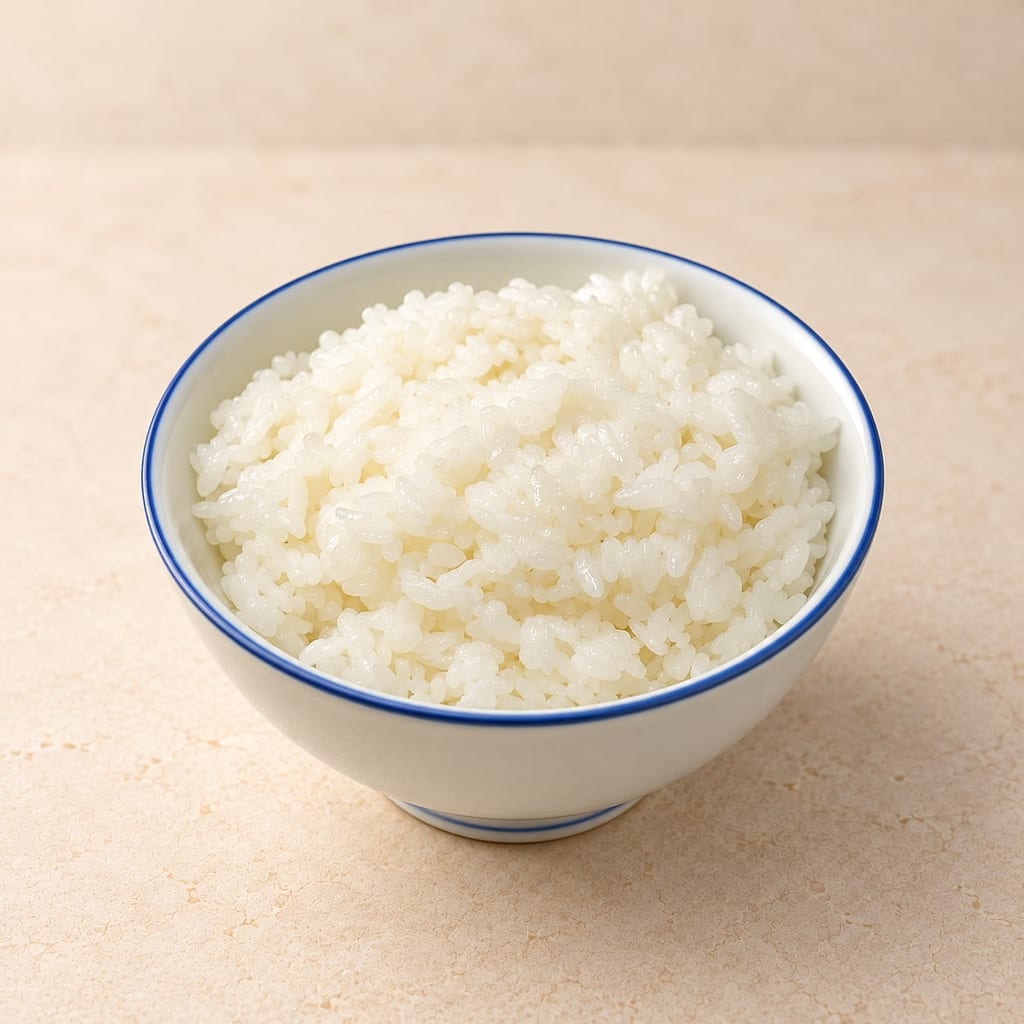
Cooked rice is rice grain heated in water until its starch gelatinizes; in Thai sour sausage it feeds the bacteria that acidify the meat.

Protected Italian vinegar made only from cooked grape must, fermented and aged in a battery of wooden barrels for at least 12 years: sweet, sharp and syrupy.

Airag is Mongolia’s fermented mare’s-milk drink, traditionally churned with saved starter in a reusable cowhide khokhuur.

Appam, or hoppers, are South Indian and Sri Lankan rice pancakes made from a fermented coconut-and-rice batter and cooked in a curved pan to a crisp lacy rim and a soft, spongy centre.

Auricularia tremellosa is a wood ear fungus of the genus that supplies most dried wood ear sold in China; its own food record is thin, and the culinary practice described here comes from the closely related wood ear species.

Ayran is Turkey’s cold, savoury yogurt drink: plain yogurt is loosened with water and lightly salted, then whisked smooth or aerated into a soft cap of foam.
A thin stone griddle used over an open hearth. Norwegian archaeology documents the established tradition from the early Middle Ages; a Viking-period origin is only a cautious suggestion linked to Shetland.

Crushed or milled barley cooked in water until the starch softens and the mixture thickens, the plainest way a northern household turned stored grain into a meal, here with apple and hazelnut.

Black carrot is the anthocyanin-pigmented Eastern carrot (Daucus carota var. atrorubens), the purple root that preceded orange types and still colours kanji and şalgam.
No community contributions have been published for this entry yet.
Sign in to contribute. Published comments and photos are free to read.
Food and Agriculture Organization of the United NationsIdentity · Function · Processing
Meat as raw material, non-meat ingredients and basic techniques in meat processingPig skin has high collagen content and swelling and binding properties in meat products.
FAO describes industrial preparation of pork skin for cooked sausage; it is not a universal home process.
Cited in: A rind, not the outside of a cut; Why collagen matters; From pig to food ingredient; What is known about its history; From skin to rind, crackling and gelatin; What the name leaves unspecified
Japan International Research Center for Agricultural Sciences (JIRCAS) and Kasetsart UniversityUse · Preparation · Geography
NaemNaem uses pork rind with red pork, garlic, salt and cooked glutinous rice.
The described rind is dehaired, defatted, boiled and shredded before mixing with the meat.
Cited in: Skin prepared before the meat ferments; From pig to food ingredient; Regional names and forms; What is known about its history; What the name leaves unspecified
Food Research InternationalUse · Preparation · Microbiology
A culture-dependent and -independent approach for the identification of lactic acid bacteria associated with the production of nem chua, a Vietnamese fermented meat productThis study describes lean ground pork mixed with boiled pig skin cut into thin strings in nem chua.
The meat mixture is fermented without later cooking; this does not mean the skin was raw when added.
Cited in: Why collagen matters; Skin prepared before the meat ferments; From pig to food ingredient; Regional names and forms; What is known about its history; What the name leaves unspecified
Beneficial Microbes; PubMed recordMicrobiology · Geography · Safety context
Isolation and characterisation of selected lactic acid bacteria for improved processing of Nem chua, a traditional fermented meat from VietnamThe paper identifies nem chua as Vietnamese lactic-acid-fermented meat consumed raw and reports acid-producing bacteria during fermentation.
This product study does not validate every process or establish how all skin is prepared.
Cited in: Choosing and handling
Lao CookUse · Geography · Practitioner account
Som MooA first-person illustrated account documents pork skin with pork and rice in Lao Som Moo.
The household account is not laboratory or food-safety validation.
Cited in: Skin prepared before the meat ferments; Regional names and forms
FoodsComposition · Texture
Changes in Texture and Collagen Properties of Pork Skin during Salt–Enzyme–Alkali Tenderization TreatmentThe research examines pork skin collagen and measured texture changes under a specific staged laboratory treatment; it does not provide a general kitchen procedure.
Cited in: A rind, not the outside of a cut
USDA Food Safety and Inspection ServiceSafety · Handling
What foodborne organisms are associated with pork?Raw or undercooked pork may carry bacteria or parasites including Trichinella and E. coli, Salmonella, Staphylococcus aureus and Listeria monocytogenes.
General pork cooking advice is not a fermentation control.
Cited in: Choosing and handling
CoReMA — Cooking Recipes of the Middle Ages, University of GrazHistory · Preparation
Suckling pig, roasted (m11.9)A Würzburg source dated about 1345–1354 uses pork rind as the skin kept on a stuffed, scalded, briefly boiled and roasted suckling pig.
This dated recipe is a historical attestation of one preparation, not an origin claim or modern safety instruction.
Cited in: Skin in a medieval roast and a Viennese puree
CoReMA — Cooking Recipes of the Middle Ages, University of GrazHistory · Preparation
Pork puree (w1.90)A Viennese recipe collection dated in part to the mid-fifteenth century describes pork belly cooked until nearly separable from the rind; the rind is removed, chopped and returned to the broth.
The source documents a cooked-skin use in one historical recipe, not a general or safe present-day method.
Cited in: Skin in a medieval roast and a Viennese puree
Food Preservation ScienceProcessing · Product form
Development and Quality of Puffed Food from PigskinThe study evaluates a specific processing route for puffed food from pigskin by-products and reports differences between baked and fried sample properties.
The experimental treatment describes snack development and is not a fermentation control or general household instruction.
Cited in: From skin to rind, crackling and gelatin
Global Alliance for Improved Nutrition (GAIN), Working Paper 46Product forms · By product context
From Trash to Table: Opportunities for repurposing waste products into nutritious foodsThe review lists pork skin among animal by-products that may be used for snack foods, gelatin, edible films and food ingredients, while noting that viable uses depend on local processing and feasibility.
The report is a desk-based global analysis and does not establish local availability, safety or acceptability for any individual product.
Cited in: From skin to rind, crackling and gelatin
