
Akahatsu
Akahatsu, Lactarius akahatsu, is a wild milkcap of East Asian pine and mixed forests that is sold in Yunnan markets, with its edibility and identity still needing species-level review.
 FermenteaWhere food goes to change
Mushrooms
Auricularia thailandica is a thin, gelatinous wood ear described from Southeast Asian collections. Research reports it edible and experimentally cultivable, but species-specific recipes and everyday handling guidance are scarce.
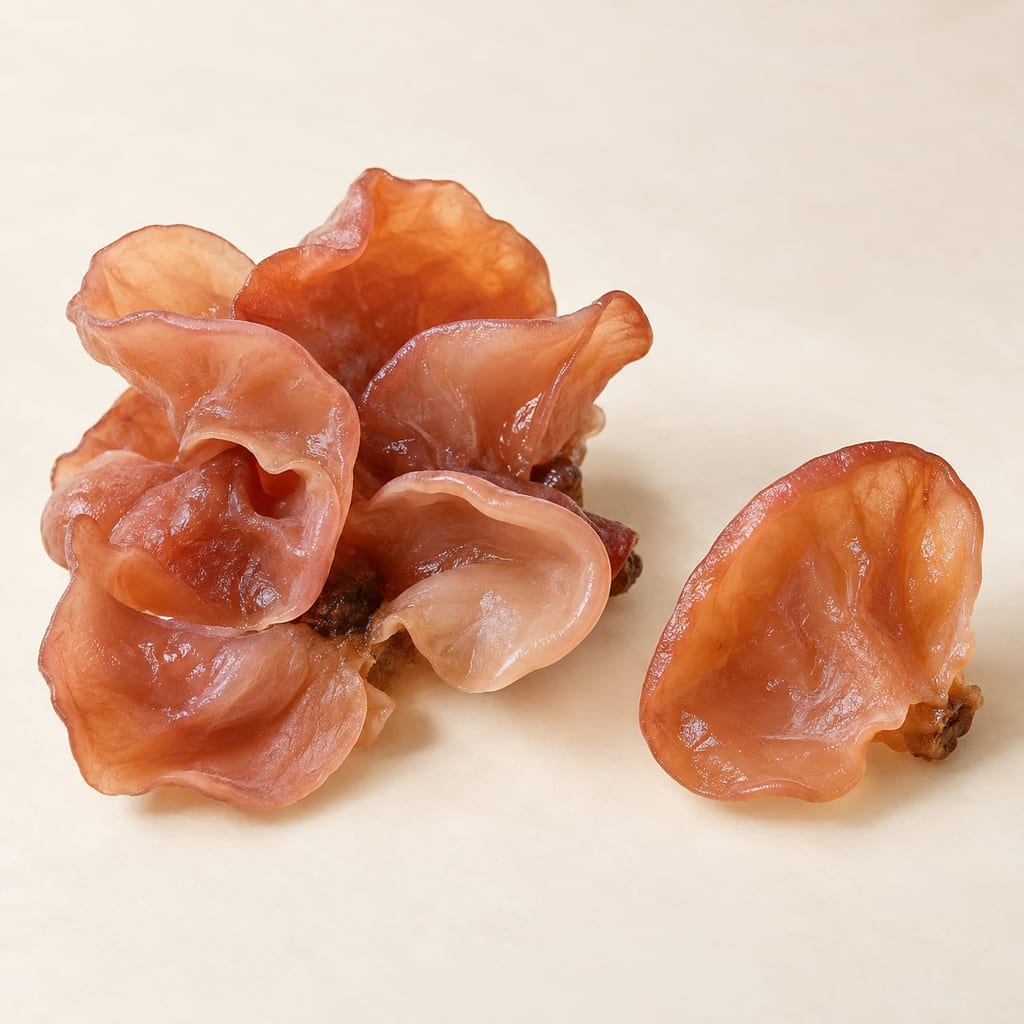
Auricularia thailandica is a species of wood ear fungus first described in 2015 from collections in Thailand, China and the Philippines. The scientific name refers to Thailand, where the type specimen was collected. Mae Fah Luang University later reported the Thai name มุสิกรัตน์ (Musikarat) for the species. “Red ear mushroom” is another name used in research titles.
The species belongs to Auricularia, a group of gelatinous fungi that grow on wood. This is a particular named species, not a synonym for every wood ear sold in shops. Commercial wood ears may belong to other cultivated species; genus-level food traditions should not be transferred to A. thailandica without evidence.
Fresh fruit bodies are gelatinous and thin, with colours reported from brownish orange and clay-pink to reddish brown or light brown. Their shapes range from rounded or cup-like to ear-shaped, sometimes with short stalks, and they may grow singly or in clusters. The 2015 description records basidiocarps 2–5 cm across; the Vietnamese record describes fruit bodies 3–10 cm wide and up to 3 mm thick. These measurements come from different collections and should not be treated as a fixed size range for every specimen.
Taxonomists distinguish this species using more than colour or outline. Its outward-facing surface has short, scattered hairs, and the fruit body has internal layers examined in cross-section. The original species description used morphology together with ITS DNA sequences; later work used combined ITS and nrLSU sequence data. Auricularia fibrillifera is a close relative, and several species share a similar gelatinous form. A photograph or colour match cannot establish the identity of an unvouchered mushroom.
Published, voucher-backed records place A. thailandica in Yunnan, China; Chiang Mai and Chiang Rai in Thailand; Quezon in the Philippines; and Lam Dong in Vietnam. The 2015 study describes its collections from China, Thailand and the Philippines as rainy-season finds. Recorded dates include March in Quezon, May in Yunnan, June in northern Thailand and August at the Thai type locality. Vietnam's Langbiang specimens were collected in July and August.
These dates show when researchers encountered the fungus at particular sites. They do not establish a calendar that applies to every year or region. Reports describe it on dead or decaying wood; one Vietnamese specimen grew on a Castanopsis branch. That single named host does not establish the species' full host range.
Research has moved beyond identifying wild collections. A 2017 study reports successful domestication of the red ear mushroom and investigated nutritional and antioxidant properties. Mae Fah Luang University described laboratory cultivation as successful and classified the species as edible. These findings support research cultivation, but do not show that the species is widely farmed or commercially available.
A 2025 Vietnamese study identified two local collections with morphological and DNA evidence, then tested culture conditions. It reported fruit-body formation on supplemented rubber sawdust with a biological efficiency of 16 percent. Its mycelium-growth experiments favoured yeast-malt broth at 30 °C and pH 5. These are results from particular research strains and laboratory methods, not a home-growing recipe or a guarantee of yield in other conditions.
The 2026 Chinese edible-fungi catalogue lists A. thailandica as edible, and the supplied research index preserves the catalogue's qualification that the listing was not independently assessed. The species-specific cultivation literature and the university report provide additional evidence that researchers regard it as a food mushroom. The available sources do not describe a named traditional dish, a regional recipe, market trade, routine household use, or a tested storage life for this species.
For that reason, no cooking time, rehydration method, preservation process or storage period is supplied here. Methods documented for other wood ears may not apply to this species. The research cited here also does not constitute a clinical toxicology or general food-safety assessment. It supports an edible classification and experimental cultivation, not identification or preparation advice for wild finds.
Voucher collection on dead wood; occurrence record only, not a claim of traditional food use at this locality.
Type and additional vouchers collected on dead wood; occurrence record only.
Voucher collected on decaying tree trunk; occurrence record only.
Voucher collected on deadwood; occurrence record only.
Two vouchers identified with morphology and ITS+nrLSU; one from a Castanopsis branch and one on dead wood. Occurrence record only.
Akahatsu, Lactarius akahatsu, is a wild milkcap of East Asian pine and mixed forests that is sold in Yunnan markets, with its edibility and identity still needing species-level review.
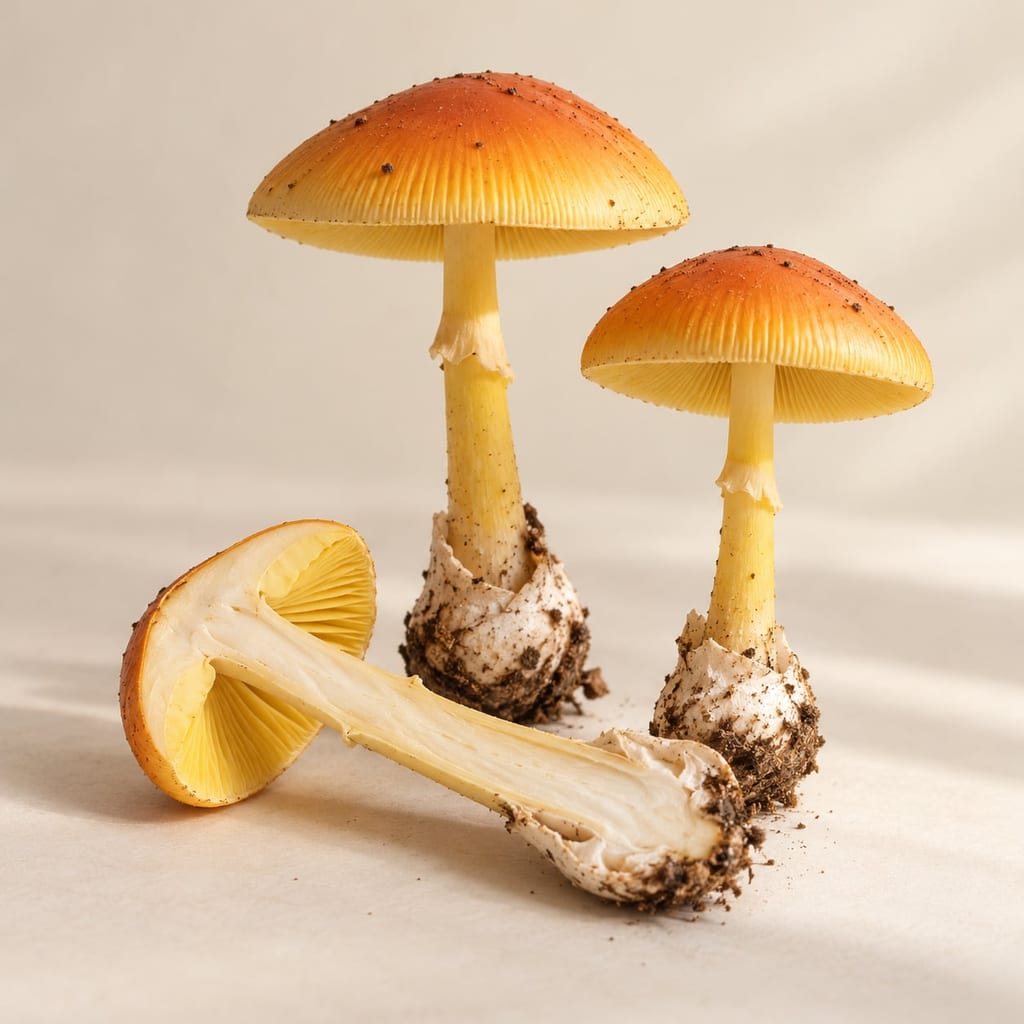
A wild Amanita of China, first reported there and listed as edible in a Yunnan ethnomycology study. The genus contains deadly species, so this page does not support identifying or eating it.
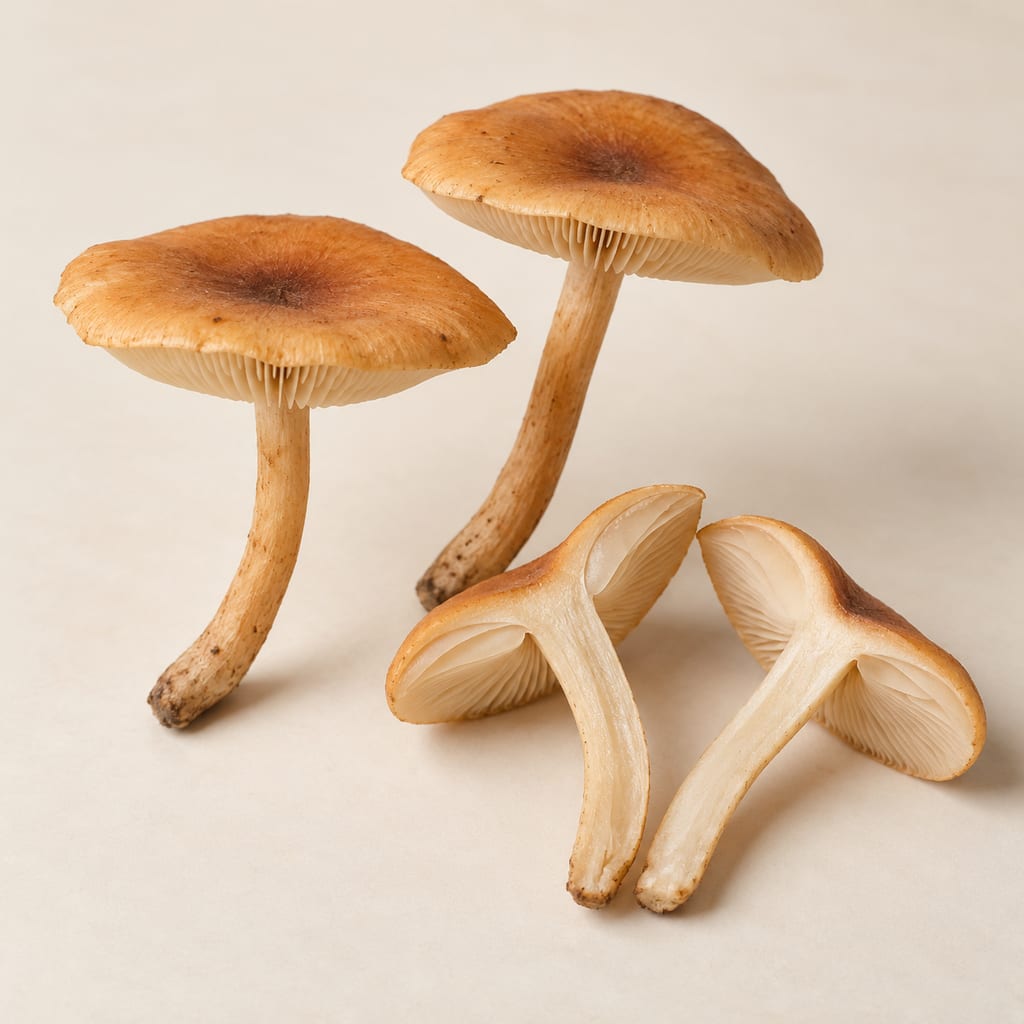
A wood-associated Armillaria recorded in Yunnan and Sichuan, China, and listed as edible in a 2026 Chinese catalogue.
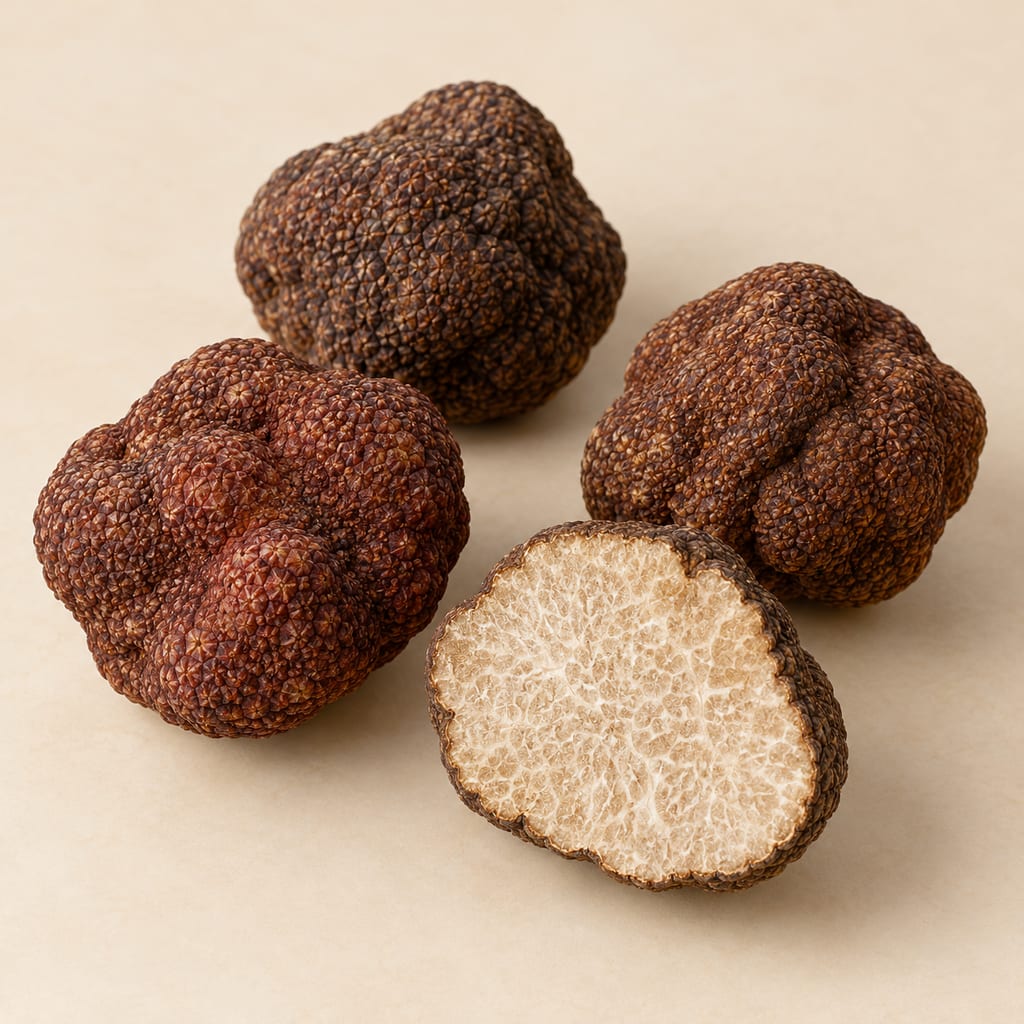
Tuber pseudohimalayense is a wild black truffle from Yunnan, China, listed as edible in a Chinese species catalogue. No independent assessment of its culinary use or safety is available.
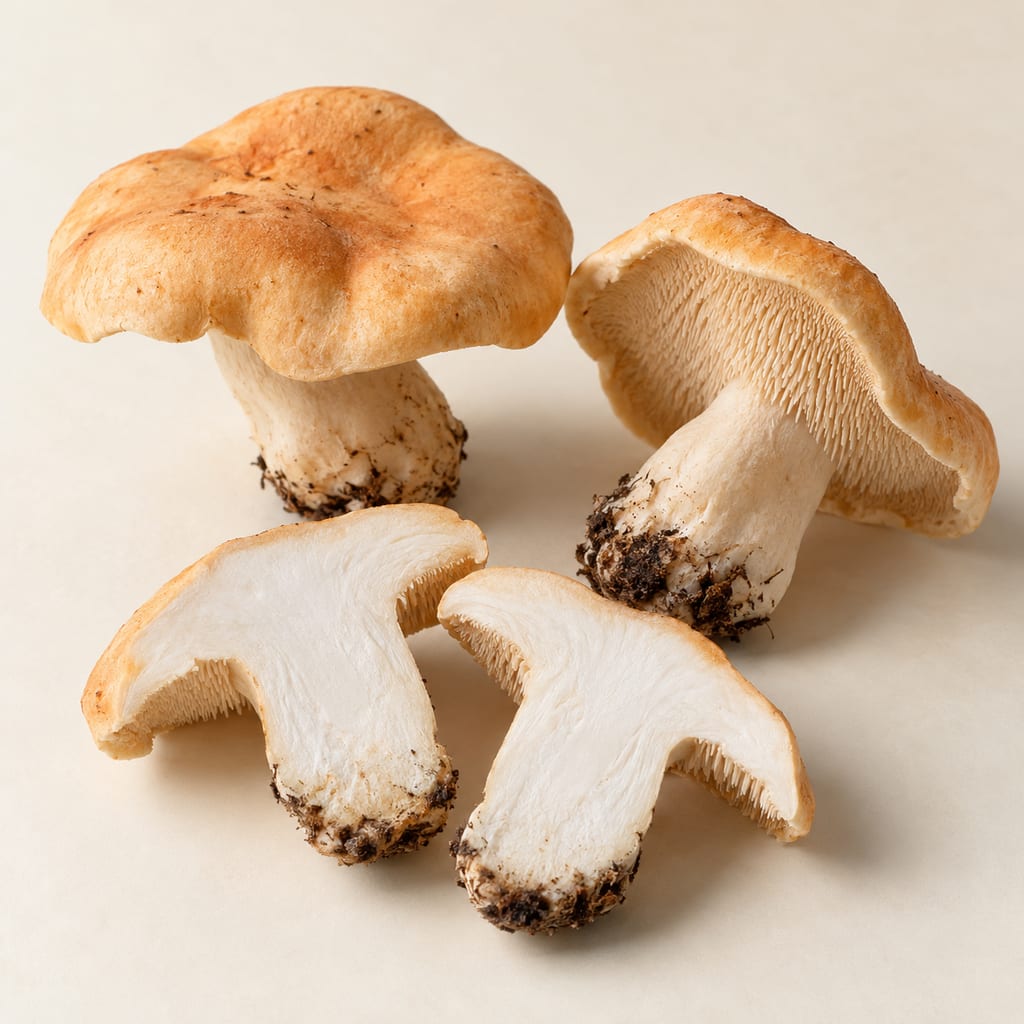
Hydnum berkeleyanum is a toothed, ectomycorrhizal forest fungus sold in food markets in Yunnan, China. Its regional identification is published, but its current name and local safety still need species-level review.
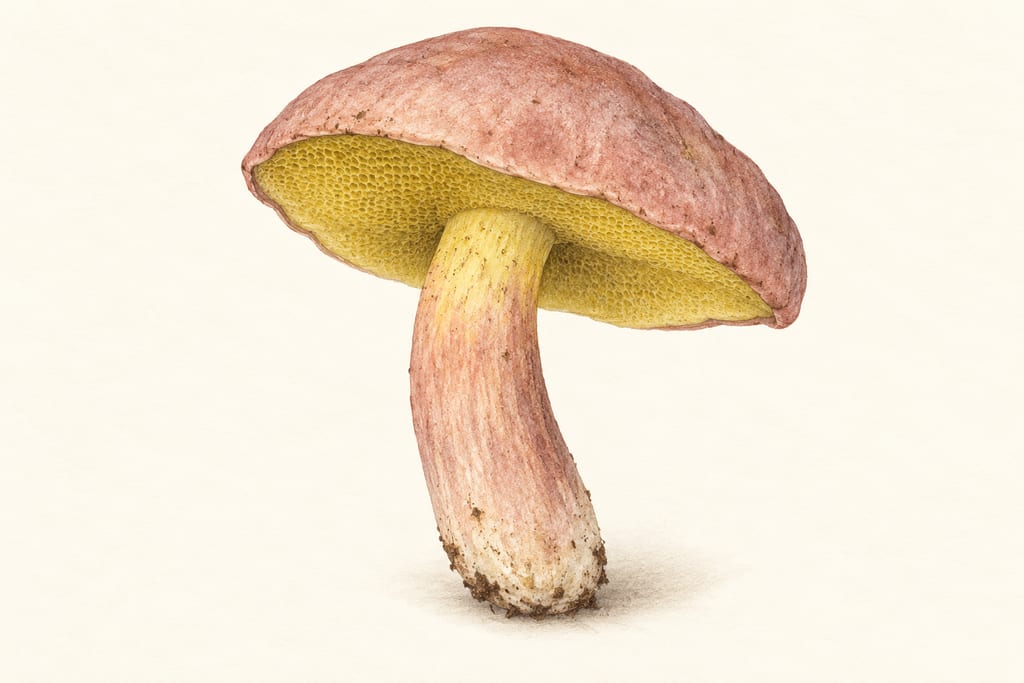
A 2023 Chinese taxonomic treatment accepts Boletellus indistinctus as a species. A separate Yunnan market record uses this name, but its specimen identification and local food safety have not been confirmed here.
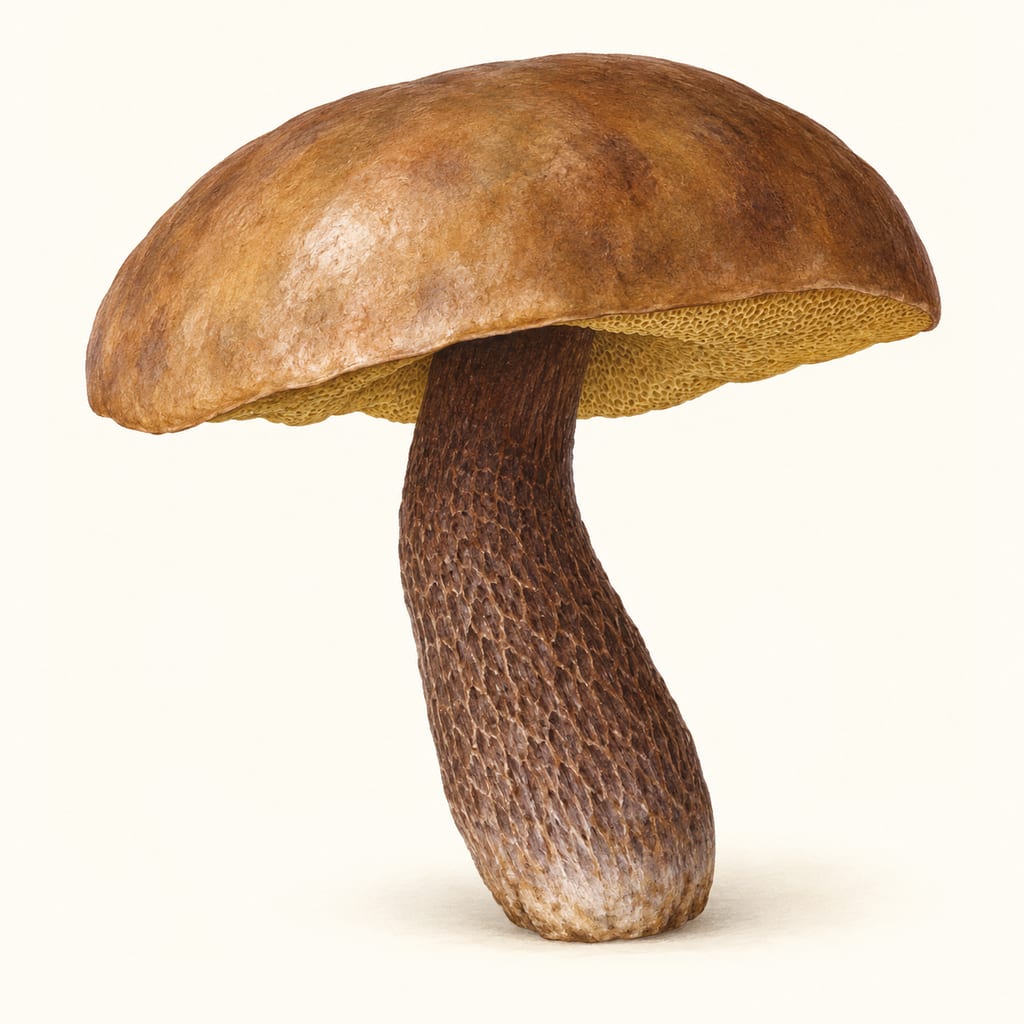
Boletus botryoides, the grape-coloured bolete, is a porcini-like wild bolete of central and south-western China. It is listed as edible in Chinese catalogues, but no dish or preparation is documented for it.
B. shiyong is a Yunnan bolete identified in a 2014 study of dried Chinese porcini sold commercially; a 2018 review also reports local collection and consumption, but neither gives a species-specific preparation or safety assessment.
No community contributions have been published for this entry yet.
Sign in to contribute. Published comments and photos are free to read.
Bandara et al., Phytotaxa 208(2):147–156; Magnolia PressTaxonomy · Type specimen · Morphology · Distribution · Season
Auricularia thailandica sp. nov. (Auriculariaceae, Auriculariales) a widely distributed species from Southeastern AsiaDescribes type MFLU 130410 from Chiang Mai, Thailand, collected 14 August 2013 on dead wood.
Describes morphological and ITS-based species delimitation.
Lists vouchers from Yunnan, Chiang Mai, Chiang Rai and Quezon with collection dates; study says collections were made during rainy seasons.
Reports basidiocarp size and diagnostic hair and internal-layer characters.
Bandara et al., Mycological Progress 16:1029–1039Species specific cultivation · Nutritional research
First successful domestication and determination of nutritional and antioxidant properties of the red ear mushroom Auricularia thailandicaThe species-specific research reports successful domestication and nutritional/antioxidant investigation; publisher full text was not open in the source view, so no numerical results or detailed method are asserted.
Wu et al., Journal of Fungi 7(11):933Taxonomy · Morphology · Distribution · Image reference
Global Diversity and Updated Phylogeny of Auricularia (Auriculariales, Basidiomycota)Retains A. thailandica and describes fresh gelatinous, pinkish fruit bodies and microscopy.
Reports China and Thailand and relationship to A. fibrillifera.
Figure 20 caption identifies fruit-body panels d/e as A. thailandica vouchers Dai 13635A and Dai 13655A.
Article states CC BY 4.0.
Huong et al., International Journal of Agricultural Technology 21(5):1817–1832Vietnam distribution · Morphology · Cultivation · Photo references
A new record of Auricularia thailandica in Vietnam and its biological characteristicsReports two Vietnamese vouchers with ITS+nrLSU evidence and collection locations/dates in Lam Dong.
One collection grew on Castanopsis; other on dead wood.
Reports rubber-sawdust cultivation with 16% biological efficiency and selected mycelium culture conditions.
Figures 2 and 3 show labelled Vietnam subject photographs; licence is CC BY-NC-ND 4.0.
Mae Fah Luang UniversityEdible classification · Local name · Cultivation
MFU found a new species of wood-ear mushroom worldwideInstitutional news release identifies the Thai name มุสิกรัตน์ and says researchers classified the species as edible and achieved laboratory cultivation.
The news item does not provide a culinary preparation or food-safety study.
Wu et al., Mycosystema 45(1):250237Catalogue edibility
Species cataloging of edible and medicinal fungi in ChinaLists A. thailandica as edible in the 2026 Chinese catalogue; supplied index marks this checklist source as not independently assessed.