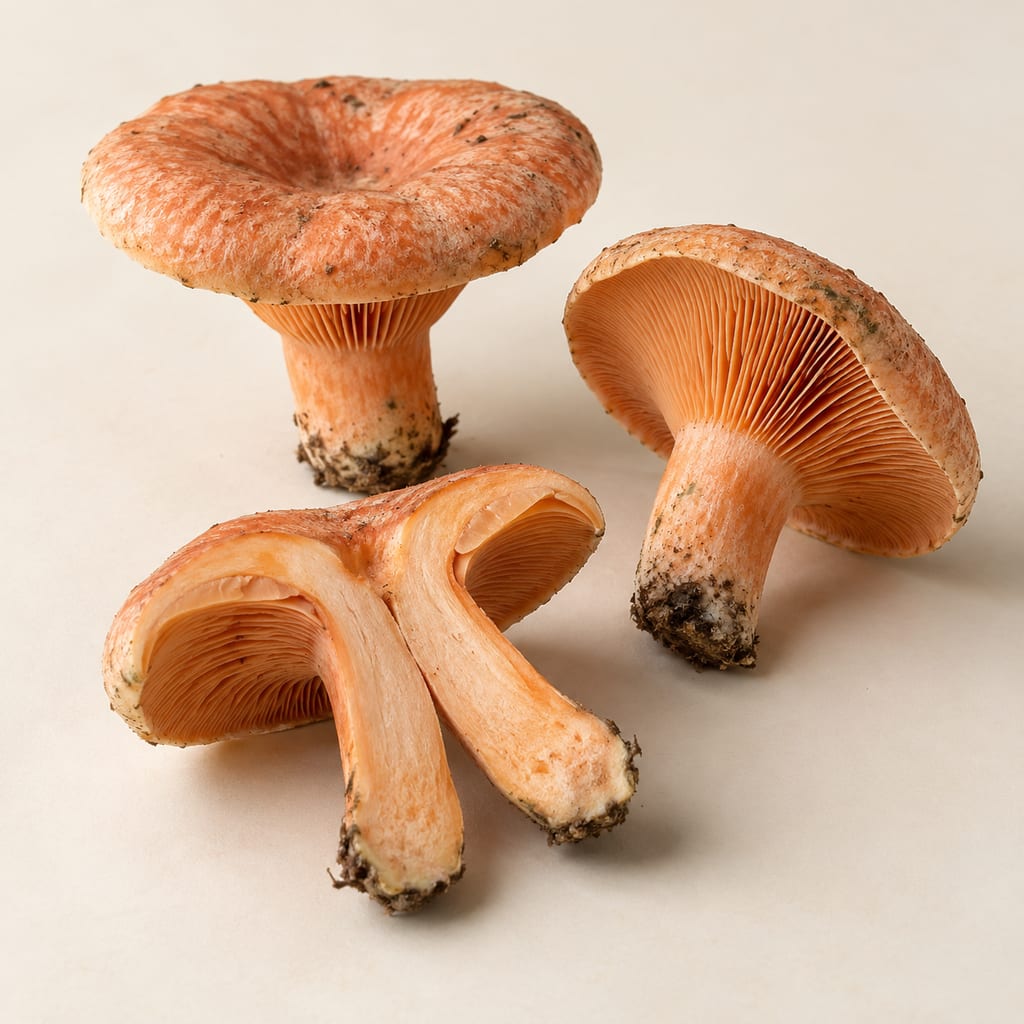
Akahatsu
Akahatsu, Lactarius akahatsu, is a wild milkcap of East Asian pine and mixed forests that is sold in Yunnan markets, with its edibility and identity still needing species-level review.
 FermenteaWhere food goes to change
Mushrooms
B. shiyong is a Yunnan bolete identified in a 2014 study of dried Chinese porcini sold commercially; a 2018 review also reports local collection and consumption, but neither gives a species-specific preparation or safety assessment.
Boletus shiyong is a porcini-like bolete native to Yunnan Province in south-west China. It was described in 2013. Its specific epithet is the pinyin for 食用, meaning “edible,” a name chosen in reference to the epithet of Boletus edulis. A 2014 DNA study identified B. shiyong among the species present in a commercial packet of dried Chinese porcini purchased in London. This documents its occurrence in a food product, but does not describe how it was prepared.
Feng and Yang’s 2018 review separately reports that B. shiyong, alongside B. bainiugan and B. sinoedulis, was traditionally collected and consumed by local people in Yunnan, widely traded in free markets and exported to Europe. The review gives no B. shiyong-specific local name, dish or preparation method.
The species was described in 2013. A 2016 revision of Chinese porcini in the journal Fungal Diversity revised B. bainiugan, B. meiweiniuganjun and B. shiyong, and treated B. meiweiniuganjun as a synonym of B. bainiugan. The name therefore sits in a group of closely related Chinese boletes whose boundaries were revised after the first description.
The catalogue marks the name as a research name that has not been validated against current taxonomy. Names and synonyms in this group should be checked against a nomenclature database before use.
Reports describe the species as growing in Yunnan under spruce, Yunnan pine and related trees, and the catalogue describes its ecology as an ectomycorrhizal forest fungus whose exact host association needs verification. The fruiting season is not given in the evidence reviewed, so none is recorded here.
The primary 2014 DNA study recovered B. shiyong among three species identified in a commercial packet of dried Chinese porcini bought in London. Feng and Yang’s 2018 review also reports its traditional collection and consumption by local people in Yunnan and its trade in free markets and export to Europe. The review discusses B. shiyong with other species and gives no species-specific local name, dish or preparation method, so none is supplied here.
Boletes in Yunnan are a varied group, and the evidence reviewed do not separate the edible from the unsafe members of the group for this species. The record is therefore a listing, and it should not be read as a tested preparation or a safety assessment.
The reviewed sources document traditional collection and consumption, but do not give a B. shiyong-specific toxin profile or an independent clinical or toxicological safety assessment. The catalogue is a species listing, not an individual identification or safety check. Boletus identification is difficult; this page does not advise collecting or identifying wild boletes for consumption.
The native range is Yunnan as reports state; the catalogue lists the country for edibility, which does not establish a collection locality.
Akahatsu, Lactarius akahatsu, is a wild milkcap of East Asian pine and mixed forests that is sold in Yunnan markets, with its edibility and identity still needing species-level review.
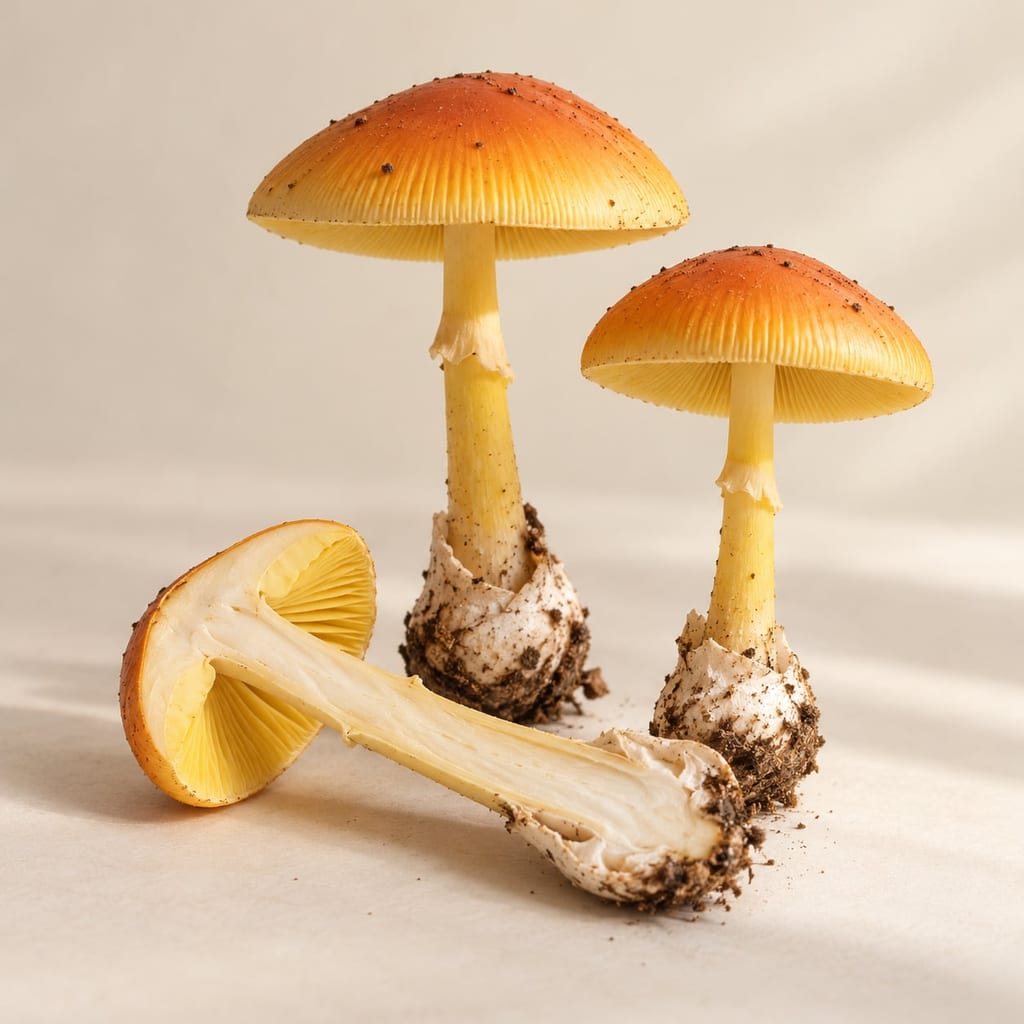
A wild Amanita of China, first reported there and listed as edible in a Yunnan ethnomycology study. The genus contains deadly species, so this page does not support identifying or eating it.
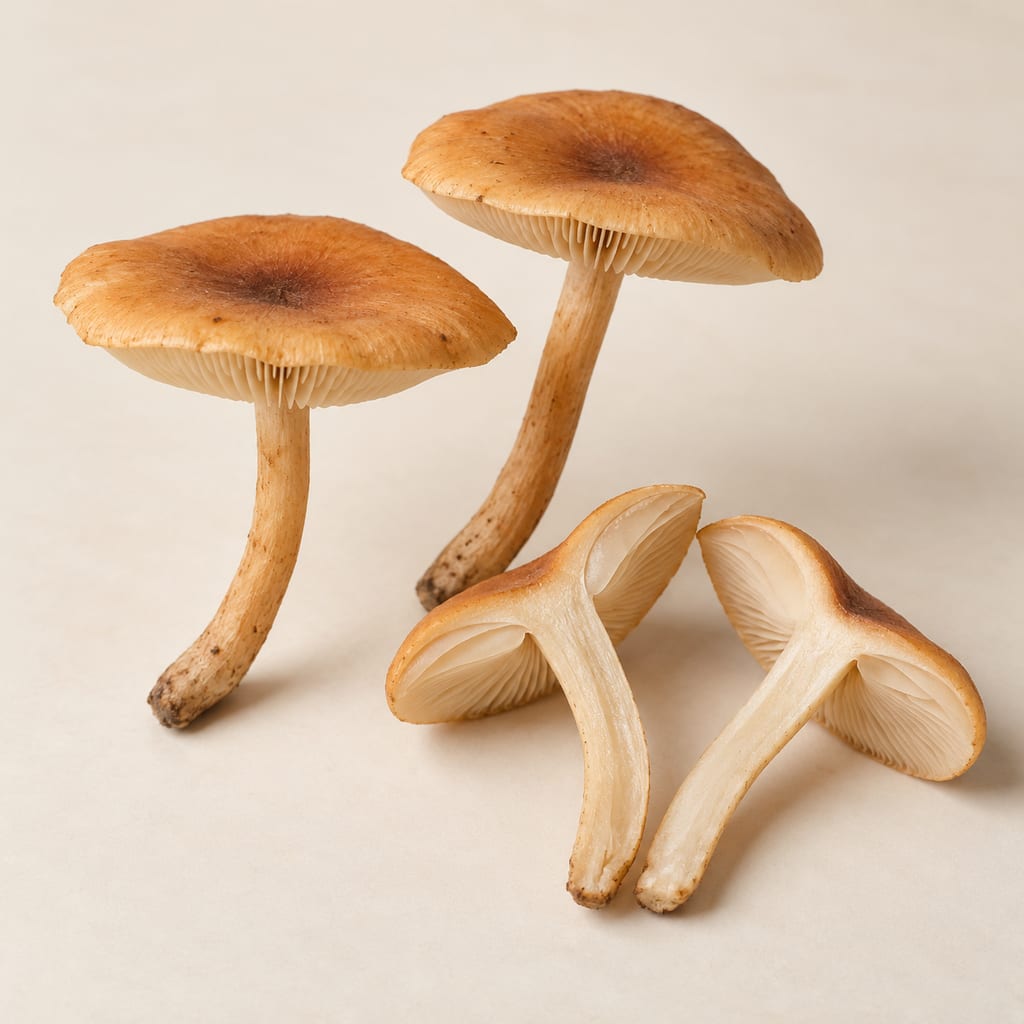
A wood-associated Armillaria recorded in Yunnan and Sichuan, China, and listed as edible in a 2026 Chinese catalogue.
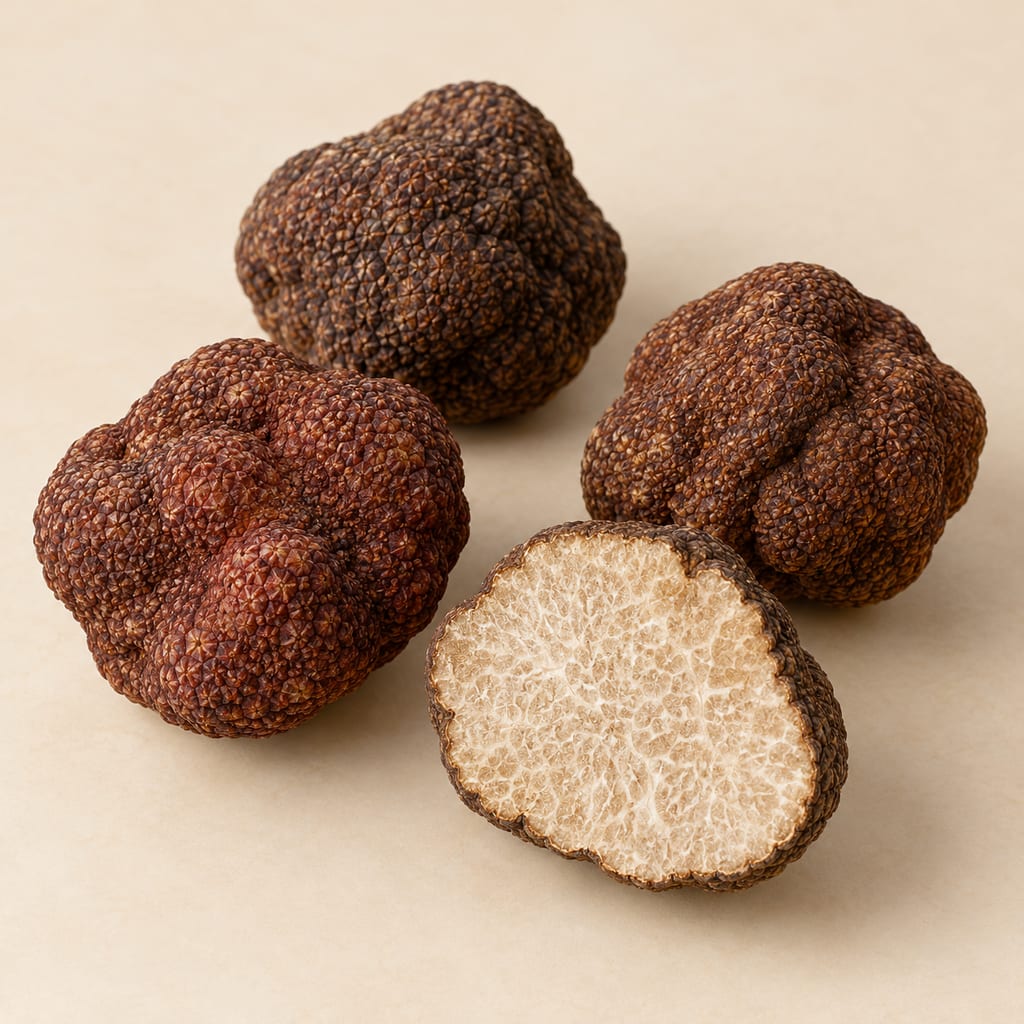
Tuber pseudohimalayense is a wild black truffle from Yunnan, China, listed as edible in a Chinese species catalogue. No independent assessment of its culinary use or safety is available.
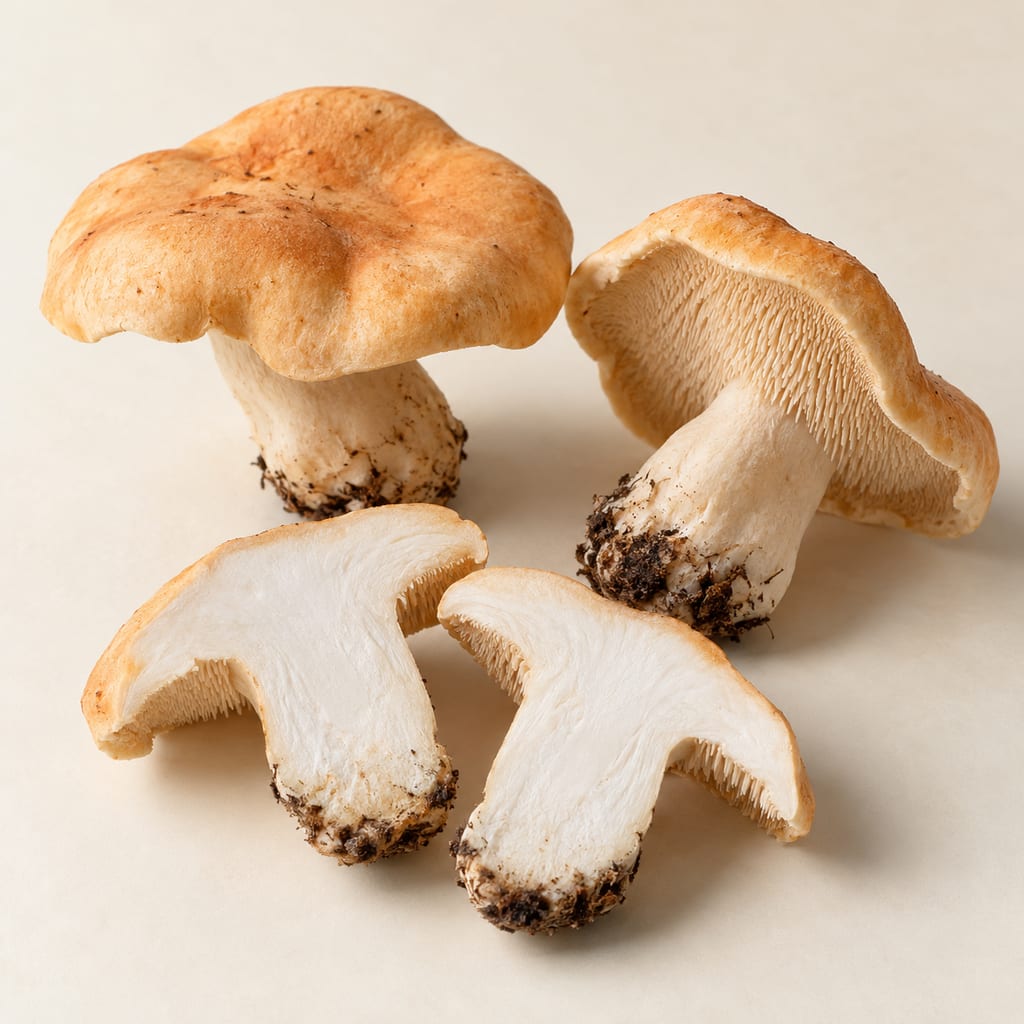
Hydnum berkeleyanum is a toothed, ectomycorrhizal forest fungus sold in food markets in Yunnan, China. Its regional identification is published, but its current name and local safety still need species-level review.
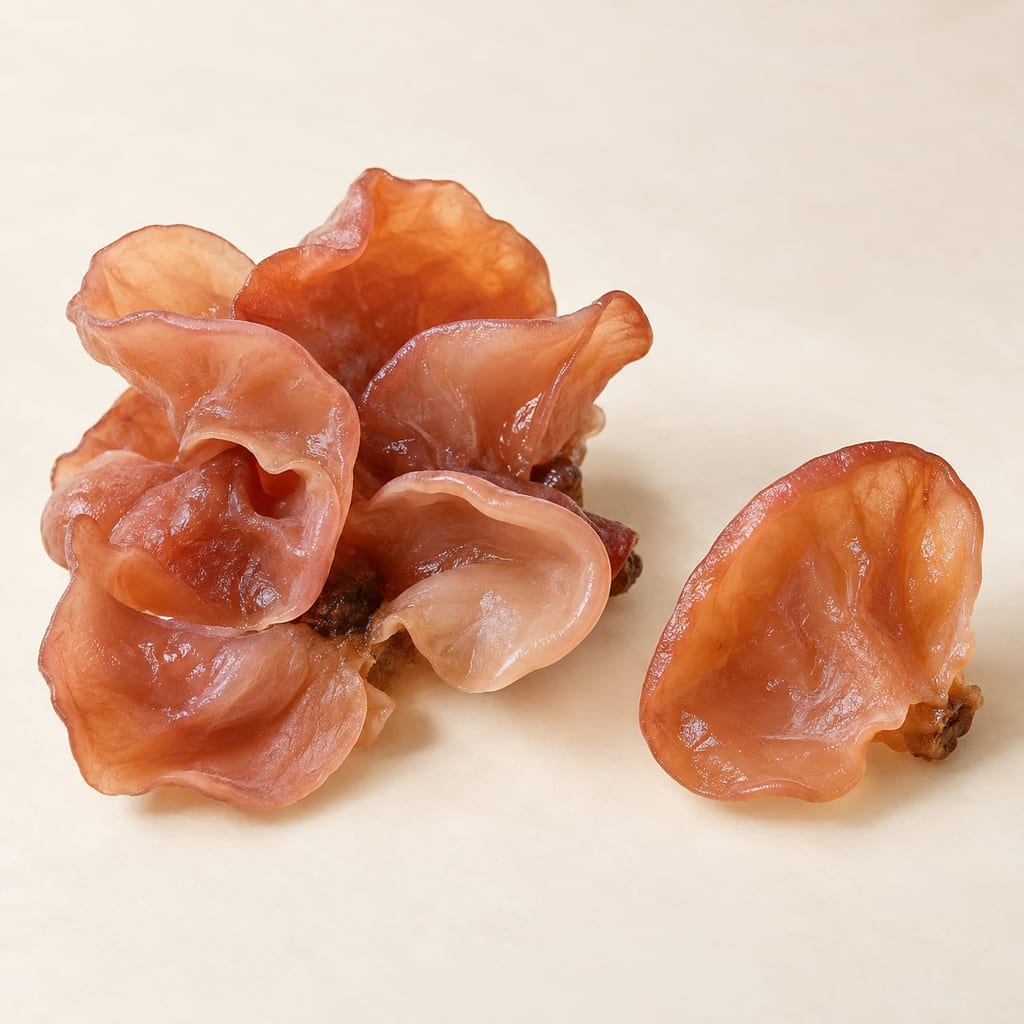
Auricularia thailandica is a thin, gelatinous wood ear described from Southeast Asian collections. Research reports it edible and experimentally cultivable, but species-specific recipes and everyday handling guidance are scarce.
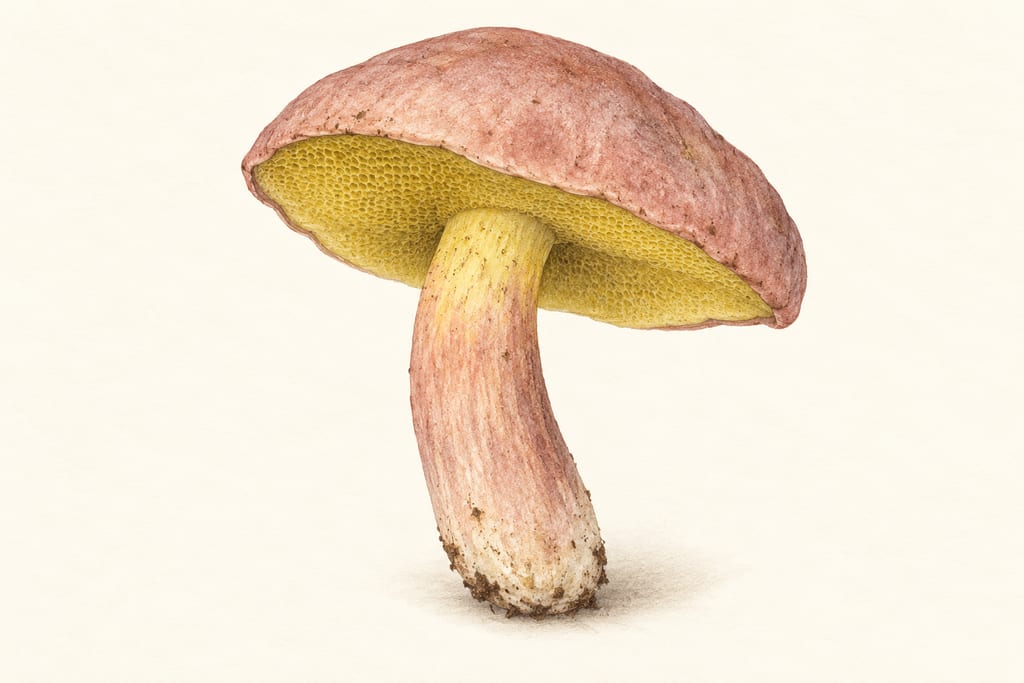
A 2023 Chinese taxonomic treatment accepts Boletellus indistinctus as a species. A separate Yunnan market record uses this name, but its specimen identification and local food safety have not been confirmed here.
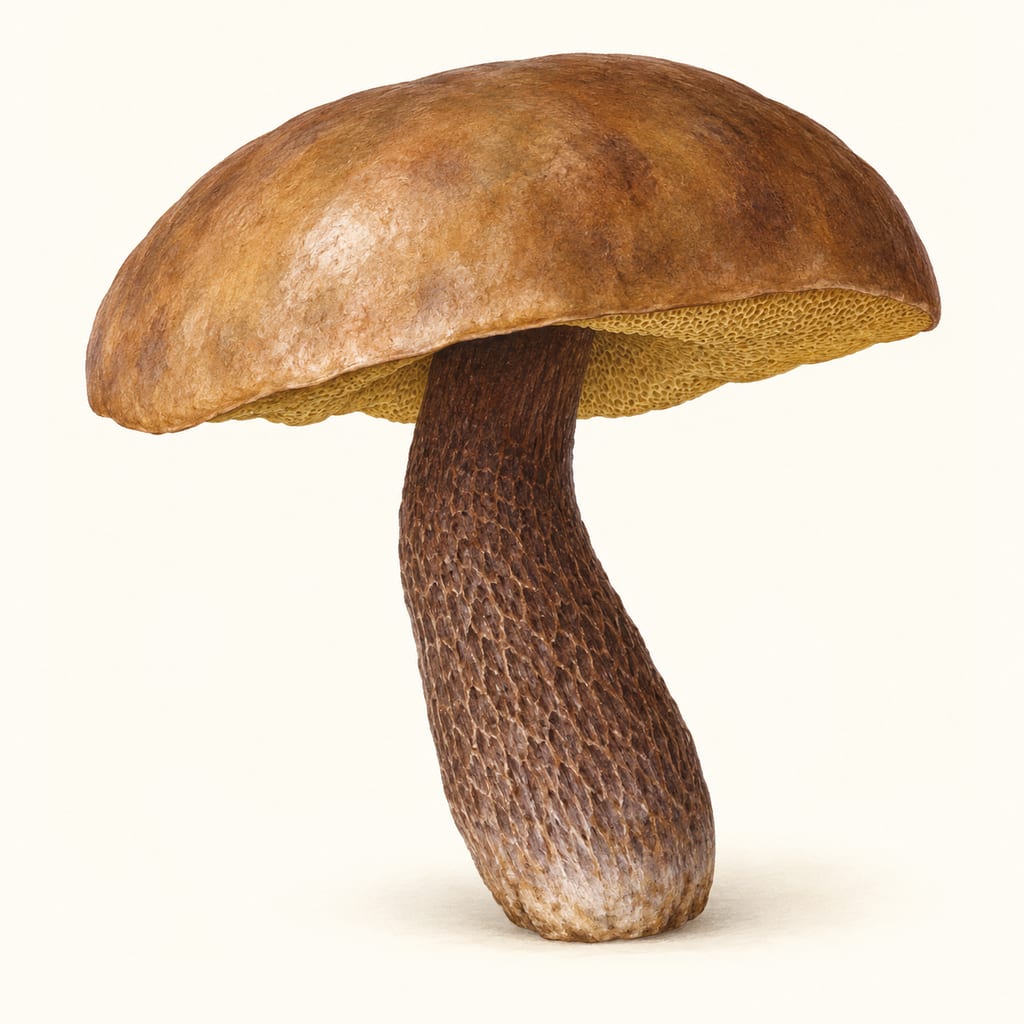
Boletus botryoides, the grape-coloured bolete, is a porcini-like wild bolete of central and south-western China. It is listed as edible in Chinese catalogues, but no dish or preparation is documented for it.
No community contributions have been published for this entry yet.
Sign in to contribute. Published comments and photos are free to read.
WikipediaIdentity · Taxonomy · Geography
Boletus shiyongPorcini-like fungus native to Yunnan; grows under spruce and Yunnan pine; described in 2013; epithet is the pinyin for edible; 2016 Fungal Diversity revision of Chinese porcini.
Cited in: Overview; Taxonomy; Habitat; Safety and what is not known
MycosystemaFood use · Geography
Species cataloging of edible and medicinal fungi in ChinaThe 2026 national catalogue lists the species among edible or edible-and-medicinal fungi; catalogue inclusion, not a preparation or local-consumption account.
Cited in: Overview; Habitat; Food use and what remains undocumented; Safety and what is not known
Plant DiversityFood use · Geography
Studies on diversity of higher fungi in Yunnan, southwestern China: A reviewThe review states that Boletus bainiugan, B. shiyong and B. sinoedulis were traditionally collected and consumed by local people, widely traded in free markets, and exported to Europe; it does not provide B. shiyong-specific preparation or safety evidence.
Cited in: Overview; Food use and what remains undocumented; Safety and what is not known
PeerJFood use · Trade
What’s for dinner? Undescribed species of porcini in a commercial packetDNA sequencing of fifteen mushroom pieces from a commercial packet of dried Chinese porcini purchased in London identified B. shiyong among the three species recovered; the paper documents commercial food-product context, not a B. shiyong-specific recipe or safety assessment.
Cited in: Overview; Food use and what remains undocumented