
Akahatsu
Akahatsu, Lactarius akahatsu, is a wild milkcap of East Asian pine and mixed forests that is sold in Yunnan markets, with its edibility and identity still needing species-level review.
 FermenteaWhere food goes to change
Mushrooms
Macrocybe gigantea is a large wild mushroom of tropical and subtropical Asia that is sold in markets in Laos and Yunnan, China. Its local identification and safety still need species-level review.
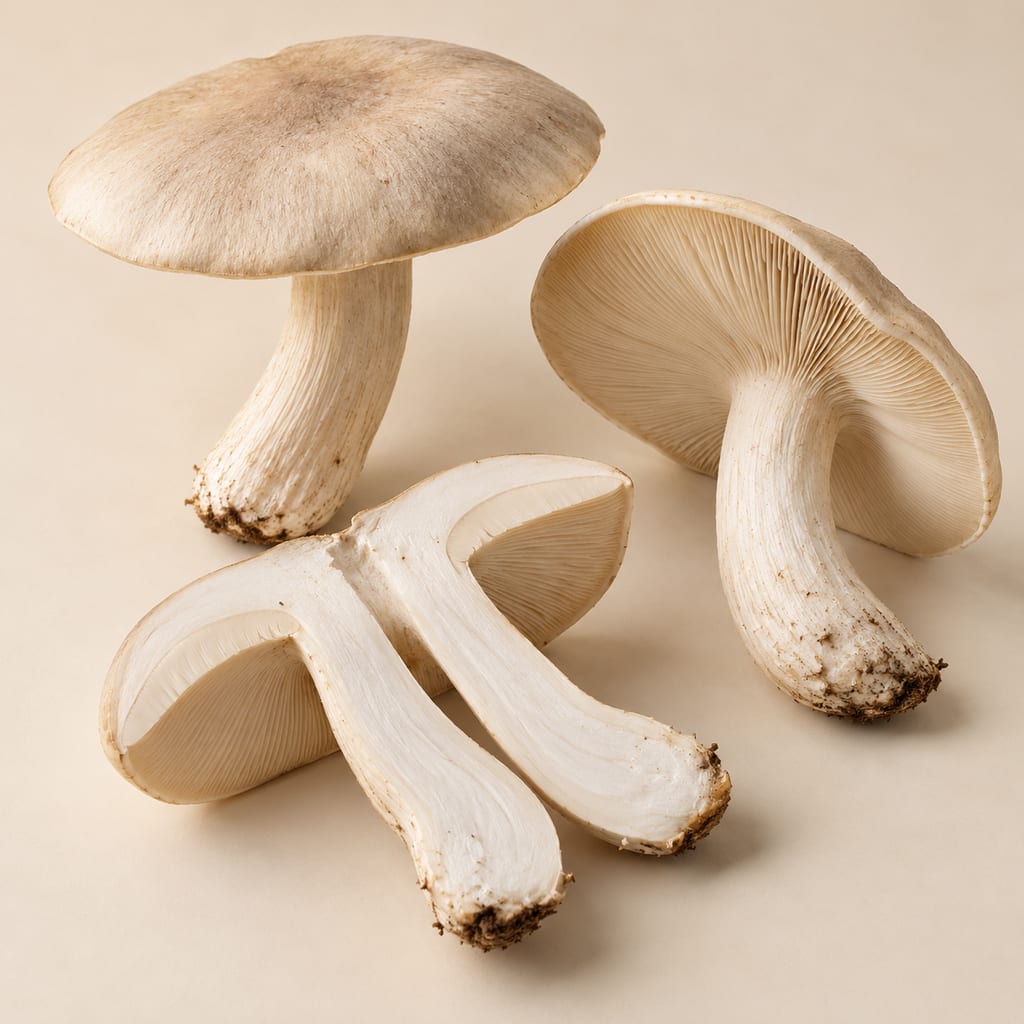
Macrocybe gigantea is a large wild mushroom known from tropical and subtropical Asia. Market sellers in Laos and in Yunnan, China, offer it as food, and the Fermentea catalogue records it as a large food mushroom sold in markets. Its scientific name is the one used in the research record; the common name giant tropical mushroom is applied to several species, so the scientific name is the reliable label here.
The supplied catalogue treats the name Macrocybe gigantea as a research label rather than a reconciled accepted name. The 2024 review of the genus Macrocybe, which counts eight species, is a useful current overview, but a species-level check against the original market specimens has not been published in the sources read here.
The 2024 review describes Macrocybe gigantea as widely distributed across tropical and subtropical Asia, including China. The market records place it in Laos and Yunnan. These are places where it was sold, not a verified native range; the sources do not establish the species' original home.
In the Luang Prabang markets of Laos, sellers offer Macrocybe gigantea together with Termitomyces heimii, another wild fungus that is valued as food. The authors of the market survey describe the city's markets as among the richest in wild edible plants and fungi in Asia.
In the Pu'er markets of Southwest Yunnan, the ethnomycological survey records many wild mushroom species that also occur in Laos, and it lists Macrocybe gigantea among them. The catalogue records the species as a large food mushroom sold in markets, supplied from the wild.
The catalogue records the species as non-ectomycorrhizal in its source table, meaning it does not form the tree-root partnership that many edible boletes and truffles form. Its detailed substrate and seasonal behaviour are not established in the material used here and need follow-up.
The 2024 review cautions that these mushrooms raises the possibility of cyanide toxicity, so these mushrooms need care when eaten. The catalogue states that the local safety of the species, and the local preparation that makes it safe, still need species-level review.
This page does not give a preparation or an edibility verdict. Wild mushrooms should be identified and checked by a qualified person before they are eaten.
Sold in the markets of Luang Prabang; a market-survey record, not a locality for the species' origin.
Recorded among wild mushrooms sold in Pu'er markets in Southwest Yunnan.
Akahatsu, Lactarius akahatsu, is a wild milkcap of East Asian pine and mixed forests that is sold in Yunnan markets, with its edibility and identity still needing species-level review.
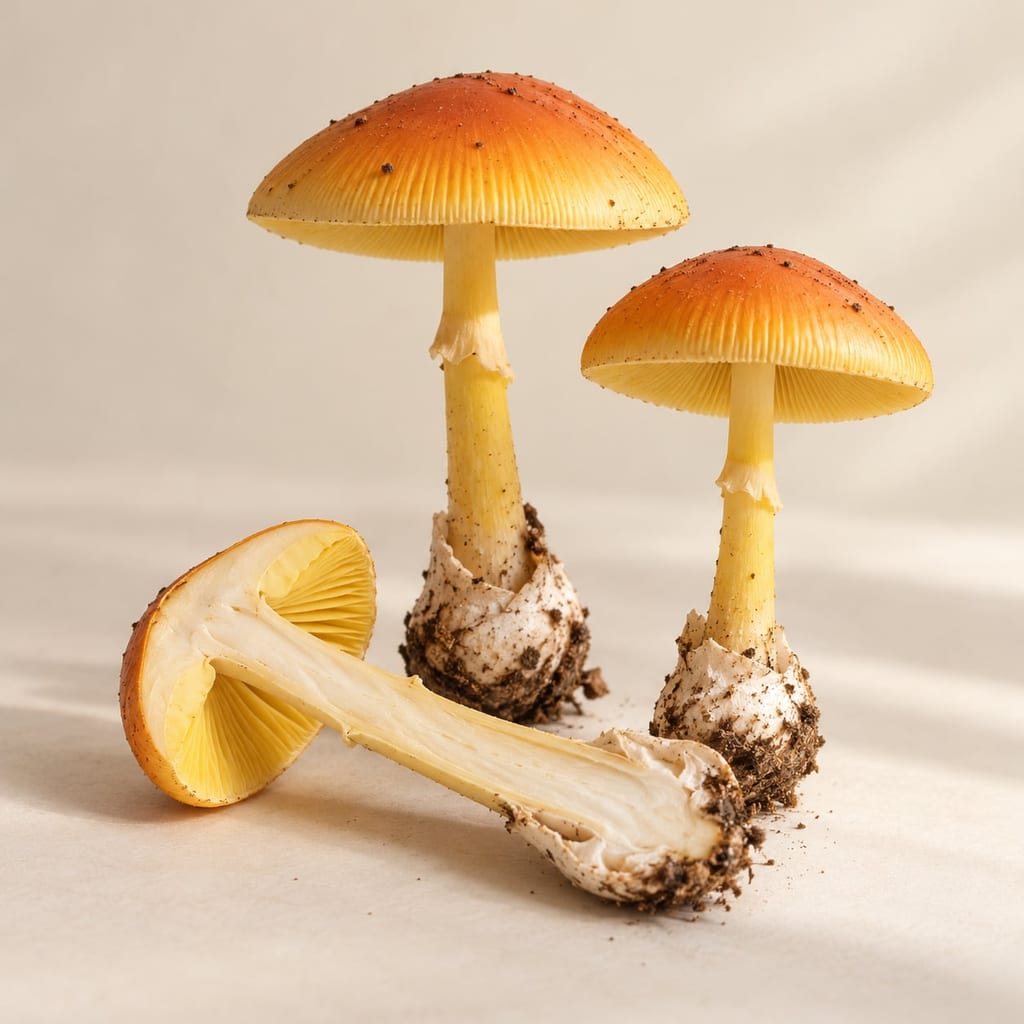
A wild Amanita of China, first reported there and listed as edible in a Yunnan ethnomycology study. The genus contains deadly species, so this page does not support identifying or eating it.
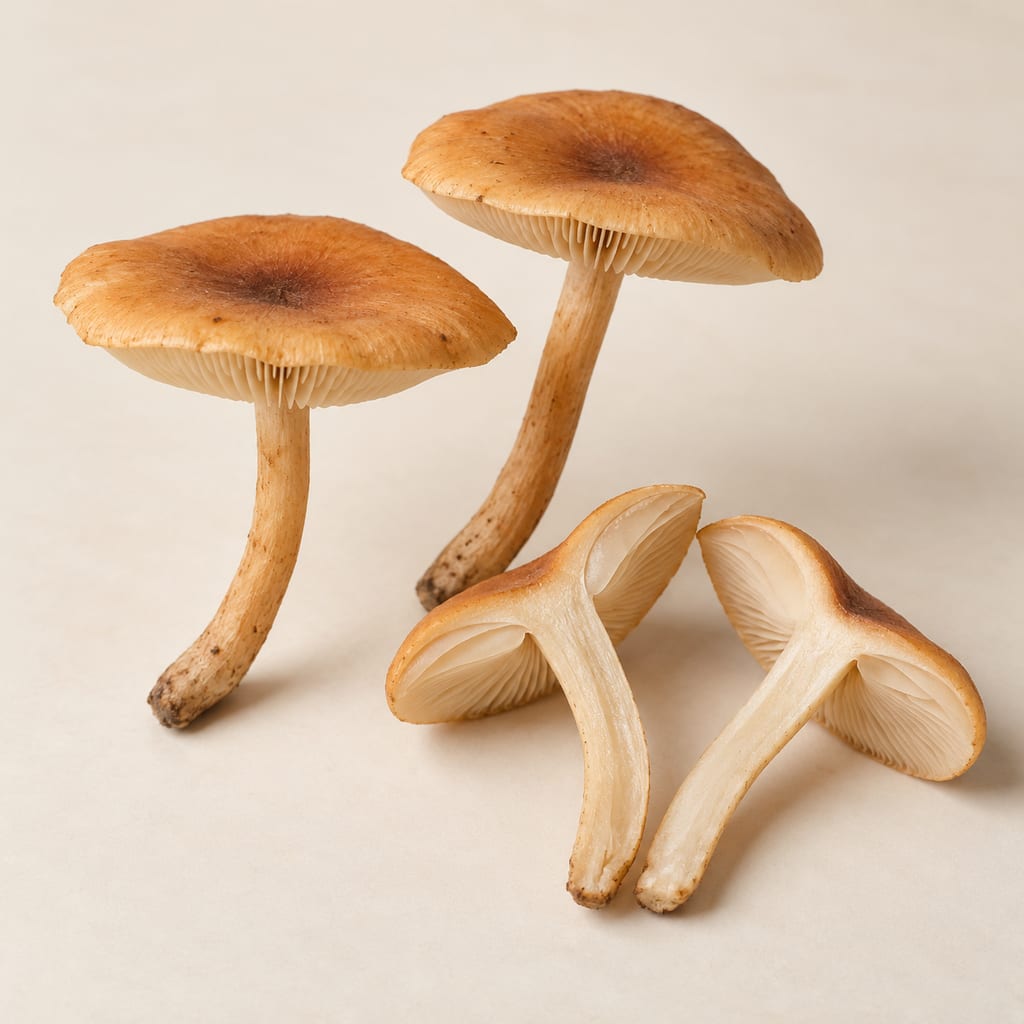
A wood-associated Armillaria recorded in Yunnan and Sichuan, China, and listed as edible in a 2026 Chinese catalogue.
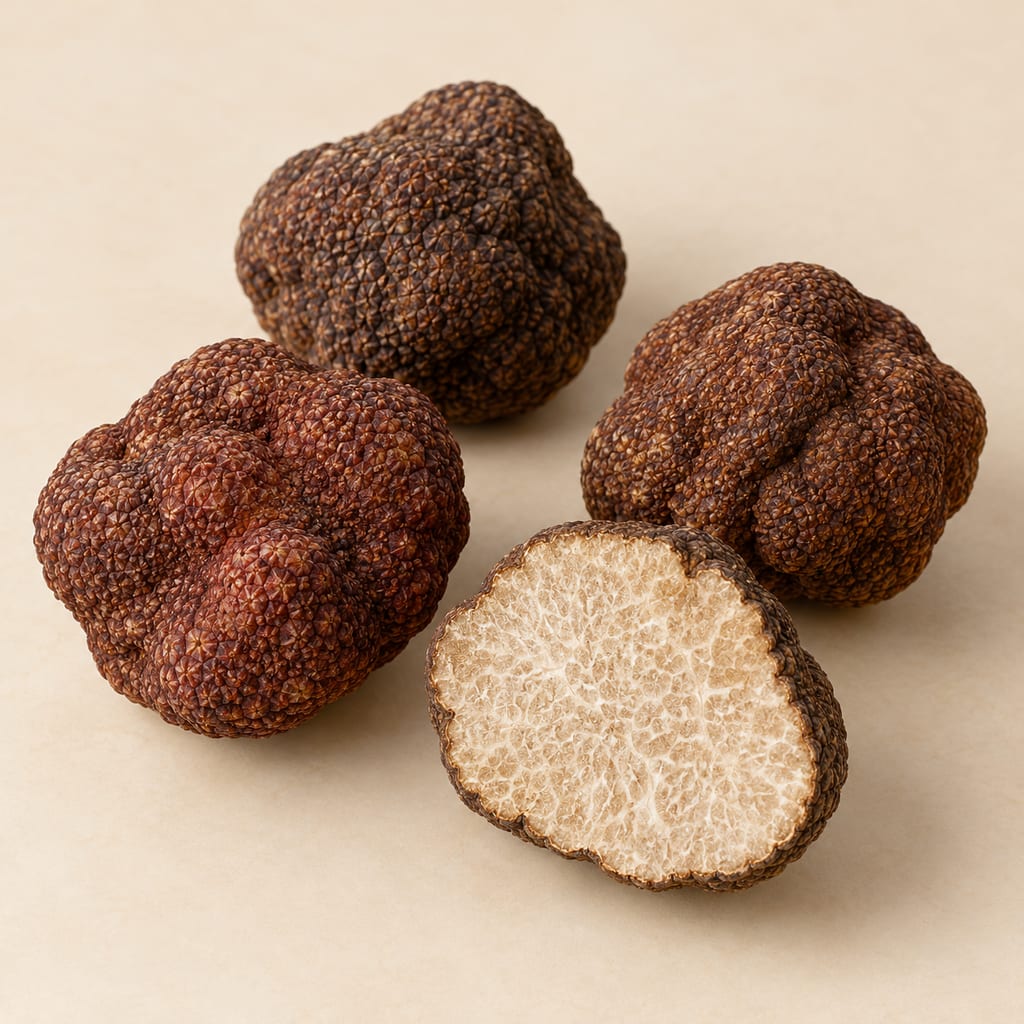
Tuber pseudohimalayense is a wild black truffle from Yunnan, China, listed as edible in a Chinese species catalogue. No independent assessment of its culinary use or safety is available.
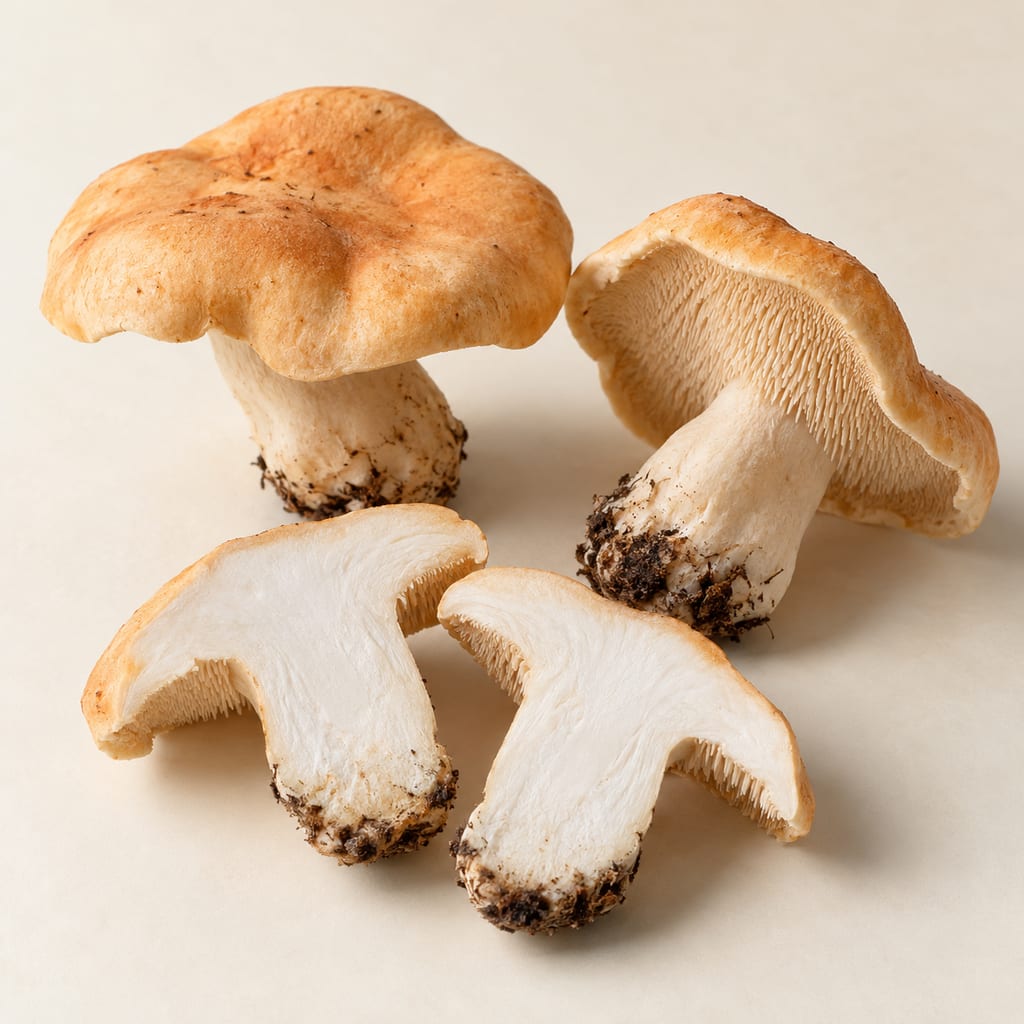
Hydnum berkeleyanum is a toothed, ectomycorrhizal forest fungus sold in food markets in Yunnan, China. Its regional identification is published, but its current name and local safety still need species-level review.
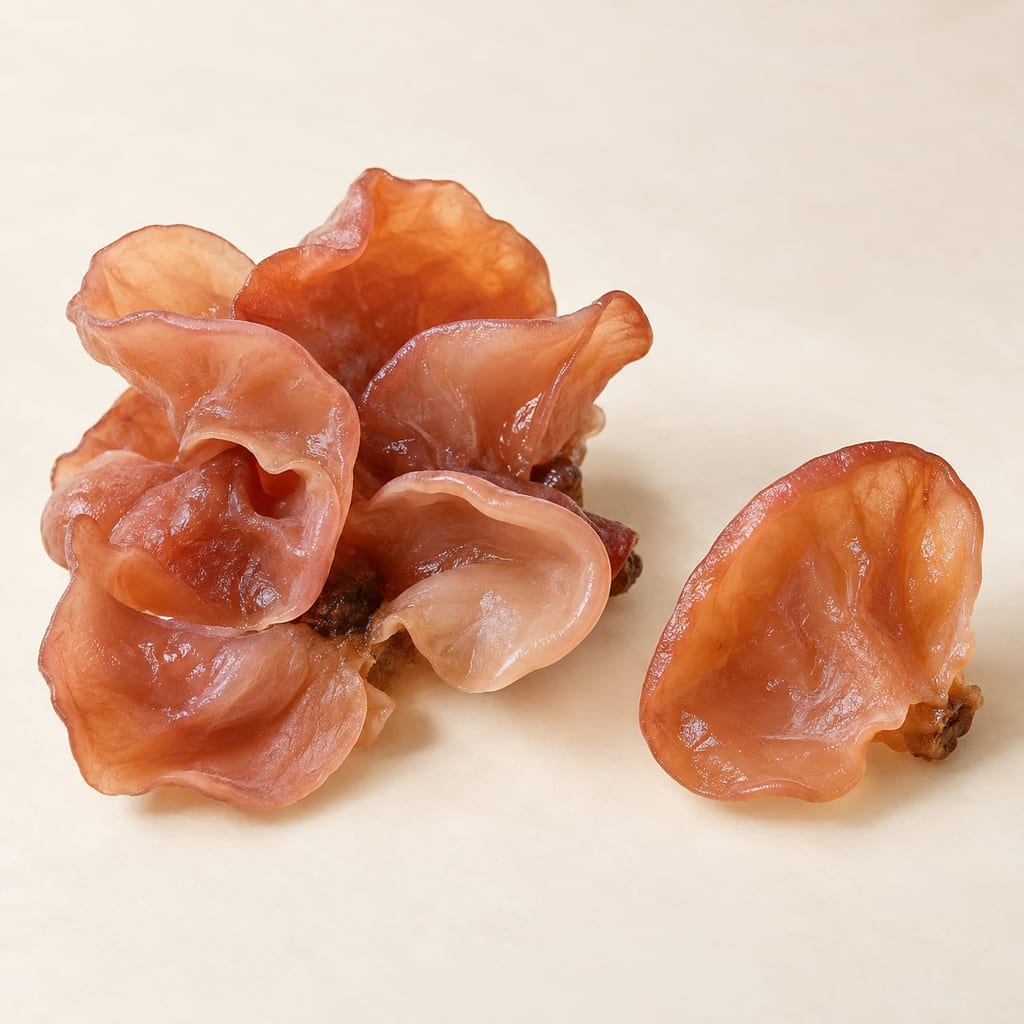
Auricularia thailandica is a thin, gelatinous wood ear described from Southeast Asian collections. Research reports it edible and experimentally cultivable, but species-specific recipes and everyday handling guidance are scarce.
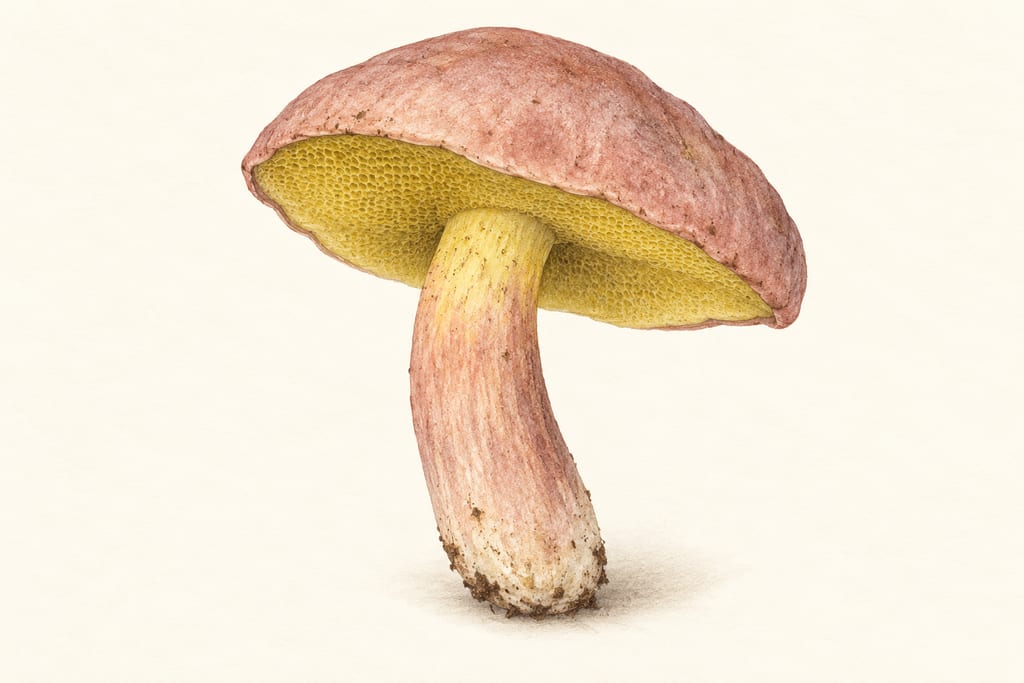
A 2023 Chinese taxonomic treatment accepts Boletellus indistinctus as a species. A separate Yunnan market record uses this name, but its specimen identification and local food safety have not been confirmed here.
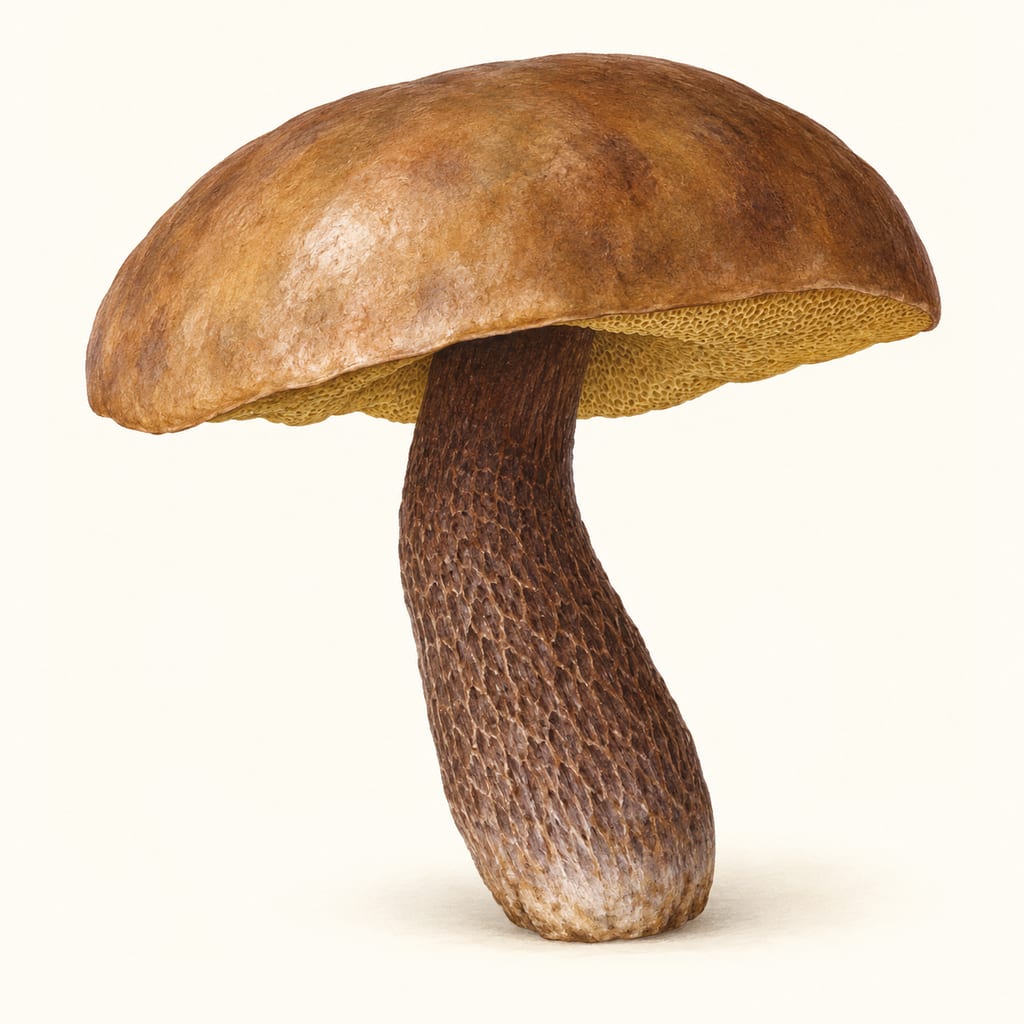
Boletus botryoides, the grape-coloured bolete, is a porcini-like wild bolete of central and south-western China. It is listed as edible in Chinese catalogues, but no dish or preparation is documented for it.
No community contributions have been published for this entry yet.
Sign in to contribute. Published comments and photos are free to read.
PubMed CentralFood use · Market
Wild food plants and fungi sold in the markets of Luang Prabang, Lao PDRMacrocybe gigantea is among the wild fungi sold by sellers in Luang Prabang markets; the authors describe the markets as among the richest in wild edible plants and fungi in Asia.
Journal of Ethnobiology and EthnomedicineFood use · Market · Distribution
Ethnomycological study on wild mushrooms in Pu'er Prefecture, Southwest Yunnan, ChinaPu'er markets sell wild mushrooms, and many of the species sold also occur in Laos, including Macrocybe gigantea.
PubMed CentralTaxonomy · Distribution · Safety
The treasured giants: a current overview on agricultural, nutritional, bioactive, and economic potential of Macrocybe Species (Agaricales, Basidiomycota)Macrocybe gigantea is widely distributed across tropical and subtropical Asia, including China; the review cautions about possible cyanide toxicity in these mushrooms.
SpringerCatalogue source
Ethnomycological study on wild mushrooms in Pu'er Prefecture (catalogue source, DOI 10.1186/s13002-022-00551-7)Catalogue record of the regional food-use observation for Yunnan and Laos.