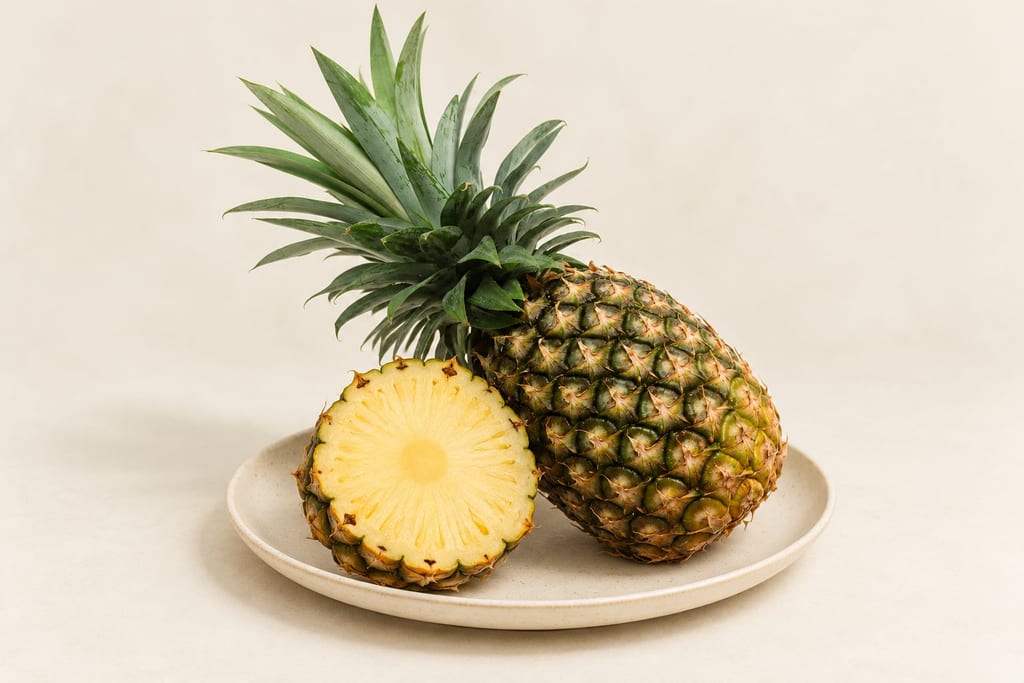
Pineapple
Pineapple is a sweet-tart tropical multiple fruit whose fresh flesh and peel supply sugars and acids to fruit ferments, while cultivar and maturity shape the balance.
 FermenteaWhere food goes to change
Mushrooms
A European bolete reported as food in some regions and treated as toxic or not known to be edible in others. Its name, use and safety cannot be generalized across all records.
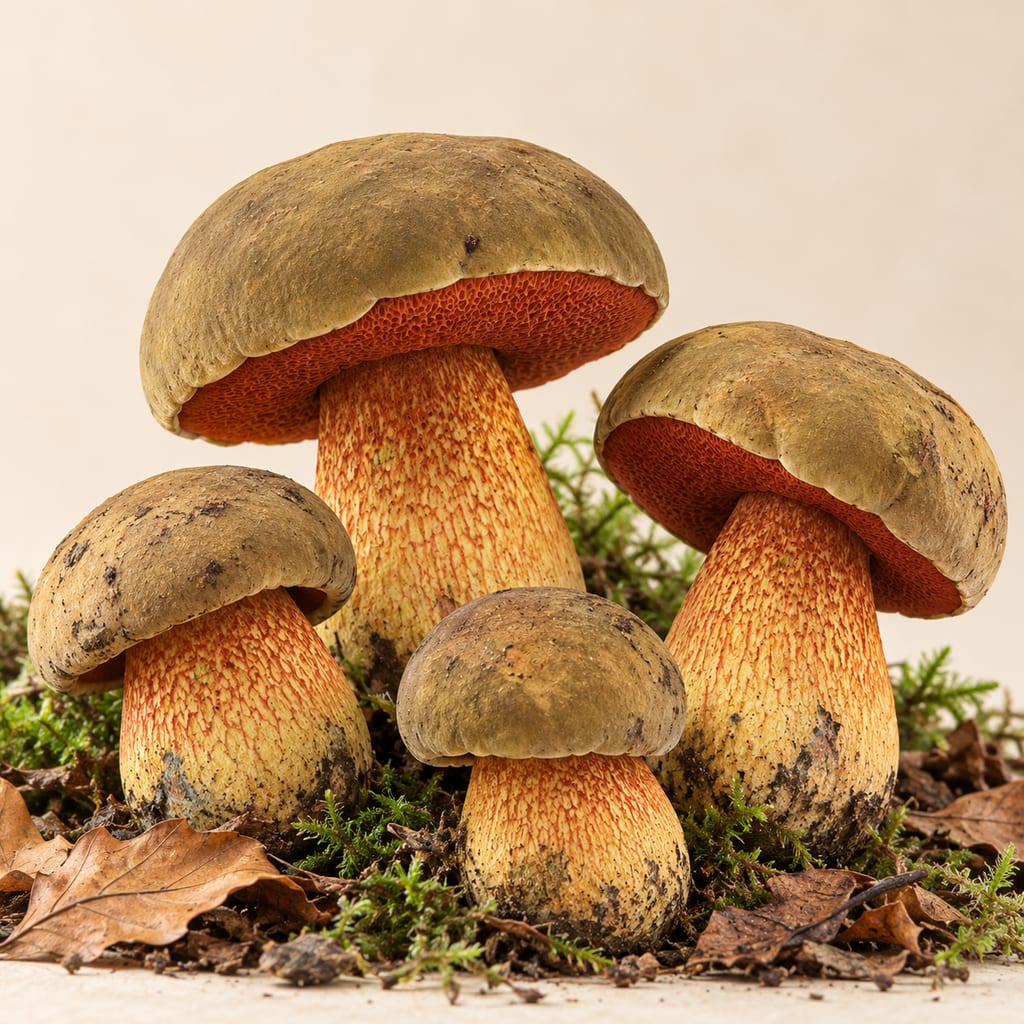
Boletus luridus was described in 1774. Species Fungorum and NCBI treat Suillellus luridus as the current name, while the New York Botanical Garden's Boletineae project retains Boletus luridus as accepted. Both names occur in field guides and older food records; identifications and reports should be checked in the taxonomic context of their source.
European descriptions mention an olive-brown cap, orange-red pores that bruise blue, a yellow stem with red netting, and flesh that stains blue. Similar red-pored boletes can be toxic. A photograph or brief description cannot confirm a specimen; Vienna says its own description is not a substitute for expert assessment.
European season reports are regional: Vienna describes spring through late autumn, Naturalis summer to autumn, and the Ukrainian biodiversity data centre June to September. European habitat accounts associate the species with woodland and broadleaf trees including oak, beech, hornbeam and lime. These are not a global calendar or universal host list.
The supplied register lists Bulgaria, Mexico, Nepal, Russia and Ukraine as historical-source geographies, not as five verified modern range or food-use records. The Ukrainian data centre documents occurrence across much of Ukraine. The Nepal plant-resource bulletin says the mushroom is not known to be edible there. Russia and Bulgaria need more precise sources before any local culinary statement is attached.
Some European authorities call Suillellus luridus edible only after thorough cooking; other field references list it as poisonous or advise avoiding it due to digestive upset. Such descriptions document local guidance and reported experience; they do not establish a universally validated procedure.
A study of Tsotsil communities in the Chiapas highlands records the mushroom as locally considered toxic. Its discussion cites consumption in Poland, eastern Europe and Estado de México, while emphasizing that taxonomic identity and chemical properties need confirmation before treating these reports as the same organism with the same risk. The Nepal bulletin does not recognize it as edible. Available sources do not resolve the regional disagreement.
This page does not recommend eating or collecting this mushroom and gives no preparation method. Sources report toxicity or gastrointestinal illness for raw or insufficiently heated specimens. Similar red-pored boletes add identification risk; cooking claims from one place cannot verify a specimen or guarantee safety elsewhere.
Alcohol-related cautions differ. The Ukrainian record warns of illness with alcohol, while the North American Mycological Association lists S. luridus among mushrooms implicated in other alcohol-related syndromes in susceptible people. These sources do not establish that a classic coprine/disulfiram reaction is proven for this species.
The national biodiversity data centre records range and local edibility opinions; not a general consumption recommendation.
Tsotsil study reports a local toxic classification; distinct from food-use reports elsewhere in Mexico.
Bulletin says this species is not known to be edible in Nepal; this is a knowledge/safety attestation, not a food-use claim.
Pineapple is a sweet-tart tropical multiple fruit whose fresh flesh and peel supply sugars and acids to fruit ferments, while cultivar and maturity shape the balance.
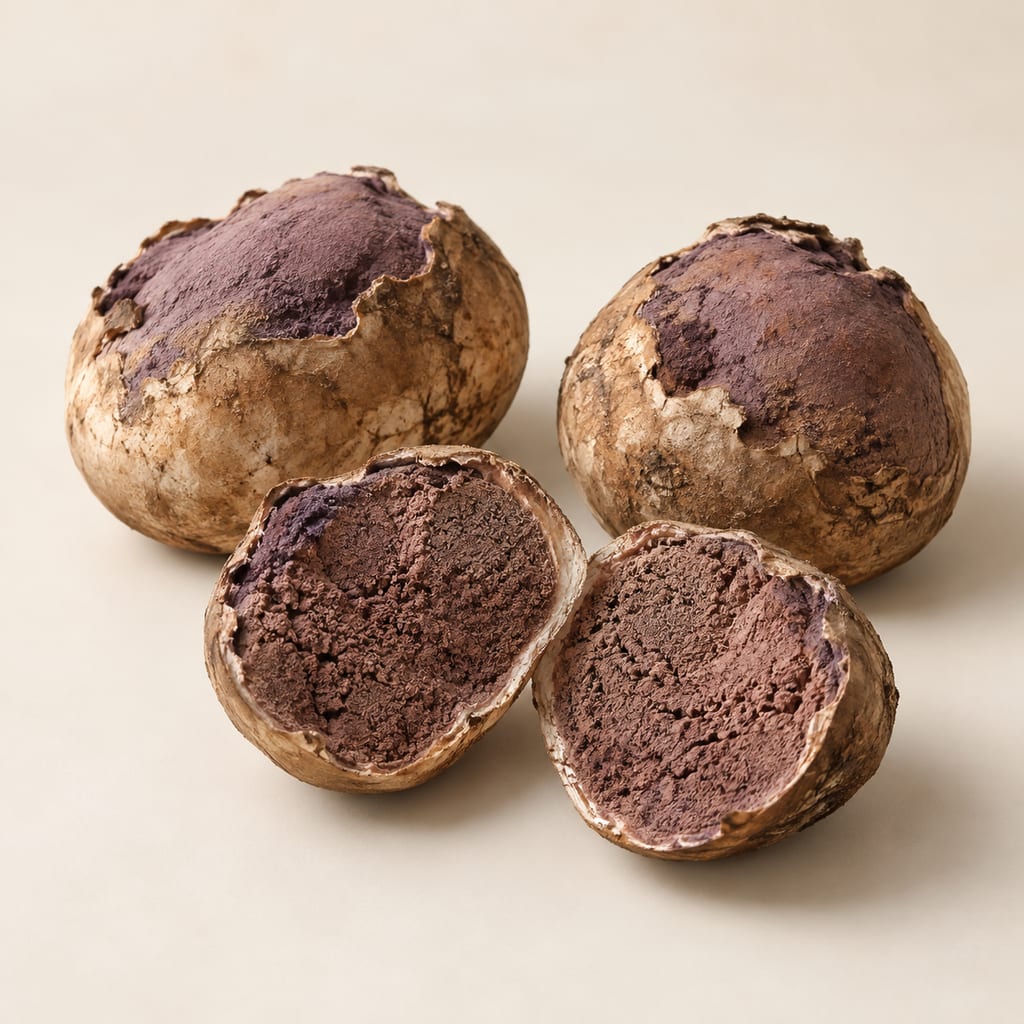
A soil-growing puffball, Calvatia cyathiformis, with white immature gleba that darkens purple as spores mature; food and seasonal records are local and do not establish a universal identification or safety rule.
No community contributions have been published for this entry yet.
Sign in to contribute. Published comments and photos are free to read.
Species Fungorum, Royal Botanic Gardens, KewTaxonomy
Boletus luridus Schaeff.Species Fungorum gives Suillellus luridus as current name for Boletus luridus Schaeff. (1774).
Cited in: Names and identity
NCBI TaxonomyTaxonomy
Suillellus luridusNCBI gives Suillellus luridus as current name and Boletus luridus as basionym.
Cited in: Names and identity
New York Botanical Garden, BoletineaeTaxonomy
Boletus luridusAlternative database treatment retains Boletus luridus as accepted.
Cited in: Names and identity
City of ViennaIdentification · Season · Habitat · Safety
Netzstieliger HexenröhrlingSpring to late autumn; woods and parks; edible only thoroughly cooked according to local advisory; toxic lookalikes; advisory says it is not expert assessment.
Cited in: Names and identity; Range and season; Food reports and disagreement; Safety
Biodiversity Data Centre, State Museum of Natural History, NAS of UkraineRange · Season · Habitat · Food history · Safety
Suillellus luridusUkraine range; June–September; oak, hornbeam and lime settings; locally described conditional edibility and raw/alcohol warnings.
Cited in: Range and season; Food reports and disagreement; Safety
Naturalis Biodiversity CenterSeason · Habitat · Safety
Boletus luridusLists summer to autumn, deciduous trees and poisonous.
Cited in: Range and season; Food reports and disagreement
Journal of Ethnobiology and EthnomedicineFood history · Safety · Regional variation
Sociodemographic differences in the cultural significance of edible and toxic mushrooms among Tsotsil towns in the Highlands of Chiapas, MexicoStudy reports local toxic classification in Chiapas, cites use in Poland, eastern Europe and Estado de México, but warns taxonomic identity and chemistry need confirmation.
Cited in: Range and season; Food reports and disagreement
Department of Plant Resources, Nepal, Bulletin No. 36Regional variation · Safety
Addition and correction to the list of edible mushrooms of NepalStates Boletus luridus is not known to be edible in Nepal.
Cited in: Safety
North American Mycological AssociationSafety
Mushroom Poisoning SyndromesIncludes Suillellus luridus among mushrooms reported in other alcohol-induced syndromes in susceptible people; this is not proof of a coprine/disulfiram mechanism.