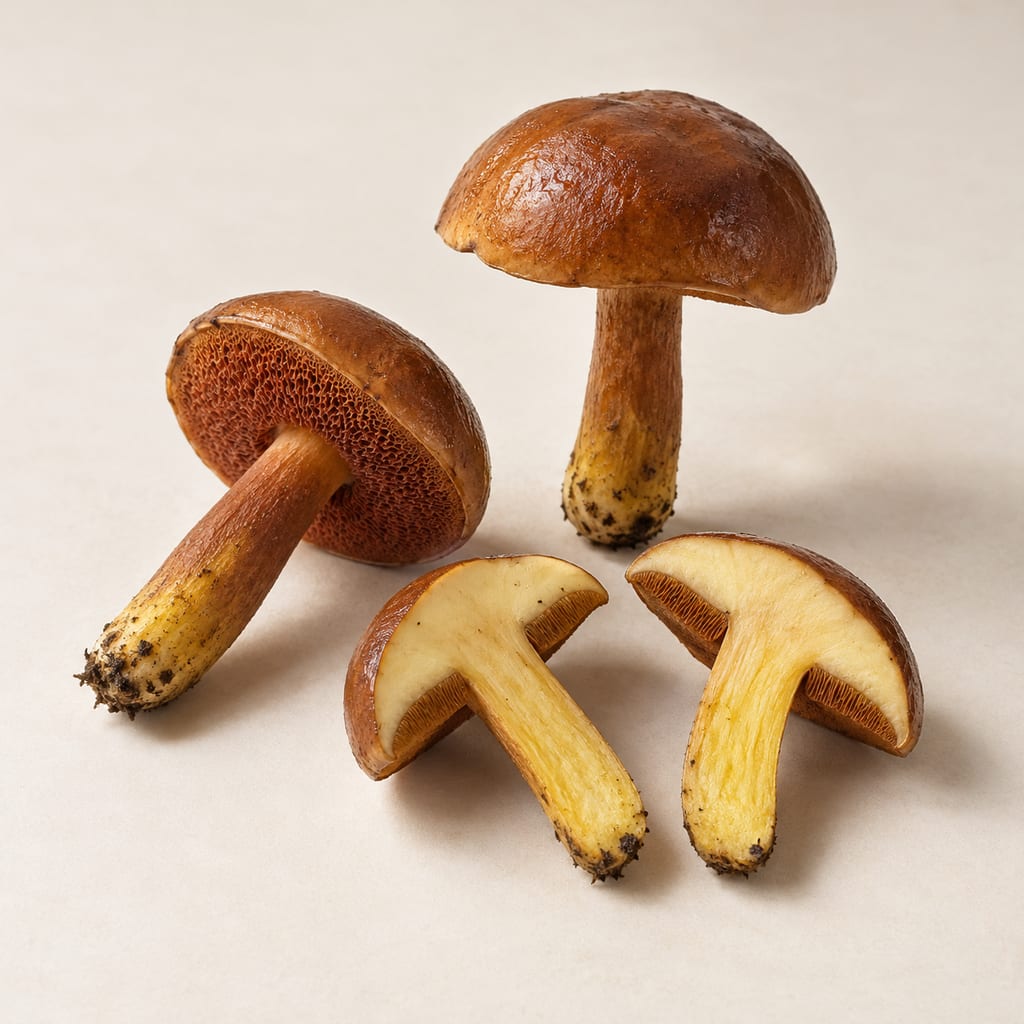
Chalciporus piperatus
A peppery woodland bolete with historical edible labels and reported condiment use in Querétaro. Current mycological references call its edibility suspect or unestablished; this entry does not recommend consumption.
 FermenteaWhere food goes to change
Mushrooms
A soil-growing puffball, Calvatia cyathiformis, with white immature gleba that darkens purple as spores mature; food and seasonal records are local and do not establish a universal identification or safety rule.
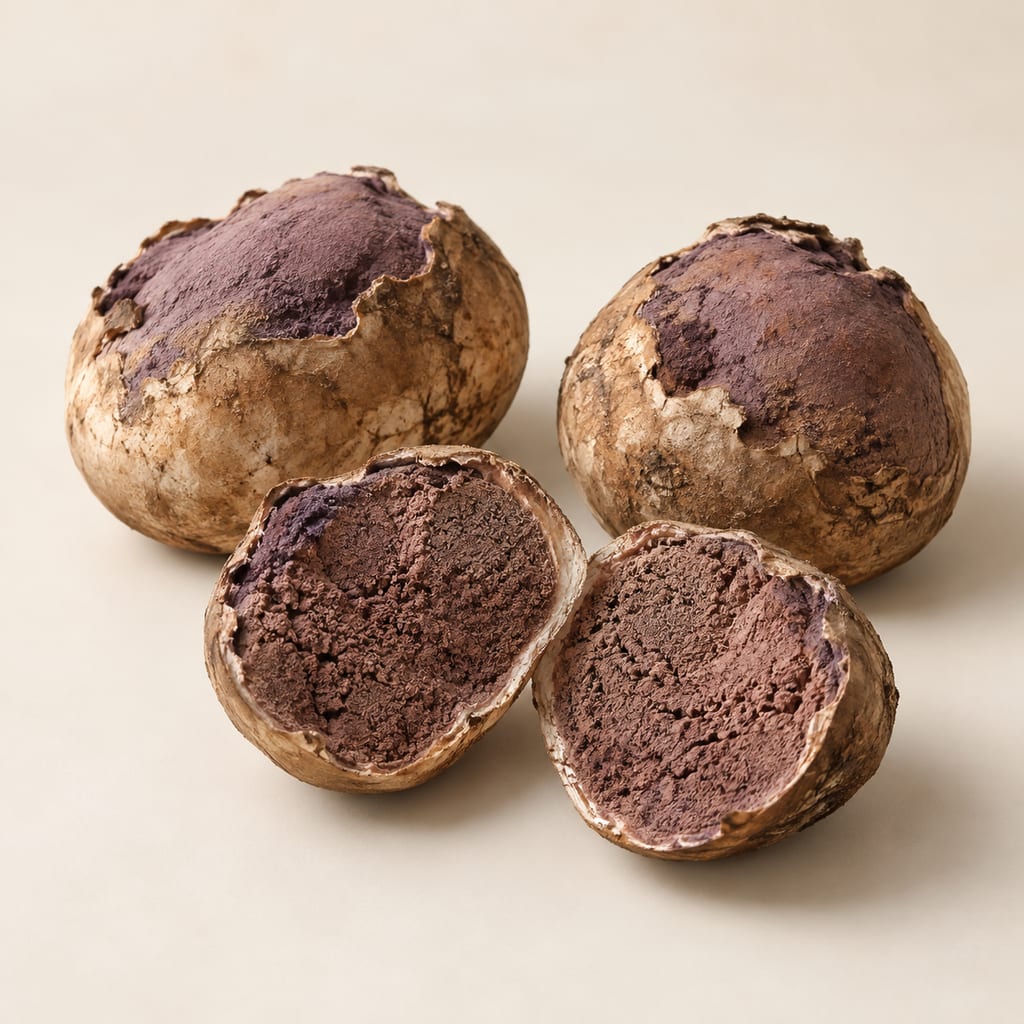
The purple-spored puffball, Calvatia cyathiformis, is a soil-growing fungus with no cap and gills. Its fruit body begins as a rounded, pale structure and can become pear-shaped, flattened or cup-like. Inside, the firm gleba is white when immature; as spores develop it darkens through purplish tones, and the outer wall eventually opens to release them. This visible change is useful context for the species' name, but appearance alone is not a safe identification method. Puffball-like young stages of other mushrooms can be confusing, and a food record is not a substitute for expert identification.
Taxonomic sources accept the name Calvatia cyathiformis (Bosc) Morgan, based on Lycoperdon cyathiforme Bosc. Sources do not agree uniformly on its family: Lycoperdaceae is used by Index Fungorum and Mexico's UNAM reference, while some applied checklists place it in Agaricaceae. Older works use names such as Calvatia fragilis; because historical synonymy is inconsistent, this account keeps the catalogued name and does not silently merge every similar name.
In three Hñähñu communities in Amealco de Bonfil, Querétaro, the mushroom is part of local gathering and food-market knowledge. One ethnomycological survey lists it among the collected species and describes a meat-like quality in a comparison with field mushroom. The authors place it among the first terrestrial mushrooms available in the local season, but do not give a specific month range for this species. Their wider study took place from August 2013 to November 2014; that is the research period, not a claim that the puffball fruits continuously over those dates.
In Antelá and Tziscao near Lagunas de Montebello in Chiapas, a separate study groups Calvatia cyathiformis with mushrooms appearing during the May–October rainy season. July is reported as a broad peak for mushroom abundance in the area, not a species-specific peak. A national university reference also records the species among mushrooms gathered near homes in Playón de la Gloria, Chiapas. These accounts show how seasonal knowledge is local: rainfall, landscape and community observations matter, so they cannot be combined into a single Mexican calendar.
Food-use accounts also appear outside Mexico. A survey of edible macrofungi in Assam's Borail Reserve Forest lists Calvatia cyathiformis and records it in September. A broader Indian review describes cooking immature fruit bodies with white, firm gleba, and gives June–August as a broad season for its Indian account. The month difference is not necessarily a contradiction: the sources cover different places and sampling frames. A Chinese catalogue includes the species under an edible/medicinal checklist heading, while FAO's historical Nigerian table records food and medicinal use based on a 1975 source. Neither checklist nor historical table specifies a universal preparation. Reports from several West African countries using Calvatia cf. cyathiformis carry an explicit identification caveat and should not be treated as confirmed records for this exact species.
The best-supported use in these sources is food use, reported in named regional contexts. Mexico's ethnomycological paper records local gathering and sale; Indian accounts describe cooking immature puffballs. UNAM summarizes older reports of the gleba being placed against minor wounds or irritated skin. This documents a traditional practice only: it does not establish that the fungus disinfects wounds or helps healing, and it should not be used as medical advice. Historical Nigerian medicinal entries likewise document reported practice rather than efficacy.
The Querétaro study names Tesquedó, Xajay and Tenasdá in Amealco de Bonfil. Its Amealco coordinate is a municipality-level reference, not the location of an individual specimen. The Chiapas account covers Antelá and Tziscao but does not give a verified mushroom collection coordinate in the cited text. The Assam survey bounds Borail Reserve Forest geographically and names September as the observed month; a bounding box cannot be turned into a precise specimen point. UNAM gives a broader state distribution in Mexico. These levels of evidence should stay distinct on a map: named food-use community, regional occurrence and country-level checklist are not interchangeable.
Traditional food use is not a universal safety guarantee. The cited Indian review specifies immature fruit bodies with white, firm gleba, but that description is not enough to identify an unknown specimen; some dangerous mushrooms have a closed, immature stage. Do not eat a wild mushroom based on this page or the word “puffball.” Consult a qualified local identifier and follow local rules. Do not eat dark, mature spore mass as though it were the documented immature food form. No clinical safety or therapeutic trial for this species was identified in the sources summarized here.
20°11′17″N, 100°08′38″W converted from the paper's Amealco municipality reference coordinate. Not a specimen coordinate; the study names Tesquedó, Xajay and Tenasdá but does not separately georeference them.
The source covers these communities and groups the species with rainy-season mushrooms; no precise specimen coordinate is established.
The paper supplies a reserve bounding box and a month, not a point; coordinates intentionally omitted.
FAO's historical table records food and medicinal use citing Oso (1975), without locality or season.
The cited Chinese catalogue supplies an edible/medicinal checklist category only; it is not evidence of a local harvest practice or exact locality.
A peppery woodland bolete with historical edible labels and reported condiment use in Querétaro. Current mycological references call its edibility suspect or unestablished; this entry does not recommend consumption.
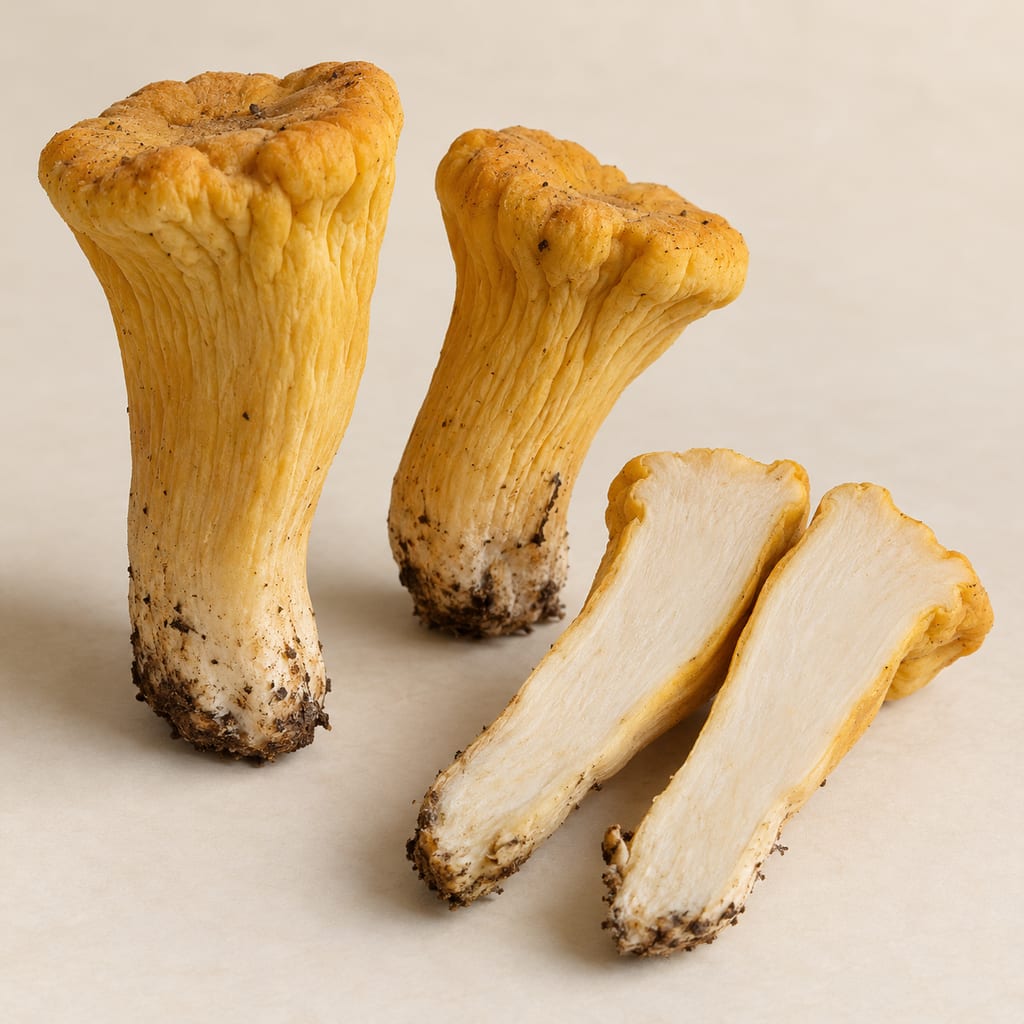
A yellow to ochre club fungus reported as food in parts of Mexico and in historical country lists. Local acceptance and taxonomy vary, and some Chinese records may refer to Clavariadelphus amplus.
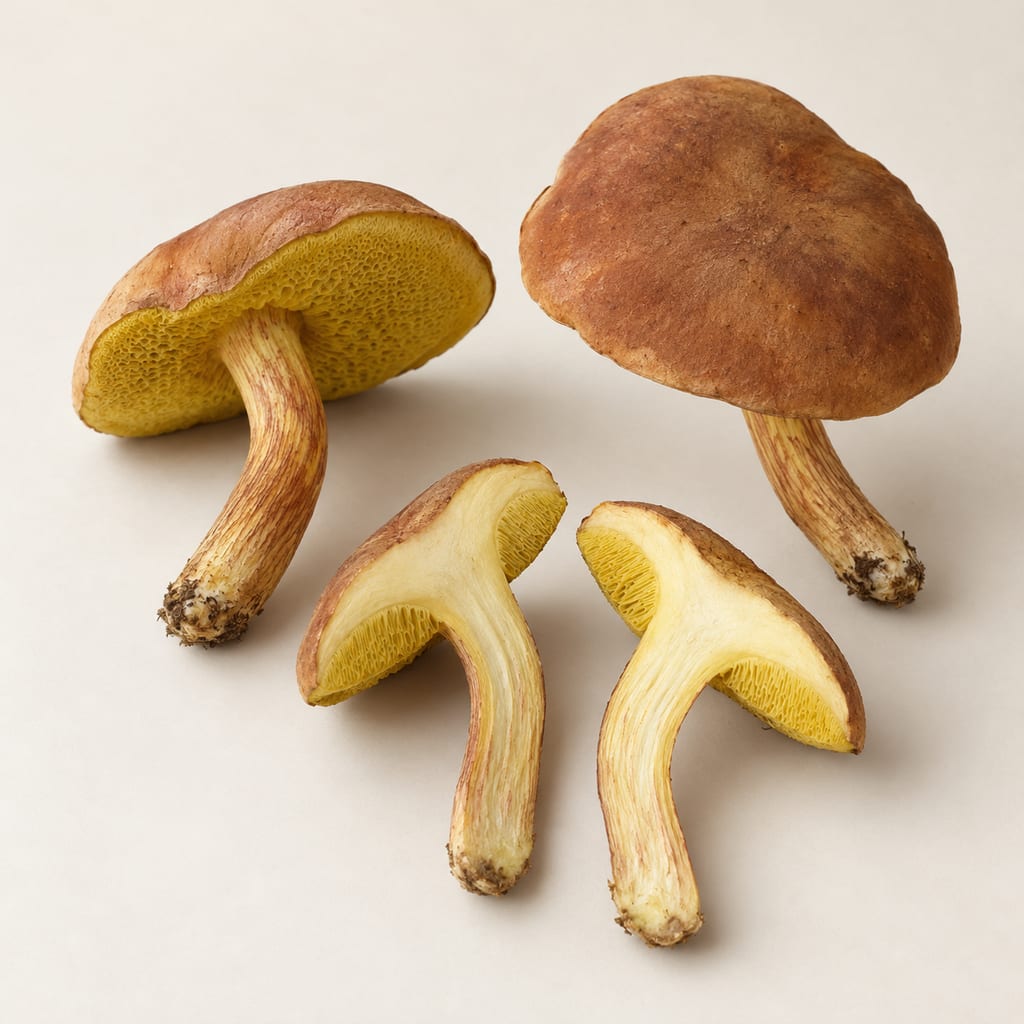
Xerocomus illudens, a forest bolete of Mexico that is gathered by some communities but was ranked low by others, partly because of its sour taste.
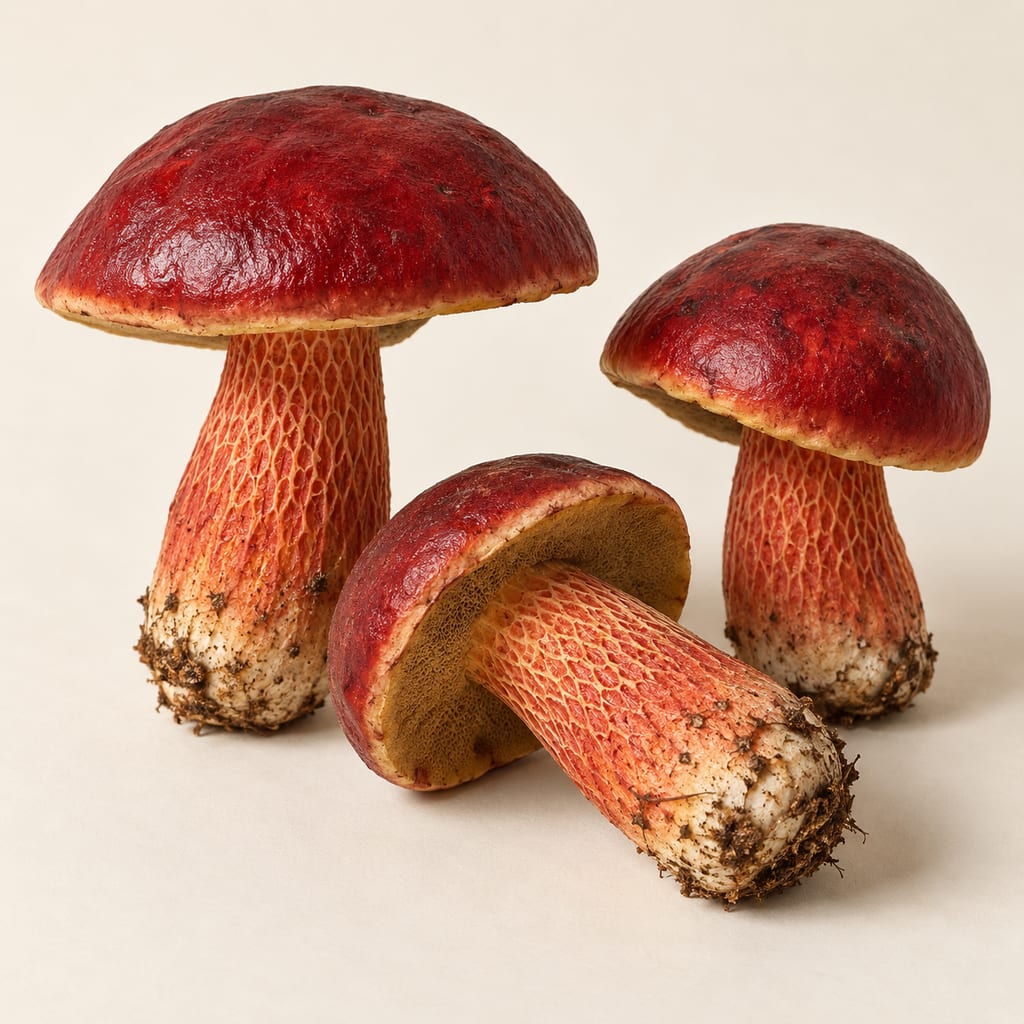
Frost's bolete, Exsudoporus frostii, is a red-pored bolete of oak woodland in eastern North America and Mexico. Its edibility is contested because it can be confused with poisonous red-pored boletes.
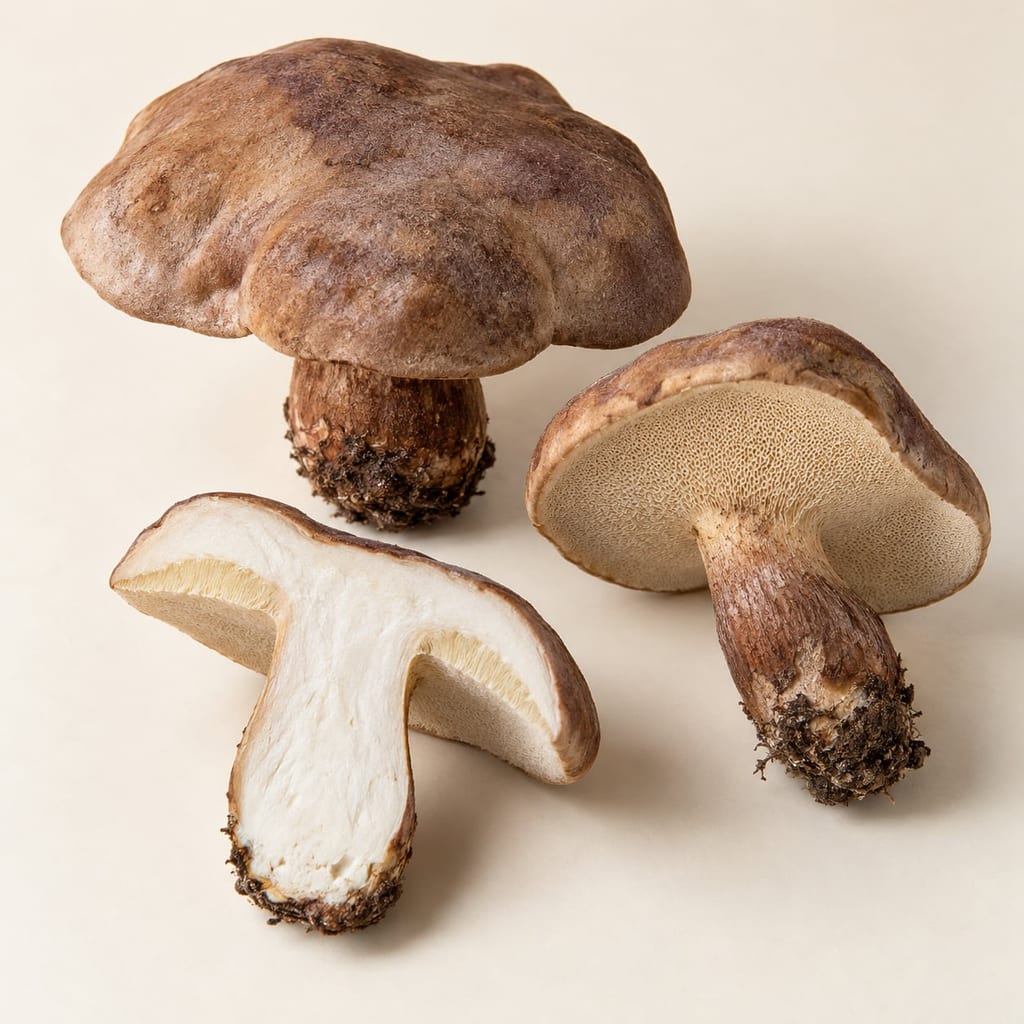
Wolfe's bolete, Fistulinella wolfeana, is a wild bolete of oak and oak-pine forest in eastern and southeastern Mexico, where Otomi communities in Amealco, Querétaro, gather and sell it as food.
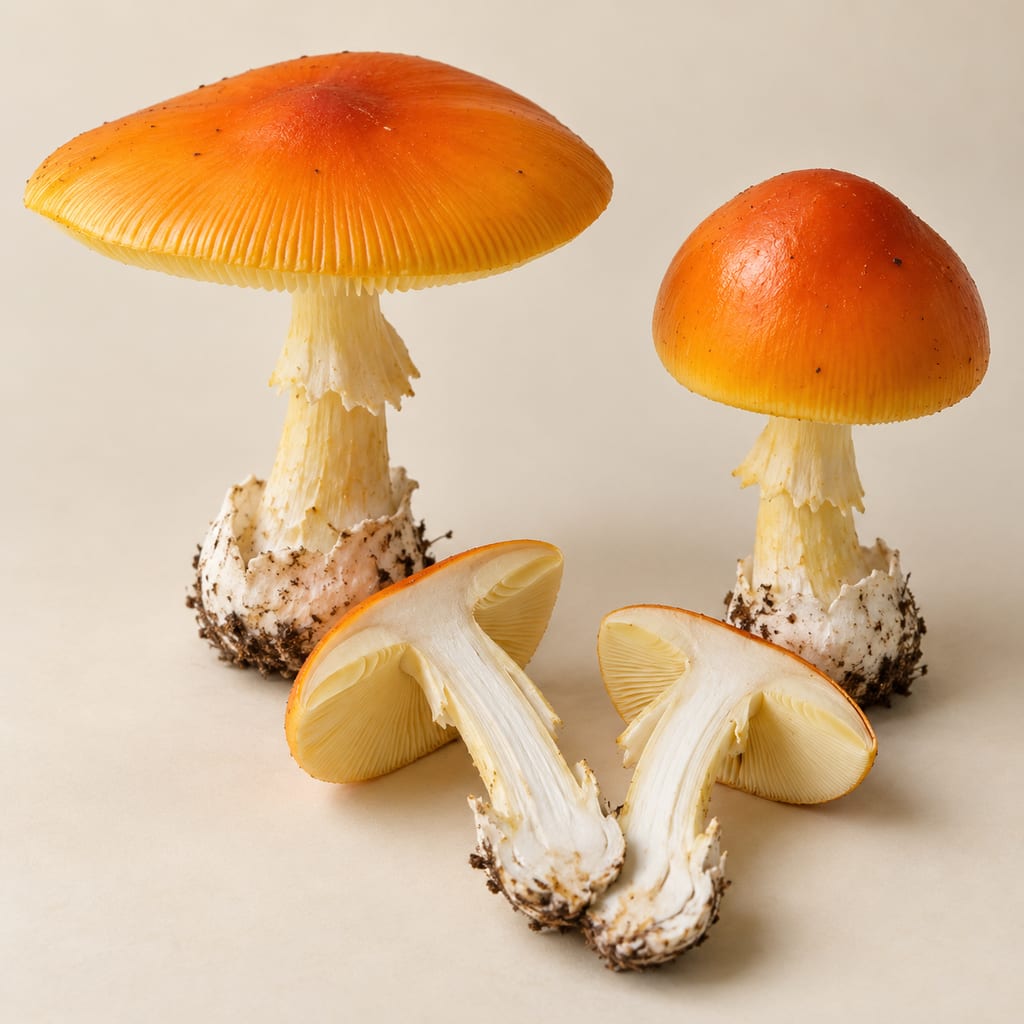
A wild Amanita valued in local foodways of Mexico and Guatemala. Community studies document seasonal gathering, market trade and distinct cooked preparations; species identity and Amanita safety require particular care.
No community contributions have been published for this entry yet.
Sign in to contribute. Published comments and photos are free to read.
Index FungorumIdentity
Index Fungorum record 356862Accepted name Calvatia cyathiformis (Bosc) Morgan and basionym Lycoperdon cyathiforme Bosc.
Cited in: A puffball whose inside changes with age
Hongos Comestibles de México, UNAMIdentity · Geography · Traditional use · Safety
Calvatia cyathiformisGasteroid morphology and gleba color change; Mexico distribution and habitat; local collection and historical topical folk-use accounts; family placement and synonym caveats.
Cited in: A puffball whose inside changes with age; Local food knowledge and seasonal appearance; Recorded uses are not medical evidence; Reading place records carefully; Safety and scope
Journal of Ethnobiology and EthnomedicineTraditional use · Geography · Season
Ethnomycological knowledge in three communities of Amealco, Querétaro, MexicoFood and market use among Tesquedó, Xajay and Tenasdá; described in comparison as meat-like; listed among early available terrestrial mushrooms; study gives an Amealco municipality reference coordinate, not a specimen coordinate.
Cited in: Local food knowledge and seasonal appearance; Recorded uses are not medical evidence; Reading place records carefully
SciELO MéxicoTraditional use · Geography · Season
Conocimiento micológico tradicional en dos comunidades aledañas al Parque Nacional Lagunas de Montebello, Chiapas, MéxicoIncludes the species in the May–October rainy mushroom season around Antelá and Tziscao; July is an area-level peak, not a species-specific one.
Cited in: Local food knowledge and seasonal appearance; Reading place records carefully
Ecology, Environment and ConservationDocumented use · Geography · Season · Identity
Edible Macrofungi of Borail Reserve Forest of Dima Hasao District, Assam, IndiaLists Calvatia cyathiformis as edible and humicolous with September occurrence; reserve is described by a bounding box, not a specimen point.
Cited in: A puffball whose inside changes with age; Local food knowledge and seasonal appearance; Reading place records carefully
Mushroom Research / ICARTraditional use · Season · Safety
A perspective on Indian edible mushrooms with traditional knowledgeDescribes use of immature fruit bodies with white firm gleba and a broad June–August season in its Indian account.
Cited in: Local food knowledge and seasonal appearance; Recorded uses are not medical evidence; Safety and scope
Food and Agriculture Organization of the United NationsHistorical attestation
Wild edible fungi: a global overviewHistorical Nigerian table records food and medicinal use citing Oso (1975), without a preparation or detailed locality.
Cited in: Local food knowledge and seasonal appearance; Recorded uses are not medical evidence
MycosystemaDocumented use · Identity
Chinese macrofungal catalogueChecklist assigns an edible/medicinal category; this is not a field study of local use.
Cited in: Local food knowledge and seasonal appearance