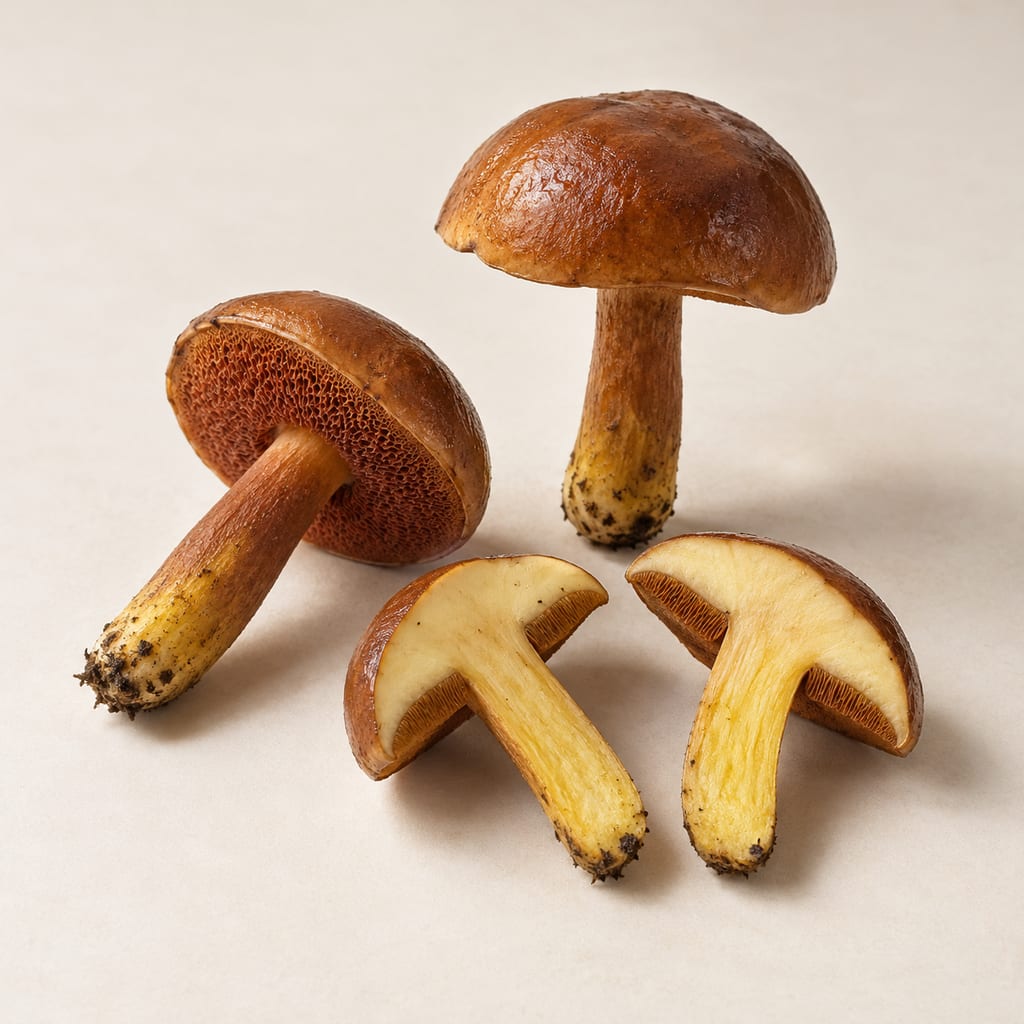
Chalciporus piperatus
A peppery woodland bolete with historical edible labels and reported condiment use in Querétaro. Current mycological references call its edibility suspect or unestablished; this entry does not recommend consumption.
 FermenteaWhere food goes to change
Mushrooms
Frost's bolete, Exsudoporus frostii, is a red-pored bolete of oak woodland in eastern North America and Mexico. Its edibility is contested because it can be confused with poisonous red-pored boletes.
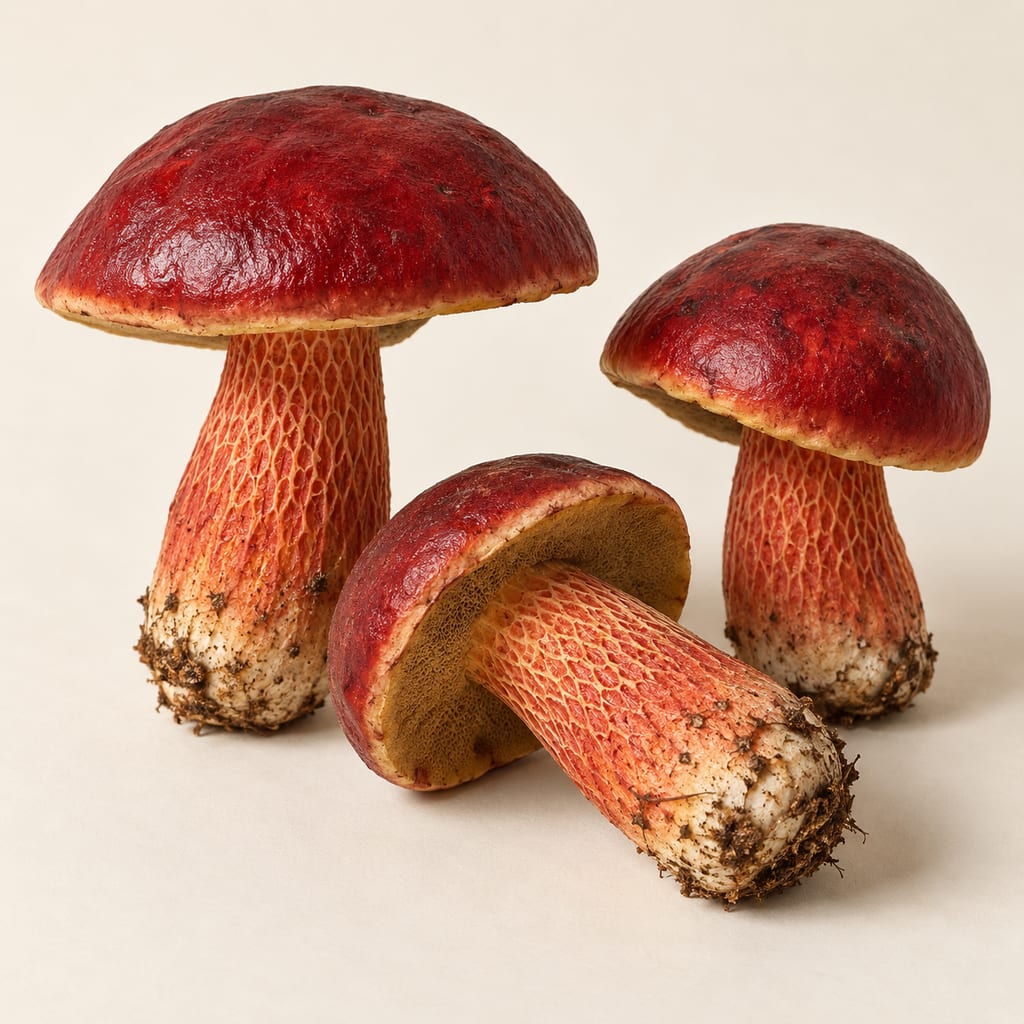
Exsudoporus frostii was first described in 1874 as Boletus frostii. It is also known as Frost's bolete or the apple bolete. Its cap is a candy-apple red, sometimes duller, sticky when wet, with pores that bruise blue when touched. The stem has coarse, raised netting. The sources read give these features, and they note that the genus spelling in the catalogue is Exudoporus, while the current spelling used by Wikipedia is Exsudoporus.
It grows near hardwood trees, especially oaks, and the range given runs from Maine to Georgia and from Arizona south into Mexico and Costa Rica.
In Mexico the species is called panza agria, meaning sour belly, a name tied to its sour, lemony taste. The catalogue records food use in Amealco, Querétaro, but the sources read do not document specific harvesting or sale of this species in Mexico, so that record stands on the catalogue entry alone.
Opinions on the taste differ. One guide rates it good and arguably choice, with an unusual, almost sour flavour. Others find it unremarkable. Wikipedia-derived material says it is considered edible when thoroughly cooked and is generally not recommended, because it is easily confused with poisonous red-pored boletes that also bruise blue.
Red-pored boletes include poisonous species, and identification is the central risk. Wild boletes must be identified from the whole specimen by a specialist. This page does not establish that Frost's bolete is safe to eat, and cooking is not a substitute for correct identification. The sources read give no safe quantity or preparation.
Catalogue records food use in Amealco. Other sources list the local name panza agria in Mexico.
Native range from Maine to Georgia and from Arizona south to Mexico and Costa Rica, per Wikipedia-derived sources.
A peppery woodland bolete with historical edible labels and reported condiment use in Querétaro. Current mycological references call its edibility suspect or unestablished; this entry does not recommend consumption.
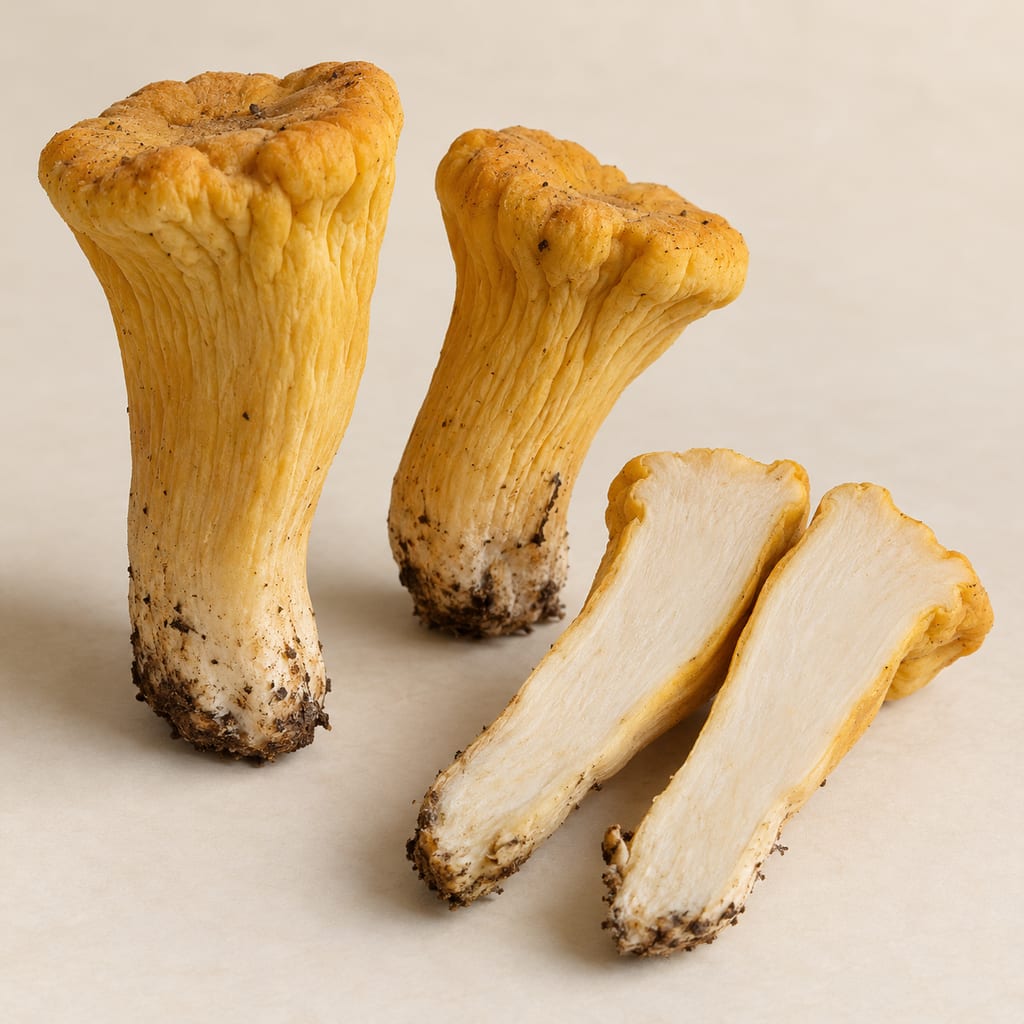
A yellow to ochre club fungus reported as food in parts of Mexico and in historical country lists. Local acceptance and taxonomy vary, and some Chinese records may refer to Clavariadelphus amplus.
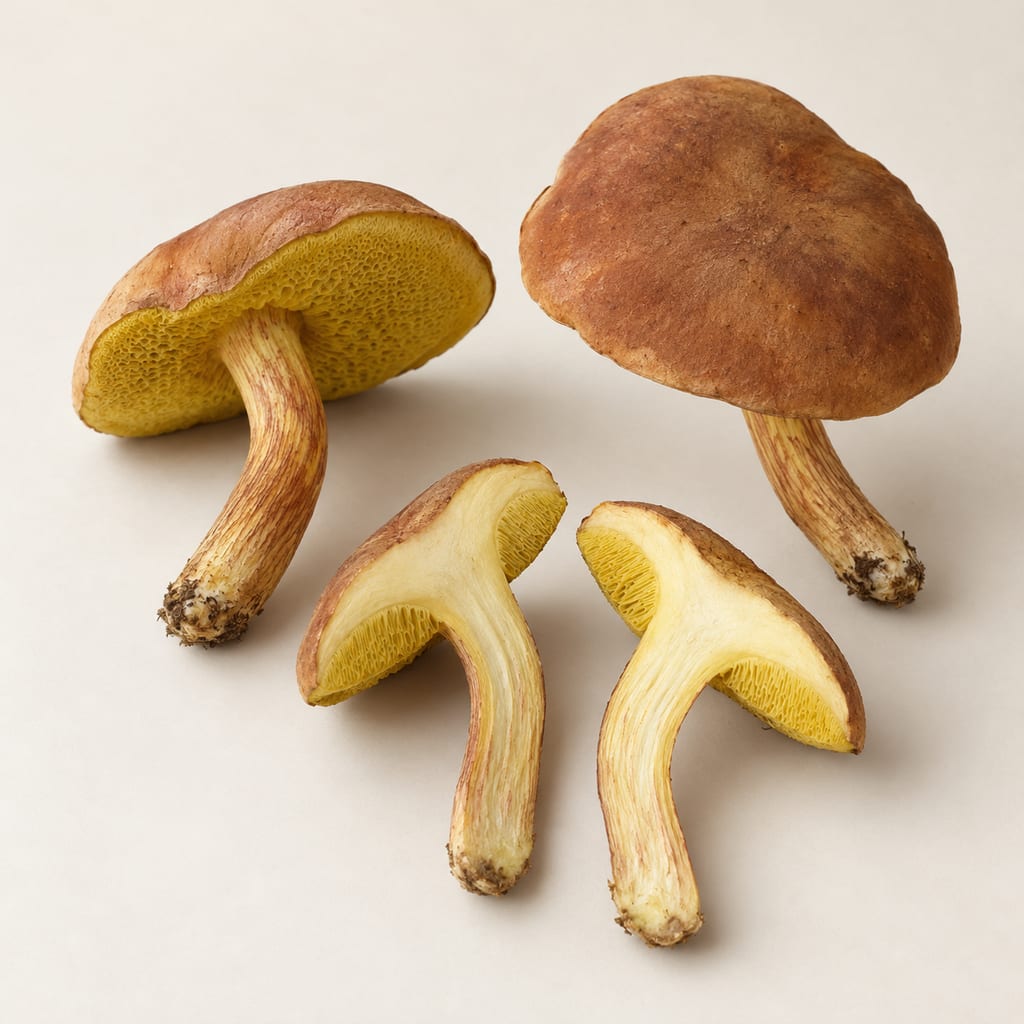
Xerocomus illudens, a forest bolete of Mexico that is gathered by some communities but was ranked low by others, partly because of its sour taste.
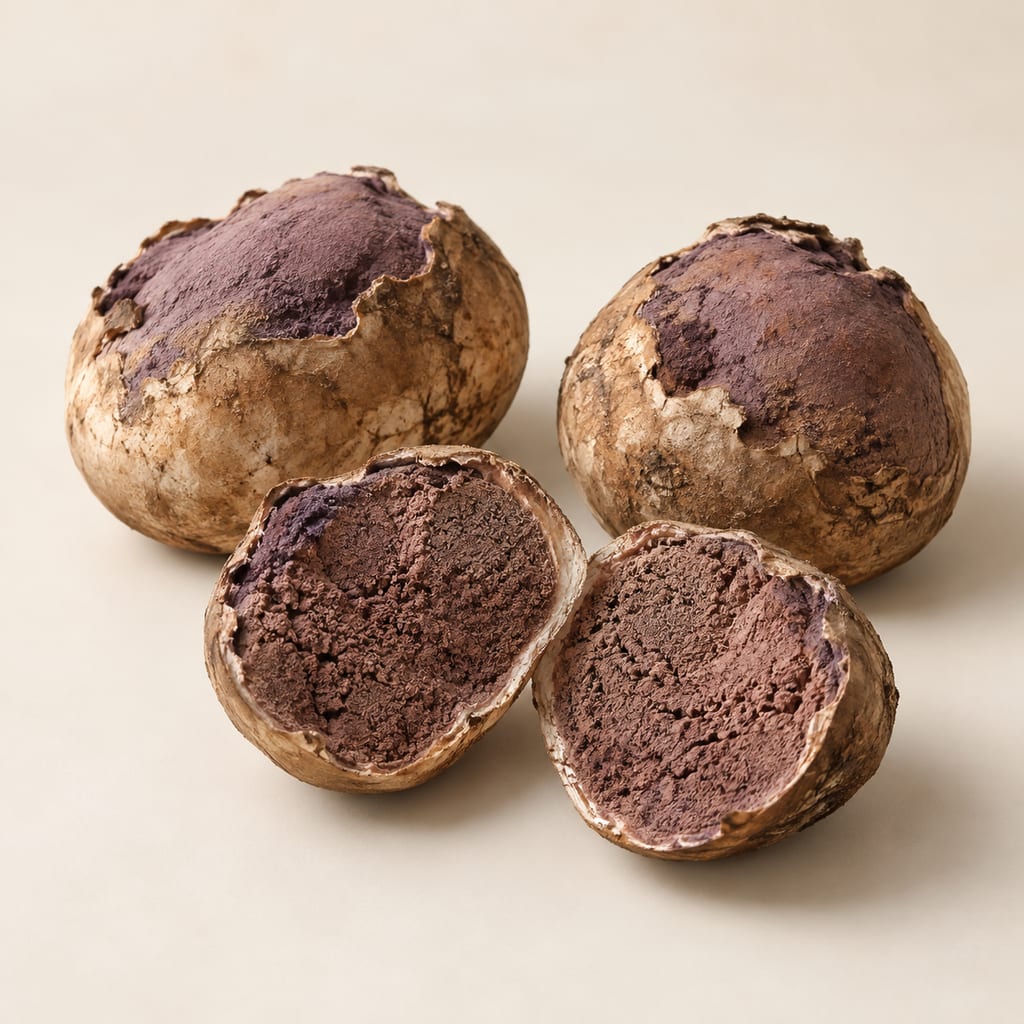
A soil-growing puffball, Calvatia cyathiformis, with white immature gleba that darkens purple as spores mature; food and seasonal records are local and do not establish a universal identification or safety rule.
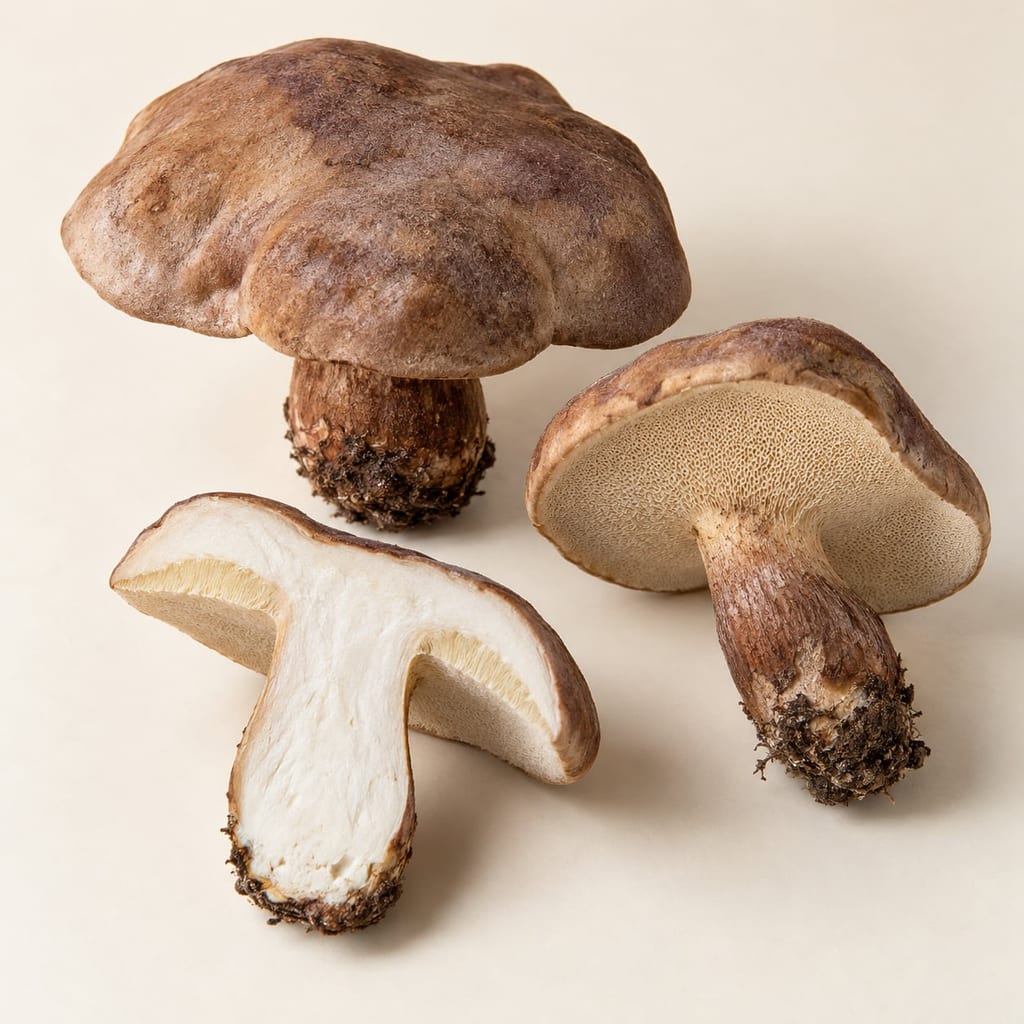
Wolfe's bolete, Fistulinella wolfeana, is a wild bolete of oak and oak-pine forest in eastern and southeastern Mexico, where Otomi communities in Amealco, Querétaro, gather and sell it as food.
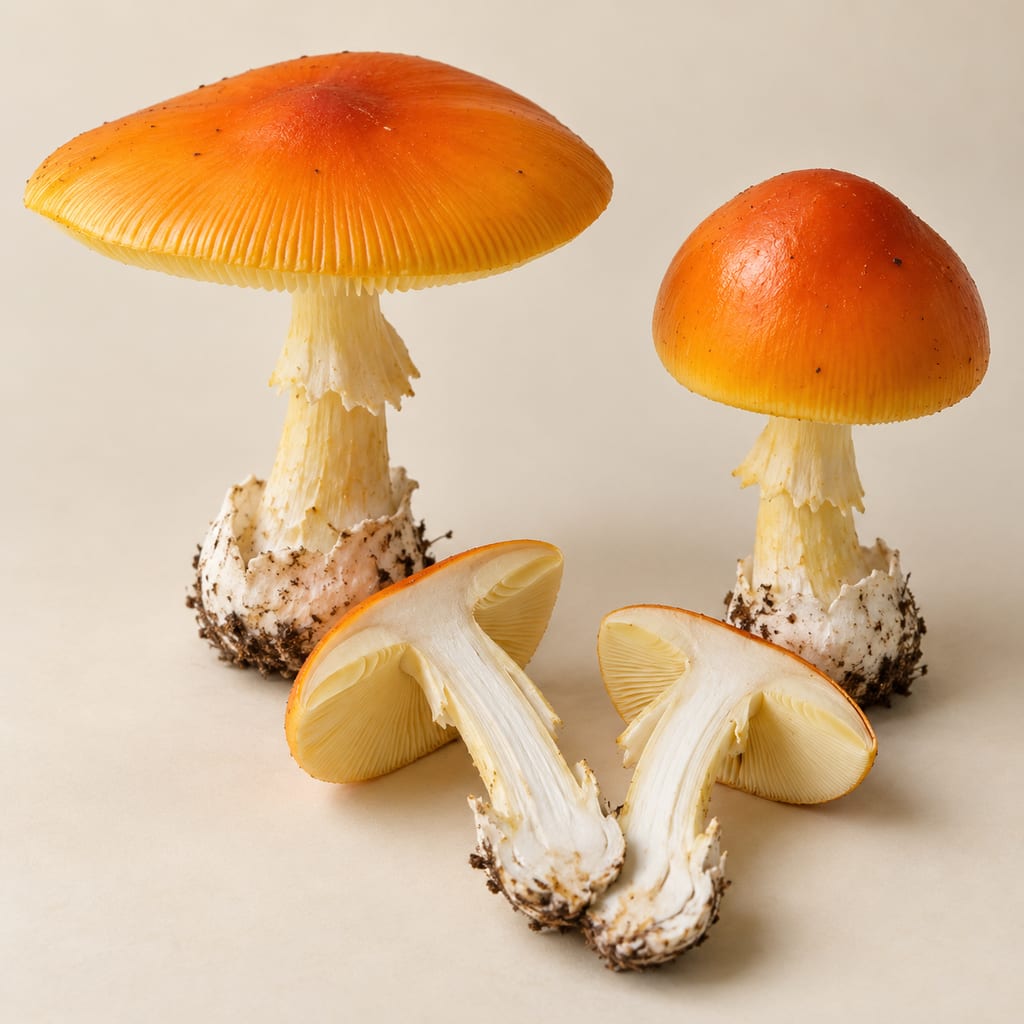
A wild Amanita valued in local foodways of Mexico and Guatemala. Community studies document seasonal gathering, market trade and distinct cooked preparations; species identity and Amanita safety require particular care.
No community contributions have been published for this entry yet.
Sign in to contribute. Published comments and photos are free to read.
WikipediaIdentity · Distribution · Safety
Exsudoporus frostiiDescribed 1874 as Boletus frostii; range Maine to Georgia and Arizona to Costa Rica; edible when cooked but generally not recommended
Cited in: What it is; Names and food use; Safety
Mushroom AppreciationIdentification · Food
Frost's boleteCandy-apple red cap, sticky, bluing pores and flesh, coarse netting on stem; opinions on edibility differ
Cited in: What it is; Names and food use
SpringerFood · Catalogue
Ethnomycological study (Mexico), DOI 10.1186/s13002-017-0202-7Catalogue: food use documented in Amealco, Mexico
Cited in: Names and food use