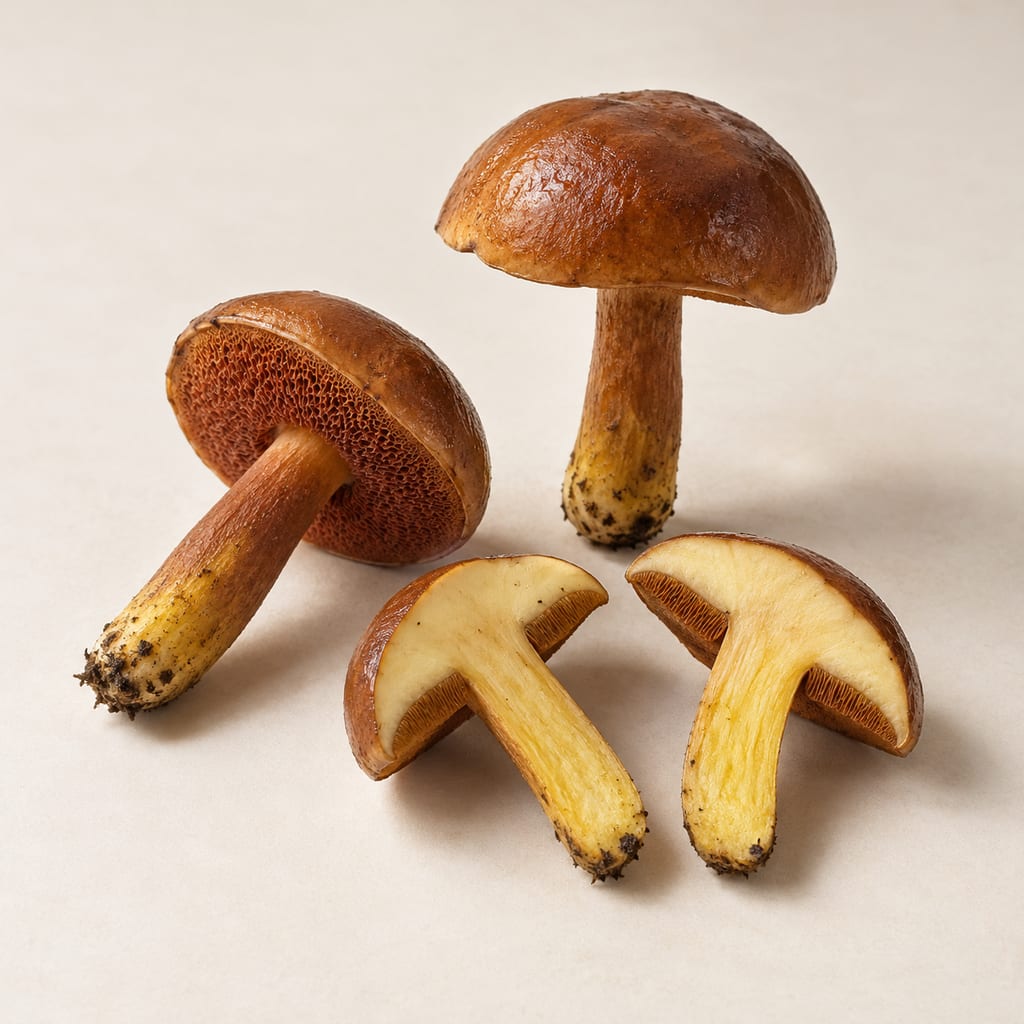
Chalciporus piperatus
A peppery woodland bolete with historical edible labels and reported condiment use in Querétaro. Current mycological references call its edibility suspect or unestablished; this entry does not recommend consumption.
 FermenteaWhere food goes to change
Mushrooms
Wolfe's bolete, Fistulinella wolfeana, is a wild bolete of oak and oak-pine forest in eastern and southeastern Mexico, where Otomi communities in Amealco, Querétaro, gather and sell it as food.
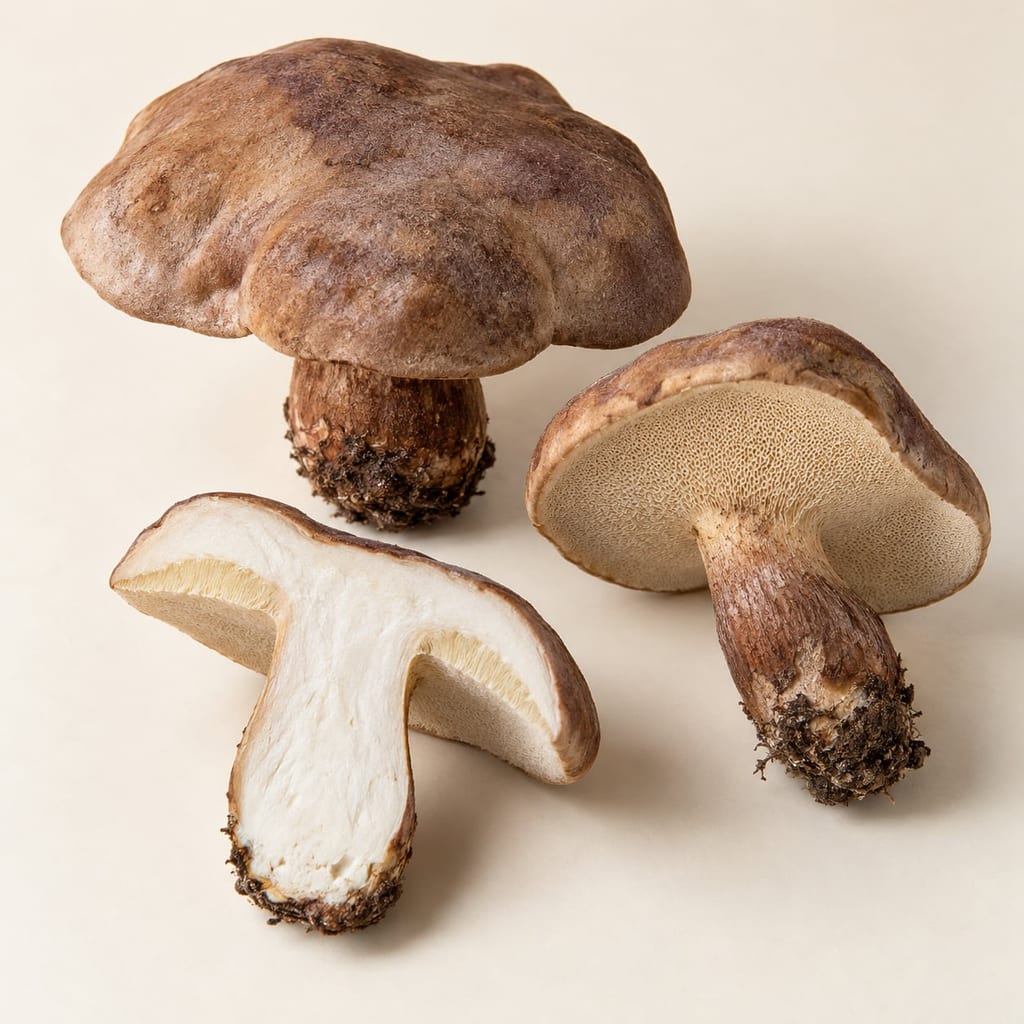
Fistulinella wolfeana is a bolete with pink to rose tubes and pores that turn orange or reddish when touched. It is easily confused with Tylopilus species, which share the rose tubes and the colour change. It grows in ectomycorrhizal association with subtropical oak and oak-pine forest.
The 2016 study in the Revista Mexicana de Micología recorded the species as food for the first time, in the Otomi communities of Tesquedó, Xajay and Tenasdá in Amealco de Bonfil, Querétaro. It is gathered in the rainy season and sold locally as food. The catalogue records roasting, sun-drying and hanging to preserve it. The sources read for this page did not confirm those preparation methods, and a regional ethnomycology source would be needed to check them.
Wikipedia lists the species as edible and names the Otomi of Amealco as eating it. The catalogue gives no safety statement beyond the record of use.
The IUCN Red List entry says the species does not meet the criteria for a threatened category. The Global Fungal Red List Initiative, as cited by Wikipedia, rates it Near Threatened because of habitat fragmentation. Gathering for sale therefore sits alongside a habitat that is being broken up, and the sources do not measure either effect.
Because Fistulinella can be confused with Tylopilus, identification of the whole specimen is the main safety step. This page does not establish that Wolfe's bolete is safe to eat for any reader, and it gives no preparation that makes an unidentified bolete safe.
The 2016 study records first documented food use in Otomi communities of Tesquedó, Xajay and Tenasdá, Amealco de Bonfil.
The IUCN entry describes it as endemic to this region and common where it grows.
A peppery woodland bolete with historical edible labels and reported condiment use in Querétaro. Current mycological references call its edibility suspect or unestablished; this entry does not recommend consumption.
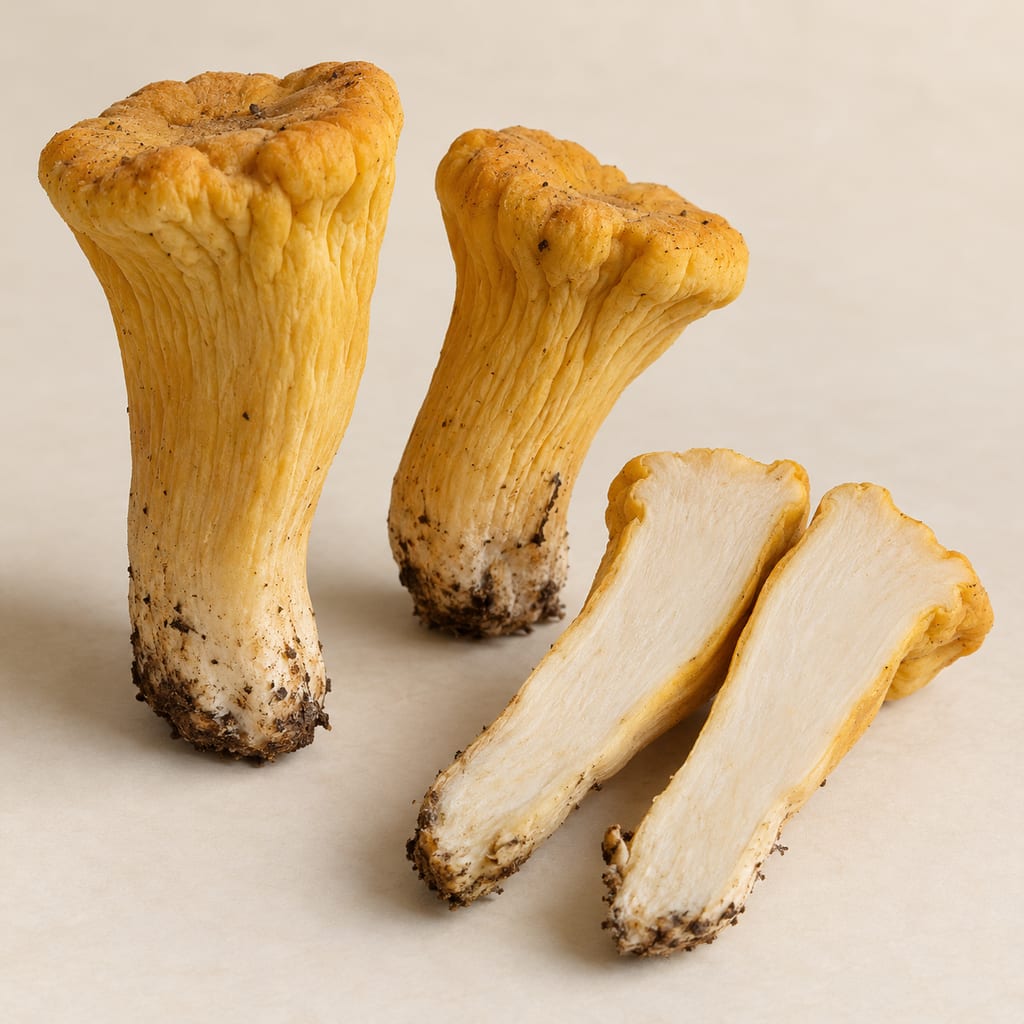
A yellow to ochre club fungus reported as food in parts of Mexico and in historical country lists. Local acceptance and taxonomy vary, and some Chinese records may refer to Clavariadelphus amplus.
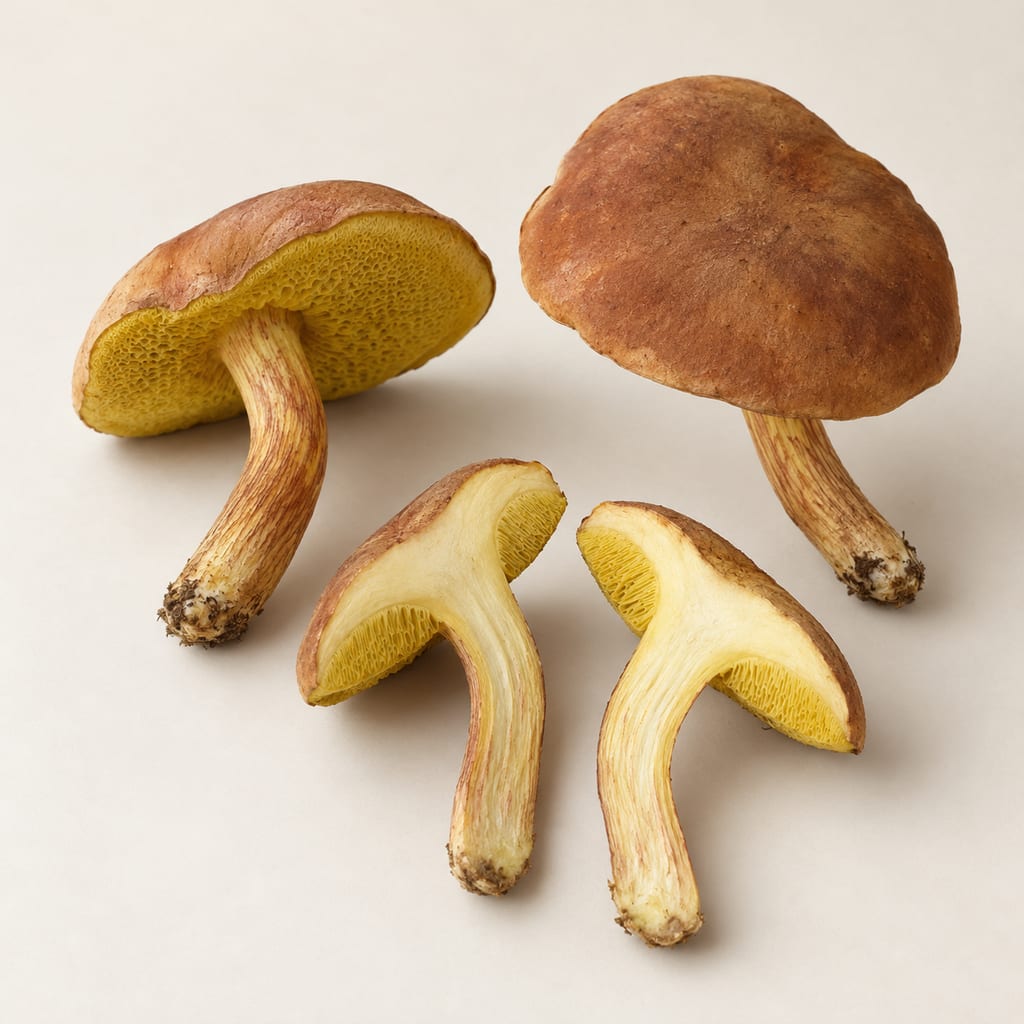
Xerocomus illudens, a forest bolete of Mexico that is gathered by some communities but was ranked low by others, partly because of its sour taste.
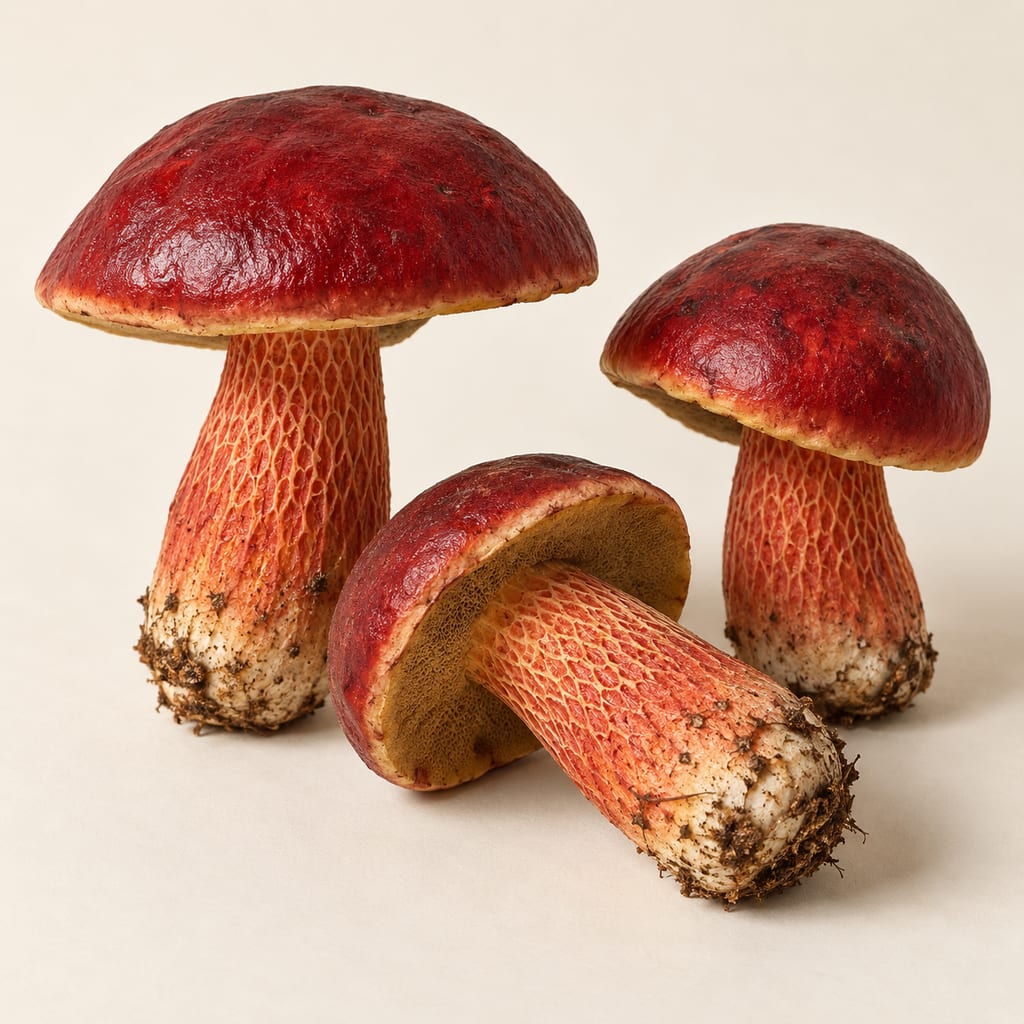
Frost's bolete, Exsudoporus frostii, is a red-pored bolete of oak woodland in eastern North America and Mexico. Its edibility is contested because it can be confused with poisonous red-pored boletes.
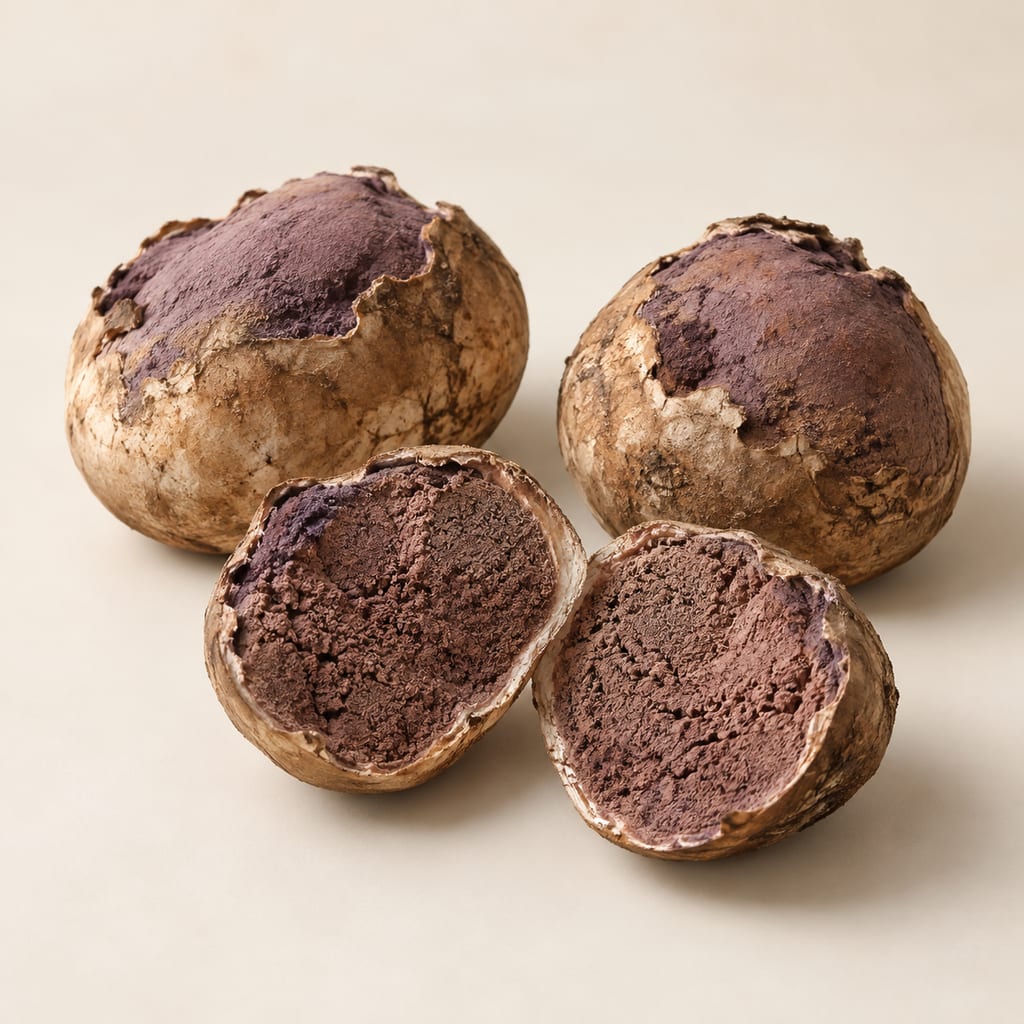
A soil-growing puffball, Calvatia cyathiformis, with white immature gleba that darkens purple as spores mature; food and seasonal records are local and do not establish a universal identification or safety rule.
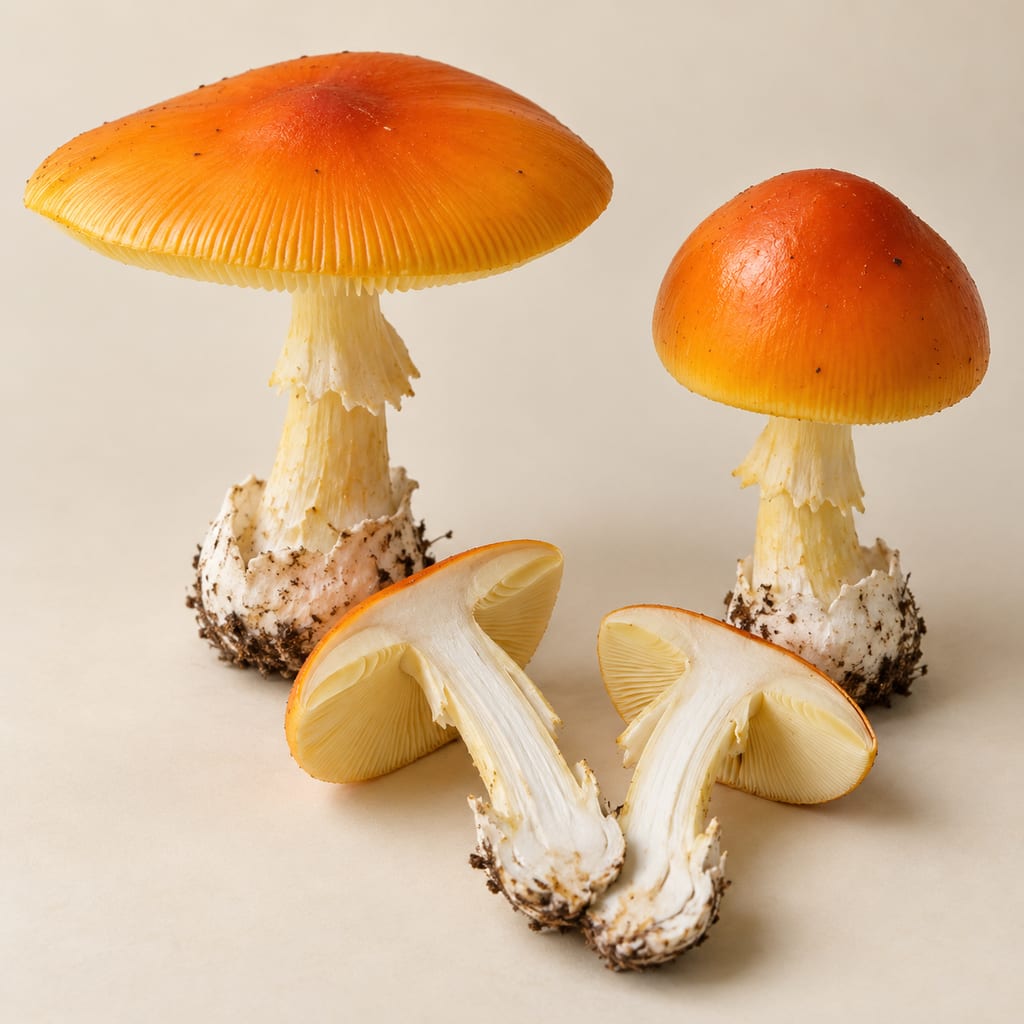
A wild Amanita valued in local foodways of Mexico and Guatemala. Community studies document seasonal gathering, market trade and distinct cooked preparations; species identity and Amanita safety require particular care.
No community contributions have been published for this entry yet.
Sign in to contribute. Published comments and photos are free to read.
Revista Mexicana de MicologíaFood · History
Revista Mexicana de Micología, 2016 study on food use of Fistulinella wolfeana (Otomi communities, Amealco)First documented food use in Tesquedó, Xajay and Tenasdá, Amealco de Bonfil; gathered in rainy season
Cited in: Food use in Mexico
WikipediaIdentity · Conservation
Fistulinella wolfeanaEdible; eaten by Otomi people in Amealco; Near Threatened (Global Fungal Red List); Tylopilus look-alike
Cited in: What it is; Food use in Mexico; Conservation; Safety
IUCNConservation · Distribution
IUCN Red List species view, Fistulinella wolfeanaEndemic to eastern and southeastern Mexico; not currently threatened under IUCN criteria; sold locally as food
Cited in: What it is; Conservation
SpringerFood · Catalogue
Ethnomycological study (Mexico), DOI 10.1186/s13002-017-0202-7Catalogue: roasted; sun-dried or hung to preserve
Cited in: Food use in Mexico