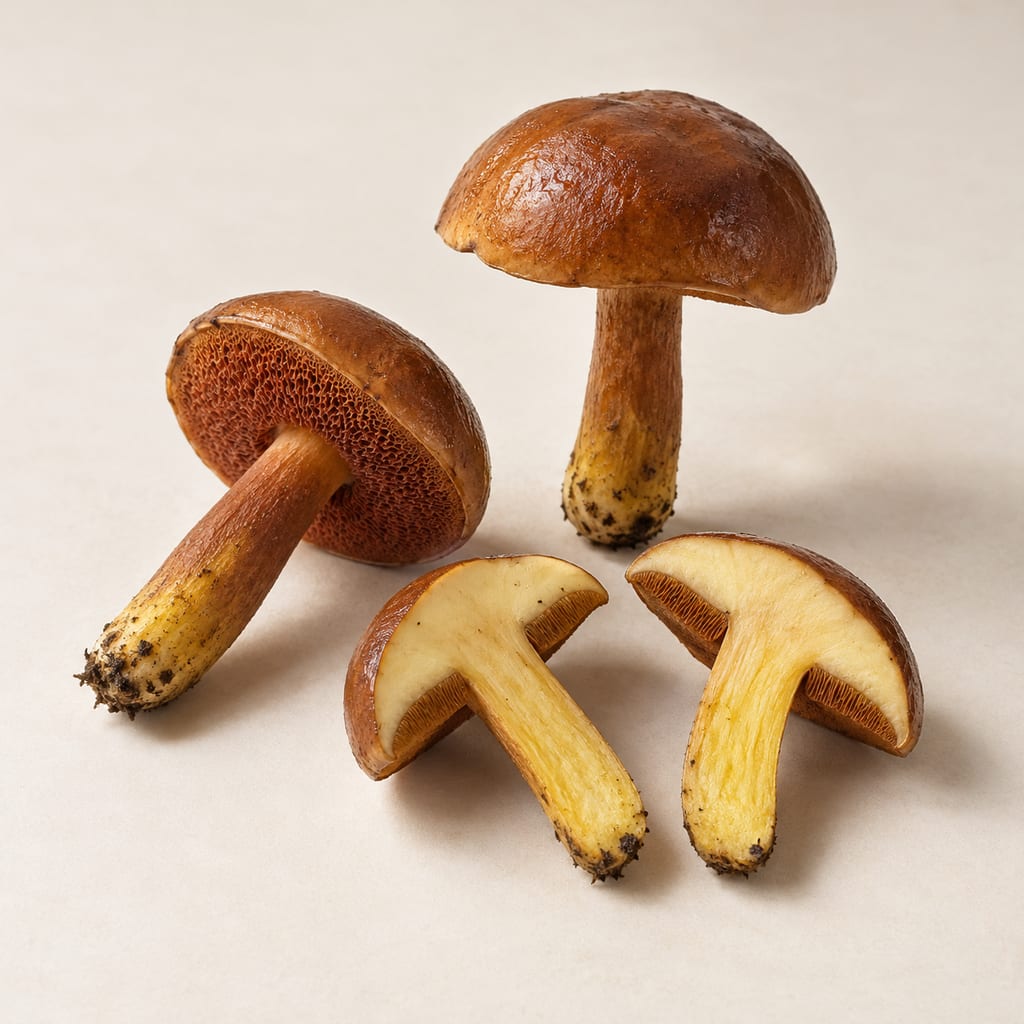
Chalciporus piperatus
A peppery woodland bolete with historical edible labels and reported condiment use in Querétaro. Current mycological references call its edibility suspect or unestablished; this entry does not recommend consumption.
 FermenteaWhere food goes to change
Mushrooms
Xerocomus illudens, a forest bolete of Mexico that is gathered by some communities but was ranked low by others, partly because of its sour taste.
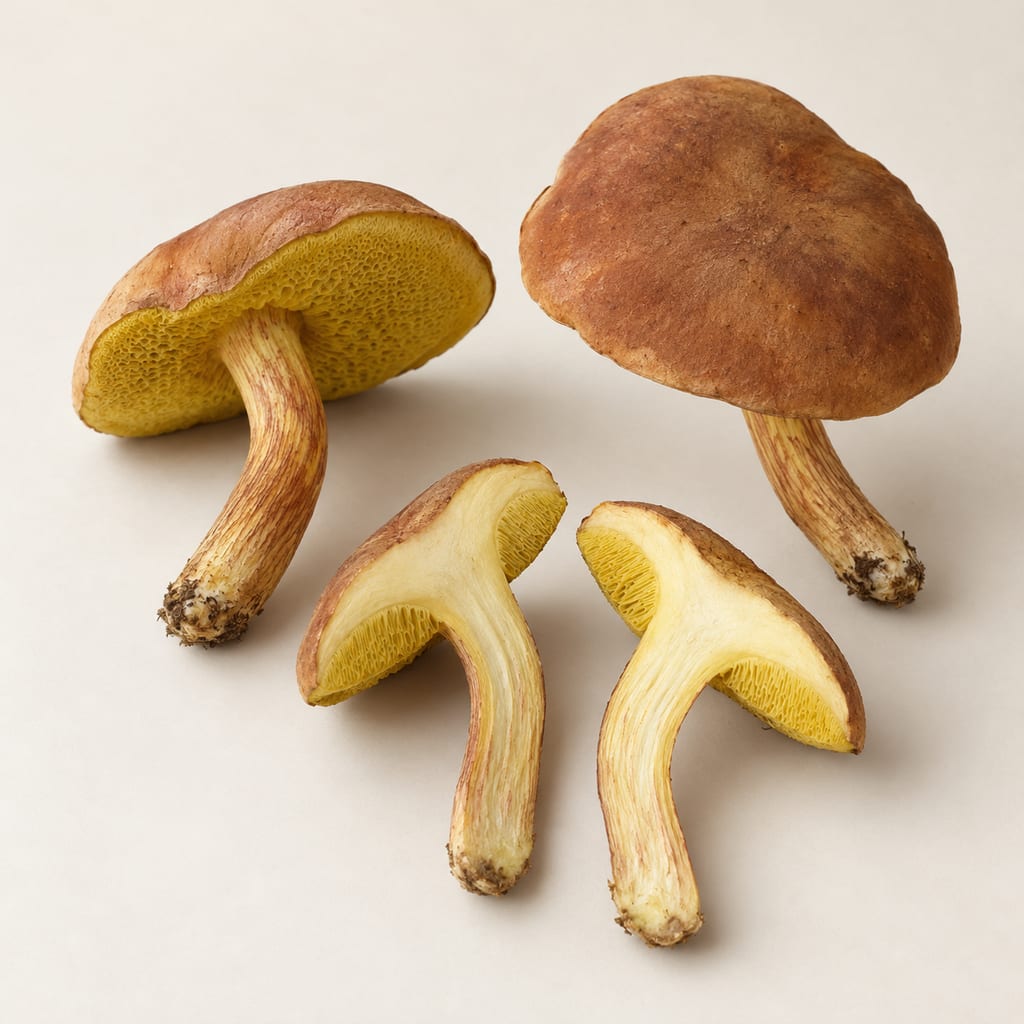
The deceptive bolete is the common name of Xerocomus illudens, a bolete, a mushroom with a pored underside, that grows in forest in association with trees, as an ectomycorrhizal fungus. The catalogue records it as a wild mushroom. The scientific name is a research name in the catalogue, and it has not been checked against current taxonomy in this entry.
Recent work on Mexican boletes indicates that the name may cover more than one taxon. The study reports that a North American specimen is separated from the clade of X. illudens sensu stricto, which suggests that the species is probably a complex. Until that is settled, a record under this name may refer to more than one fungus, and the same is true of regional names.
The catalogue records the species as a regional food, with low preference in the survey it comes from. The survey is an ethnomycological study of three communities in Amealco, in the state of Querétaro, Mexico. In that study the species was among those that people did not value, and the reason given was largely its sour taste.
The same study notes that knowledge of which mushrooms to gather is passed on mostly by women, and that colour, smell and maturity are the main traits used to recognise them. The authors also state that species with a sour taste, including this bolete, are reported to have that taste without consequences. That is a statement of what the community reports, and it is not a laboratory assessment of the species.
A 2023 study of Mexican boletes reports that X. illudens has biocultural importance for the Otomi-Hñähñu people of Querétaro, who call it by a name that refers to yellow or sulphur-coloured mushrooms. The same paper lists the species among the boletes of mixed forests where Quercus rugosa grows. The paper also reports a count of edible boletales that differs between its versions, so the number of species eaten in Mexico should not be taken from one figure alone.
The sources read for this entry do not record how the mushroom is cooked or preserved, and they give no quantities. A foraging-club account describes the species as edible and as fruiting from July to October, and it describes most Xerocomus species as edible but of lower quality than the porcini, but that account is a hobbyist guide and is not used here as evidence of food safety or of a preparation.
The catalogue states that the record is a food record from a regional survey and gives no independent safety assessment. The sour taste recorded in the Amealco study is a sensory property, and taste does not establish safety. No toxicity data for X. illudens were found in the sources read.
This entry is not an identification guide. Boletes are often confused with one another and with poisonous species, and a complex species name means a regional record may not refer to the specimen in hand. Any wild bolete should be identified by a qualified person before anyone considers eating it.
The main gaps are the taxonomy of the complex, the preparations used where the species is eaten, and the safety of the species. The local names and the uses recorded in Mexico also need to be linked to the specimens they describe.
Food record from three communities in Amealco, where the species was among those people did not value; the record does not extend to other parts of Mexico.
A peppery woodland bolete with historical edible labels and reported condiment use in Querétaro. Current mycological references call its edibility suspect or unestablished; this entry does not recommend consumption.
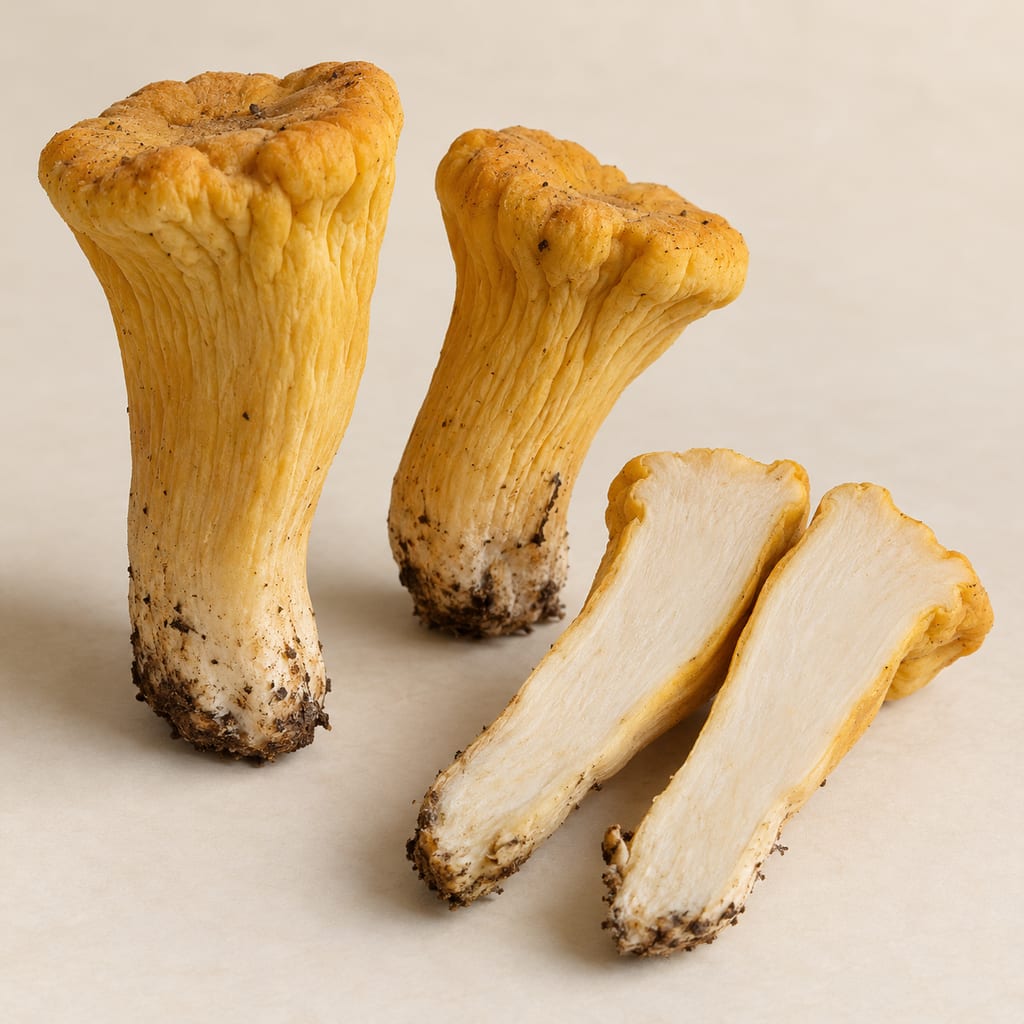
A yellow to ochre club fungus reported as food in parts of Mexico and in historical country lists. Local acceptance and taxonomy vary, and some Chinese records may refer to Clavariadelphus amplus.
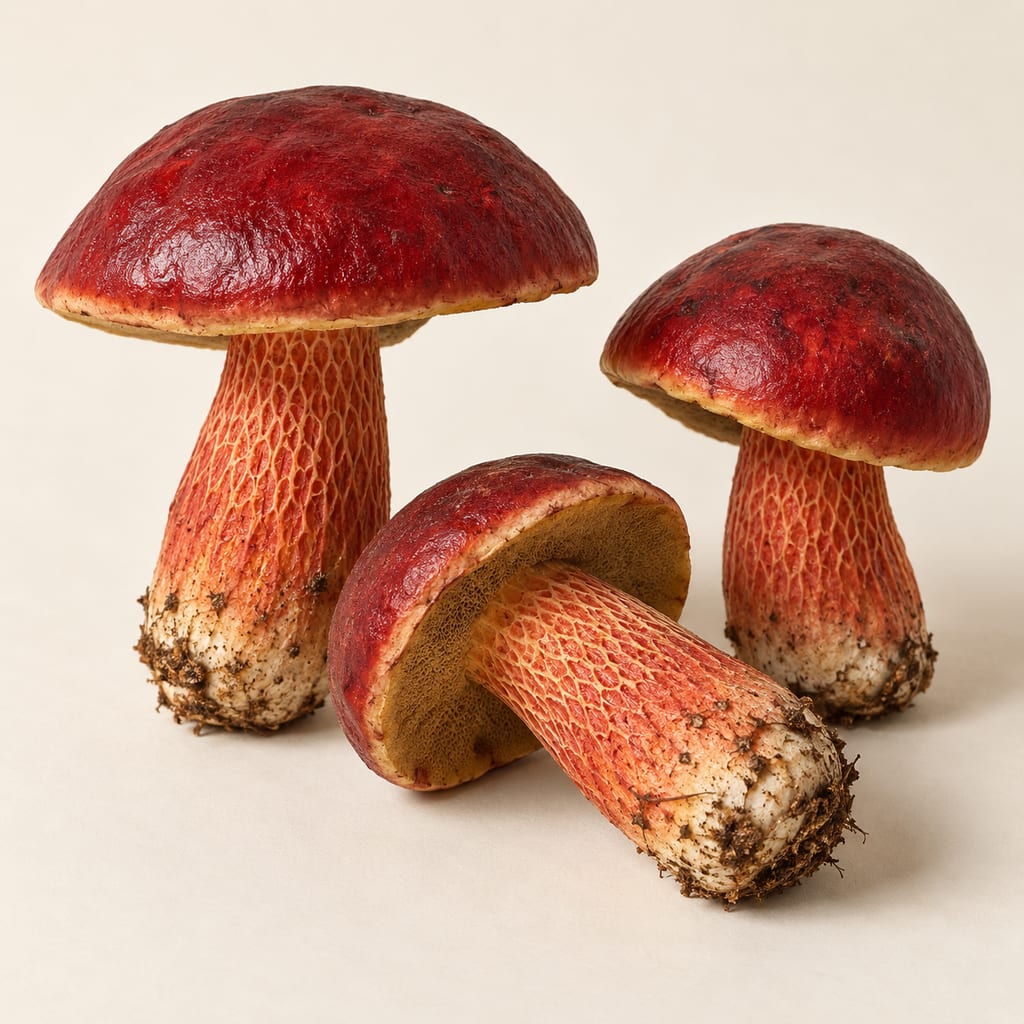
Frost's bolete, Exsudoporus frostii, is a red-pored bolete of oak woodland in eastern North America and Mexico. Its edibility is contested because it can be confused with poisonous red-pored boletes.
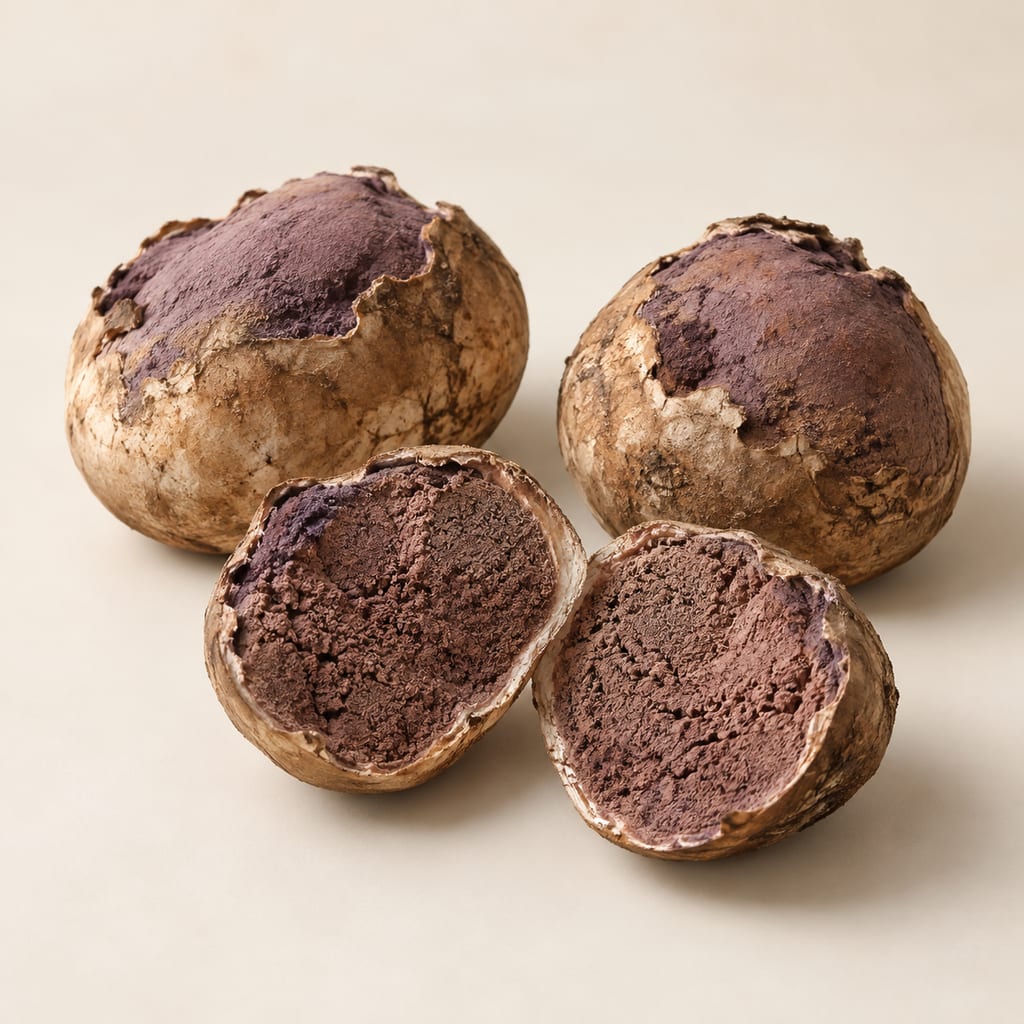
A soil-growing puffball, Calvatia cyathiformis, with white immature gleba that darkens purple as spores mature; food and seasonal records are local and do not establish a universal identification or safety rule.
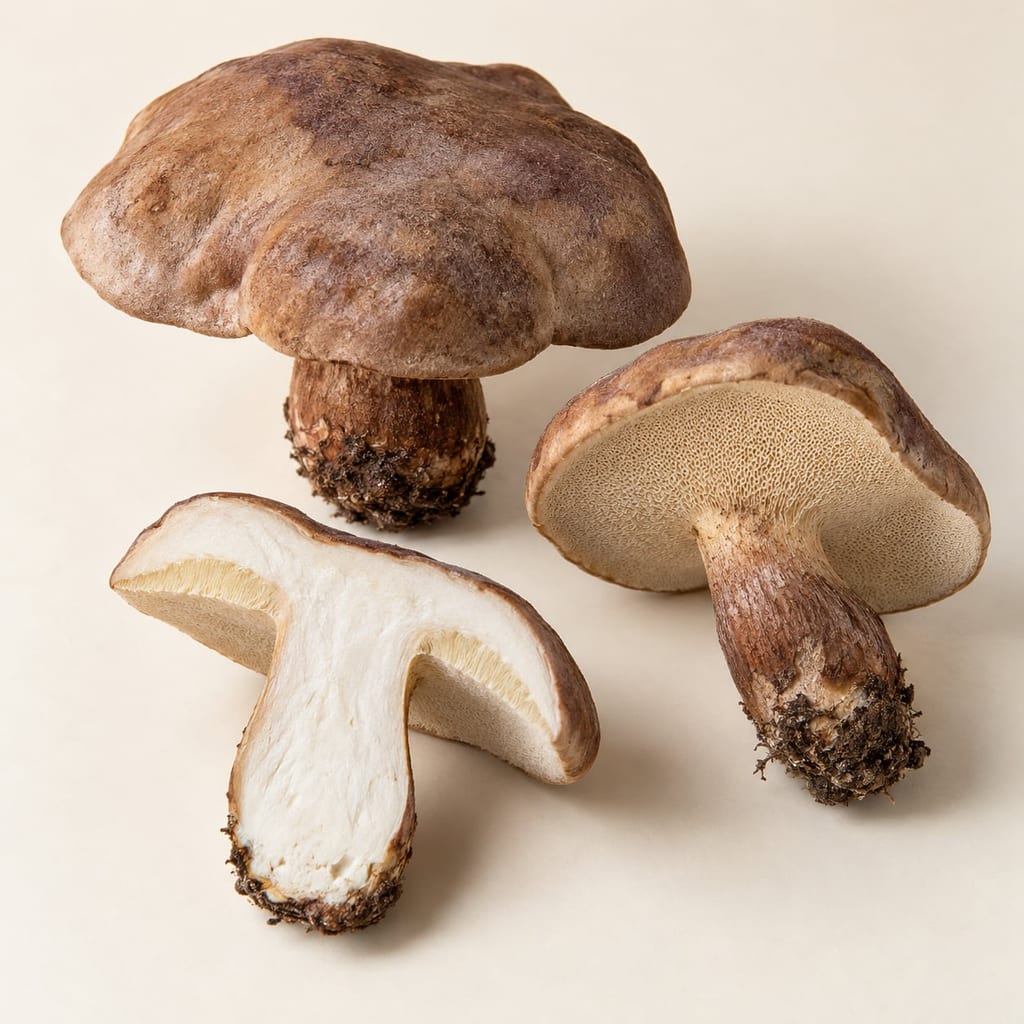
Wolfe's bolete, Fistulinella wolfeana, is a wild bolete of oak and oak-pine forest in eastern and southeastern Mexico, where Otomi communities in Amealco, Querétaro, gather and sell it as food.
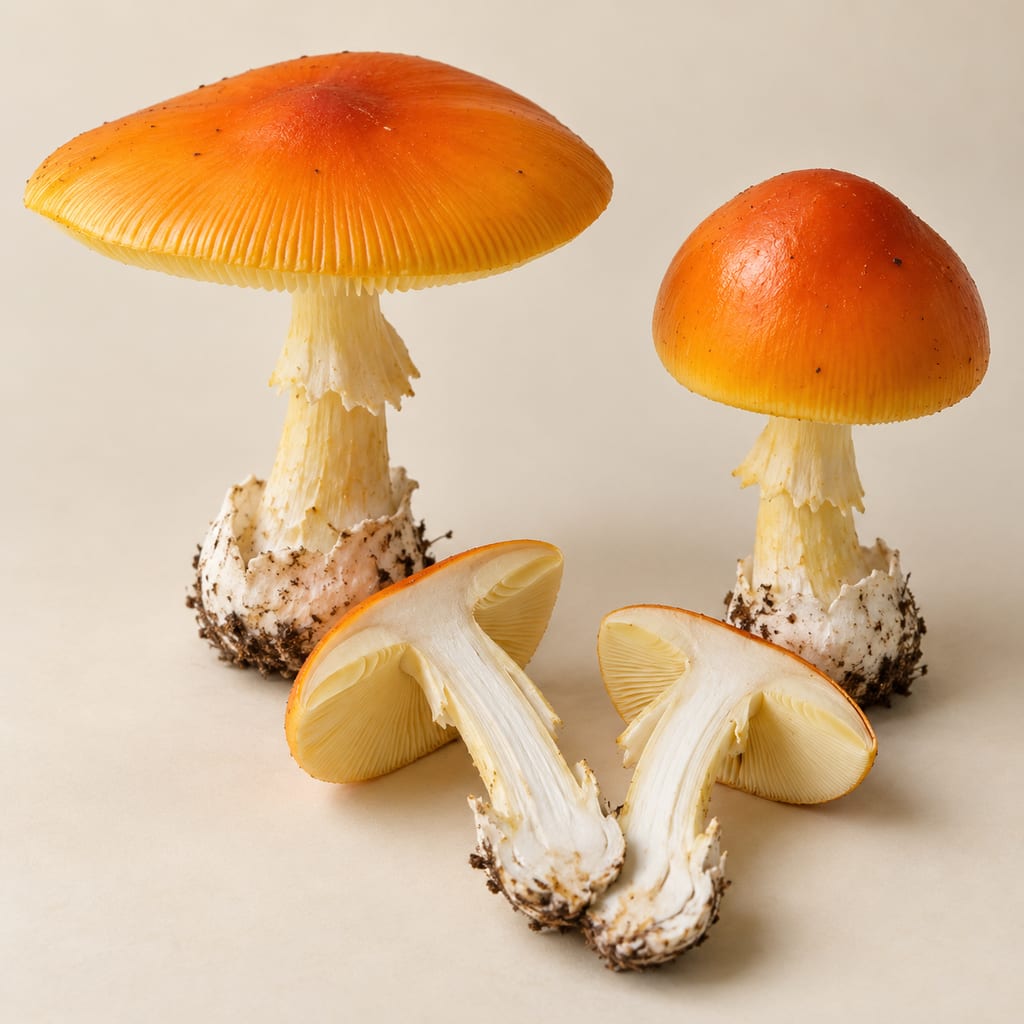
A wild Amanita valued in local foodways of Mexico and Guatemala. Community studies document seasonal gathering, market trade and distinct cooked preparations; species identity and Amanita safety require particular care.
No community contributions have been published for this entry yet.
Sign in to contribute. Published comments and photos are free to read.
Journal of Ethnobiology and Ethnomedicine (Springer)Food
Ethnomycological study cited in the supplied catalogue for Xerocomus illudensSupplied catalogue source for the regional food record and low preference; the article page could not be read during this recovery, so no fact is taken from it directly
ResearchGate (preprint record)Food · Safety
Ethnomycological knowledge in three communities in Amealco, Querétaro, MéxicoThree communities in Amealco; X. illudens among species people did not value, largely because of its sour taste; knowledge passed on mainly by women; colour, smell and maturity as recognition traits
Journal of Fungi (MDPI)Identity · Food
Broadening the Knowledge of Mexican Boletes: Addition of a New Genus, Seven New Species, and Three New CombinationsX. illudens probably a species complex; a North American specimen separated from the X. illudens clade
Biocultural importance for the Otomi-Hñähñu of Querétaro; mixed forests with Quercus rugosa
Counts of edible boletales differ between versions of the paper