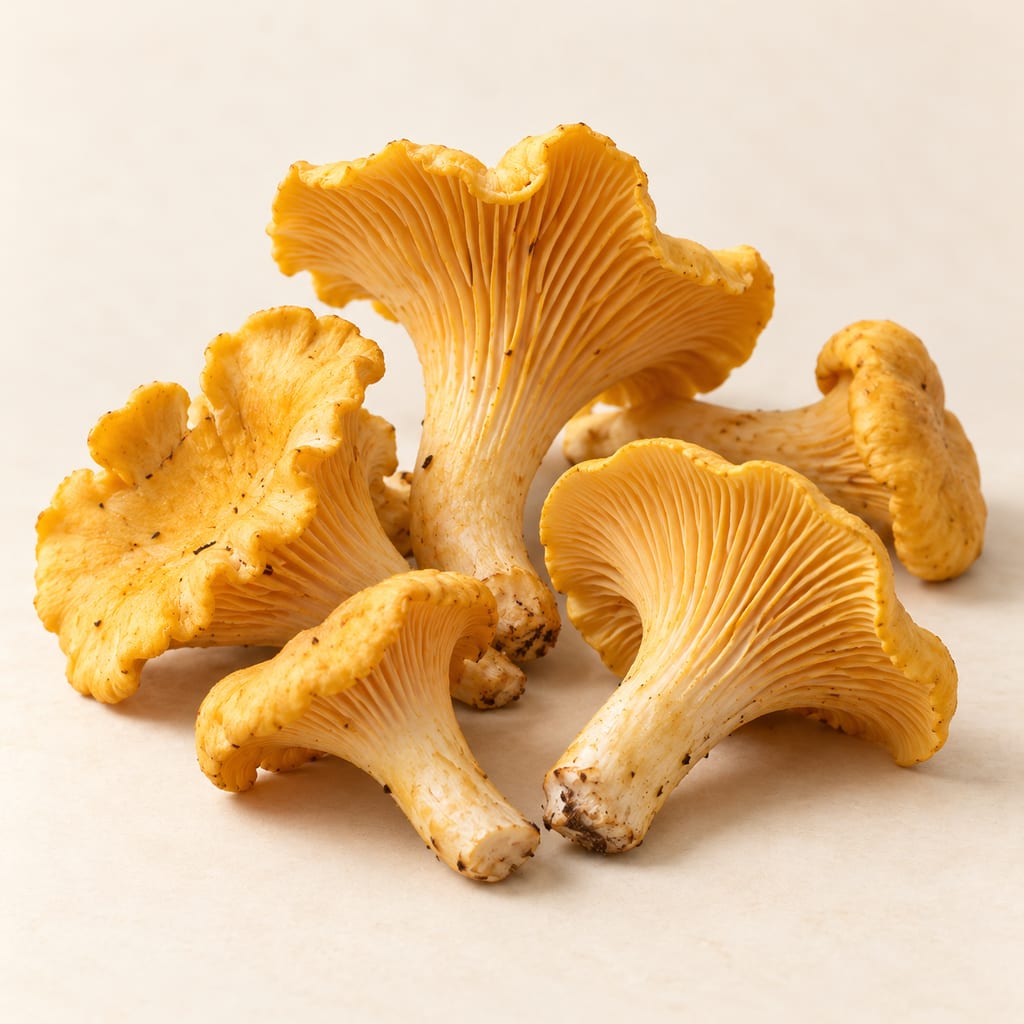
Chanterelles
Chanterelles are wild, tree-associated edible mushrooms, particularly the European golden chanterelle Cantharellus cibarius, prized for their firm flesh, fruity aroma and use fresh, frozen, dried or pickled.
 FermenteaWhere food goes to change
Mushrooms
Tuber panzhihuanense is a truffle described in 2012 from southwestern China. A 2026 Chinese species catalogue lists it as edible, but its culinary use, host association and safety are not established by the sources reviewed.
Tuber panzhihuanense is a truffle, the fruiting body of an underground ectomycorrhizal fungus. It was described in 2012 from southwestern China, where a group of white truffles were named in 2010 to 2011.
The species is listed as edible in a 2026 Chinese catalogue. Its common English label, Chinese truffle, covers several Chinese truffle species, so the label does not identify this one.
The authority is X.J. Deng and Y. Wang (2012). The species is closely similar to Tuber latisporum, another white Chinese truffle, and the catalogue keeps the name as a research label that has not been checked against a current taxonomic authority.
The catalogue describes the species as an ectomycorrhizal forest fungus whose host association needs verification. This page does not name a host tree.
The 2026 catalogue lists the species as edible or edible-and-medicinal. Direct food-use evidence and its culinary tradition are not documented.
A 2019 study on Chinese white truffles describes the species as edible and aromatic, and reports a decline in truffle production in Panzhihua. Cultivation research is active in response, although that study was not read in full here.
The catalogue calls the species a checklist lead. A catalogue listing as edible is not an independent safety assessment, and no toxicity data for this species were found.
Truffles are identified by spore and peridium features, and similar white truffles exist, including Tuber latisporum. Do not eat a wild truffle on the basis of this page. Confirm identity with an expert before eating any wild fungus.
Direct food-use evidence, the host association, the culinary tradition, and any nutritional profile for this species are not established. Nutritional work on related Chinese truffles does not transfer to this species.
The species is recorded for southwestern China. The sources do not give a village or a market, so the record is a broad area.
Chanterelles are wild, tree-associated edible mushrooms, particularly the European golden chanterelle Cantharellus cibarius, prized for their firm flesh, fruity aroma and use fresh, frozen, dried or pickled.
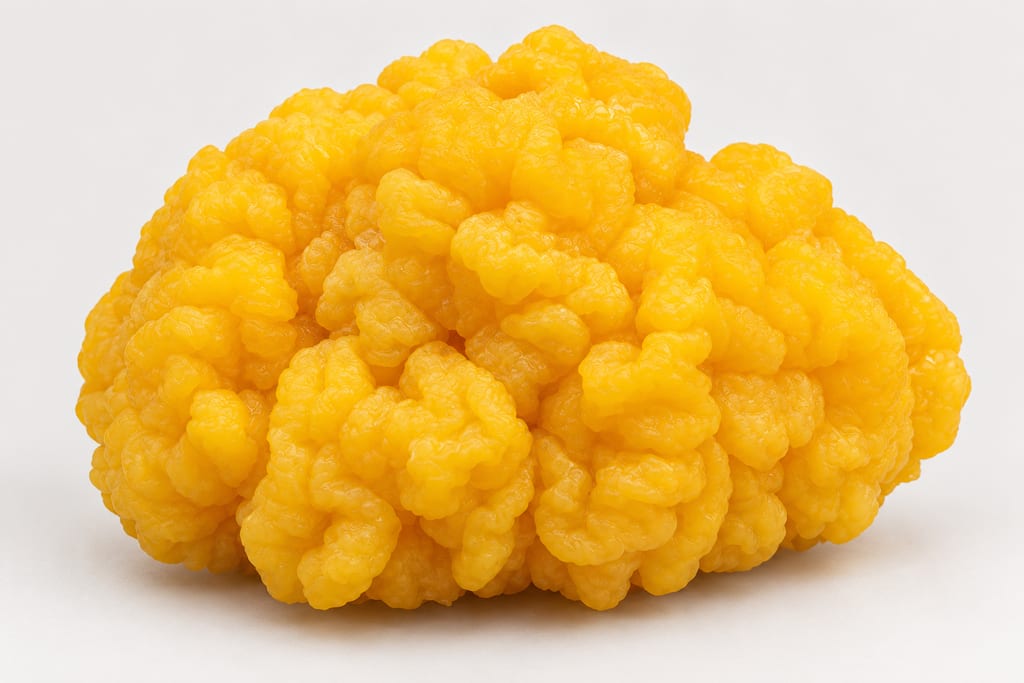
Cultivated golden ear, Naematelia sinensis (jin'er), is a gelatinous yellow-orange fungus of southwestern China, eaten and used as a medicinal fungus and grown on Stereum wood-fungus partners.
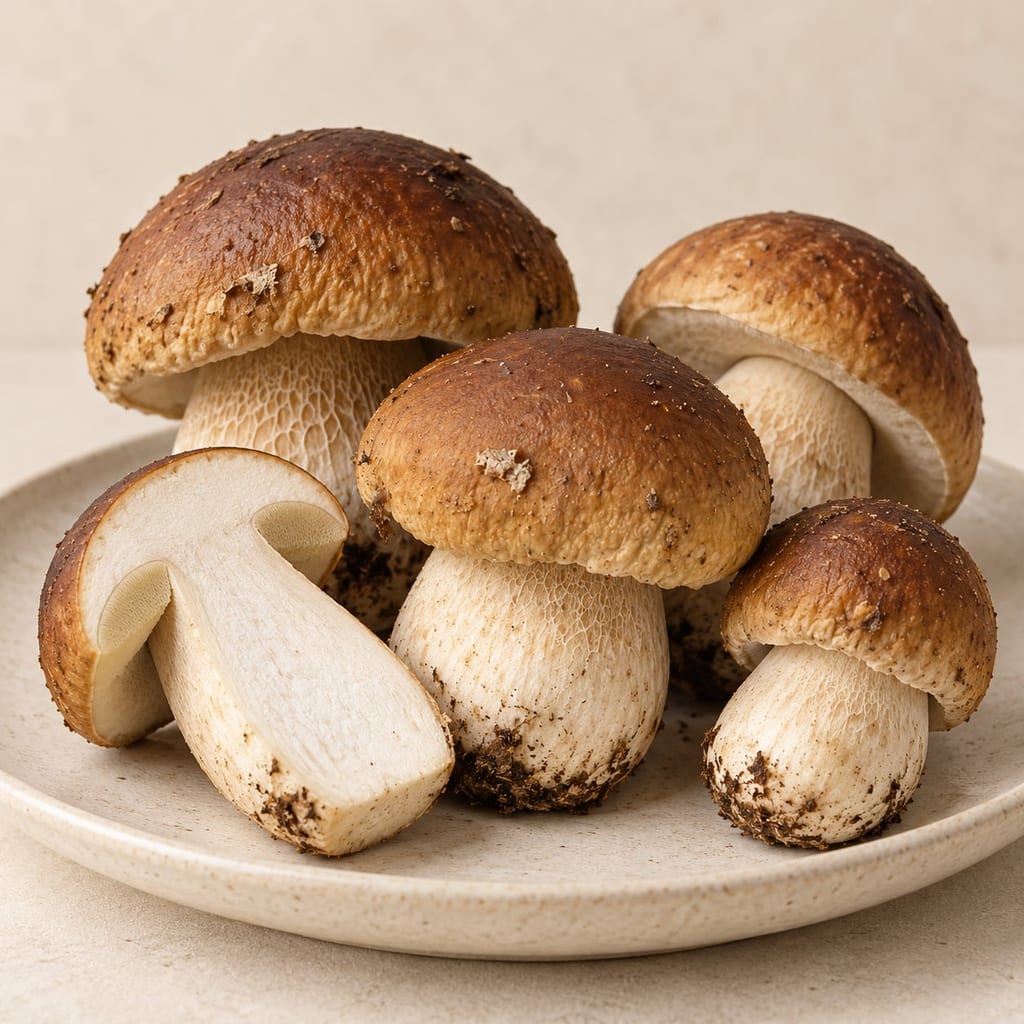
Porcini are prized wild ectomycorrhizal mushrooms from several closely related Boletus species, harvested chiefly from forests and sold fresh, dried or frozen for their firm texture and concentrated savoury aroma.
No community contributions have been published for this entry yet.
Sign in to contribute. Published comments and photos are free to read.
Chinese Academy of Sciences journal (CAST)Food · Status
2026 Chinese edible fungi species catalogue (catalogue source S003)Listed as edible or edible-and-medicinal in the 2026 Chinese catalogue; the catalogue treats this as a research lead, not an independent safety assessment
Cited in: Overview; Ecology and host trees; Food use; Identification and safety; Open questions
Springer (Annals of Microbiology)Food · Ecology · Production
Annals of Microbiology article on Chinese white truffles (2019)Summarised in a search result: widespread in southwestern China, edible, and with a strong aroma that supports market value; a decline in production in Panzhihua is reported; the full text was not read in this pass
Cited in: Names and taxonomy; Food use
WikipediaTaxonomy · Lead
List of Tuber (fungus) speciesAuthority recorded as X.J. Deng and Y. Wang, 2012; China
Cited in: Overview; Names and taxonomy