
Vegetables
The purple carrot came first
Purple and yellow carrots preceded Europe's orange root. In Punjab, kanji kept kali gajar working as a lactic drink substrate long after orange took the supermarket.
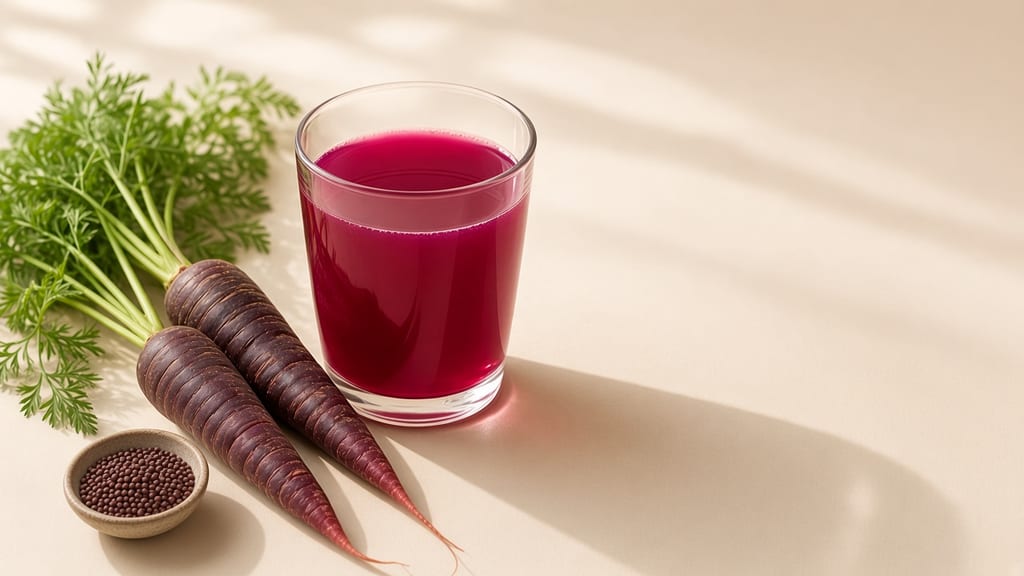
A glass the colour of beetroot juice
In a Ludhiana laboratory in the early 2020s, a research team grated a Punjabi black-carrot variety called Punjab Black Beauty, mixed it with salt and rye adjuvants, and let the jar go sour on its own lactic flora. When they measured the finished drink they recorded a pH of 3.47, nearly one percent lactic acid, and a liquor so purple-red that the paper treated colour as part of the product's identity rather than a garnish. They were studying kanji, the mustard-sharp carrot drink of northern India and Pakistan.
That colour does not come from orange carrots. It comes from anthocyanins in roots that look nearly black until you cut them. English calls them black carrots or purple carrots. Hindi and Punjabi kitchens often say kali gajar. The same pigment class stains şalgam, the lactic drink of southern Turkey that keeps black carrot as its main raw material even though its name points at turnip.
The modern supermarket carrot is orange. The older cultivated carrot, in the written and botanical record that plant historians trust, was purple or yellow first. Kanji is one of the reasons the dark root never fully left the plate in South Asia: a drink that wants purple liquor has little use for a carotene root.
Call the drink kanji in a Punjabi kitchen and you are usually talking about grated or cut black carrot in salted water with mustard and often chilli, left until sour and faintly fizzy, then strained or served with the pieces. Call a different South Indian rice porridge kanji and you have a homonym, not a cousin. This article means the carrot drink.
Purple before orange
John Stolarczyk and Jules Janick, writing in Chronica Horticulturae in 2011, summarise carrot domestication as a story that begins on the Iranian Plateau. Wild roots are white or pale yellow. The first domesticated colours, they write, were purple or yellow. They place Afghanistan as a primary centre of diversity and divide cultivated carrots into an Eastern or Asiatic group with anthocyanin-pigmented roots and a later Western group whose yellow, orange and red roots are coloured by carotenoids.
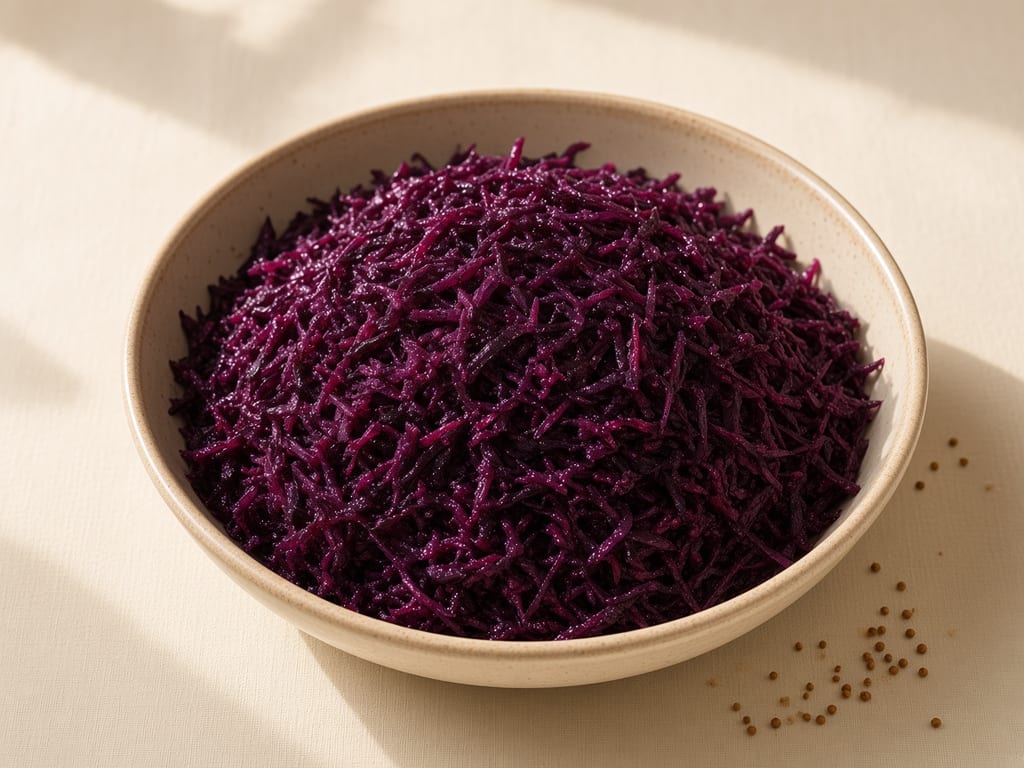
The Eastern group's centre of diversity, in their account, sits in the Himalayan–Hindu Kush region and around Turkestan. Those purple types store poorly and grow erratically compared with modern Western cultivars. Their pigment browns on cooking and stains hands and cookware. That last point is a kitchen fact as much as a chemistry note: the colour wants water and acid, which is exactly what a lactic ferment provides.
Orange types, Stolarczyk and Janick continue, displaced purple forms in Europe and the Mediterranean by the seventeenth century through preference and selection, and became the base of modern commercial cultivars. The Anatolian region and temperate Europe count as a secondary centre for that Western complex. The orange carrot did not invent the crop. It won a later fashion contest.
Mackevic's 1929 bulletin on the carrot of Afghanistan, cited in the 2011 Chronica survey, is one of the older specialised looks at Eastern diversity. Vavilov's gene-centre lists, which Banga also quotes, string Asia Minor, Transcaucasia, Iran, Turkmenistan, north-west India, Afghanistan, Tadjikistan, Uzbekistan and western Tian-Shan into a single wide belt of Daucus variation. Anatolia's unusual cultivated variety keeps it in the conversation as a possible cradle for the Western sativus complex even when the purple story points further east.
Nothing in that horticultural outline requires every purple carrot on earth to descend from one Afghan field. Domestication was messy, introgression with wild carrot was constant, and archaeological roots are scarce. The claim that survives scrutiny is narrower and stronger: purple and yellow domesticates are early; orange is later in Europe; anthocyanin roots remain the right substrate when a lactic drink must be purple.
What Banga found in the archives
O. Banga's 1957 paper in Euphytica, Origin of the European cultivated carrot, works from a different angle: European and Near Eastern texts. He finds no secure evidence that the Romans knew the modern cultivated food carrot. Classical pastinaca and siser, he argues, have been over-translated as carrot. Prehistoric Daucus seeds from Swiss and south German sites show people collected the plant, probably for seed medicine, not that they already grew swollen purple table roots.
The first clear descriptions of cultivated carrots related to modern types, Banga writes, come from Arab countries after the spread of Islam. Citing Berthold Laufer's work on Iranian and Chinese cultivated plants, he dates Persian acquaintance with the cultivated carrot to the tenth century and finds no valid evidence that the carrot was known in India before that time. A Chinese notice places the crop in China during the Yuan dynasty, probably from Iran.
Through Ibn al-Awwam's twelfth-century Andalusian agriculture book, Banga reaches an older Nabathean agricultural text that describes two edible roots: a juicier red kind and a coarser green-to-yellow kind, eaten with vinegar, salt and oil. Early European documents then name carrots from the thirteenth century in Italy and the fourteenth in France, Germany and the Netherlands. Colour words such as atrorubens, blackish red and redder than a red beet point, in Banga's reading, to purple roots rather than to Dutch orange.
Banga's India caution matters for this article's geography. A Punjabi winter drink does not, by itself, prove a tenth-century Indian carrot. What the horticultural record does support is a westward and eastward spread of purple and yellow cultivated carrots from a Central and West Asian core, with northern India later among the regions that kept anthocyanin roots in active kitchen use.
Banga is careful about monastery and early-medieval European lists that mention pastinaca. The name travels; the plant behind it may be parsnip or another fleshy root. Hildegard's Physica, in his reading, names the parsnip and not the carrot. The documentary silence in early-medieval Europe is part of his argument that the swollen cultivated carrot arrived later with material from the Arab world rather than descending in a straight line from Roman gardens.
By the fifteenth century English sources list karettes among garden roots. Guild and town records in the Low Countries and northern Germany already treat carrots as ordinary market vegetables. The colour language of the herbals still leans purple and yellow before orange becomes the default in paintings of the Dutch golden age. The archive and the iconography tell the same order of events.
Why a ferment cares about pigment chemistry
Anthocyanins are water-soluble. Carotene is not. Grate a black carrot into salted water and the brine turns purple-red as acidity rises. Grate an orange carrot into the same jar and the liquor stays pale while the root keeps its colour. That single chemical difference explains why kanji and şalgam recipes, when they are serious about appearance, specify the dark root.
Sharma, Sahota and Kaur's 2021 paper treats black carrot as underused relative to its pigment and antioxidant load, then builds a spontaneous kanji from Punjab Black Beauty. Their finished study beverage sat at pH 3.47 with measurable flavonoids and phenols. Those numbers describe that batch. They are not a home critical-control chart. They do show why a food scientist reaches for kali gajar rather than a bag of orange supermarket carrots when the drink's identity is purple.
Plant physiologists now distinguish purple-periderm carrots from solid-purple types. Both can look blackish in a basket. In a ferment, fine grating exposes more surface, so colour extracts faster than from large sticks. If a home jar stays pale, the cook may have bought low-anthocyanin roots or ordinary orange carrots sold under a hopeful label. Colour failure is a shopping problem before it is a fermentation problem.
Kanji in the FAO chapter
Chapter 6 of FAO's Fermented Fruits and Vegetables: A Global Perspective gives kanji a short, concrete section. In Northern India and Pakistan, it says, carrots — especially a deep-purple variety — are fermented into a ready-to-serve drink. After washing, the carrots are finely grated. Each kilogram of grated carrot is mixed with seven litres of water, 200 grams of salt, 40 grams of crushed mustard seed and eight grams of hot chilli powder. The mixture goes into a glazed earthenware vessel, almost entirely sealed except for a tiny hole for fermentation gas. It ferments for seven to ten days as a lactic fermentation that must be kept without air. The drink is strained through muslin and should be consumed within three or four days, after which it goes bad. Yield is just over seven litres per kilogram of grated carrot, citing Berry (1998) and Shah (1986).
That paragraph is a traditional description inside a global survey. It is not a validated household process. It names no numeric temperature, no target pH, no refrigeration instruction and no objective endpoint beyond the calendar range and the later warning that the drink spoils after a few days. Fermentea's recipe record for kanji keeps those FAO figures in the structured method and refuses to invent the missing controls.
FAO frames kanji among typical products of bacterial vegetable fermentations, alongside pickles and other lactic foods. The chapter's wellness adjectives — cooling, soothing, nutritious — are reported as local regard, not as clinical claims Fermentea repeats. The technical core is the batch, the vessel, the air-limiting seal, the seven-to-ten-day window and the short life after straining. Everything else is atmosphere.
Readers who want a home jar should wait for a recipe page that carries tested critical limits. Readers who want the history can stop at the root: kali gajar is not a boutique colour fad. It is an old cultivated type still doing ferment work.
A second batch that is not the first
Modern papers and culinary pages describe other mixes. One primary study summarised on Fermentea's traditional soft-drinks atlas used 500 grams of black carrot, 25 grams of black salt, 50 grams of mustard powder, 10 grams of red-chilli powder and three litres of boiled drinking water cooled before use. That card exists to show a real studied formulation rather than a vague two-percent salt slogan. Its salt experiments use different denominators; an eight percent figure based on carrot weight is not an eight percent final brine. Other studies start from carrot juice or selected lactic cultures. None of those batches is a scaled FAO jar.
Household writers sometimes cut carrots into sticks, add beetroot when black carrot is scarce, and serve both the sour liquor and the pickled pieces. The atlas records red carrot plus beetroot as a common replacement colour strategy. It is not the historical Eastern carrot, and it changes sugar and earthiness as well as hue. A magazine piece can note the substitution. It should not pretend the substitute is kali gajar.
Berry's CFTRI-linked work on a ready-to-serve black-carrot beverage sits in the same twentieth-century technical stream that FAO cites. Sharma's 2021 paper and later microbiological studies continue that stream with colony counts, pH curves and talk of autochthonous starters. A magazine reader can treat those papers as evidence that the drink is still alive in labs and markets. A cook cannot treat their tables as a substitute for a tested home recipe with published critical limits.
Mustard in the jar
Kanji is not only a carrot ferment. Mustard seed or mustard powder is part of the North Indian drink's signature. Crushed seed brings pungency and a microbial neighbourhood that laboratory papers discuss when they isolate lactic acid bacteria from finished kanji. The FAO account uses crushed seed; the study card uses powder; culinary pages vary. The spice is not a decorative afterthought. It is one reason the drink tastes different from beet kvass or şalgam even when all three can look purple in a glass.
Şalgam's food-science literature, including Tanguler and Erten's work on commercial Çukurova producers, puts black carrot at the centre and treats turnip as a minor ingredient despite the name. Traditional and direct methods differ among producers. The shared substrate logic with kanji is the purple root, not a shared recipe. Two regions kept the anthocyanin carrot because lactic drinks still wanted it.
Mustard chemistry adds more than heat. Glucosinolate breakdown products shape aroma; the seed also alters the early microbial contest in ways papers describe without handing home cooks a control limit. That is another reason Fermentea keeps kanji on hold: the tradition is rich, the measurements exist in fragments, and the fragments do not yet assemble into an extension-style process validation.
Punjab winters and summer abstracts
Black carrots for kanji are a cool-season crop in northern India. Festival and household calendars often place the drink in cooler months, when the roots are in the market. A CFTRI-catalogued 1953 technical article, known in Fermentea's vegetable-atlas dossier mainly from its abstract and catalogue record, associates the beverage with summer in parts of Northern India. Full text access was restricted in that review. The seasonal notes do not cancel each other so much as warn against a single national calendar.
Sharma's team bought Punjab Black Beauty from the vegetable sciences department at Punjab Agricultural University in Ludhiana. That is a precise institutional provenance for one study, not a claim that every market bunch in Amritsar or Lahore is the same cultivar. Landraces, named varieties and garden purple hybrids sold abroad under names like Purple Haze can look similar in a photograph and behave differently in a jar.
Partition-era and later food writing sometimes treats kanji as a shared North Indian and Pakistani taste rather than a single city's property. FAO's pairing of the two countries matches that broad geography. Soft-drinks atlas notes emphasise Punjab and adjacent regions. None of those lines pins a first village or a first century. They describe a living belt.
What orange won, and what it did not erase
Once Dutch and other Western breeders locked orange into commerce, seed catalogues, city markets and school posters followed. Stolarczyk and Janick note that painting and herbal evidence still show purple and yellow roots in Europe before that shift. The orange root's advantages were real for many cooks: sweeter flavour for many palates, better storage in the Western types, no purple stains on the cutting board, and later a marketing link to vitamin A.
South and West Asian kitchens did not file the purple root as extinct. Kanji kept a seasonal demand for kali gajar. Şalgam kept a commercial demand for Turkish black carrot. Specialty growers and pigment researchers elsewhere revived purple types for colour and nutrition studies. The supermarket aisle can look entirely orange while the ferment jar still argues for black.
Colonial and twentieth-century seed trade moved orange cultivars through South Asia for fresh eating, halwa, salads and industrial processing. Purple roots kept a narrower but stubborn niche. A ferment that fails without anthocyanin is a niche with leverage. So is a street glass of şalgam that customers expect to be red-purple. Market power and pigment chemistry pulled in opposite directions, and both still exist.
Safety is not a colour test
A purple-red glass is not a pH meter. University of Minnesota Extension guidance on home fermentation asks for tested recipes, produce kept submerged, and acidity monitoring. FAO's kanji section supplies a traditional schedule and a short use window without those critical limits. The AM43 study card supplies a different measured mix without converting itself into a home validation. Fermentea's standing rule for this drink matches the hogweed hold earlier in November: improve the draft, keep the publication withdrawn, and wait for an authority-backed household method with explicit limits before treating the recipe as safe to publish.
That caution does not erase the history. It separates a magazine claim about roots and regions from a kitchen claim about what a reader should brew tonight.
Excessive salt can slow or stop acidification in vegetable ferments, which is one reason extension services warn against improvising brine strength. FAO's 200 grams of salt in seven litres of water is a strong traditional figure relative to many cabbage ferments when read as grams per litre; the AM43 card uses black salt and a different mass of carrot. Merging them into one percentage is how unsafe internet recipes get written. This article refuses that merge.
Cousins on a purple map
Draw a rough line from Kabul's highland gardens through Multan and Ludhiana to Adana and you have sketched, badly, the working geography of anthocyanin carrot drinks. The line is not a trade route proven by a single caravan diary. It is a pattern: Eastern purple roots where lactic beverages still want them.
Kanji and şalgam do not share a recipe, a mustard dose or a bulgur dough stage. They share a substrate preference that orange carrots cannot satisfy. That is enough to put them in the same magazine piece without forcing a false family reunion.
Fermentea's published şalgam record already carries black carrot as an ingredient line. The new black-carrot ingredient page sits under that line and under kanji's revised Black carrot line. The orange carrot page remains for the Western commercial root and for mixed pickles where colour is not the point. Keeping those pages separate is the database version of Banga's and Stolarczyk's botanical caution.
The root that stayed useful
Return to the Ludhiana jar. The team did not invent purple carrots. They grated a living Eastern type that plant historians place among the crop's early colours and that Punjabi markets still recognise as kali gajar. Orange carrots took Europe's commercial crown by the seventeenth century. They did not take every glass.
Kanji is one reason. As long as someone wants a mustard-sharp drink the colour of beet liquor, the black carrot has a job that no orange root can do. The purple carrot came first. In parts of Punjab and Çukurova, it also never left.
If you walk a winter produce market in Punjab looking for kanji roots, you are looking for a crop historians classify with the Eastern anthocyanin group. If you walk a European supermarket looking for carrots, you are usually looking at the Western orange victory. Both walks are real. Only one of them explains why a glass of kanji looks like diluted garnet instead of like pale ginger beer.
The next time a seed catalogue calls purple carrots a novelty, remember Banga's atrorubens and Stolarczyk's Eastern group. Novelty is a marketing word. For kanji makers and şalgam producers, the dark root is inventory.
Related
Discussed in this article
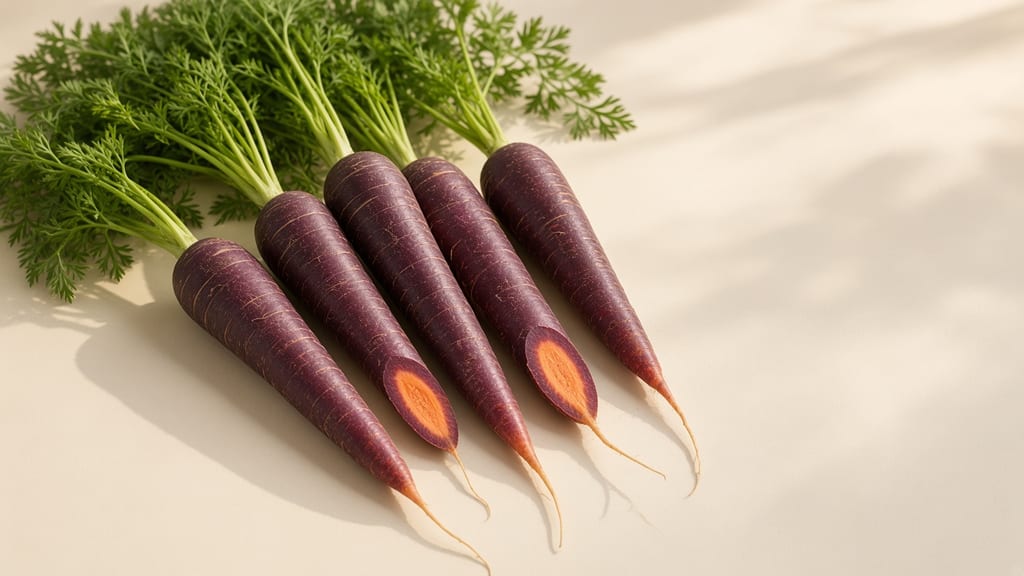
Black carrot
Black carrot is the anthocyanin-pigmented Eastern carrot (Daucus carota var. atrorubens), the purple root that preceded orange types and still colours kanji and şalgam.

Carrot
Carrot is the sweet taproot of Daucus carota subsp. sativus, domesticated in Central Asia, and the raw material of kanji and a common companion in fermented vegetable mixes.
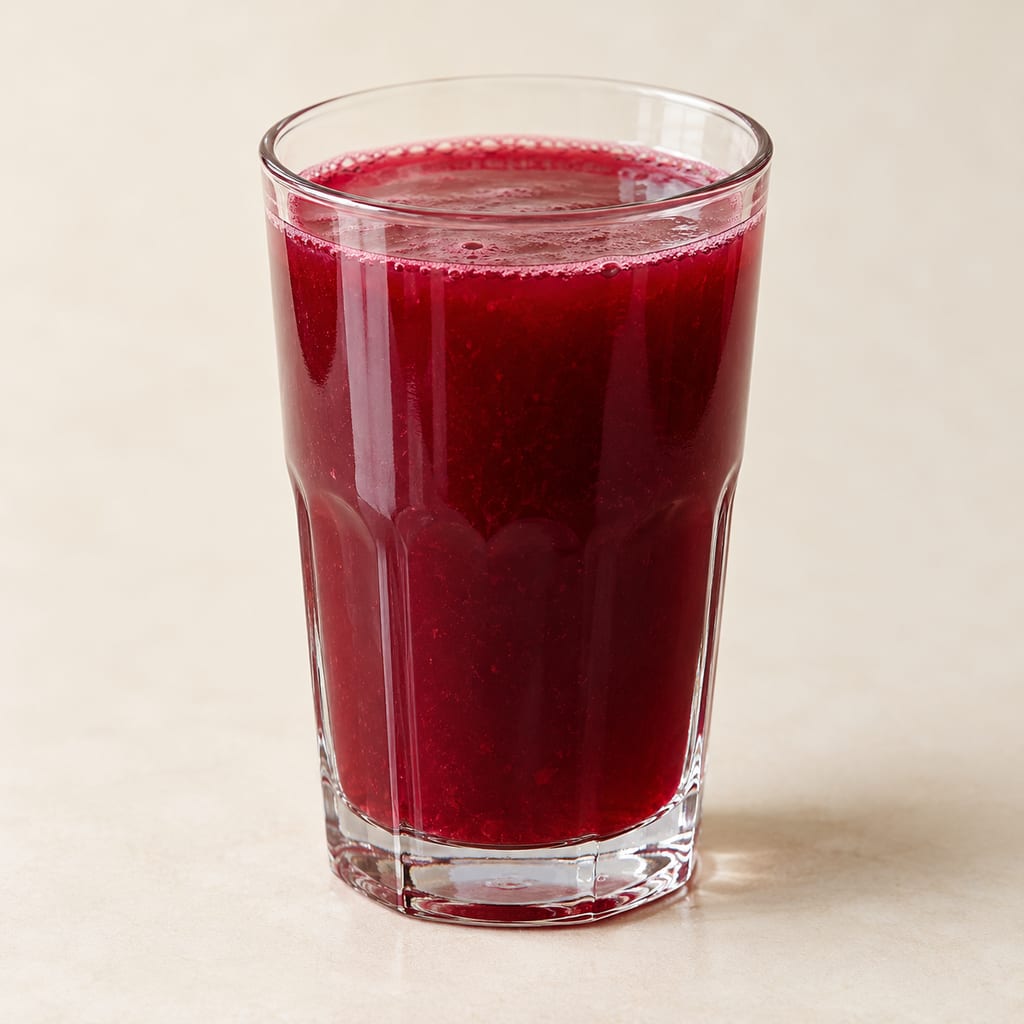
Şalgam
A sour, red Turkish drink of black carrot, rock salt and bulgur or sourdough, fermented in a traditional two-stage method or a direct one, and drunk with food in southern Turkey.
Community
No community contributions have been published for this entry yet.
Share what you made
Sign in to contribute. Published comments and photos are free to read.
Sources
Stolarczyk J. & Janick J., Chronica Horticulturae 51(2):13–18, 2011
Carrot: History and IconographyCited in: A glass the colour of beetroot juice; Purple before orange; Why a ferment cares about pigment chemistry; What orange won, and what it did not erase; Cousins on a purple map; The root that stayed useful
Banga O., Euphytica 6:54–63, 1957
Origin of the European cultivated carrotCited in: A glass the colour of beetroot juice; What Banga found in the archives; What orange won, and what it did not erase
Sharma C., Sahota P.P. & Kaur S., Bulletin of the National Research Centre 45:143, 2021
Physicochemical and microbiological evaluation of antioxidant-rich traditional black carrot beverage: KanjiCited in: A glass the colour of beetroot juice; Why a ferment cares about pigment chemistry; A second batch that is not the first; Punjab winters and summer abstracts; Cousins on a purple map; The root that stayed useful
Battcock M. & Azam-Ali S., FAO, 1998
Fermented Fruits and Vegetables: A Global Perspective, Chapter 6 §6.3.5 KanjiCited in: A glass the colour of beetroot juice; Kanji in the FAO chapter; Mustard in the jar; Safety is not a colour test; Cousins on a purple map
Wageningen University & Research depot reprint of Euphytica 6 (1957)
Origin of the European cultivated carrot (WUR reprint PDF)Cited in: What Banga found in the archives
ScienceDirect S1878450X18300763; quantities as reported in Fermentea soft-drinks atlas
Primary study formulation of kanji (ScienceDirect record used as AM43 card)Cited in: A second batch that is not the first; Mustard in the jar; Safety is not a colour test
Tanguler H. & Erten H., Journal of Food Quality, 2012
Chemical and Microbiological Characteristics of Shalgam (Şalgam)Cited in: Mustard in the jar; What orange won, and what it did not erase; Cousins on a purple map; The root that stayed useful
Berry et al. / CFTRI catalogue lineage referenced for mid-century technical attestation
Preparation and Evaluation of Ready-to-Serve Black Carrot Beverage (CFTRI record lineage)Cited in: Punjab winters and summer abstracts
University of Minnesota Extension
Preserving food at home: FermentationCited in: Safety is not a colour test
Gaps
- Achaya's Indian Food: A Historical Companion was not read in full for this article; Indian carrot chronology here follows Banga's Laufer-based caution and later technical kanji sources.
- Steinkraus's Handbook of Indigenous Fermented Foods was not opened for this run; kanji method detail follows FAO and primary papers instead.
- The CFTRI 1953 full article remains restricted in the dossier review; only catalogue/abstract framing is used.
- No source read here dates the first Punjabi kanji household practice before twentieth-century technical literature.
Updated 2026-11-06