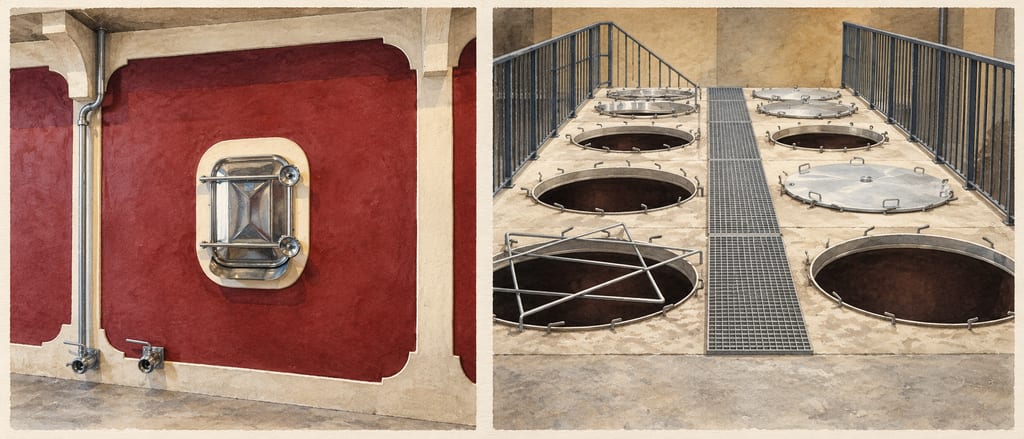
Concrete wine tank
Concrete wine tanks are heavy, fixed vessels in rectangular, cylindrical and tapered forms. Their thermal response and wine contact depend on mix, wall construction and interior finish.
 FermenteaWhere food goes to change
Equipment · Kettles, coppers and boilers
alquitara
A traditional Galician direct-fire pomace still: its copper pot and cap condense vapour in a water-cooled chamber, then send the distillate through a short biqueira.
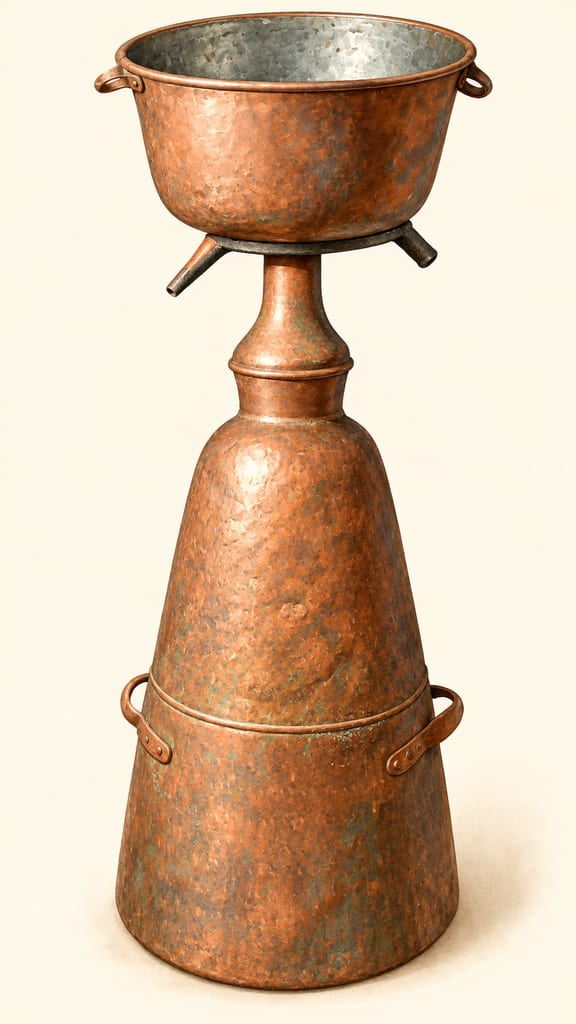
The Galician alquitara is one of the direct-fire apparatuses documented for distilling fermented grape pomace into aguardiente. The Orujo de Galicia Council and the Xunta de Galicia distinguish it from the alambique and from steam distillation. In the Xunta's account it remained in use in some places, including Portomarín and Verín. These local records do not establish that Galicia is the origin of the alquitara everywhere, nor that every Galician distiller used this form.
The Xunta describes a three-part assembly: a support, a pot or boiler of about 200 litres, and a cap (capacete) that contains the condenser and outlet. The pot and cap are copper lined inside with tin, and the support is usually cast iron. The Council describes the cap as cauldron-shaped, with a hemispherical expansion chamber below it and a short spout called the biqueira; a split willow twig, or vimbio, may be placed at its tip to help the flow. The exact size and fittings of individual stills are not supplied in the Council description, so the Xunta's approximate pot capacity should not be treated as a universal specification.
Fermented grape pomace is placed in the pot and heated directly. Vapour rises into the cap, where the alquitara's integrated water-cooled chamber condenses it; the liquid distillate leaves through the biqueira. The upper part of the cap holds cooling water. The Council describes an open top for that water, while the Xunta describes inlet and outlet openings that let cooling water flow counter to the vapour. These descriptions agree on the cap's cooling function but differ in how they describe its water openings. The alambique is a different Galician apparatus: its vapour path and cooling condenser are separate components, and the Council describes that separation as offering more control.
The Xunta characterizes the alquitara as the oldest traditional Galician method still used in some areas, and as slower and lower-yield than the alambique. It also states that the alquitara cannot force cooling to accelerate the passage of later fractions. That is a design limitation, not evidence that the resulting spirit is intrinsically better or worse: the Xunta says there are no objective grounds for preferring one of the approved apparatus types by sensory quality, and identifies economic criteria as a reason for choosing among them. Its history of legal distillation dates the changing rules for Galician production, not this particular apparatus. Neither inspected source gives a cleaning or repair protocol, so none is prescribed here.
The Xunta's EGU records a special Galician regime for distilling aguardiente in 1911, expanded across Galicia in 1927, and a 1985 rule requiring fixed apparatus that contributed to the disappearance of portable stills and travelling distillers. The same entry says the alquitara remained in use in some areas, naming Portomarín and Verín. These dates describe the legal and production context, not the invention or end of this particular still form.
The Xunta's EGU says the alquitara cannot force cooling to speed the flow of later distillate fractions; it also describes the method as slower and lower-yield than the alambique.
Source →Regional use is documented for Galician pomace distillation; it is not an exclusive-origin claim.
The Xunta's EGU names Portomarín among areas where the traditional alquitara remained in use.
The Xunta's EGU names Verín among areas where the traditional alquitara remained in use.
Concrete wine tanks are heavy, fixed vessels in rectangular, cylindrical and tapered forms. Their thermal response and wine contact depend on mix, wall construction and interior finish.
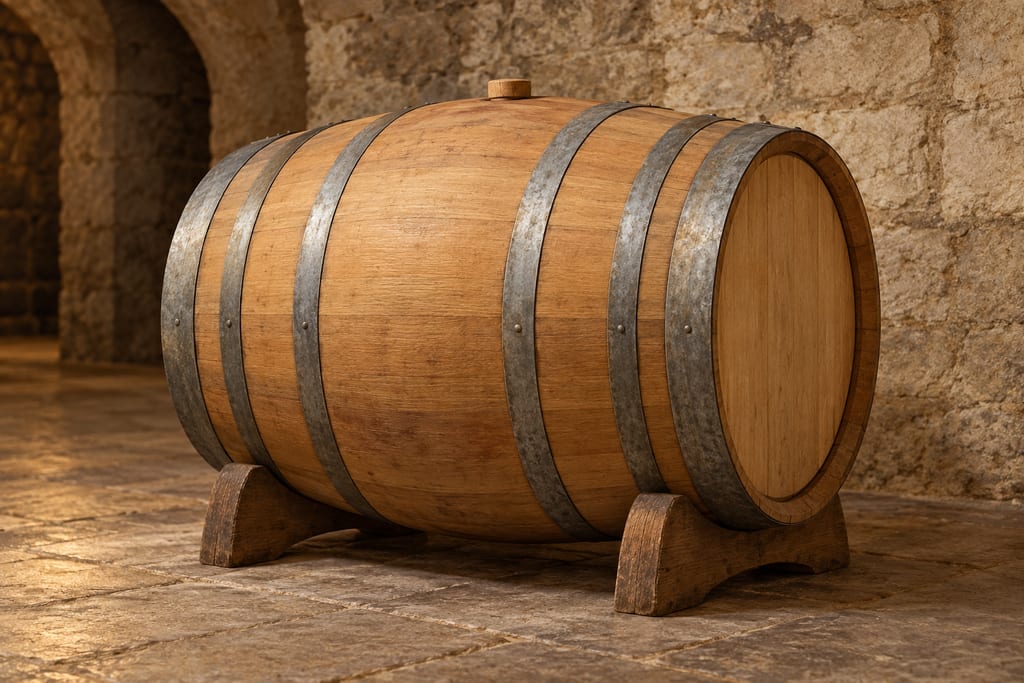
Coopered vessels use shaped staves and hoops, but portable barrels, large foeders and upright wooden vats serve different roles. Materials and uses vary by place and process.
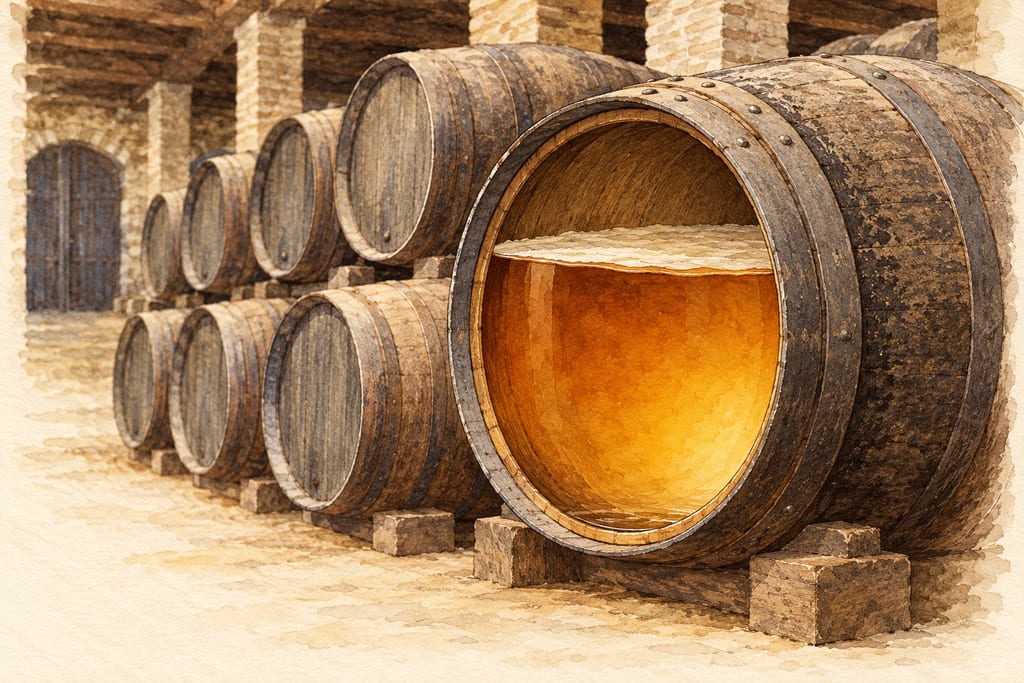
A Jerez bota is a coopered oak butt used for wine ageing. In a criaderas-and-solera array, butts at successive ages are arranged in scales and partly drawn and replenished; the bota's capacity and fill depend on the documented system.
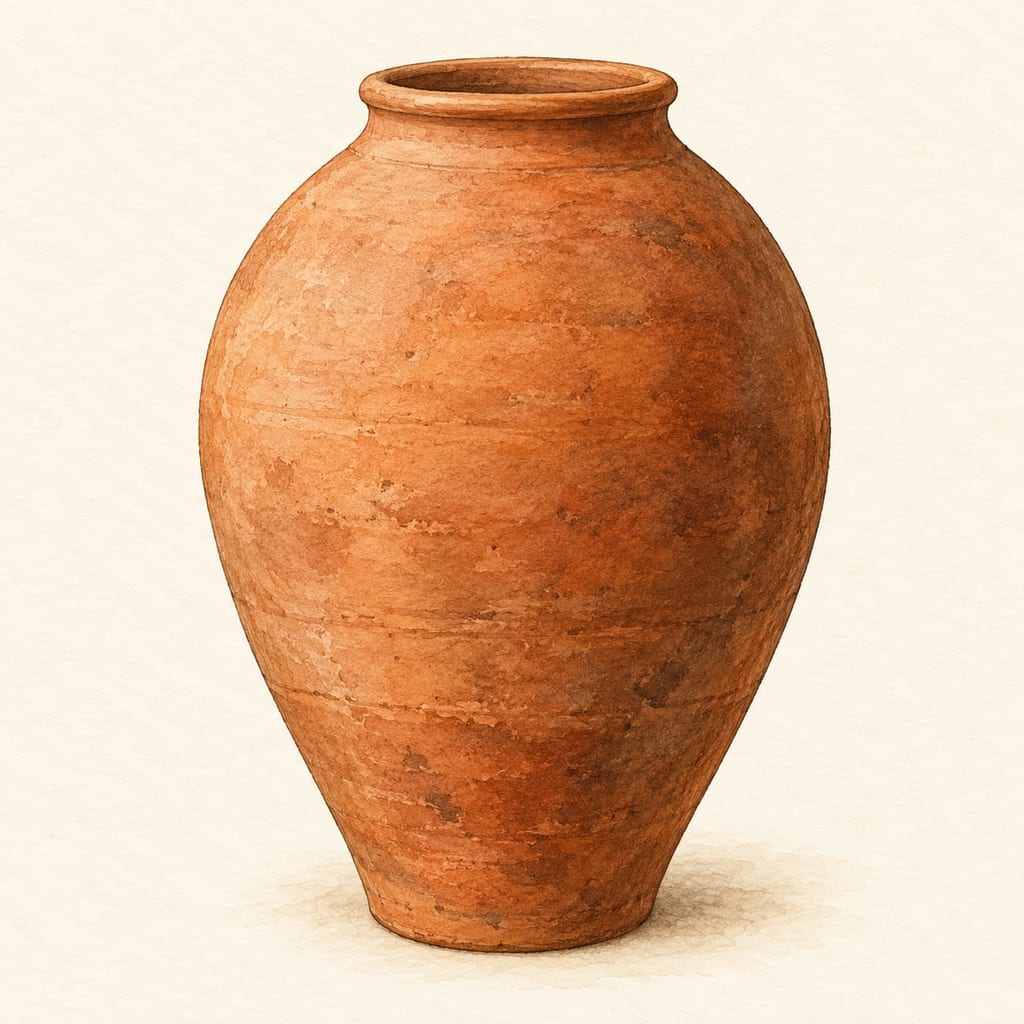
A tinaja is a fired-clay jar used in Spain for wine making and storage, with a particularly well-documented hand-building tradition in La Mancha. Sizes range from domestic vessels to monumental winery jars.
No community contributions have been published for this entry yet.
Sign in to contribute. Published comments and photos are free to read.
Orujo de Galicia Regulatory CouncilMethod · Form · Materials · Geography · History
Proceso de elaboración de los Aguardientes y Licores Tradicionales de GaliciaThe Council distinguishes Galician alquitara, alambique and steam distillation as separate methods for fully fermented grape pomace.
It describes the alquitara's pot, cauldron-shaped cap, integrated hemispherical condenser, biqueira outlet, optional split willow twig and cooling water at the top of the cap.
The Council describes direct heat and says the alambique separates vapour and condensation into distinct components.
Cited in: A distinct Galician still; Pot, cap and biqueira; How the arrangement condenses vapour; Performance and historical limits
Enciclopedia Galega Universal, Xunta de GaliciaHistory · Form · Materials · Capacity · Geography · Method · Limits
AugardenteThe EGU describes a Galician alquitara with a usually cast-iron support, approximately 200-litre pot, and copper pot and cap lined inside with tin.
It names Portomarín and Verín as places where the traditional alquitara remained in use, and describes the apparatus as slower and lower-yield than the alambique.
It describes direct heating, water openings in the cap, and the limit on forcing cooling to accelerate distillation.
It records 1911, 1927 and 1985 changes to Galician distillation regulation but does not date the invention or first use of this specific alquitara form.
Cited in: A distinct Galician still; Pot, cap and biqueira; How the arrangement condenses vapour; Performance and historical limits