A large clay jar with a local history
Tinaja names a fired-clay jar used in Spain for wine production and conservation. The word covers vessels of different sizes and purposes: smaller containers could serve household work, while wineries used very large jars. Villarrobledo, in Albacete province in Castilla-La Mancha, became a leading centre for the craft of making these jars. Its history gives one well-documented regional example, not a single origin story for every tinaja.
The town already had potters producing household vessels before the sixteenth century. From the sixteenth century, workshops in the tinajero district increasingly concentrated on tinajas, close to local clay deposits. The craft grew into an organized trade: in the eighteenth century, the guild had quality inspectors. During the second half of the nineteenth century, manual production expanded into an industry, with the municipal interpretation centre reporting 72 kilns operating at full capacity. The date belongs to Villarrobledo’s documented trade, not the invention of large clay jars throughout Spain.
Sources for this section
Monumental vessels and their making
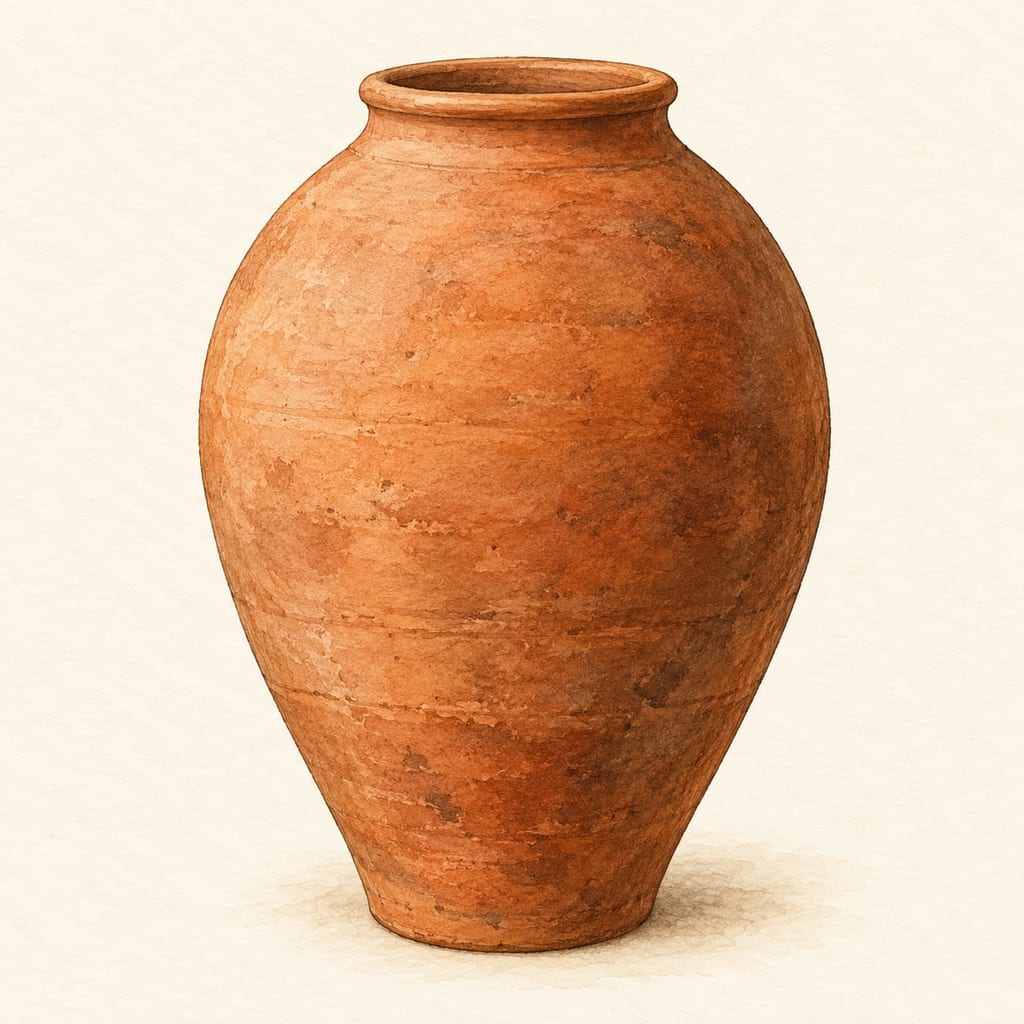
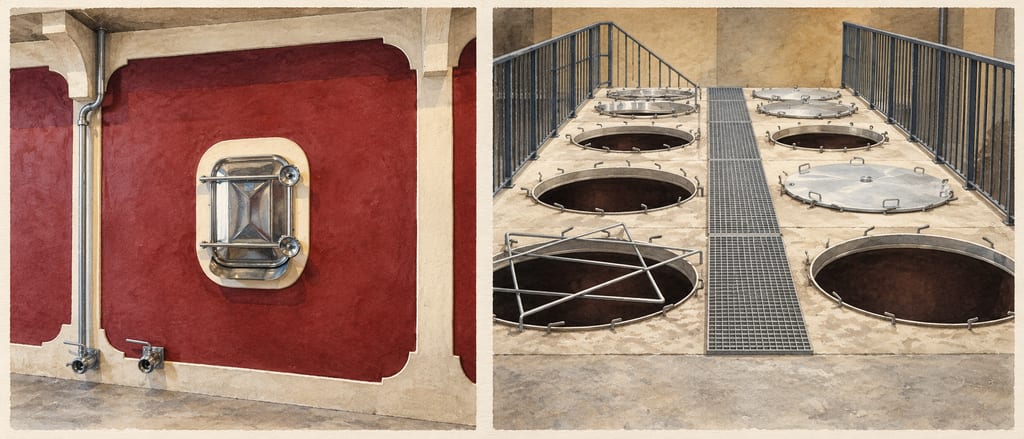
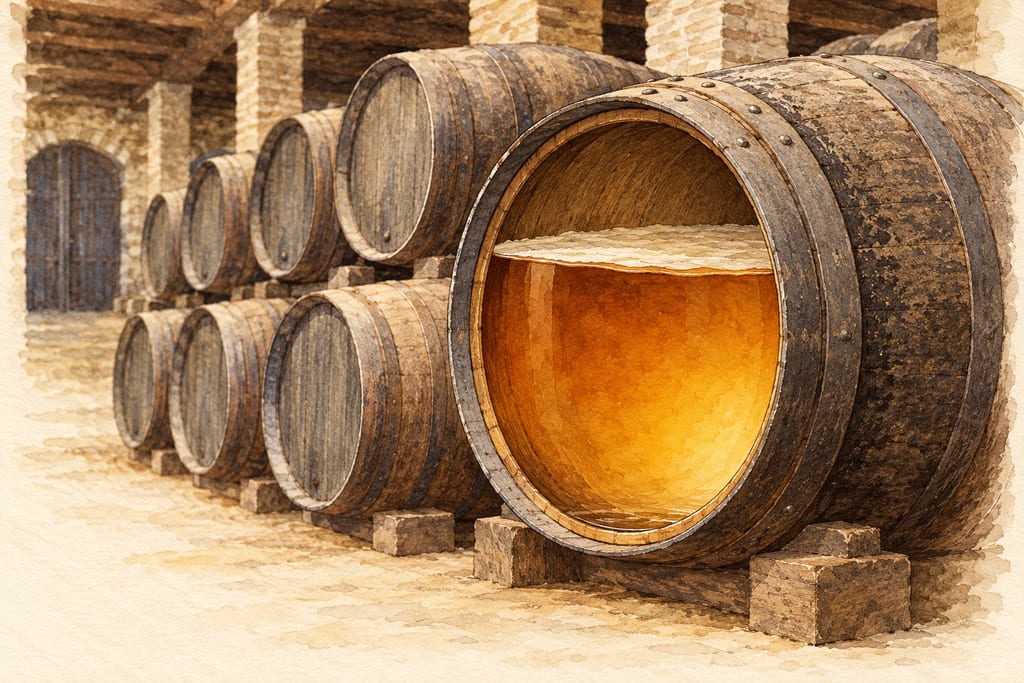
A tinaja is not a handled amphora. The inspected cellar photograph from Colmenar de Oreja shows a swollen, tall jar body and a relatively small mouth, set in a row for winery use. The Villarrobledo centre documents especially large jars over four metres tall and about 2,500 kilograms, with cited capacities reaching 500, 600 and 700 arrobas. Those figures describe exceptional monumental forms; smaller household jars and other workshop sizes should not be imagined at that scale.
The making of large tinajas began with the clay itself. At the CIAT, the documented sequence starts in the courtyard, where clay was dried and given its first treatment. The tinajero then shaped the jar by hand in the workshop. A pottery kiln completed the vessel; its combustion chamber supplied the heat for firing. The centre also records a final hydration treatment before the jar’s journey to a bodega. These are features of the documented Villarrobledo process, not instructions for reproducing a vessel without a trained maker.
Sources for this section
What the clay can and cannot tell you
The vessel’s wall is part of its behavior, but “clay” does not specify one fixed rate of exchange with the surroundings. Ceramic research shows that clay composition and firing influence pore size and porosity, and that oxygen transmission follows the material’s permeability. Sealing or coating the inside can further alter liquid contact and movement through the wall. A clay taste or oxygen effect should not be assumed merely from the name tinaja.
A published wine trial makes the distinction concrete without setting a universal rule. It compared red wines aged for six months in two 4,000-litre, buried, ovoid tinajas after alcoholic fermentation in steel: one vessel had a food-grade epoxy inner coating and the other did not. The experiment concerns that vessel pair and wine, not every historical cellar jar. A winery in Villarrobledo separately describes using its own historic 4,000-litre jars after alcoholic fermentation for malolactic fermentation and maturation. That documented modern practice shows how one cellar uses tinajas; it does not establish one traditional sequence for all regions.
Sources for this section
Choosing a tinaja as equipment
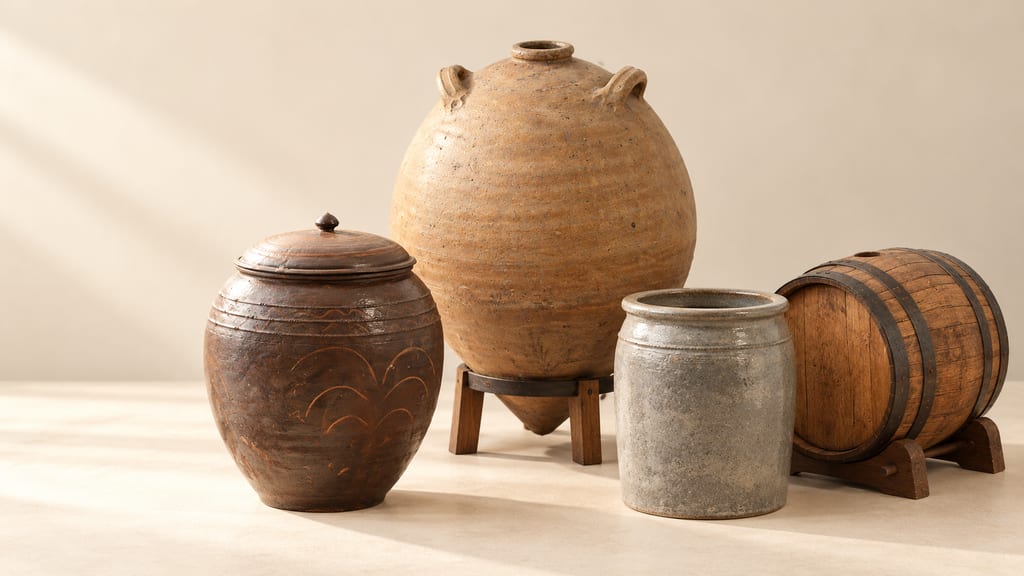
The word alone cannot tell a buyer a vessel’s capacity, firing, coating or condition. Historic examples range from domestic containers to monumental winery jars, and no universal specification covers them all. A working wine tinaja therefore needs to be identified by its actual maker, dimensions, inner treatment and intended use. Monumental historic jars are not a practical proxy for every modern vessel.
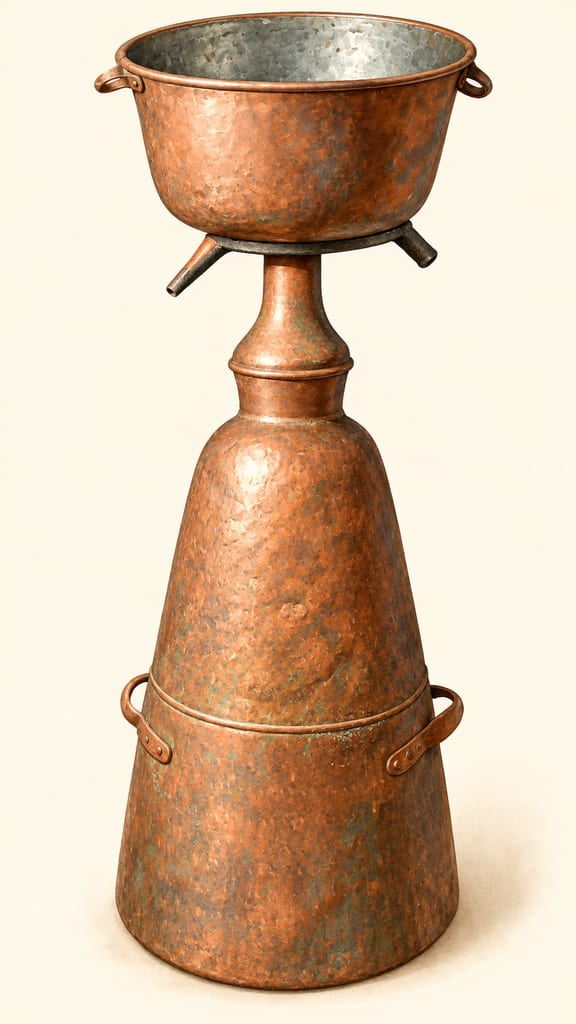
The municipal center documents an active craft tradition and current wineries use tinajas, but these pages do not establish a general supplier list, price or cleaning routine. The CIAT’s final hydration treatment belongs to its historical making sequence; it does not establish a cleaning or sealing procedure for a particular working jar. Care should follow the vessel’s own construction and the maker’s directions. The cellar image in the gallery and the generated illustration show historical equipment forms; neither is a photograph of a specific available product.
Sources for this section
History
Potters were already making domestic vessels in Villarrobledo before the sixteenth century. From that century, workshops increasingly focused on tinajas. The town’s guild later had quality inspectors, and the second half of the nineteenth century brought large-scale manual production, with the municipal centre reporting 72 active kilns. These dates describe Villarrobledo and should not be generalized to every Spanish jar.
Equipment details
CapacityThe Villarrobledo centre describes exceptional historic examples as holding 500, 600 or up to 700 arrobas. It does not provide a standardized litre conversion, and these monumental capacities do not define smaller tinajas.
SizeThe centre describes exceptional jars over four metres high and about 2,500 kg; these are monumental examples, not standard dimensions.
PowerNo power A tinaja is a passive vessel; its contents are made or stored through surrounding winemaking practice.
How you get oneBought, manufactured Traditional Villarrobledo tinajas were formed by tinajeros in pottery workshops and fired in kilns. The municipal interpretation centre documents the continuing craft, but present maker availability and prices are not established here.
CareThe CIAT describes a final hydration treatment after firing before a jar goes to a cellar, but the available sources do not give a universal cleaning, sealing or repair protocol. For a working vessel, care depends on its clay, firing, coating and maker's instructions.
Made of
- Fired clay / earthenware — Vessel body
The Villarrobledo interpretation centre documents hand-modelled clay jars fired in a kiln; clay body, firing and treatment vary by maker and period.
Limits
The documented sixteenth-century craft history and monumental dimensions refer to Villarrobledo examples, not every vessel called a tinaja.
Source →Ceramic permeability is not fixed by the name tinaja: clay composition, firing and pore structure affect it, and a separate coating can change contact and oxygen transfer.
Source →One modern wine study compared two 4,000-litre buried ovoid tinajas, one epoxy-coated and one uncoated, for six months of ageing after fermentation in steel; its result is specific to that design and trial.
Source →Places
Villarrobledo
Manufacture · Locality evidenceRecords Villarrobledo as a documented tinajero production centre; it is not a claim that all tinajas originated there.
La Mancha
Traditional use · Region evidenceRecords regional tinaja use for wine and preservation; it does not imply exclusive use or one single method.