
Hákarl
A documentary account of Icelandic hákarl, fermented and dried Greenland shark. It describes cultural context and one production study, not a home preparation method.
 FermenteaWhere food goes to change
Built structures · Pits and cavities
hákarl · hákarl pits · hákarl hjallur
Historical hákarl pits were covered gravel features near Iceland's coast; later production uses draining containers and a separate outdoor drying stage. Sources describe varied practice, not one standard plan.
Hákarl is Greenland shark cured and dried in Iceland. A peer-reviewed review describes older accounts in which shark pieces were placed in gravel pits, often near the sea, then covered with stones, seaweed or turf. Seawater could reach some pits at high tide. The review presents these as historical practices; it does not document one surviving pit with a measured plan.
Jensen and colleagues note that the earliest written documentation of processed shark in Iceland dates to 1374. That is a date for the food practice, not proof that a particular pit or pit design existed then.
The same review distinguishes historical pits from later indoor perforated containers, which allow liquid to drain. Jensen and colleagues describe the traditional process as two stages, conditioning followed by drying, and report that contemporary producers use different methods. Their 2023 small-scale industrial study likewise separated fermentation from outdoor drying; its experimental setup should not be mistaken for a universal household design.
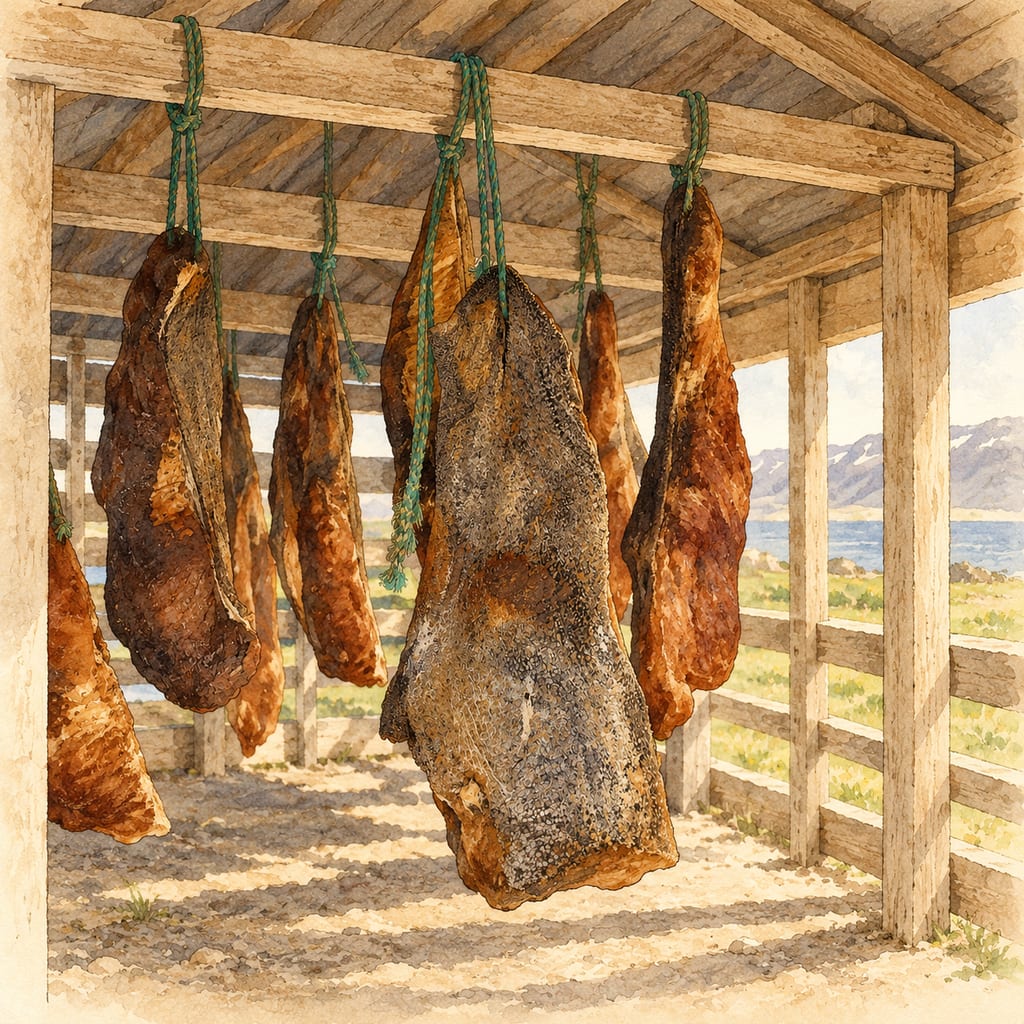
At Bjarnarhöfn in West Iceland, Visit Iceland describes a current museum and a drying house that visitors can see. This identifies a present-day place and drying stage, not a historic pit. The linked photograph shows hákarl hanging in a shed and is captioned accordingly.
The sources do not establish one standard pit shape, lining, depth, capacity or cover. Nor do they show that every producer used a coastal pit or followed the same sequence. The historic feature, modern perforated container and drying shed are related parts of a food tradition, but they are not interchangeable structures.
This page records historical evidence and current museum context; it is not a construction plan or a validated preservation procedure. The gallery photograph documents the later drying stage, while no image here claims to depict a historic pit.
Icelandic sources document hákarl production over a long period; Jensen et al. report the oldest documentation of processed shark in Iceland as 1374. That date is evidence for processed shark, not a date for the pit structure. Historical pit design and use are not independently dated here.
A build is made where it stands: moving it means building it again.
Historical description only; this is not a construction guide or a validated food-safety process. Fresh Greenland shark can be unsafe to eat; follow current food-safety guidance and use properly controlled commercial products.
Country-level only: the sources describe historical Icelandic practice without locating a specific pit.
Visit Iceland locates a current shark museum with a drying house here. This is not identified as the location of a historic pit or the linked photograph.
A documentary account of Icelandic hákarl, fermented and dried Greenland shark. It describes cultural context and one production study, not a home preparation method.
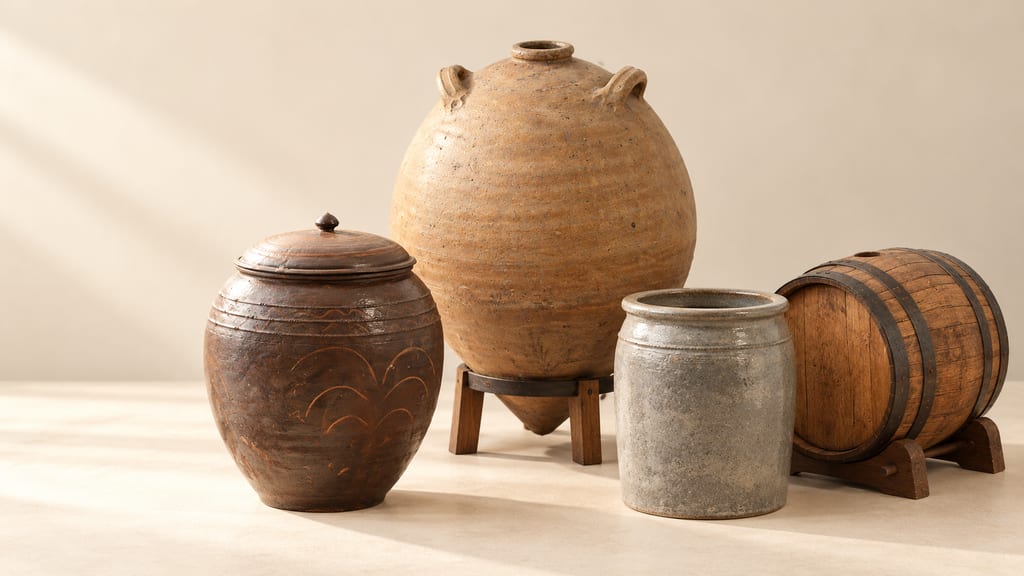
Jars, barrels, skins, leaves, pits and whole rooms decide much of what happens to fermented and cured food. This is how a container works on its contents, and how people in different places chose theirs.
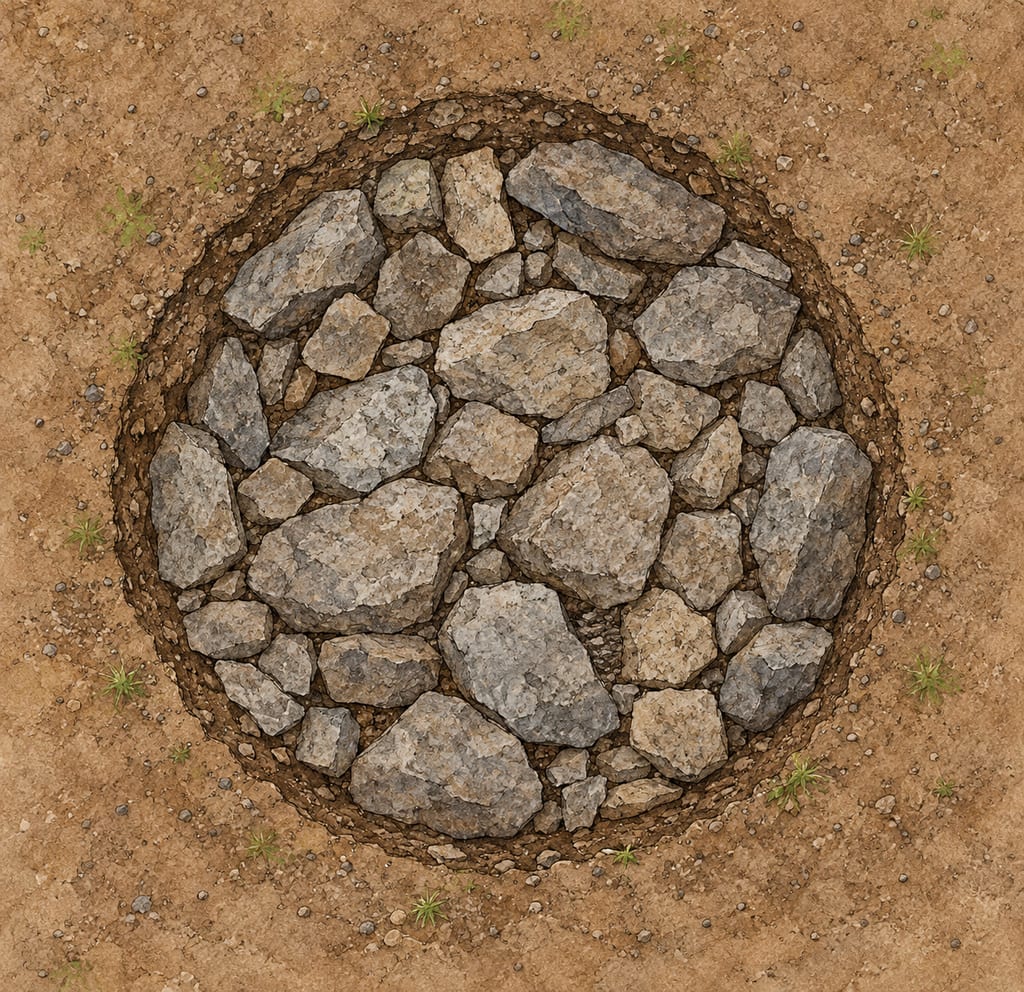
A round, stone-filled pit at Hrísbrú was interpreted as a barrel position; its exact vessel, contents and use remain uncertain.
A large cask set into the pantry floor at Hofstaðir was used to store food in whey.
No community contributions have been published for this entry yet.
Sign in to contribute. Published comments and photos are free to read.
Journal of Ethnic Foods, 2(2)Historical practice · Pit form · Process stages
Fermented and ripened fish products in the northern European countriesReview describes historical Icelandic hákarl pits near the sea covered with stones, seaweed or turf, and later perforated containers that drain liquid.
The review separates the pit/container conditioning stage from outdoor drying in hjallar; it does not define a universal design.
Cited in: The pit was one stage in a longer tradition; Containers and drying are separate stages; What the sources leave open
Heliyon, 9(11), e22127Contemporary research · Process stages · Historical context
Unlocking the microbial diversity and the chemical changes throughout the fermentation process of “hákarl”, Greenland sharkStudy describes hákarl as an Icelandic food made through distinct conditioning and drying stages and reports a small-scale industrial trial.
Authors state that each producer develops specific methods and there is no standardized production protocol.
Article dates earliest written documentation of processed shark in Iceland to 1374; this does not date a particular pit.
Cited in: The pit was one stage in a longer tradition; Containers and drying are separate stages; What the sources leave open
Business Iceland / Visit IcelandModern geography · Drying house
Bjarnarhöfn Shark MuseumLocates the family-run museum at Helgafellssveit, West Iceland.
Describes a drying house that visitors can visit; this is contemporary site context, not evidence of a historic pit.
Cited in: Containers and drying are separate stages
Wikimedia CommonsVisual reference · Rights · Drying stage
Hákarl hung to dry.jpgPhotograph shows hákarl hanging in a drying shed; it depicts the drying stage, not a historical pit or box.
Wikimedia Commons identifies the author as Funky Tee and the image as CC BY-SA 2.0.
Cited in: Containers and drying are separate stages; What the sources leave open