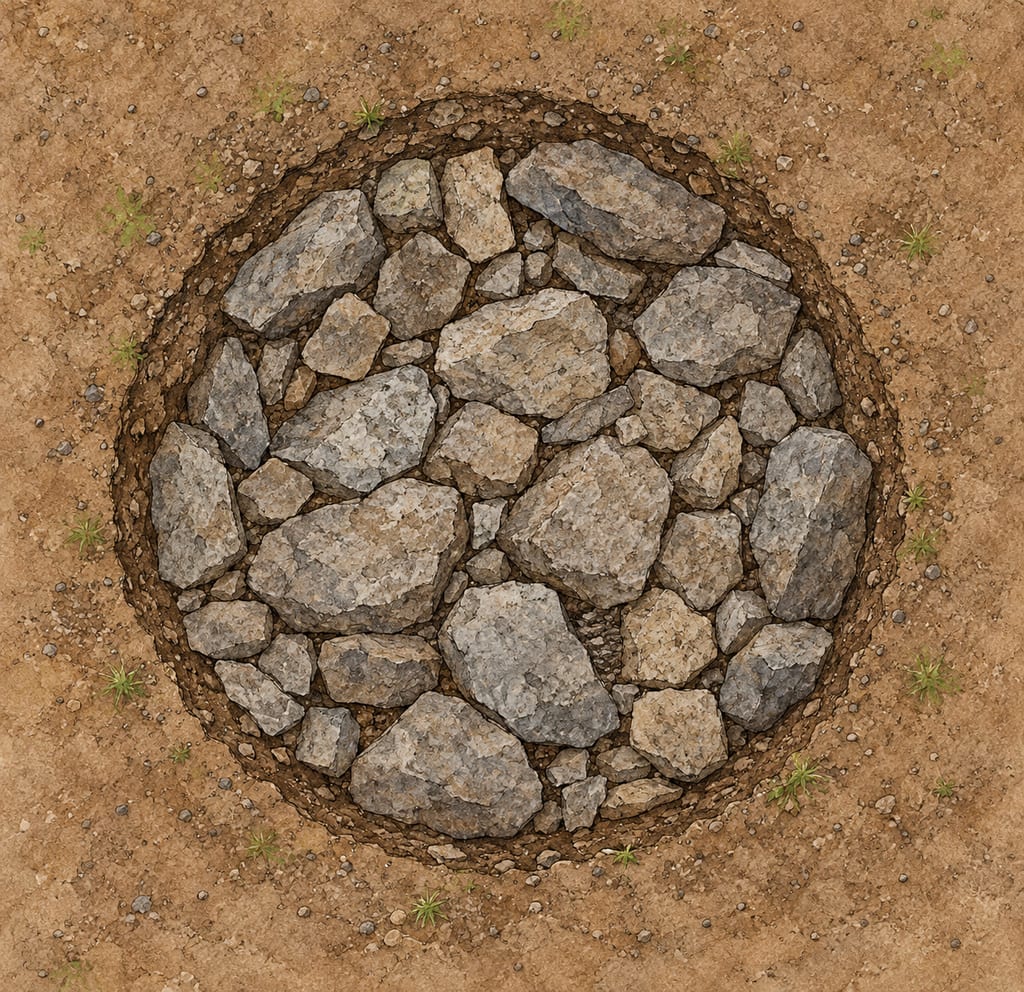
Stone-packed pit at Hrísbrú (possible barrel support)
A round, stone-filled pit at Hrísbrú was interpreted as a barrel position; its exact vessel, contents and use remain uncertain.
 FermenteaWhere food goes to change
Built structures · Place · pantry-floor-cask
A large cask set into the pantry floor at Hofstaðir was used to store food in whey.
At Hofstaðir in Mývatnssveit, northeast Iceland, the archaeological project describes a pantry annex to a large hall with a cask embedded in the floor. It interprets the cask as a place for storing food in whey. This is evidence for one named farm complex, not a typical floor plan for every Viking-age household.
The project dates the hall's construction to after 940 and says it was abandoned around 1030. These dates place the installation in a specific tenth-century context, but they do not give an exact date for the cask itself or show that it was used throughout the whole period. The pantry belongs to the hall's associated spaces rather than the central hearth room.
The Hofstaðir account names a large cask and its food-storage role, but it does not supply dimensions, a construction section, material identification, a lid or sealing method, exact contents, or storage conditions. The account says that, when the hall was abandoned, the whey cask was filled with slag from iron smelting. That later fill is evidence of the site's closure history, not a preserved food recipe.
A separate study of Icelandic farm storage discusses several room and food-processing functions at Hofstaðir. It is useful context for reading the hall complex, but it cannot fill in details that the excavated cask description leaves unknown.
The gallery includes a photograph of a modern Stöng reconstruction in Iceland and a separate contemporary oak-barrel photograph. Neither image shows Hofstaðir or its cask. They provide openly licensed visual comparisons only; the sources do not establish that the archaeological cask was oak or built like either reference.
The generated cutaway is an interpretive illustration of the documented floor installation. It is intentionally schematic and does not claim to reconstruct the actual room, vessel material, profile, dimensions, or contents. The two reference photographs and this reference-guided illustration are shared under CC BY-SA 2.0; credits and license links are recorded with the images.
The Hofstaðir project places the pantry cask within the tenth-century hall complex and describes its use for food storage in whey. The hall was built after 940 and abandoned around 1030; the cask's exact installation and use dates are not specified.
A build is made where it stands: moving it means building it again.
This is an archaeological description, not a modern construction, food-storage, or food-safety plan.
The source identifies Hofstaðir in the Lake Mývatn district; regional precision is used without coordinates.
A round, stone-filled pit at Hrísbrú was interpreted as a barrel position; its exact vessel, contents and use remain uncertain.
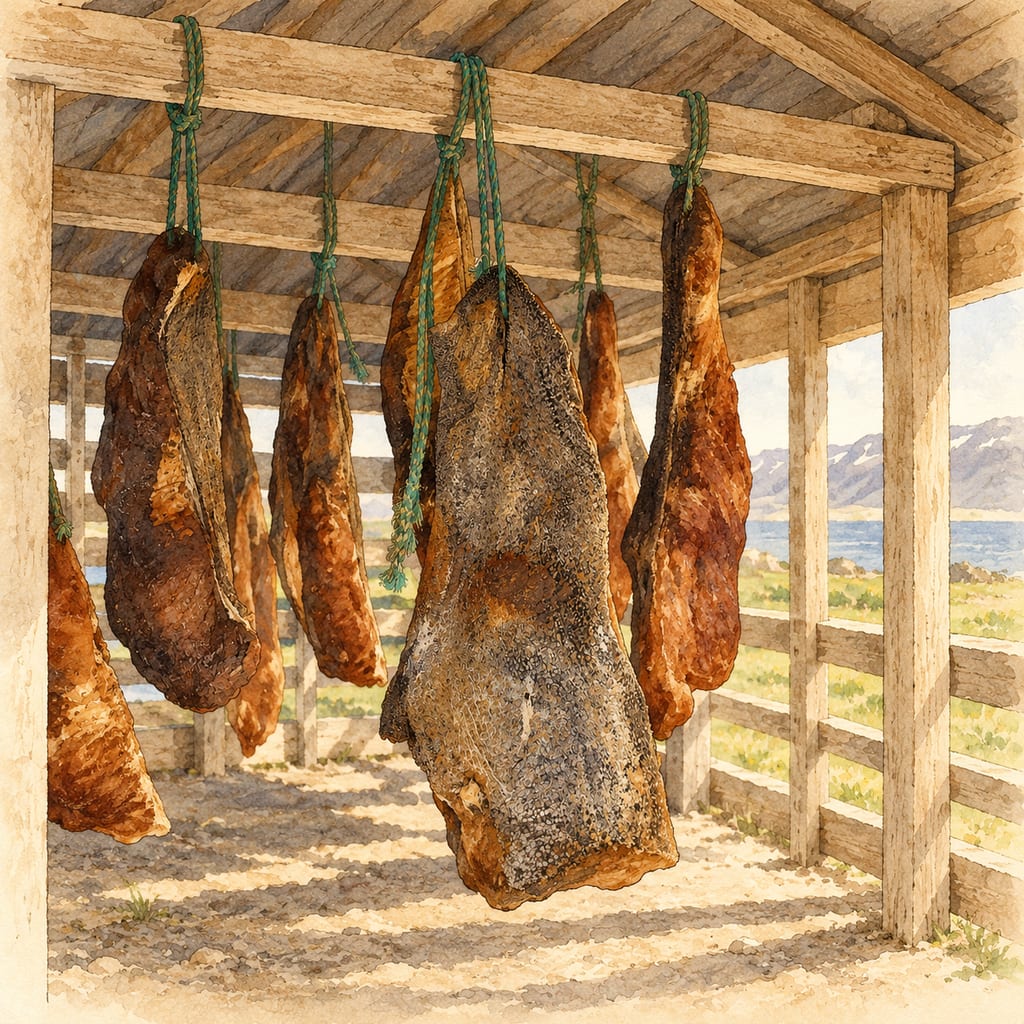
Historical hákarl pits were covered gravel features near Iceland's coast; later production uses draining containers and a separate outdoor drying stage. Sources describe varied practice, not one standard plan.

Protected Italian vinegar made only from cooked grape must, fermented and aged in a battery of wooden barrels for at least 12 years: sweet, sharp and syrupy.

Airag is Mongolia’s fermented mare’s-milk drink, traditionally churned with saved starter in a reusable cowhide khokhuur.

Appam, or hoppers, are South Indian and Sri Lankan rice pancakes made from a fermented coconut-and-rice batter and cooked in a curved pan to a crisp lacy rim and a soft, spongy centre.

Auricularia tremellosa is a wood ear fungus of the genus that supplies most dried wood ear sold in China; its own food record is thin, and the culinary practice described here comes from the closely related wood ear species.

Ayran is Turkey’s cold, savoury yogurt drink: plain yogurt is loosened with water and lightly salted, then whisked smooth or aerated into a soft cap of foam.
A thin stone griddle used over an open hearth. Norwegian archaeology documents the established tradition from the early Middle Ages; a Viking-period origin is only a cautious suggestion linked to Shetland.

Crushed or milled barley cooked in water until the starch softens and the mixture thickens, the plainest way a northern household turned stored grain into a meal, here with apple and hazelnut.

Black carrot is the anthocyanin-pigmented Eastern carrot (Daucus carota var. atrorubens), the purple root that preceded orange types and still colours kanji and şalgam.
No community contributions have been published for this entry yet.
Sign in to contribute. Published comments and photos are free to read.
The Institute of Archaeology, Iceland / Hofstaðir projectSite history · Form · Function · Geography
Cultural HeritageThe project locates Hofstaðir in Mývatnssveit, north Iceland; its hall was built after 940 and abandoned around 1030.
A pantry annex had a large cask embedded in its floor for food stored in whey; during abandonment the whey cask was filled with iron-smelting slag.
Cited in: A pantry cask set into the floor; What the evidence does and does not identify; Comparative images, not the excavated cask
Ruralia VIII / Universität WienHistorical context · Storage
Food Preparation and Storage in Iceland from the Viking Age to the Early Modern PeriodMehler surveys Icelandic farm storage and summarizes Hofstaðir end-room and adjacent spaces as indicating food storage and processing.
Cited in: What the evidence does and does not identify
Wikimedia CommonsVisual reference · Comparative reconstruction · Rights
Stöng, interior.jpg2006 photograph of a modern Stöng reconstruction at a different Icelandic site; CC BY-SA 2.0, not Hofstaðir evidence.
Cited in: Comparative images, not the excavated cask
Wikimedia CommonsVisual reference · Generic cask form · Rights
Two Oak Barrels.jpg2008 photograph of modern oak barrels; CC BY-SA 2.0, not evidence for the Hofstaðir cask's material or construction.
Cited in: Comparative images, not the excavated cask