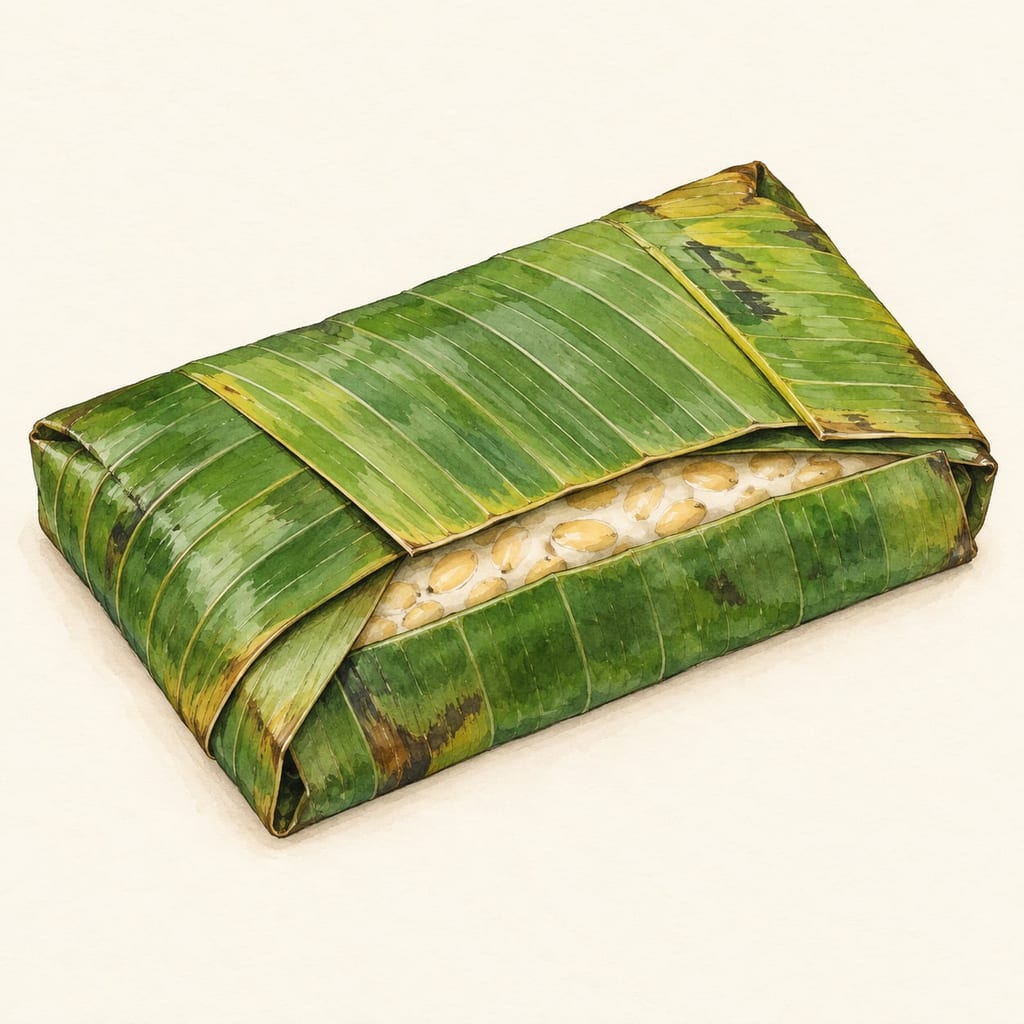
Tempe leaf packet
A broad banana leaf folded around beans forms the flat packet in which tempeh ferments. It shapes the cake while allowing air exchange; Indonesian producers also use plastic wraps.
 FermenteaWhere food goes to change
Equipment · Bamboo, leaf and wraps
Usar is a traditional Indonesian inoculum carrier: leaves such as waru hold Rhizopus growth for transfer to tempeh beans. It carries starter between stages; it is distinct from the leaf packet used for bulk fermentation.
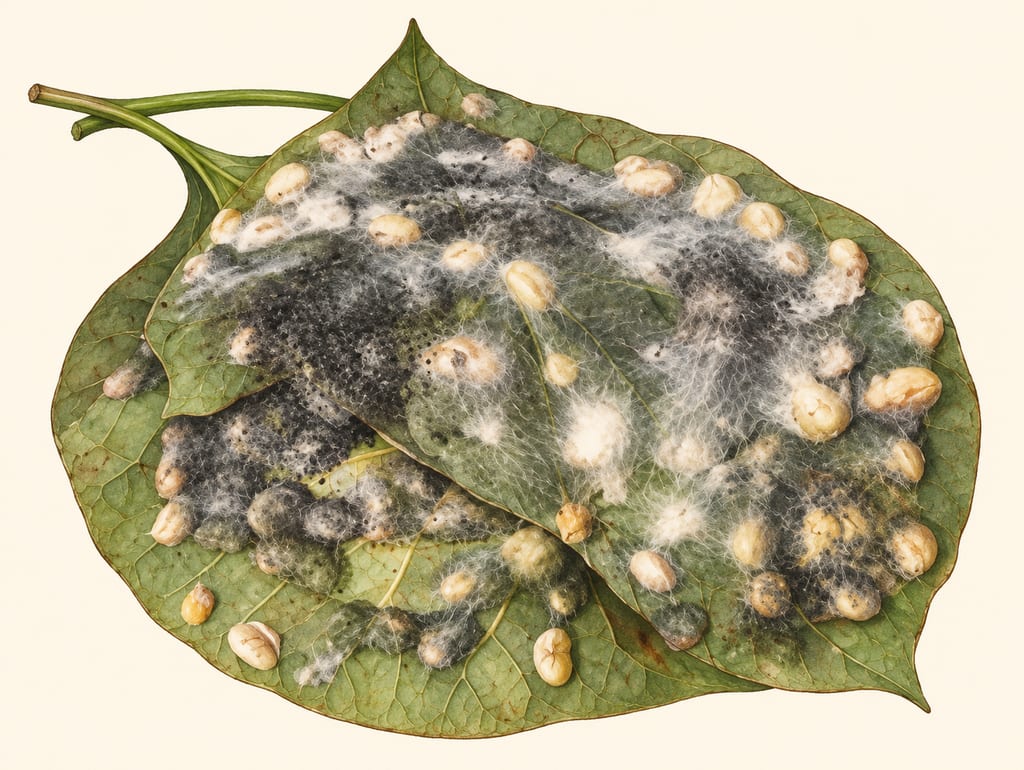
Usar is a traditional Indonesian tempeh inoculum carried on a leaf. In one described method, beans are rubbed with the leaf culture. This leaf-borne starter is neither a jar of powder nor the packet that surrounds a whole batch. In the documented form, Rhizopus grows on an inoculated soybean substrate and its mycelium adheres to a waru leaf. A later study names the leaf as Hibiscus tiliaceus, while earlier research describes waru trees more broadly as Hibiscus species.
The object is small and light: a leaf or set of leaves supporting mold growth that can be transferred to the next beans. The culture is the useful part, but the leaf is not incidental packaging. It gives the growth somewhere to attach and a surface that can be handled between the starter-making stage and the main tempeh fermentation.
A leaf surface helps retain moisture while leaving room for air around the growing mycelium. In experiments comparing Hibiscus leaves with kraft paper and linen, the alternative surfaces could also carry mold, but it was harder to manage moisture and aeration: paper and cloth tended to stick together, and mycelium could penetrate the textile. The leaf's value is therefore practical surface geometry and handling, not a proven chemical power to choose one mold and suppress every other organism.
That distinction matters when describing the starter. Usar is not a sterile pure culture by definition. The Indonesian leaf samples in the 1992 study carried several fungi, with Rhizopus predominating among those encountered. The record does not turn that observation into a claim that all leaves, places or batches have an identical microbial make-up.
In the leaf-carrier method, inoculated soybeans provide the substrate on which Rhizopus develops before the inoculum is passed on. The resulting mold-bearing leaf can then transfer culture to beans prepared for tempeh. The leaf is a bridge between batches: it carries and presents the starter rather than holding the full mass of beans through the whole fermentation.
The visible form can differ. A maker may work with a fresh leaf or with a carrier dried after growth; dried mold on Hibiscus tiliaceus leaves is one traditional starter form. In either case, the leaf remains a support for culture rather than a bulk fermentation wrapper. Neither a particular appearance nor a single species label is a universal specification for every usar.
Tempeh has another leaf stage that is easy to confuse with usar. After beans receive inoculum, banana or other large leaves can wrap the beans during the main fermentation. That packet contains the batch; usar carries the starter used to inoculate it. Both can involve leaves and both belong to the same production sequence, but they perform different jobs.
The related Tempe leaf packet entry describes that bulk wrapper. Read beside it, the distinction is clear: a mold-bearing leaf starter transfers culture, while a packet surrounds the inoculated beans. Not every leaf used around tempeh is an inoculated starter, and not every batch wrapped in leaves was inoculated with usar.
Usar is documented as a traditional starter in Indonesia, with examples across Java and other regions. A 2021 study examined preserved Rhizopus strains isolated from traditional starters and tempeh samples collected in multiple parts of the country. It also records the spread of commercial starter use from the 2000s and changes in the diversity of Rhizopus found in Indonesian tempeh. This is a shift in practice and microbial records, not proof that one starter form alone determines a batch's ecology or quality.
No single birthplace for usar, universal leaf size, fixed storage life, or single recipe for making it is established in the literature cited here. The leaf carrier's role can be explained without treating all Indonesian tempeh practice as identical.
Usar is an inoculum carrier, not the bulk fermentation wrapper or a container for the full soybean batch. The beans are wrapped separately for tempeh fermentation.
Source →Waru leaves mainly provide a surface for attachment, moisture retention and aeration; the 1992 experiments did not find that they selected Rhizopus through growth-inhibiting substances.
Source →Traditional starter methods vary, and the 2021 study discusses a shift toward commercial starters in Indonesia alongside changes in observed Rhizopus diversity; it does not establish that the leaf carrier alone determines the organisms in a batch.
Source →Studies identify leaf-carried Rhizopus inoculum called usar in Indonesian tempe production; this records use, not invention or a single birthplace.
The study discusses traditional starters in Java and samples collected from multiple Indonesian regions; it does not claim usar originated on Java.
A broad banana leaf folded around beans forms the flat packet in which tempeh ferments. It shapes the cake while allowing air exchange; Indonesian producers also use plastic wraps.
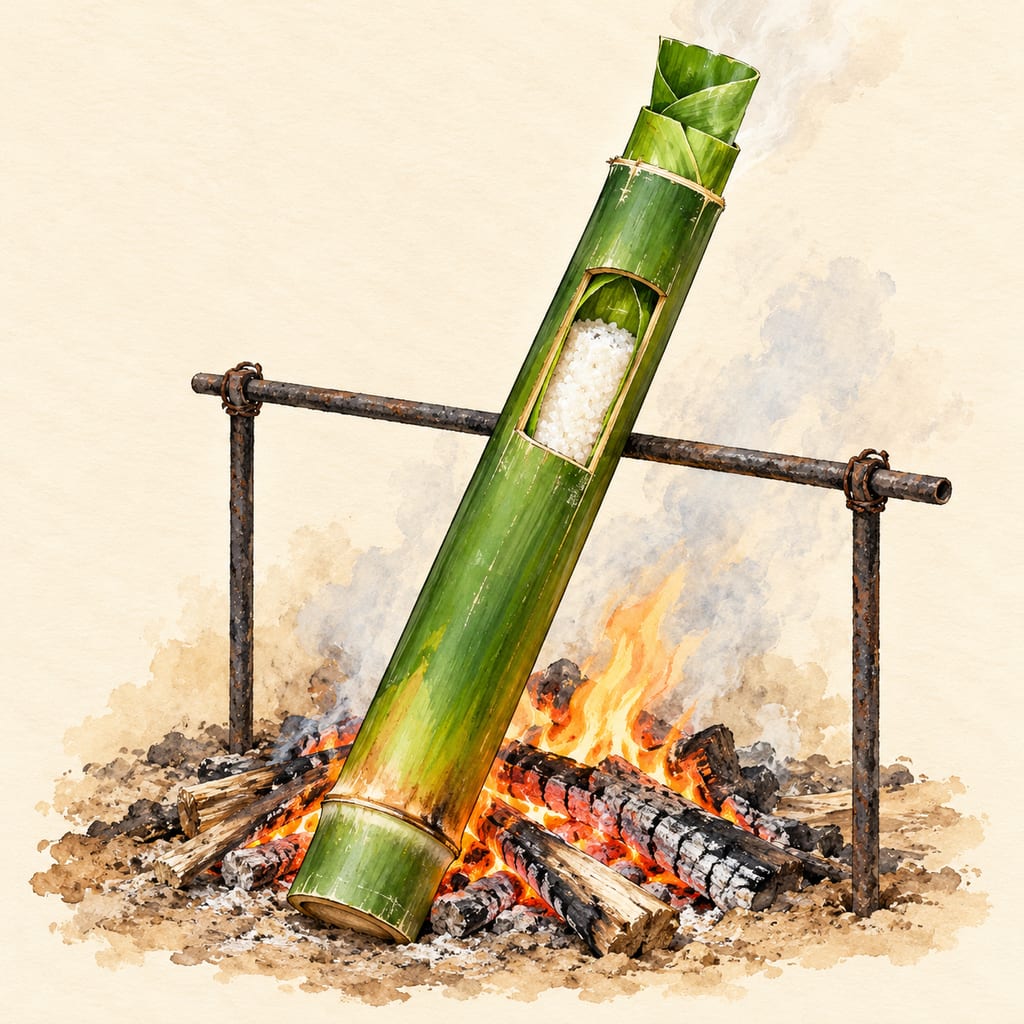
A bamboo internode can serve as the cooking vessel itself: its natural node closes one end while the open end holds food, often with a leaf lining or plug. Regional preparations differ in filling, fire arrangement and handling.
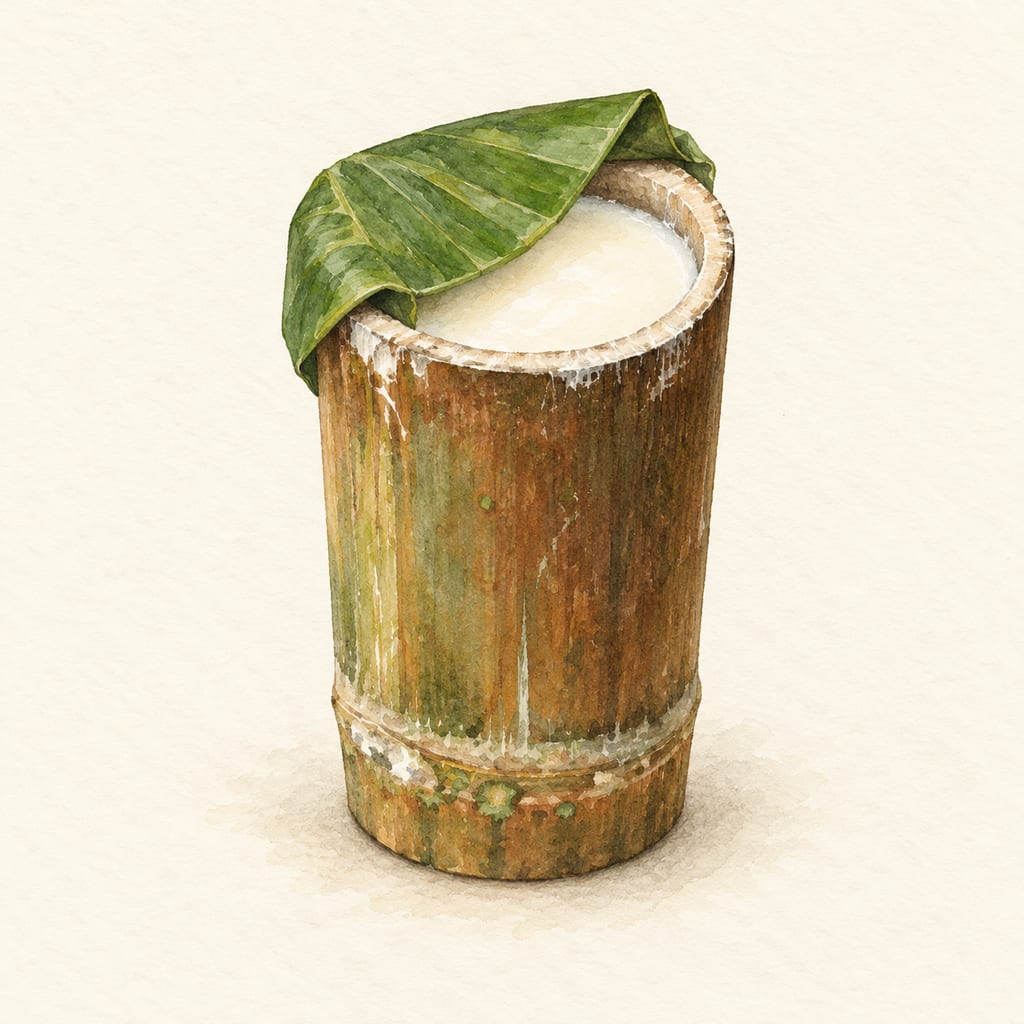
A short, open-topped segment of bamboo holds buffalo milk while it ferments into dadih, a Minangkabau food of West Sumatra. Its natural lower node forms a closed base; banana leaf often covers the mouth.
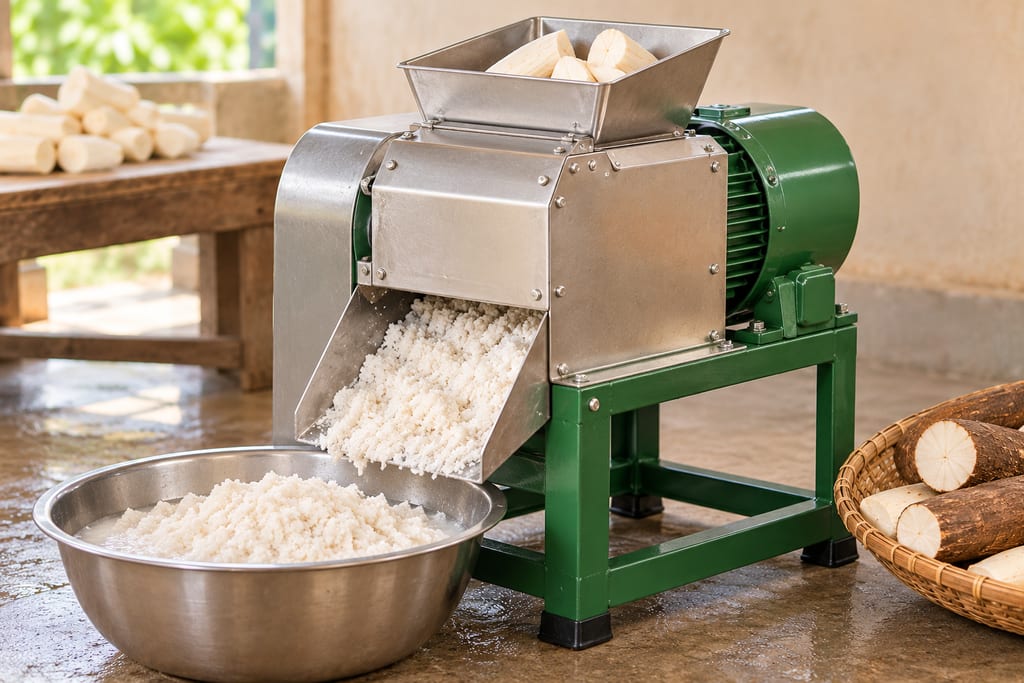
Graters, motorized rasping drums and processor grating discs reduce cassava or coconut to shreds or mash. They perform the grating stage only; later processing determines texture, extraction and cassava safety.
No community contributions have been published for this entry yet.
Sign in to contribute. Published comments and photos are free to read.
Journal of the Science of Food and Agriculture / WileyForm · Materials · Microbiology · Method
Hibiscus leaves for the manufacture of usar, a traditional inoculum for tempeUsar is described as heavily sporulated Rhizopus whose mycelium, grown on inoculated soybeans, adheres to waru leaves (Hibiscus spp.).
On Indonesian leaves sampled, Rhizopus predominated over the other fungi encountered.
Experiments with paper and textile showed leaves mainly act as an attachment surface with moisture-retaining capacity and adequate aeration, rather than by providing growth-inhibiting selectivity.
Cited in: A starter carried on a leaf; What the leaf contributes; From carrier to tempeh beans; An Indonesian tradition in a changing starter market
Scientific Reports, Nature PortfolioTraditional use · Geography · Modern context
The effect of the use of commercial tempeh starter on the diversity of Rhizopus tempeh in IndonesiaTraditional Indonesian tempe inocula include mold grown and dried on Hibiscus tiliaceus leaves (daun waru), called usar.
The paper describes leaf-carried inoculum and distinguishes starter from the banana or other leaves used to wrap beans for tempeh fermentation.
Its study covers strains and starter/tempeh samples from multiple Indonesian regions and discusses increased use of commercial starters since the 2000s alongside shifts in Rhizopus diversity.
Cited in: A starter carried on a leaf; From carrier to tempeh beans; Usar is not the leaf packet; An Indonesian tradition in a changing starter market
Singapore Noodles (Substack)Visual reference · Craft context
Tempeh: Part IThe article caption identifies the left photograph as natural tempeh starter on waru leaves; its text distinguishes starter transfer from wrapping the beans for bulk fermentation.
The guest account explains usar as a rubbing process and describes beans rubbed with the leaf culture.
Cited in: From carrier to tempeh beans; Usar is not the leaf packet