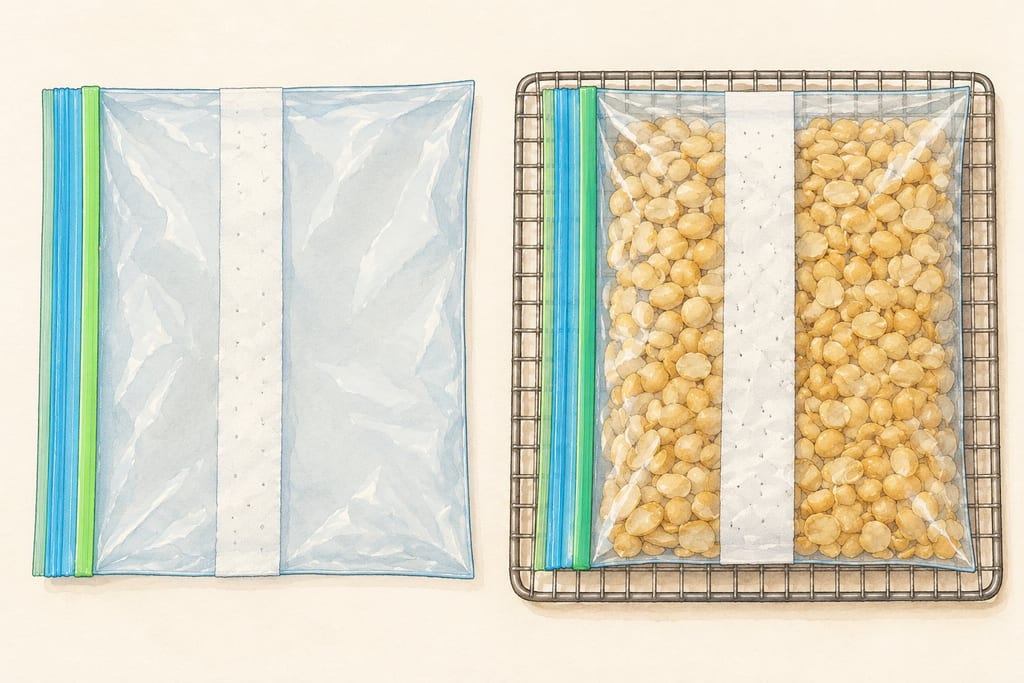
Perforated tempeh bags or ventilated containers
Perforated plastic bags and covered trays hold tempeh in a thin shape while admitting air; they are modern packaging options, distinct from the documented leaf wrapper.
 FermenteaWhere food goes to change
Equipment · Bamboo, leaf and wraps
A broad banana leaf folded around beans forms the flat packet in which tempeh ferments. It shapes the cake while allowing air exchange; Indonesian producers also use plastic wraps.
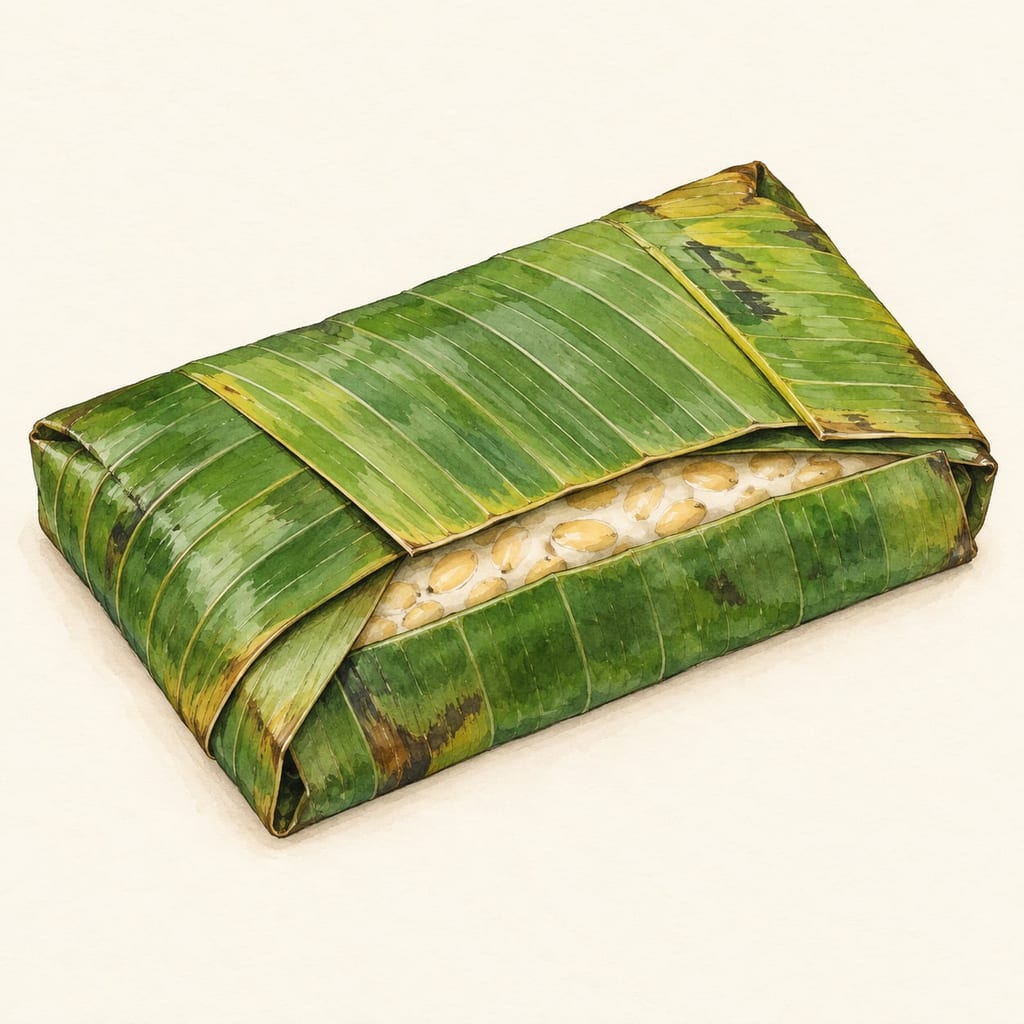
A tempe leaf packet is a flexible plant wrapper around beans while they form into tempeh. Broad banana leaves fold over a shallow portion, making a low, flattened parcel rather than a deep rigid container. A 2011 photograph documents people folding leaves around boiled soybeans and shows completed rectangular packets nearby. The illustration on this page is based on that observed form and the written evidence; it does not claim that every producer uses one exact fold, size or fastening.
The wrap helps define the cake’s shape and the conditions around it. Tempe fermentation uses a mold, and the comparative packaging paper describes the need to maintain airflow and temperature around the packet. The record does not support an airtight leaf pouch or a universal standardized dimension. A flat packet with overlapping leaf edges is better supported than a sealed jar or opaque sack.
Banana and other large leaves are documented as wrappers in traditional Indonesian tempeh production. The leaf is the outer fermentation package; it should not be confused with daun waru or usar leaves, which are separately described as carriers for traditional starter. Distinguishing the two roles matters: a starter carrier and a bean wrapper are different parts of the process, even when both are made from leaves.
Plastic packaging is also a real current method. A comparison involving three manufacturers in Bogor used both banana-leaf and plastic wraps and found that maker-related differences were stronger than the measured packaging effect on lactic-acid-bacteria community composition. That bounded result does not make the materials identical, establish universal biological equivalence, or justify replacing a leaf packet in a page specifically about the traditional form.
Tempeh and leaf-wrapped production belong to Indonesian food traditions, and a recent experimental comparison documents manufacturers working in Bogor. The national association does not make every local method the same: the research literature records variation in producers, ingredients and inoculum practices. The cited Bogor experiment used one defined soybean sample range and measured particular microbiological outcomes; it is not a national inventory of leaf packet designs.
The consulted publications describe leaf wrapping as traditional, but do not establish when the packet form first appeared or give a universally preferred leaf species, preparation, fold, fastening or reuse practice. A separate account dates early scientific writing about tempeh, not the wrapper. This entry therefore records the material and documented role without assigning an unsupported origin date or converting a single photograph into a universal pattern.
A 2021 research review describes beans wrapped in banana or other large leaves as part of a traditional Indonesian method, alongside modern plastic packaging. Its historical discussion of tempeh does not date the introduction of the leaf packet form.
Tempeh also ferments in plastic packaging, including perforated forms. The leaf packet is one documented system, not the only current option.
Source →The comparative study sampled three manufacturers in Bogor and found producer clustering more pronounced than wrap-related differences in its lactic-acid-bacteria community analysis. That result does not establish that packaging has no effects on other outcomes or processes.
Source →Banana leaves used as the outer fermentation packet are distinct from Hibiscus leaves called daun waru or usar, which can carry traditional inoculum.
Source →Researchers describe the leaf-wrapped method in Indonesia and experimentally compare banana-leaf and plastic wraps with Bogor manufacturers. The sources do not establish one regional design or an exclusive origin.
Perforated plastic bags and covered trays hold tempeh in a thin shape while admitting air; they are modern packaging options, distinct from the documented leaf wrapper.
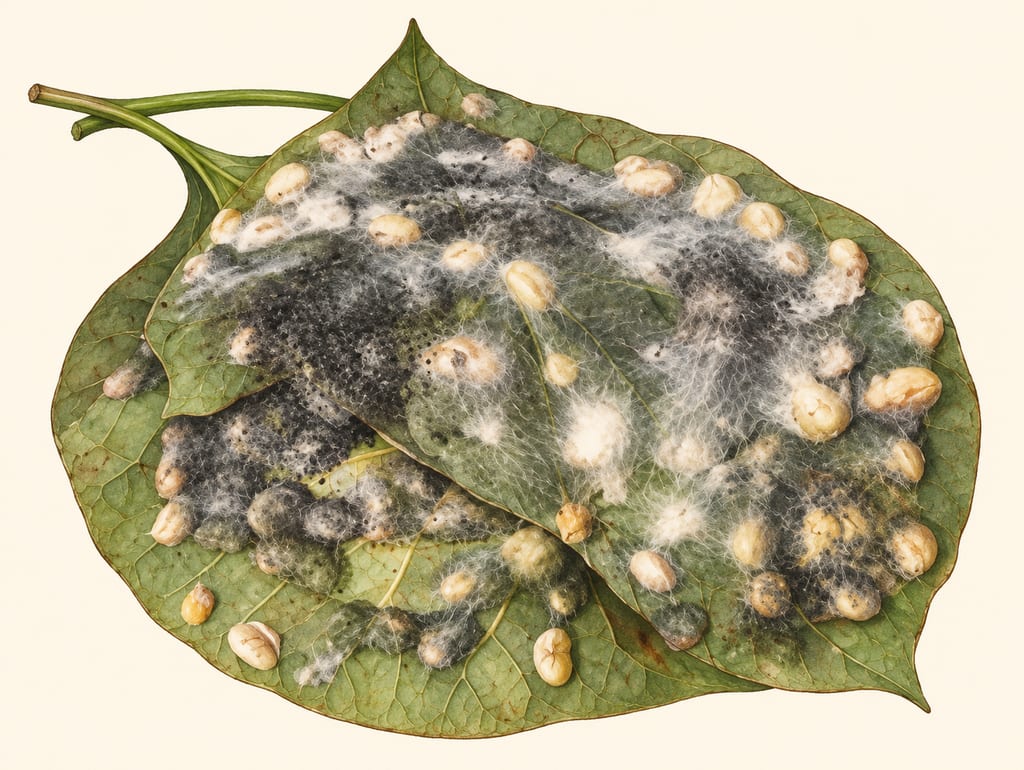
Usar is a traditional Indonesian inoculum carrier: leaves such as waru hold Rhizopus growth for transfer to tempeh beans. It carries starter between stages; it is distinct from the leaf packet used for bulk fermentation.
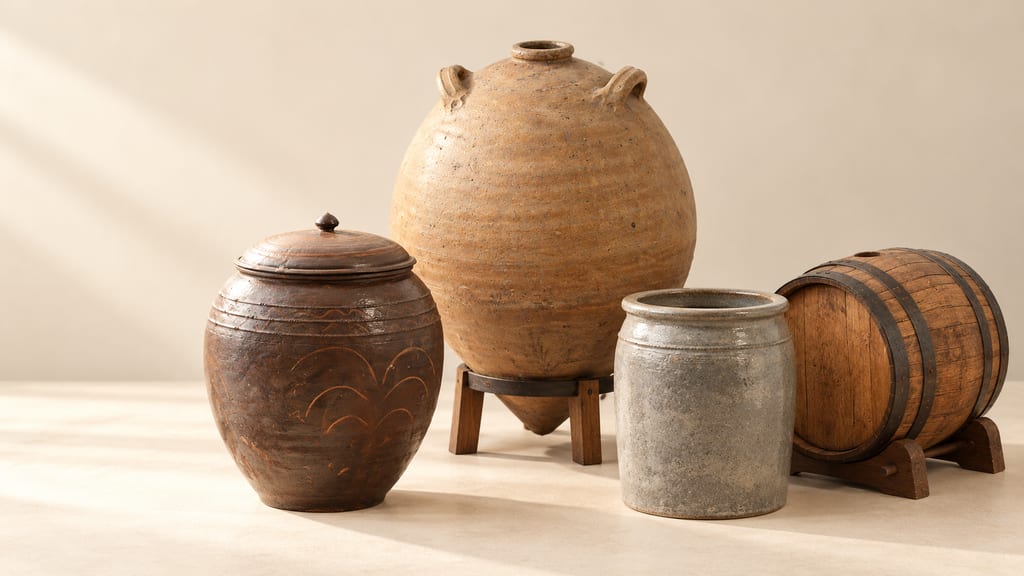
Jars, barrels, skins, leaves, pits and whole rooms decide much of what happens to fermented and cured food. This is how a container works on its contents, and how people in different places chose theirs.
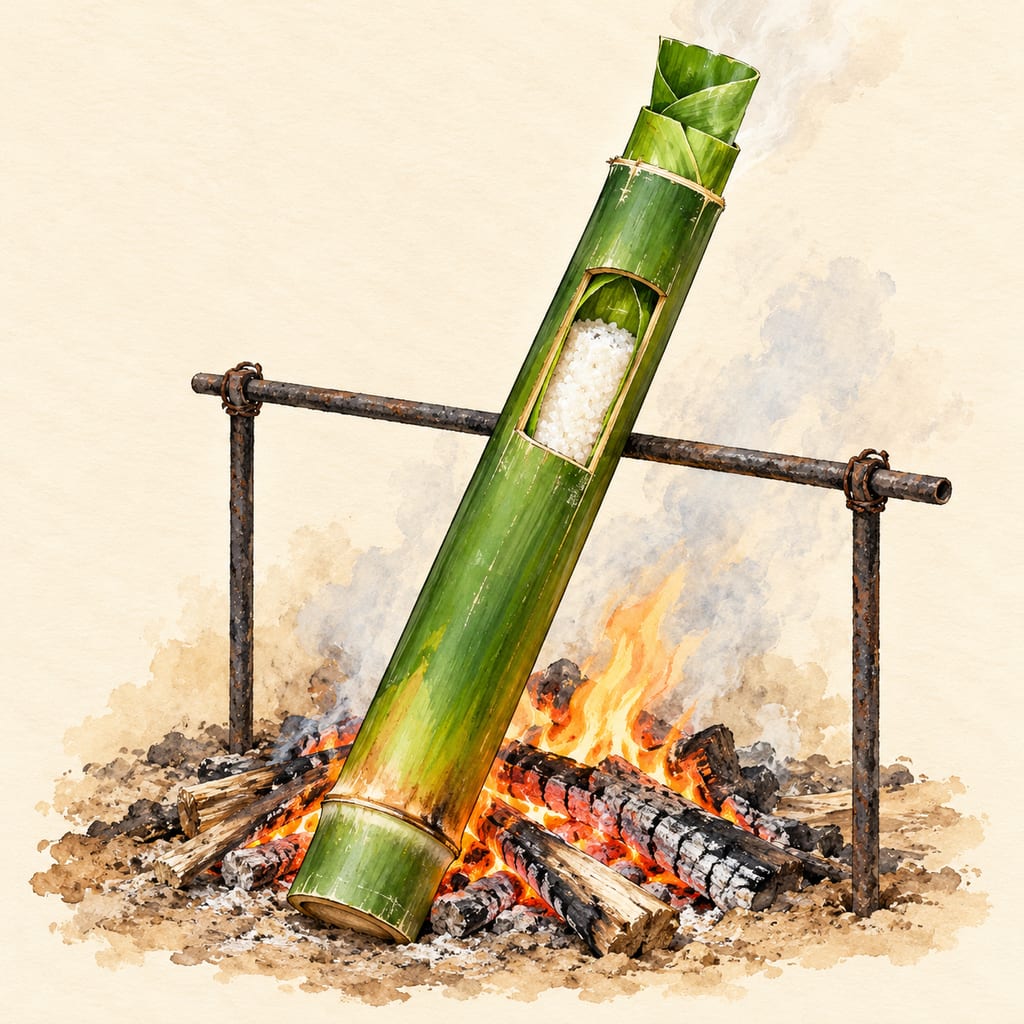
A bamboo internode can serve as the cooking vessel itself: its natural node closes one end while the open end holds food, often with a leaf lining or plug. Regional preparations differ in filling, fire arrangement and handling.
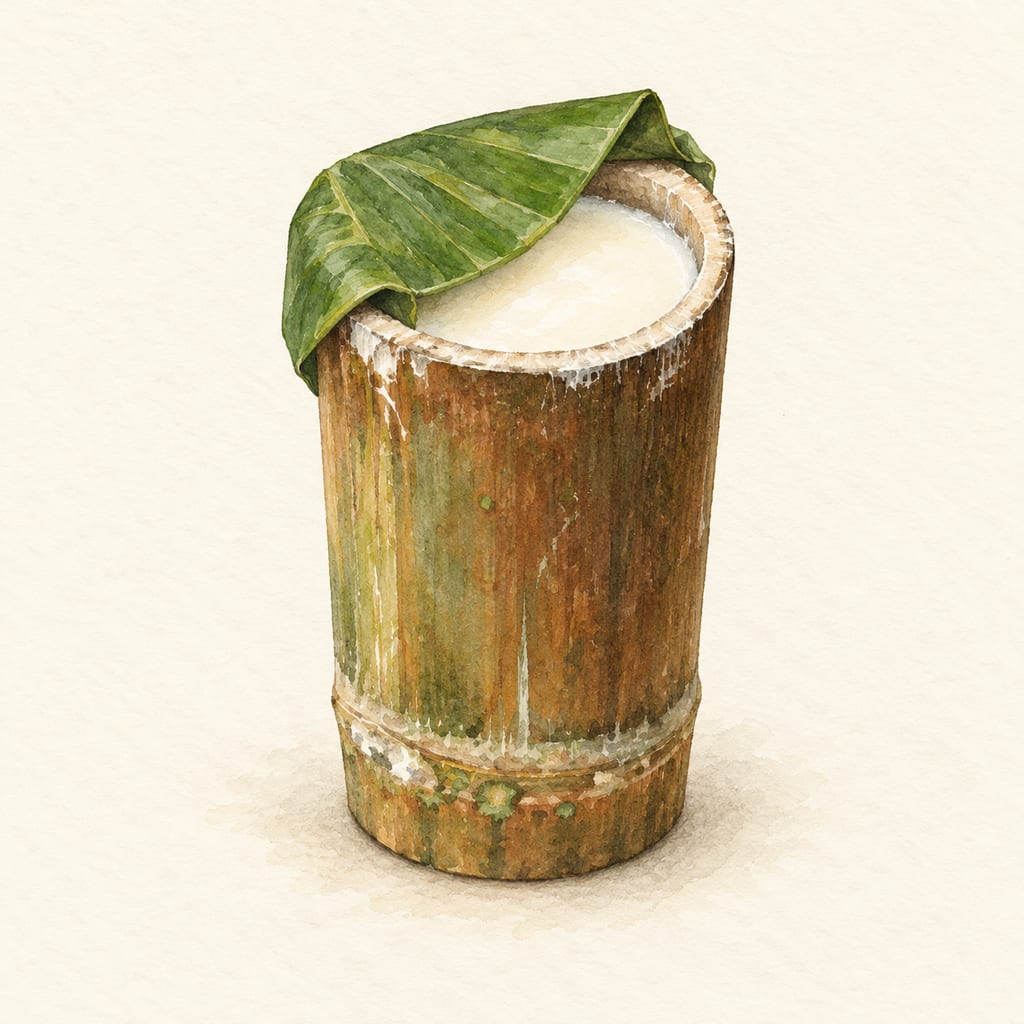
A short, open-topped segment of bamboo holds buffalo milk while it ferments into dadih, a Minangkabau food of West Sumatra. Its natural lower node forms a closed base; banana leaf often covers the mouth.
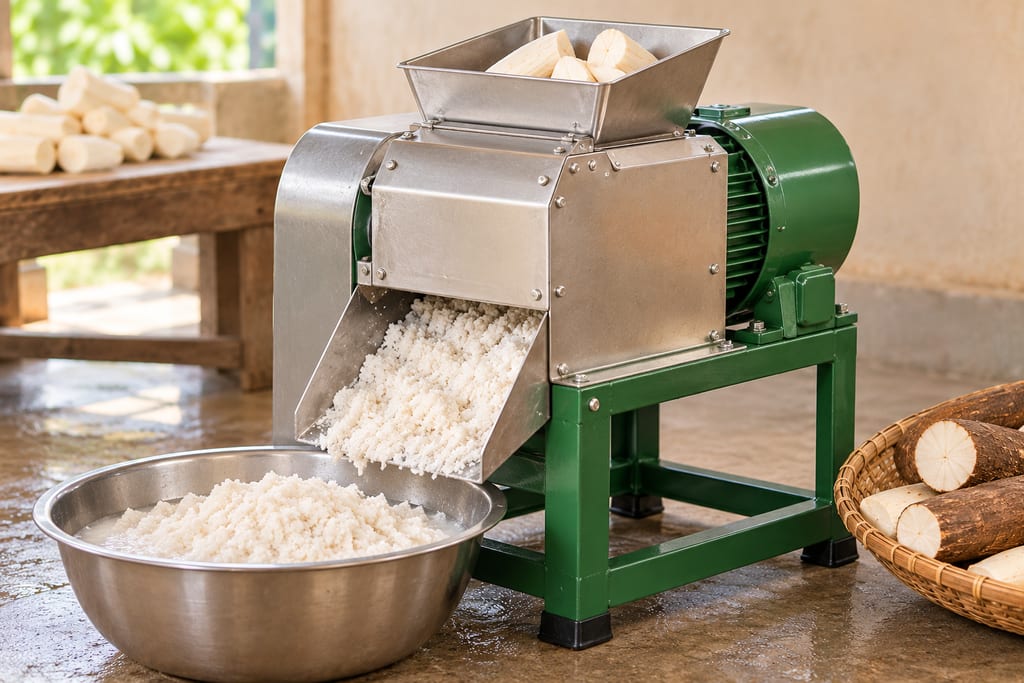
Graters, motorized rasping drums and processor grating discs reduce cassava or coconut to shreds or mash. They perform the grating stage only; later processing determines texture, extraction and cassava safety.
No community contributions have been published for this entry yet.
Sign in to contribute. Published comments and photos are free to read.
Scientific ReportsHistory · Method · Geography
The effect of the use of commercial tempeh starter on the diversity of Rhizopus tempeh in IndonesiaDescribes beans wrapped in banana or other large leaves in a traditional Indonesian tempeh process; the same account notes modern commercial starters and diverse regional practices.
Distinguishes leaves carrying traditional starter (daun waru/usar) from the leaves used to wrap beans for fermentation.
Provides a national Indonesian context but does not date the leaf packet's origin.
Cited in: Traditional material and modern alternatives; Geography and limits of the record
Journal of Food Science and TechnologyMethod · Geography · Comparative evidence
Microbiological quality of tempeh with different wraps: banana leaf versus plasticCompares banana-leaf and plastic wraps used during fermentation by three tempeh manufacturers located in Bogor, Indonesia.
The study reports manufacturer-related clustering in its lactic-acid-bacteria community analysis and no statistically significant wrap effect for that measured outcome; this does not cover every product outcome or fermentation system.
For its experiment, 200–300 g soybean portions were wrapped with banana leaf or plastic; this is a study batch, not a customary standard.
Cited in: The leaf as a fermentation packet; Traditional material and modern alternatives; Geography and limits of the record
Wikimedia CommonsVisual reference · Method
Membungkus TempeThe Commons image description identifies tempeh being made by wrapping boiled soybeans in banana leaves; inspection shows folded packets, loose leaves and packet preparation.
The photographer licensed the image under CC BY 2.0.
Cited in: The leaf as a fermentation packet