Equipment

626 sourced equipment pages: vessels, tools, appliances and built structures.

Everything

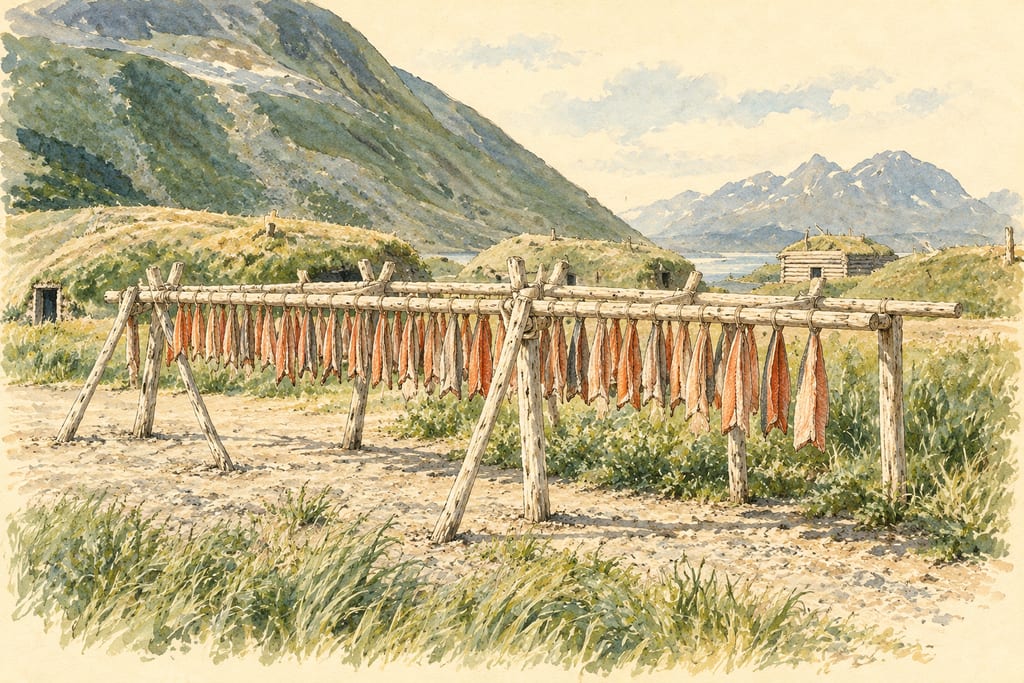
Historical illustration of an open wooden Alutiiq fish rack with salmon hanging from a rail at Old Harbor, Kodiak.
Built structures

Initaq (Alutiiq fish-drying rack)

An Alutiiq initaq is a wooden hanging rack for air-drying fish around Kodiak. An 1889 Old Harbor photograph shows an open rail structure; the Alutiiq Museum documents contemporary spruce-pole or lumber racks and airflow-preserving covers.
Terraces, platforms and stands
Kodiak Archipelago
Built structures

Grass-lined fish pit

CDC guidance depicts fish heads in a grass-lined hole in the ground and describes it as a traditional Alaska Native food-preparation method; it names no specific Nation or community.

Pits and cavities
Alaska
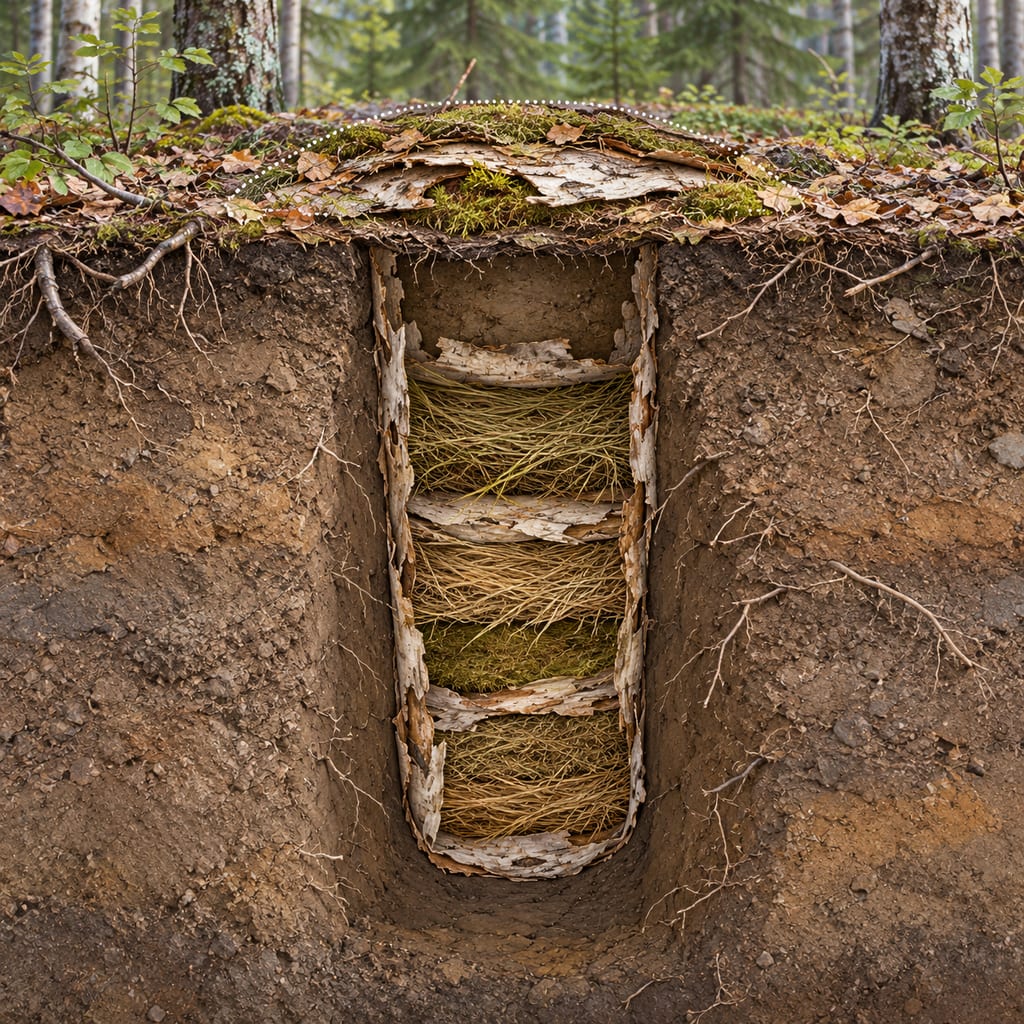
Interpretive cutaway of an Upper Cook Inlet Dene cache pit below the forest floor, showing earth layers, a bark lining and grass layers; exact details of this feature remain uncertain.
Built structures · Place

Dene birch-bark-lined cache

A Dene cache pit at Upper Cook Inlet, Alaska, initially dated to around 1,000 years ago. JBER documents a below-ground feature lined with birch bark and grasses; exact contents and construction details remain under study.

Show on map
Pits and cavities
Upper Cook Inlet
Built structures

Alutiiq clay-lined subfloor pit

A large clay-lined depression built beneath some Alutiiq house floors in the Kodiak region, documented in Koniag contexts for food storage and possibly fermentation.

Pits and cavities
Afognak Island
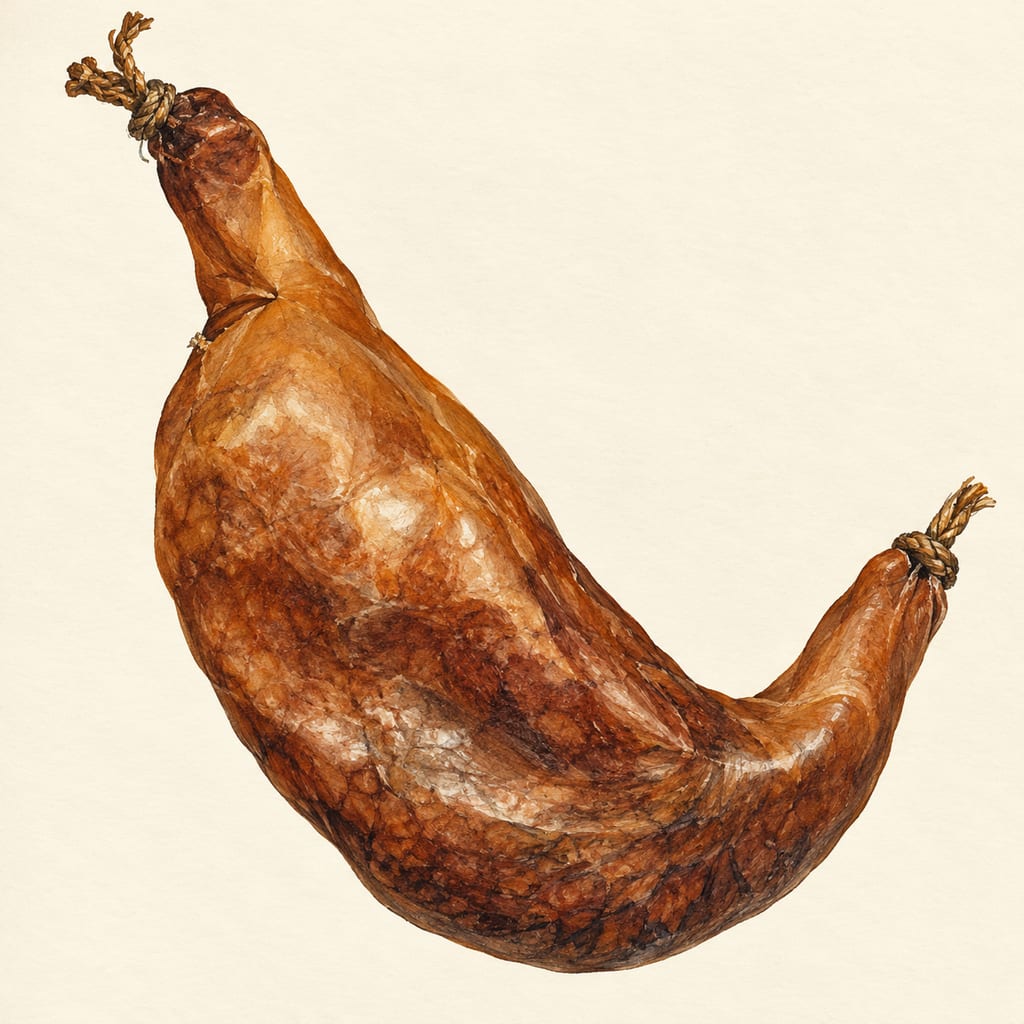
Historical gouache and pencil illustration of an empty Alutiiq seal-stomach food pouch with both ends tied, on a warm ivory background.
Equipment

Seal-stomach food container

An Alutiiq household container made from a seal stomach held summer foods such as berries, greens, oil and fish eggs. Its flexible, lashed ends contained stored foods and could also hold blubber while it released oil.

Bags, sacks and casings
Alutiiq/Sugpiaq Alaska