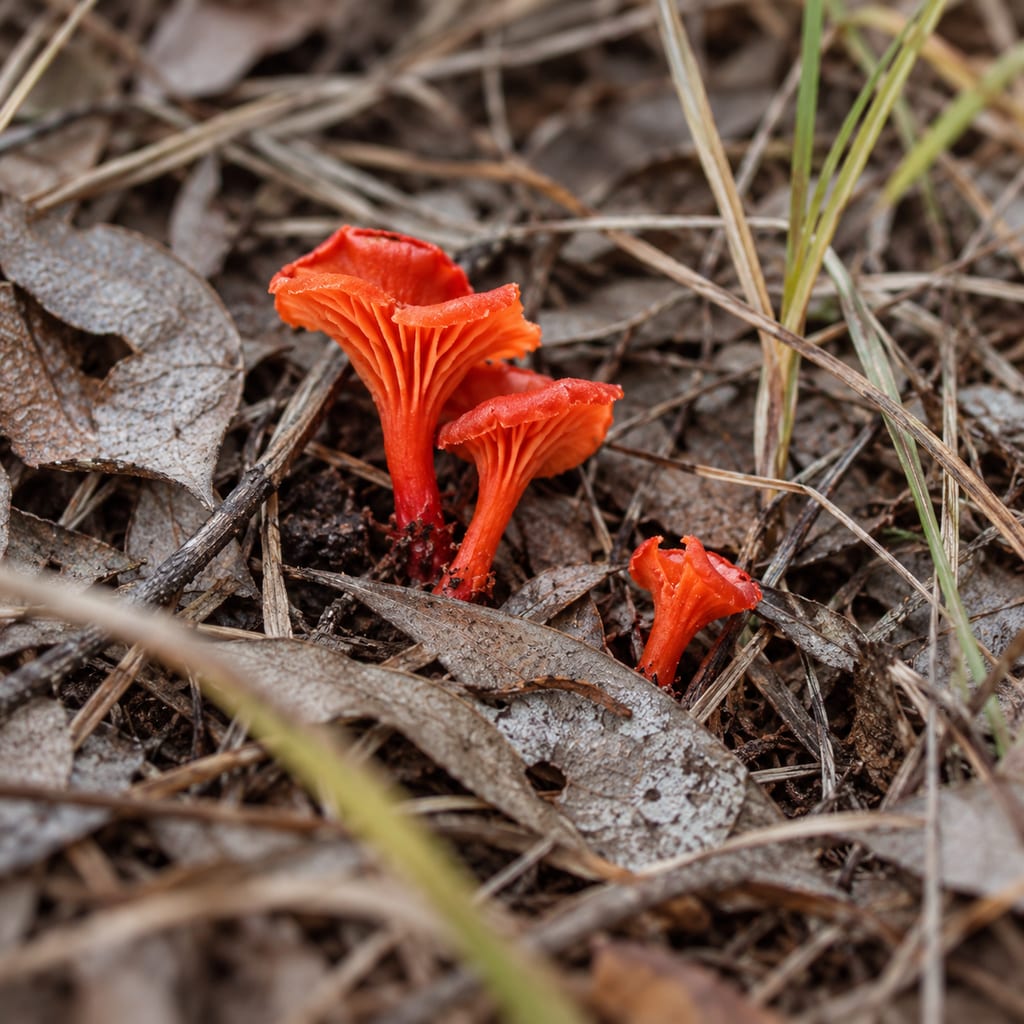
Cantharellus addaiensis
A small red ectomycorrhizal chanterelle of African open forest and miombo. Sources document regional food use but differ on taste and harvesting preference; older records as C. floridulus or C. miniatescens require care.
 FermenteaWhere food goes to change
Mushrooms
A wild miombo Amanita recorded as a local food in northern Zambia, with collections also documented in Haut-Katanga, DRC. The evidence is regional and does not make wild identification safe.
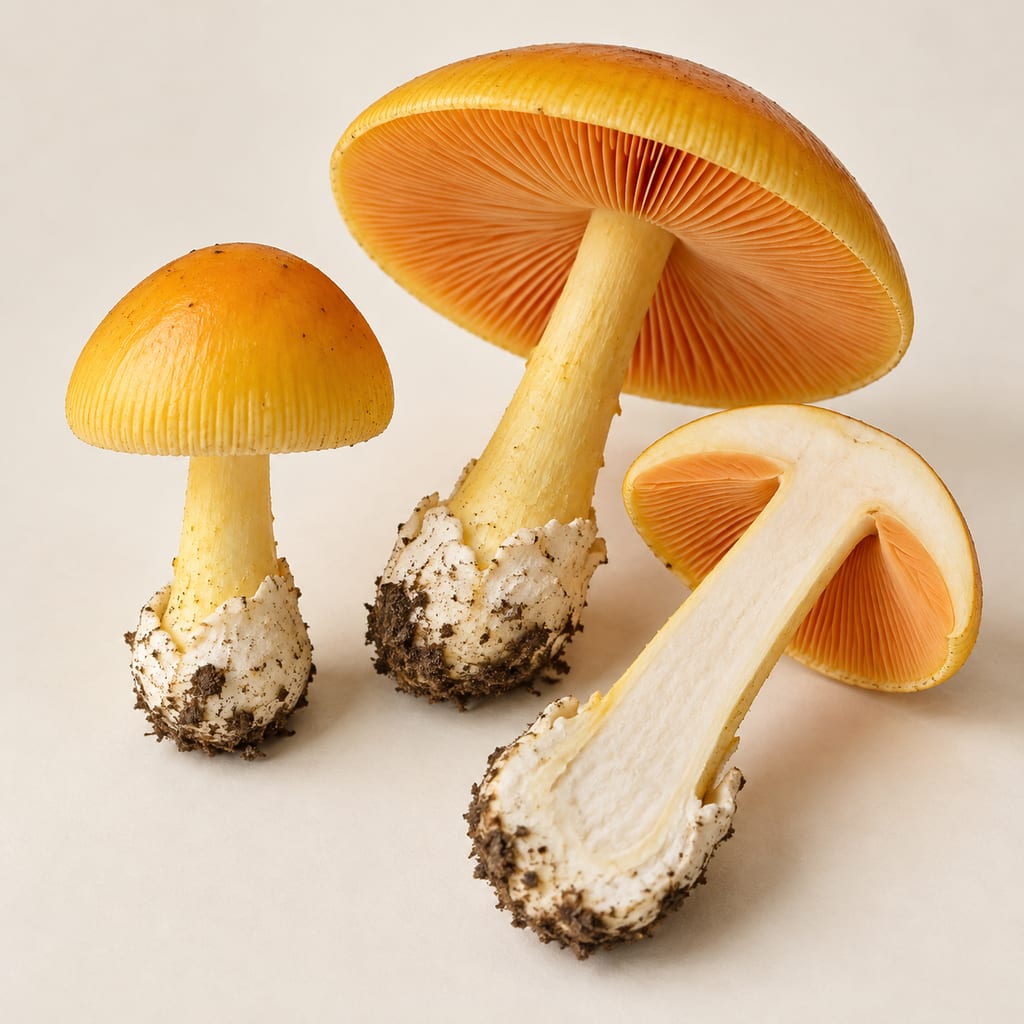
Amanita flammeola Pegler & Piearce is a tropical African Amanita described from Zambia in 1980. Specialist records accept the name. The type-study description gives a saffron-yellow cap that may fade toward straw yellow, crowded free gills, a stem without a ring and a large sac-like volva. The record also connects a voucher collection to an nrLSU sequence. These features and sequence data help describe named collections; they are not a visual test for a mushroom someone has found.
It is ectomycorrhizal, growing in association with living tree roots. The Haut-Katanga flora places it in older miombo woodland, often with Brachystegia spiciformis, on deep red soils. The specialist record describes a mixture of Uapaca and Brachystegia. The reviewed sources document a wild woodland ingredient, not cultivation or a fermentation role.
Published Zambian records include places around Kitwe and Garneton, the Kitwe–Ndola road, Greystone Farm and Misaka National Forest in Copperbelt Province. The specialist account lists collections from December 1978 and December 2000 and an ecological note gives fruiting in December and again from late March to early April. This small set of observations is not a country-wide harvest calendar.
The 2017 Haut-Katanga flora adds a DRC occurrence and describes the species as uncommon there. A 2025 review also lists Malawi but cites an underlying “Mjaika 2022” reference that was not independently resolved in this pass. Keep Malawi as an unconfirmed secondary-report lead.
The species’ food-use record is limited. Pegler and Piearce’s Zambian work and Härkönen and colleagues’ 2015 book report local consumption in northern Zambia, while noting the species is absent from markets. The Haut-Katanga flora says little is known about its consumption there and reports that Lamba people reject it. FAO’s Zambia table repeats the older food record; it is a compiled reference, not new fieldwork. The Bemba name given in the type-study record is musholomwa.
No species-specific recipe, preparation sequence, storage duration, nutritional analysis or preservation method was established in the sources reviewed. Do not infer cooking instructions or general commercial use from an edible checklist. The word edible records a localized food history; it is not a toxicological assessment.
The Haut-Katanga flora says A. flammeola resembles the yellow-orange A. masasiensis and distinguishes them by the absent ring and lack of an internal limbus in the volva base. It describes this comparison in section Caesarea. The Amanitaceae.org account instead places A. flammeola in section Vaginatae. These published sectional placements conflict; this draft keeps the disagreement visible rather than forcing a resolution.
A. masasiensis is a taxonomic lookalike; the cited flora does not call it poisonous. Separately, the FDA’s general mushroom-toxin material notes amatoxin-producing Amanita such as A. phalloides and A. virosa. That genus-level hazard does not show that A. flammeola contains amatoxins. A photo, local name, market label or local food history cannot establish that an unknown Amanita is safe to eat.
Copperbelt collection localities and a northern-Zambia food-use report do not imply use or abundance throughout the country.
The source names Kitwe/Garneton, the Kitwe–Ndola road, Greystone Farm and Misaka National Forest; coordinates are not supplied.
The regional flora records the species here but says local consumption is poorly documented and reports Lamba rejection.
A small red ectomycorrhizal chanterelle of African open forest and miombo. Sources document regional food use but differ on taste and harvesting preference; older records as C. floridulus or C. miniatescens require care.
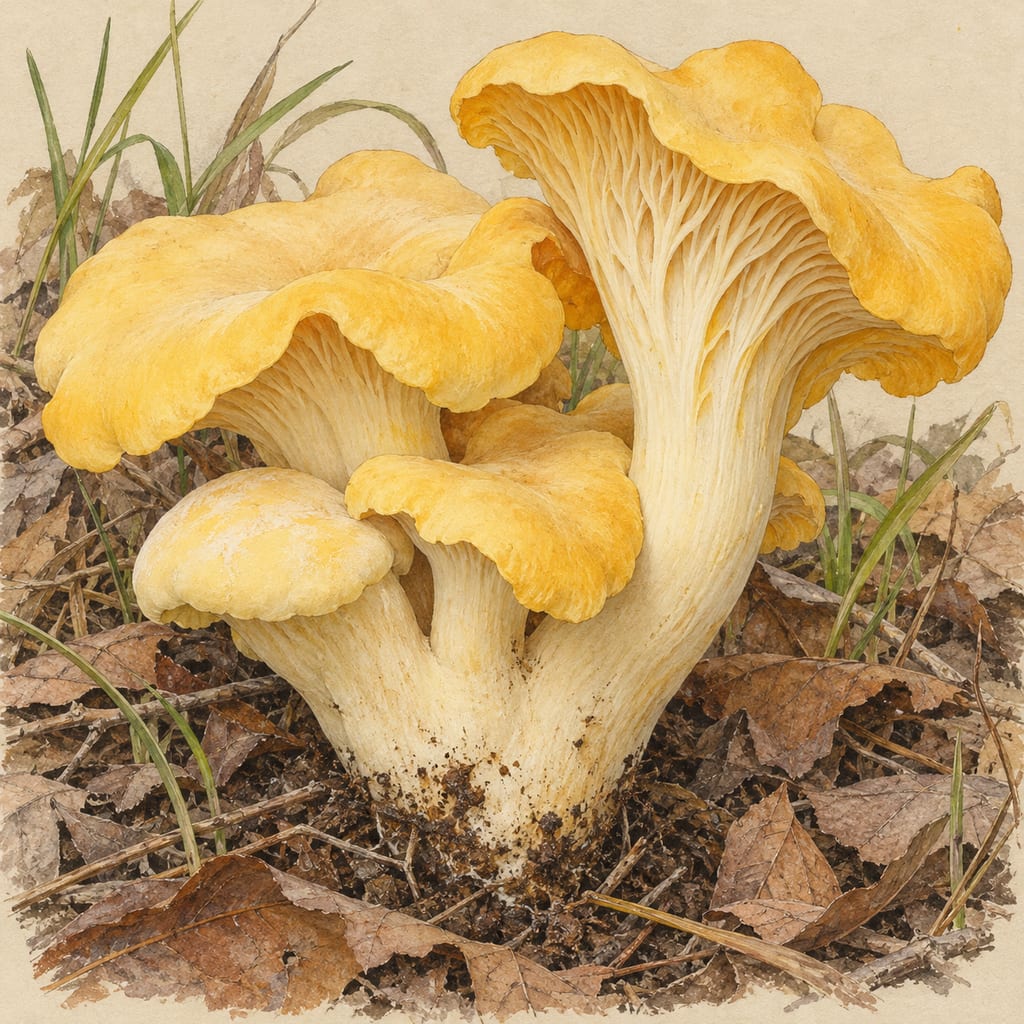
Cantharellus afrocibarius is a robust yellow chanterelle of the miombo woodlands of southern Central Africa. It is eaten and sold locally, is rated Vulnerable on the IUCN Red List, and is hard to tell from related species in the field.
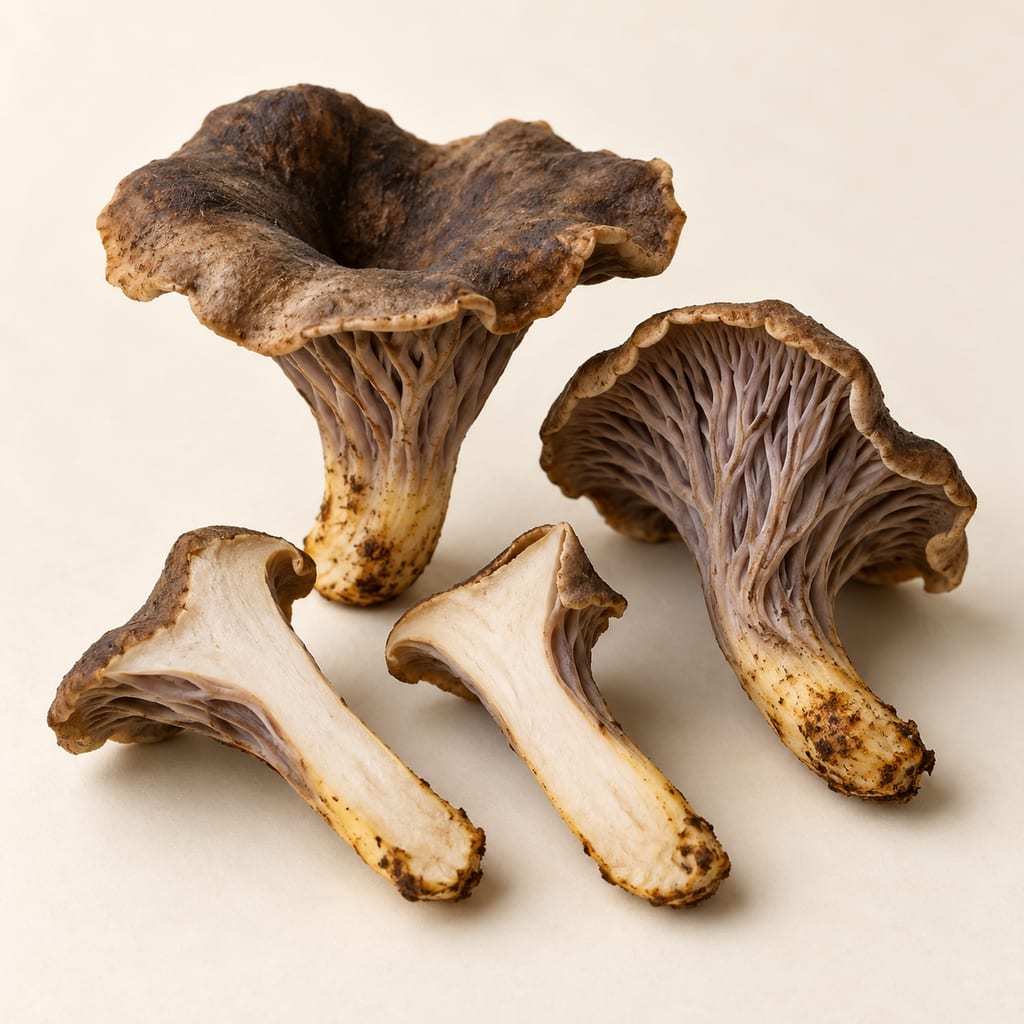
Cantharellus congolensis is an ectomycorrhizal chanterelle of sub-Saharan Africa, eaten in the Democratic Republic of the Congo under local names. Its edibility rests on food-use surveys, not on toxicity tests.
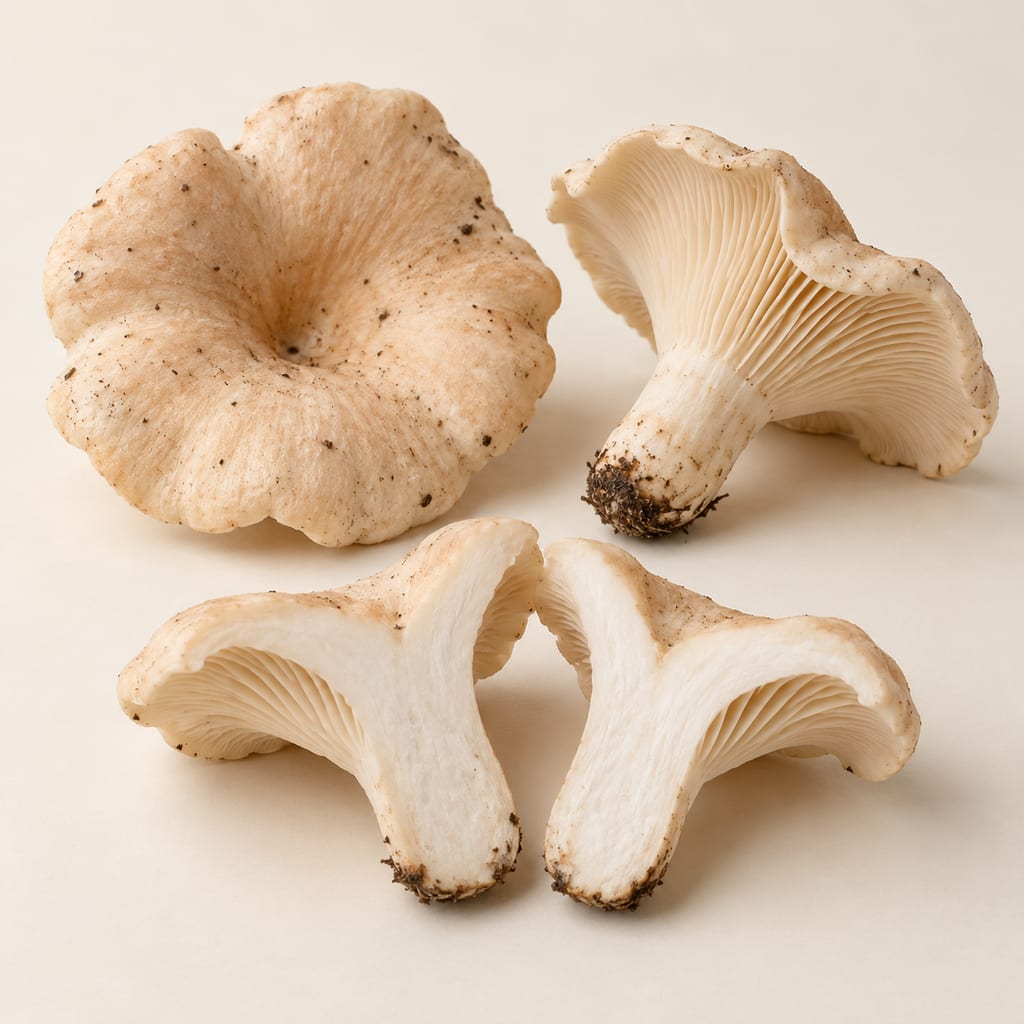
Lactifluus gymnocarpoides is an African milkcap of open Uapaca and miombo woodland. Regional inventories record it as food, but its bitter taste means local cooks remove it before eating, and the sources give no preparation.
No community contributions have been published for this entry yet.
Sign in to contribute. Published comments and photos are free to read.
Amanitaceae.org / dikarya.usIdentity · Taxonomy · Ecology · Seasonality · Locality
Amanita flammeolaAccepted name, MycoBank 112739, original description and figure, morphology, miombo ecology, Copperbelt localities and dates, Bemba name and photo credit.
Cited in: A woodland Amanita with a narrow food-use record; Collections and rainy-season observations; A local food tradition, not a safety guarantee; Lookalikes and taxonomic disagreement
ABC Taxa 17, Royal Belgian Institute of Natural Sciences / Meise Botanic GardenIdentity · Taxonomy · Morphology · Ecology · Geography · Food use · Safety context · Image lead
Champignons comestibles du Haut-Katanga (R.D. Congo)Profile and Fig.17 ADK6206; miombo ecology in Haut-Katanga; localized Zambia food use, limited DRC consumption evidence and reported Lamba rejection; A. masasiensis resemblance.
Cited in: A woodland Amanita with a narrow food-use record; Collections and rainy-season observations; A local food tradition, not a safety guarantee; Lookalikes and taxonomic disagreement
EFTA / Meise Botanic GardenTaxonomy · Morphology · Ecology · Distribution · Image leads
Amanita flammeolaMorphology, miombo Brachystegia association, A. masasiensis comparison, DRC/Zambia range, exact cited figure leads.
Food and Agriculture Organization of the United NationsFood use
Produits forestiers non ligneux 17: Champignons comestibles sauvagesZambia table lists A. flammeola as food citing Pegler & Piearce 1980; compiled record, not independent observation.
Cited in: A local food tradition, not a safety guarantee
Ethnobiology and Conservation 14:35Secondary distribution lead
Fungal Resources for Human Well-being: Implications for Poverty and Gender Inequality in Sub-Saharan AfricaTable 1 lists Malawi, Zambia and DRC and cites De Kesel 2017, Mjaika 2022 and Pegler & Piearce; underlying Malawi citation not independently resolved.
Cited in: Collections and rainy-season observations
U.S. Food and Drug AdministrationGeneral safety context
Bad Bug Book, Second EditionGeneral statement that several Amanita species including A. phalloides and A. virosa produce amatoxins; not a species-specific analysis of A. flammeola.
Cited in: Lookalikes and taxonomic disagreement