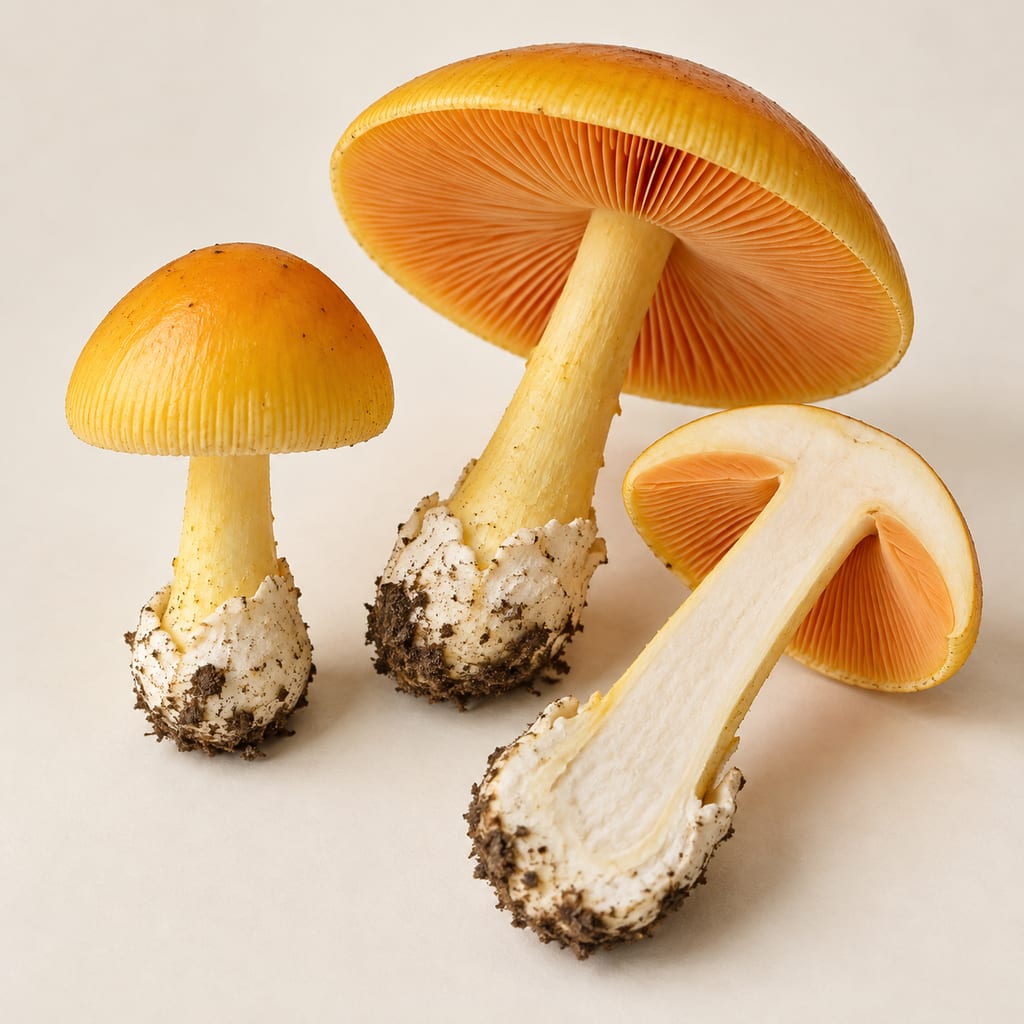
Amanita flammeola
A wild miombo Amanita recorded as a local food in northern Zambia, with collections also documented in Haut-Katanga, DRC. The evidence is regional and does not make wild identification safe.
 FermenteaWhere food goes to change
Mushrooms
Cantharellus afrocibarius is a robust yellow chanterelle of the miombo woodlands of southern Central Africa. It is eaten and sold locally, is rated Vulnerable on the IUCN Red List, and is hard to tell from related species in the field.
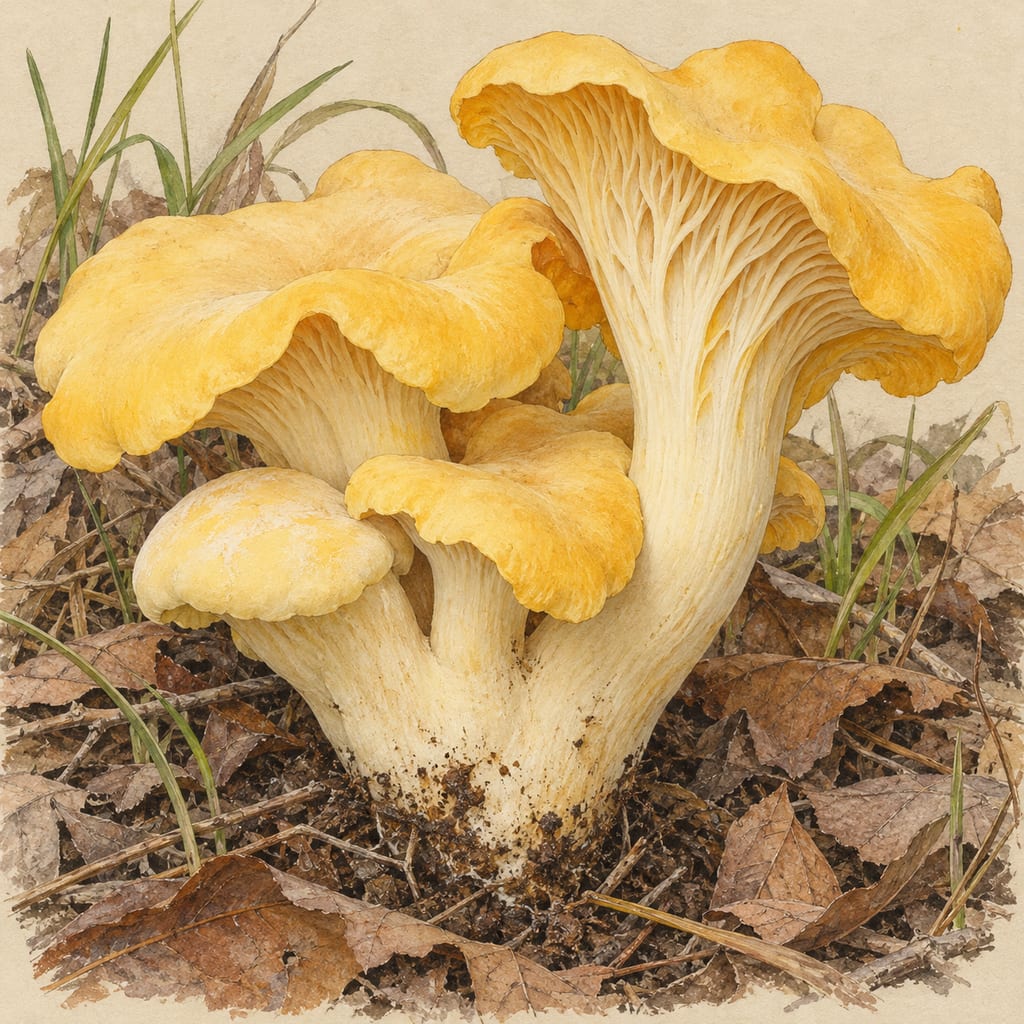
Cantharellus afrocibarius is a soil-fruiting ectomycorrhizal fungus of miombo woodland, the open seasonal woodland of Brachystegia and Julbernardia. Its caps are irregular, lobed and wavy, and several partly joined caps often rise from one massive, forked stem. Its surface is pale yellow, sometimes with a young white mealy bloom, and its flesh is whitish but yellow beneath the skin. The fertile surface is made of low, forked ridges rather than true gills. Individual caps are described at about 2 to 6 centimetres, and joined clusters can reach about 10 to 18 centimetres.
The old name C. cibarius is not a safe guide to African records. The true C. cibarius is a northern, cool-climate species, and some historical tropical reports may cover only part of this species.
Several African chanterelles form multi-cap clusters and overlap geographically. The Haut-Katanga guide says the species is hard to separate in the field from C. defibulatus, and that microscopy of clamp connections helps. Other multi-cap miombo species include C. stramineus, C. mikemboensis, and C. sublaevis. Market lots can mix it with C. rufopunctatus.
A photograph, a colour, a local name or a taste is not an identification. Consumers should not rely on any of them to decide that a specimen is this species.
The IUCN Red List assessment, dated 2023, reports the species only from southern Democratic Republic of the Congo and northern Zambia, rates it Vulnerable, and describes it as rare in the southern part of its range and fairly common farther north. The holotype is from Chibuli, Copperbelt Province, Zambia, collected on 31 January 1996; the record gives no coordinates. Illustrated Zambian collections come from North Swaka Forest Reserve in Mkushi District and from Chingila in Mbala District, both in February 2013.
The species grows in older miombo, especially stands with Brachystegia and Julbernardia. Fruit-body production is reported to rise in wetter years and fall in dry years. Logging and conversion of miombo to farmland threaten this habitat, and the sources reviewed do not support wild harvesting from this restricted range.
No monthly fruiting calendar is established for this species. February is documented for the Zambian collections, and the holotype was collected at the end of January. Regional sources link chanterelle production to rain, and a Haut-Katanga account puts broad production in January to April. Those are community-level patterns, not a season for the species.
Local food use is recorded. A Lamba and Bemba study from Haut-Katanga lists a voucher as C. afrocibarius and records the local names bwitondwe and butondo, which are shared with related chanterelles. A Haut-Katanga account says the species is not separated from other large yellow chanterelles in markets, and that it is sold in mixed lots and prized for its size and flavour. The IUCN assessment records it as edible, citing field and ethnomycological literature.
These reports establish local eating and trade. They give no recipe, preparation method, storage limit or food-safety test. The sources reviewed describe no fermentation role. The species is ectomycorrhizal, and a Zambian guide says chanterelles cannot be cultivated, so no commercial cultivation for this species is documented.
The species is Vulnerable and its range is restricted, so this entry does not encourage wild harvest. Food use should rest on correctly identified material from a source that can confirm the species. The sources give no safe preparation or storage guidance, and this page is not a food-safety validation.
Holotype locality; no coordinates in the record.
Local names, market sale and consumption reports; no finer locality.
Illustrated collections at named forest reserve and village locations.
A wild miombo Amanita recorded as a local food in northern Zambia, with collections also documented in Haut-Katanga, DRC. The evidence is regional and does not make wild identification safe.
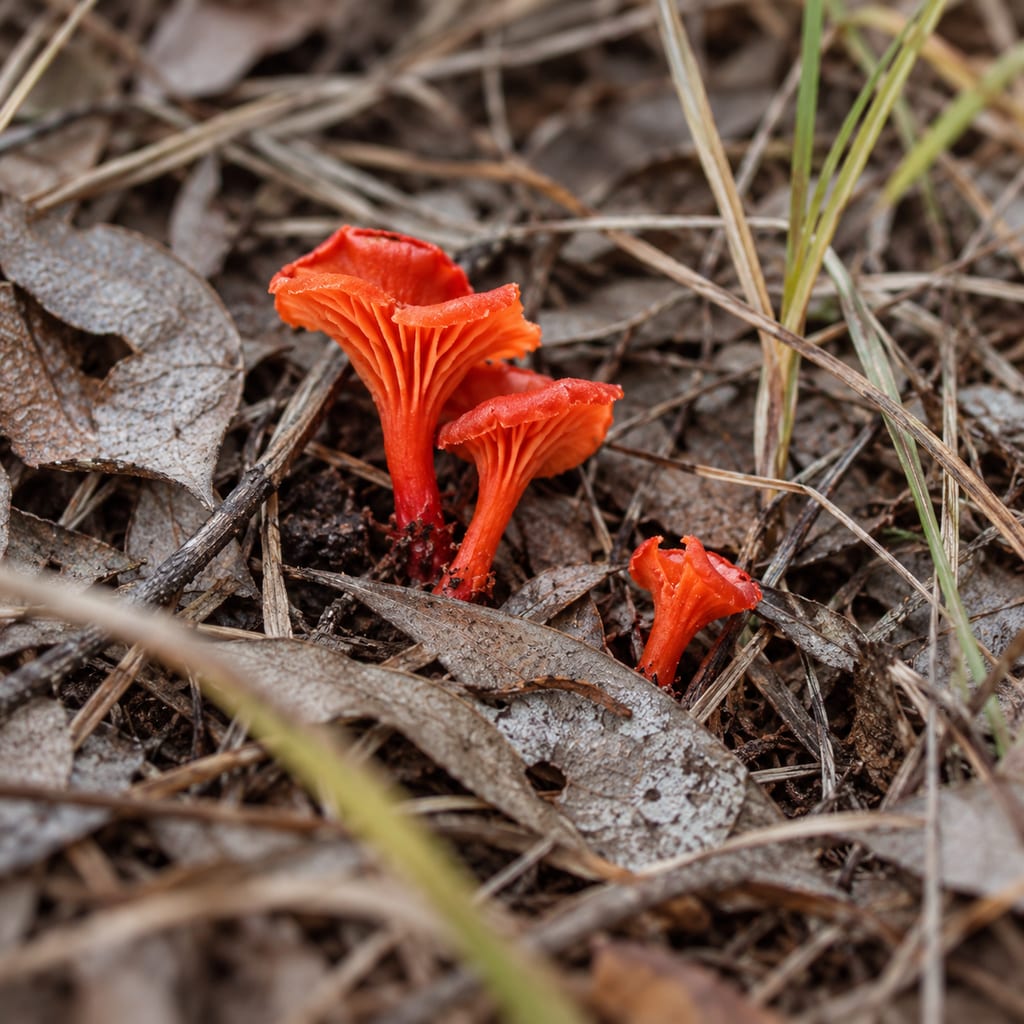
A small red ectomycorrhizal chanterelle of African open forest and miombo. Sources document regional food use but differ on taste and harvesting preference; older records as C. floridulus or C. miniatescens require care.
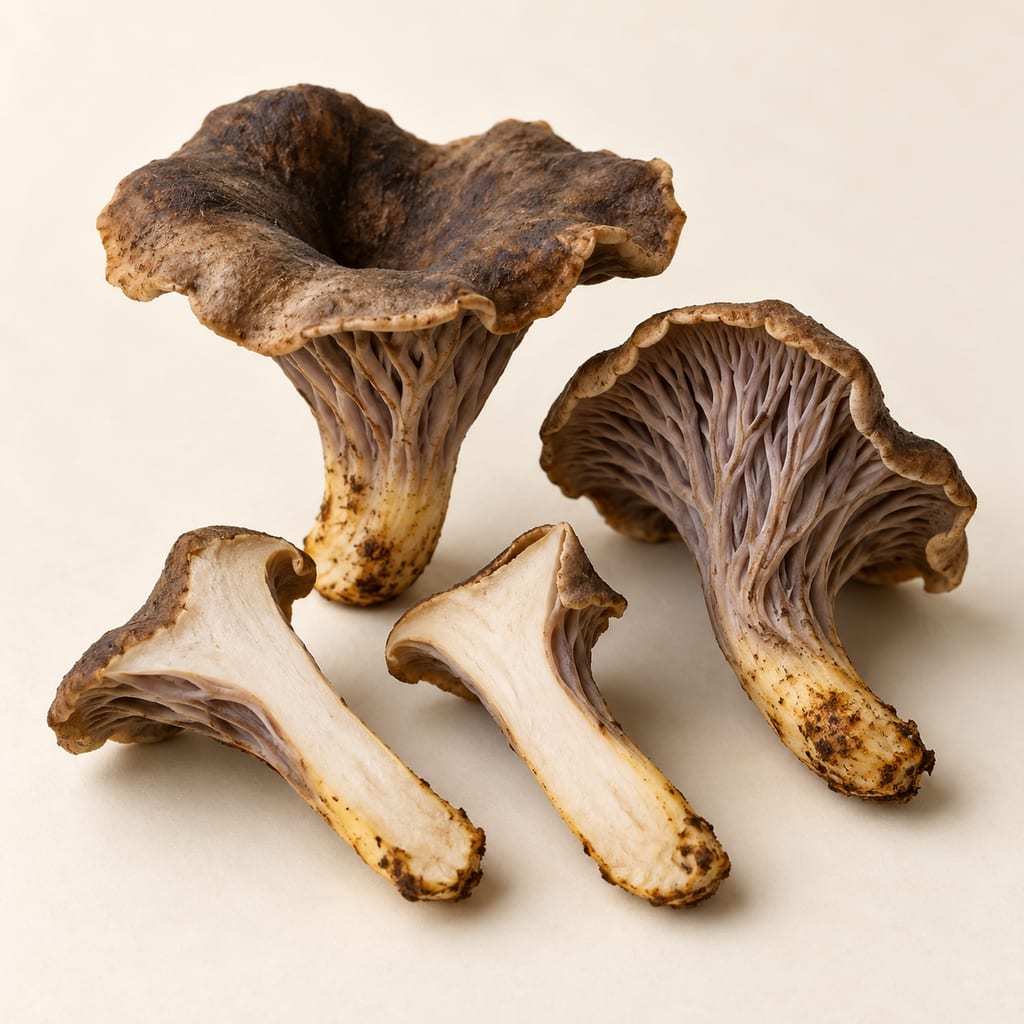
Cantharellus congolensis is an ectomycorrhizal chanterelle of sub-Saharan Africa, eaten in the Democratic Republic of the Congo under local names. Its edibility rests on food-use surveys, not on toxicity tests.
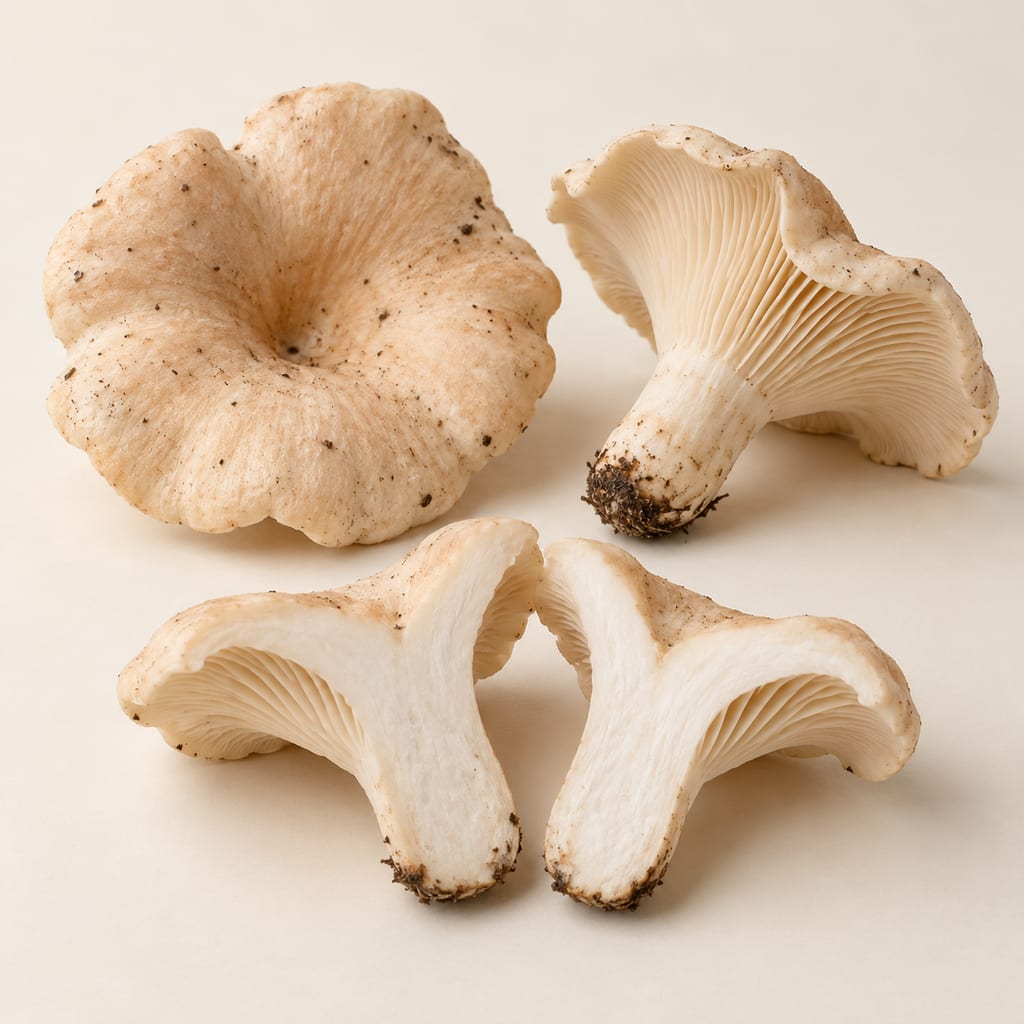
Lactifluus gymnocarpoides is an African milkcap of open Uapaca and miombo woodland. Regional inventories record it as food, but its bitter taste means local cooks remove it before eating, and the sources give no preparation.
No community contributions have been published for this entry yet.
Sign in to contribute. Published comments and photos are free to read.
Fungal DiversityTaxonomy
New or interesting Cantharellus from tropical AfricaDescription of C. afrocibarius as a distinct species in 2013
Cited in: Overview
IUCNConservation · Distribution · Food status
Cantharellus afrocibarius assessment, IUCN Red ListRange in southern DRC and northern Zambia; Vulnerable; recorded as edible from field and ethnomycological sources
Cited in: Range, habitat and conservation; Food use and markets; Safety and handling
ABC Taxa 17Identification · Food use · Season
Champignons comestibles du Haut-Katanga (R.D. Congo)Hard to separate from C. defibulatus; market mixing; rain-linked production; January to April peak
Cited in: Look-alikes and identification; Season; Food use and markets
Norrlinia 29Distribution · Identification · Food use
Zambian mushrooms and mycologyIllustrated Zambian collections; no cultivation of chanterelles; sale in Zambia
Cited in: Look-alikes and identification; Range, habitat and conservation; Season
Ghent University BiblioFood use
Edible Fungi Consumed by the Lamba and Bemba People of Haut-Katanga (DR Congo)Voucher BK73; local names bwitondwe and butondo
Cited in: Food use and markets
Museum national d'Histoire naturelleDistribution
Holotype record PC0084124Chibuli, Zambia, 31 January 1996
Cited in: Range, habitat and conservation